Articles
Nutrition and wellness, explained
Practical guides grounded in research and public-health guidelines from the US, Canada, Europe and India.

Women's health
Inositol for PCOS: the 40:1 ratio, trial doses, and food milligrams
Why do randomized trials in polycystic ovary syndrome prioritize the 40:1 myo to D-chiro inositol ratio? Here is the science behind the ovarian epimerase paradox, clinical ovulation and insulin metrics, and why cantaloupe cannot replace 4,000 mg trial powder.
21 Nov 2026

Everyday eating
Extra virgin olive oil polyphenols: the EU health claim, smoke point myths, and cooking stability
Does extra virgin olive oil degrade when cooked? What does the EU 5 mg polyphenol health claim require, how does oleocanthal act like ibuprofen, and why does oxidative stability matter more than smoke point in domestic frying? Here is the clinical and culinary data.
21 Nov 2026

Food and nutrition
L-theanine and caffeine: what cognitive trials measured on sustained attention, and milligrams in matcha vs green tea
Combining L-theanine with caffeine produces clean focus without caffeine jitters. Here is what randomized trials measured on attention-switching, EEG alpha brain waves, and the exact milligrams across ceremonial matcha, culinary powder, gyokuro, and sencha.
20 Nov 2026
Supplements and vitamins
Lactoferrin, elderberry and echinacea: what the cold and flu trials actually measured
Immune supplements crowd pharmacy shelves every winter, but what do human clinical trials actually show? Here are the exact doses, symptom-day reductions, safety risks, and how lactoferrin, elderberry, and echinacea compare with zinc and sleep.
20 Nov 2026
Supplements and vitamins
Vitamin C from food or tablets: the 200 mg absorption plateau, cold trials, and kidney stone risks
Swallowing 1,000 mg of vitamin C sends more than half of it straight out in your urine or colon. Here is why intestinal transporters plateau at 200 mg, what 29 Cochrane cold trials actually found, and the doubled kidney stone risk in men.
19 Nov 2026
Food and nutrition
Lycopene from cooked tomatoes: why oil and heat multiply absorption, and what the prostate and skin trials found
Raw tomatoes deliver only a fraction of their lycopene. Heating tomatoes and adding olive oil triggers cis-isomerization and triples blood absorption. Here is the clinical evidence on prostate cancer, skin UV protection, milligrams per serving, and ketchup vs fresh.
19 Nov 2026
Heart health
Cocoa flavanols and dark chocolate: what COSMOS and trials found, and how much cadmium and lead to expect
The landmark COSMOS trial found a 27% reduction in cardiovascular death from 500 mg daily cocoa flavanols. But standard chocolate processing destroys up to 90% of flavanols, and Consumer Reports found heavy metals in most dark chocolate bars. Here is the realistic balance.
18 Nov 2026
Heart and blood pressure
Beetroot juice and dietary nitrate: what the blood-pressure trials measured, and who should be careful
Drinking 250 ml of beetroot juice dropped clinic systolic blood pressure by 7.7 mmHg in 4-week clinical trials. Here is how tongue bacteria convert dietary nitrate to nitric oxide, why antiseptic mouthwash blocks it completely, and the oxalate kidney stone warning.
18 Nov 2026
Heart health
Oats and beta-glucan: how many grams lower LDL, and how much steel-cut, rolled and instant oats it takes
The 3 g a day of beta-glucan behind the FDA and EFSA claims lowers LDL by about 0.25 mmol/L (10 mg/dL). That is roughly 60 to 68 g of dry oats or 50 g of oat bran a day. Grams per portion, glycaemic index by oat type and the gluten caveat.
17 Nov 2026
Supplements and vitamins
Glycine before bed: the 3 g sleep trials, what they measured, and glycine in gelatin, bone broth and collagen
The 3 g dose comes from small Japanese trials: the sleep-restriction study analysed seven men. Here is what each trial measured, the grams of gelatin, collagen, pork rinds and bone broth that hold 3 g, and the clozapine warning.
17 Nov 2026
Eye health
Lutein and zeaxanthin for your eyes: what AREDS2 found, food in micrograms, and who needs a supplement
AREDS2 gave 4,203 people at risk of macular degeneration 10 mg lutein and 2 mg zeaxanthin: 31% progressed on placebo and 29% on the pills, not a significant gap at 5 years, with a 9% reduction over 10 years. Half a cup of boiled spinach has about 10 mg. A table in micrograms, a worked day and who should check the label.
17 Nov 2026
Supplements and vitamins
Curcumin and black pepper: what the 2,000% absorption claim rests on, the colitis and knee trials, and who should be careful
The "2,000% better absorption" comes from one 1998 study of a handful of men, and a 2021 crossover trial of 30 people found no difference between a pepper formula and plain extract. Trial doses of 2,000 to 3,000 mg are about 27 teaspoons of spice a day. Here are the ulcerative colitis and osteoarthritis results in numbers, and the liver, gallbladder and medicine cautions.
17 Nov 2026
Liver health
Choline: how much you need, which foods have it, and what the PEMT gene variant and fatty liver research found
Most adults eat less choline than the 425 mg (women) or 550 mg (men) target: the average is 278 mg for women and 402 mg for men. In one feeding trial, 80% of women with two copies of a common PEMT gene variant developed liver or muscle damage on a low-choline diet, against 13% with none. A table of foods in mg, a worked day that reaches 540 mg, and what the fatty-liver studies do and don't show.
16 Nov 2026
Supplements and vitamins
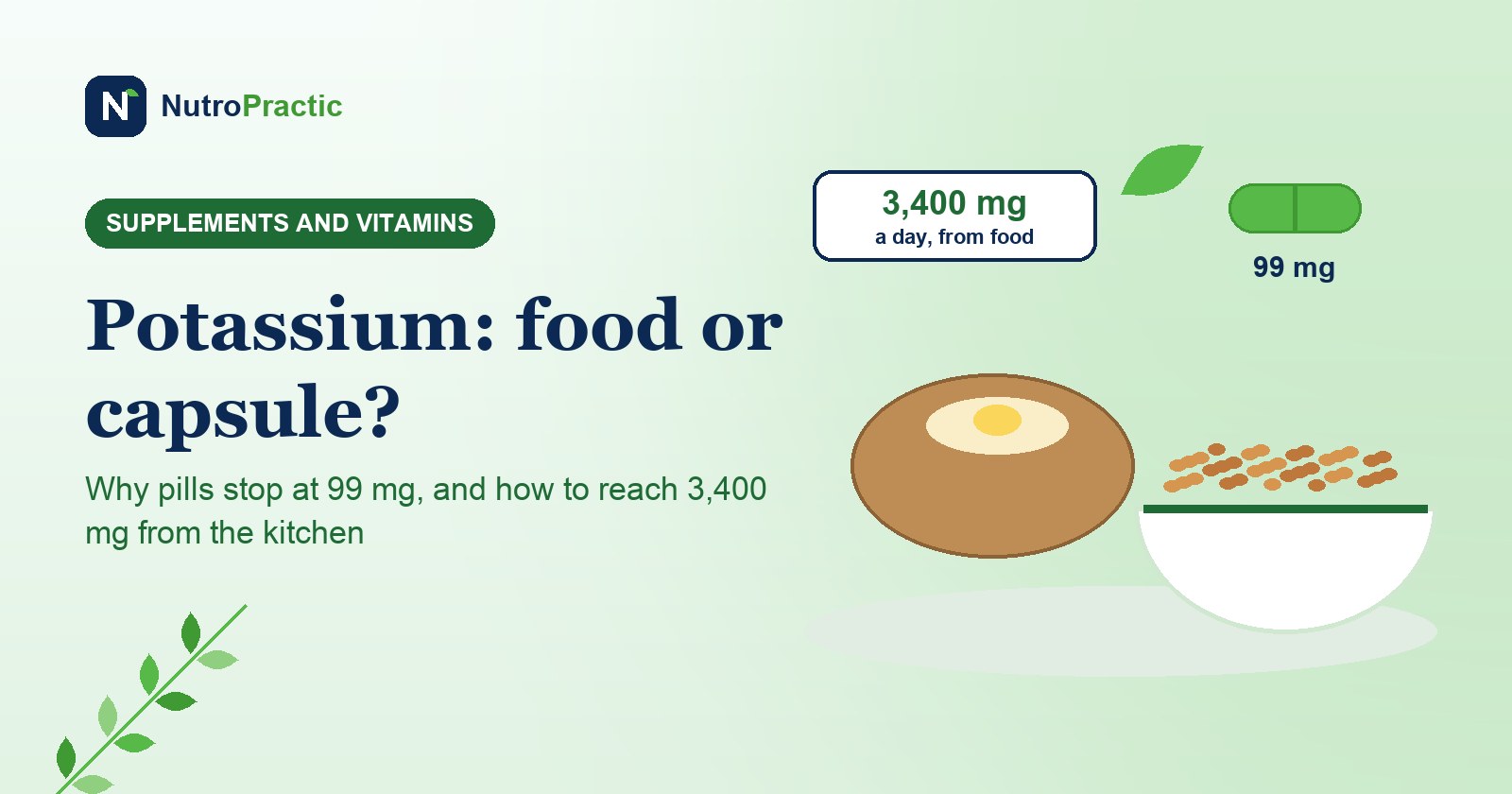
Potassium from food or a pill: why capsules stop at 99 mg, and how to reach 3,400 mg from the kitchen
A potassium capsule gives you about 99 mg. An adult man needs 3,400 mg a day and a woman 2,600 mg, so a pill covers roughly 3%. Where that 99 mg line comes from (it isn't a law), a table of what common foods really hold, one worked day that adds up to 3,388 mg, and the medicines that make extra potassium risky.
16 Nov 2026
Medicines and nutrition
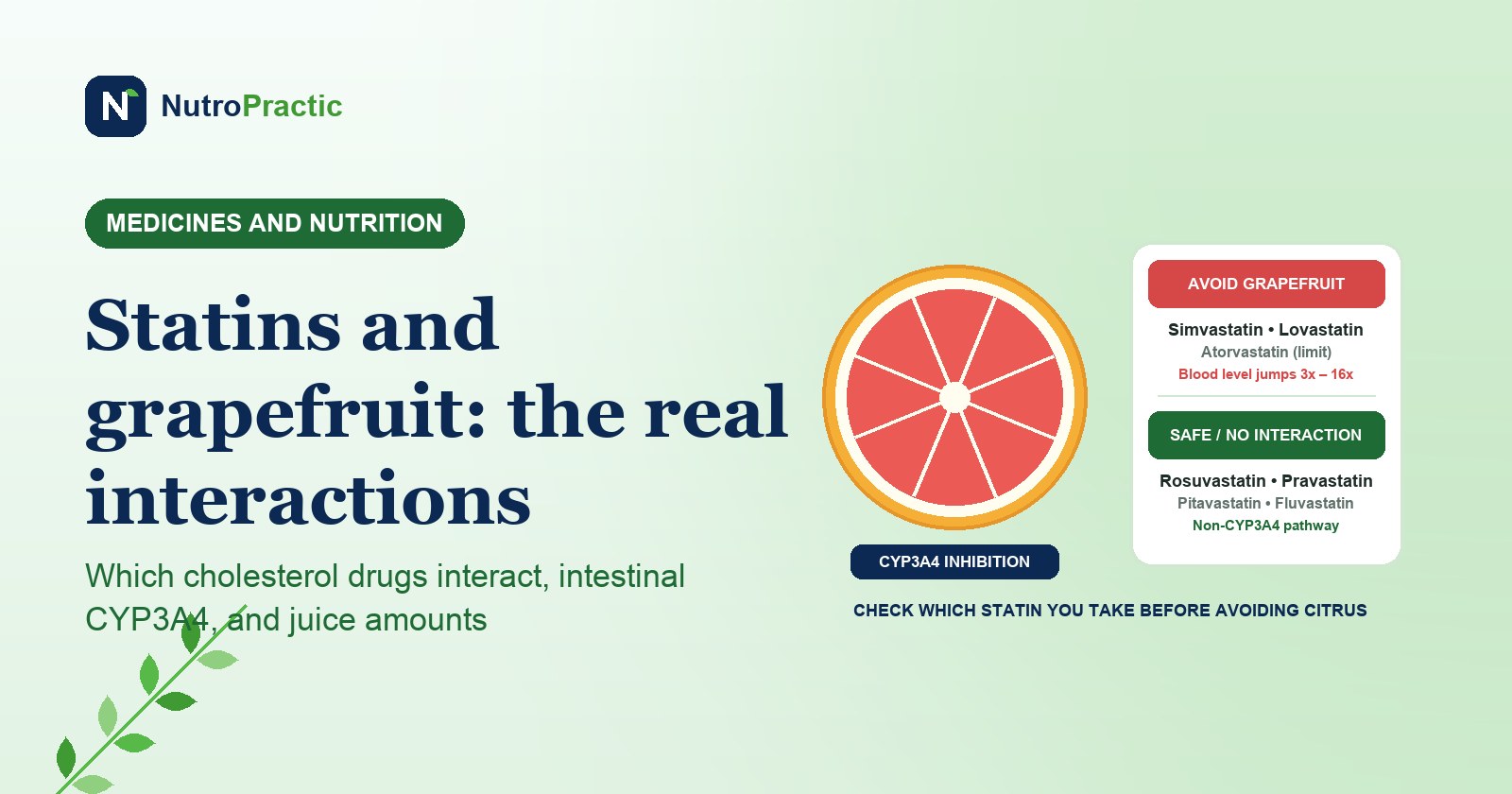
Statins and grapefruit: which cholesterol medicines actually interact, and how much fruit matters
A blanket ban on grapefruit is one of the most common warnings given to statin users, yet several widely prescribed cholesterol drugs do not interact with it at all. Learn the science of intestinal CYP3A4, actual AUC multipliers, portion thresholds, timing myths, and which statins allow you to safely enjoy citrus.
14 Nov 2026

Medicines and nutrition
CoQ10 and statins: what the muscle symptom trials found, and who might benefit
Statin-associated muscle symptoms lead up to 30% of patients to discontinue life-saving cholesterol therapy. While statins deplete circulating CoQ10 by 16% to 54%, randomized clinical trials show mixed results for myalgia relief. Explore the trials, ubiquinone vs ubiquinol bioavailability, recommended doses, and clinical guideline recommendations.
14 Nov 2026
Botanicals and sleep
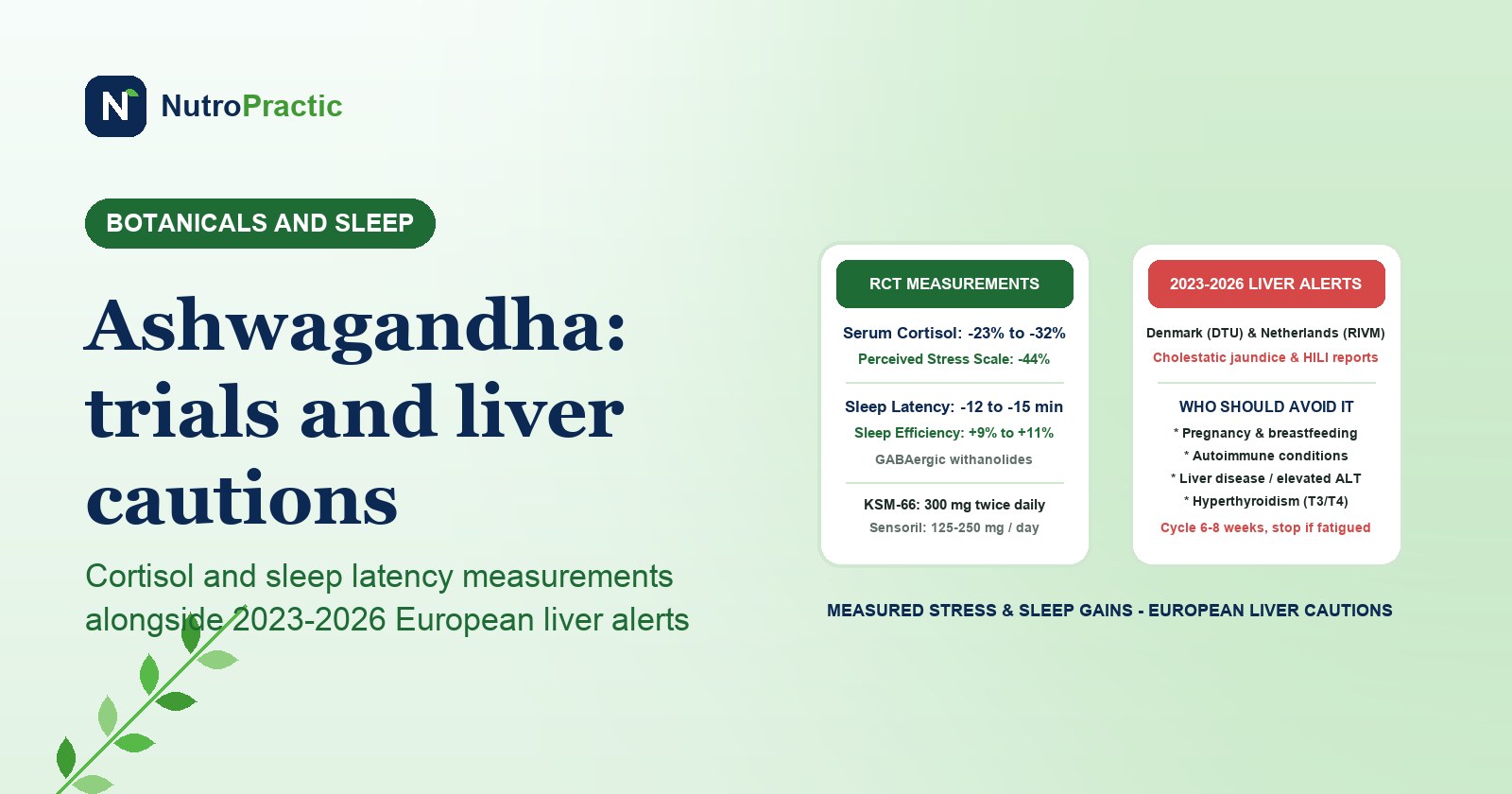
Ashwagandha for stress and sleep: what the randomised trials measured, and liver safety cautions
Standardized Ashwagandha extracts reduce serum cortisol by 23% to 32% and shorten sleep latency by 12 to 15 minutes in double-blind clinical trials. Yet 2023-2026 health alerts from Danish and Dutch authorities highlight serious herb-induced liver injury risks. Discover what the trials measured, extract differences (KSM-66 vs Sensoril), and who should strictly avoid it.
14 Nov 2026
Supplements and vitamins
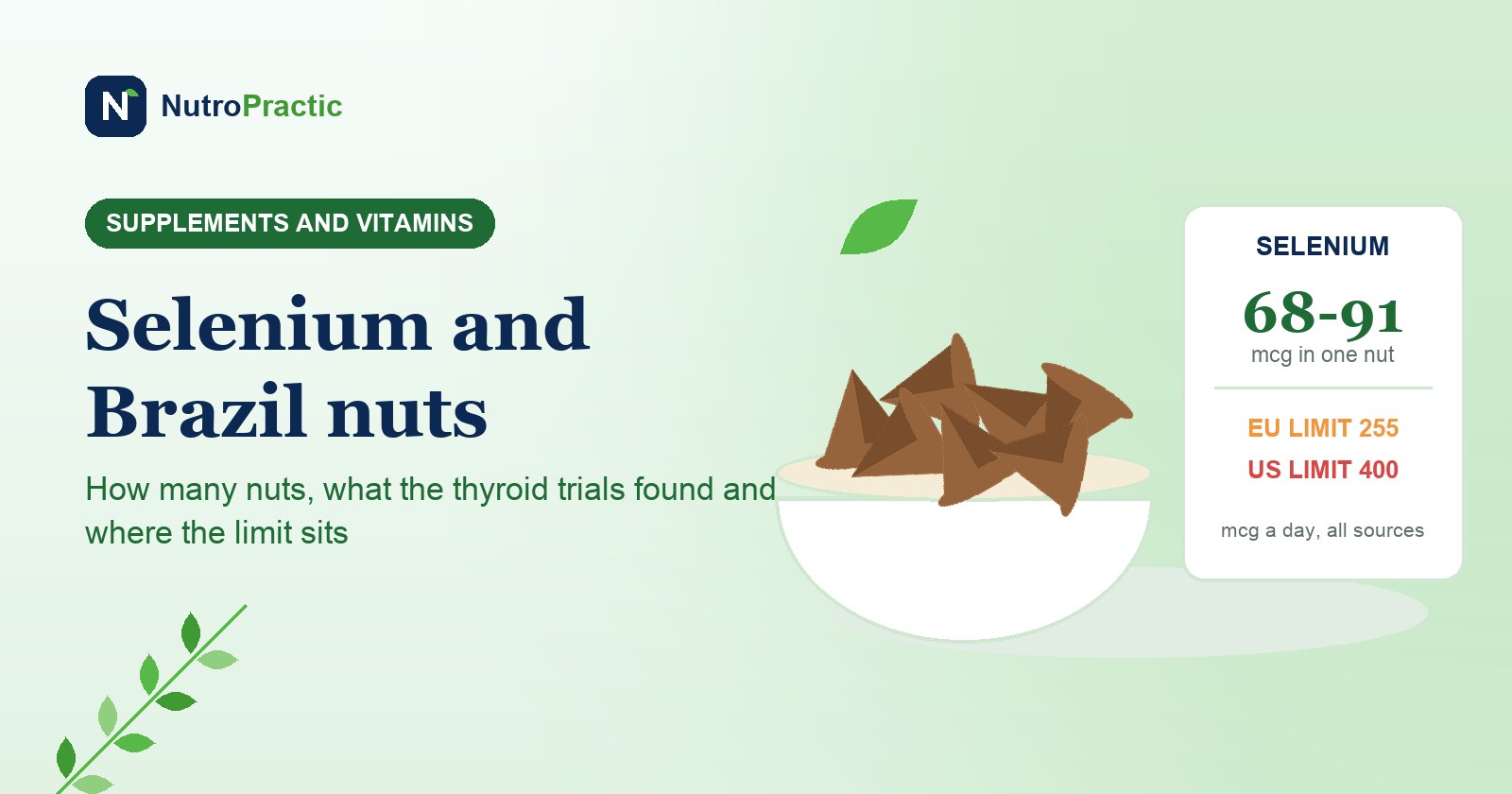
Selenium: how many Brazil nuts, what the thyroid trials found, and where the upper limit sits
One Brazil nut holds 68 to 91 mcg of selenium on average, against a 255 mcg European ceiling. A table of nuts per day, what the Hashimoto trials measured, and why more is not better.
14 Nov 2026
Everyday eating
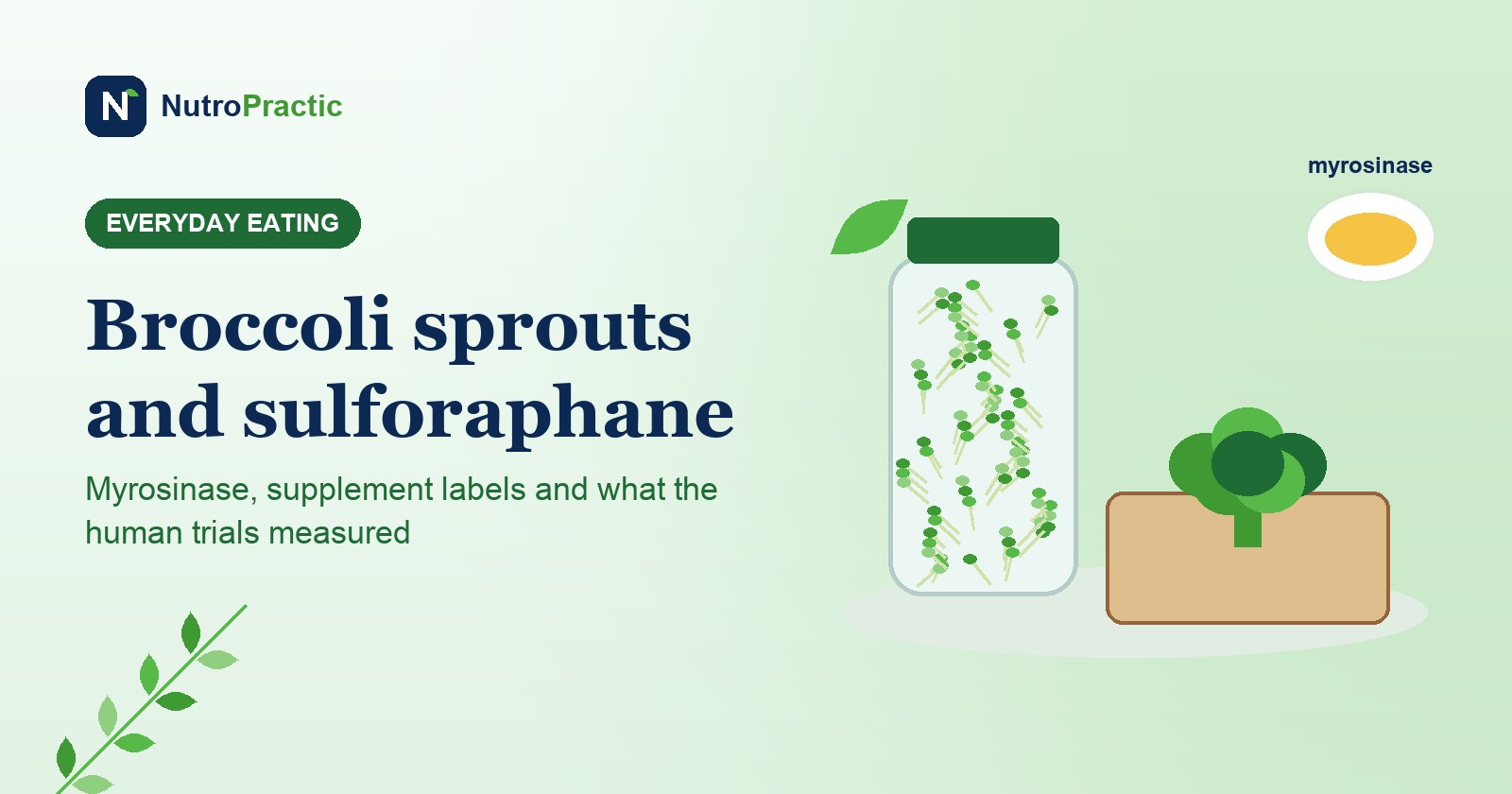
Broccoli sprouts and sulforaphane: myrosinase, supplement labels, and what the human trials measured
Sulforaphane is not in the broccoli until you chop it, and only if the enzyme myrosinase survives. What cooking does, what a label means, and what the small human trials found, including the ones that did not work.
14 Nov 2026

Women's wellness and nutrition
Creatine for women: cognitive performance, menstrual cycle phases, and bone density beyond muscle building
Creatine is widely stereotyped as a bodybuilding supplement for men, but female physiology tells a very different story. Women exhibit 70% to 80% lower endogenous creatine stores, reduced dietary intake, and cyclical fluctuations in brain creatine kinase across the follicular and luteal phases. Robust clinical trials demonstrate that 3 to 5 grams of daily creatine monohydrate enhances cognitive performance during sleep deprivation, augments clinical response in unipolar depression, preserves femoral neck bone geometry in postmenopausal women, and causes cellular intracellular hydration rather than subcutaneous bloating.
13 Nov 2026

Cardiovascular wellness
Psyllium husk: how much soluble fibre lowers LDL cholesterol and stabilizes post-meal glucose in clinical trials
Viscous soluble fibre forms a thick gel matrix in the small intestine that binds bile acids and blunts post-meal glucose spikes. Across dozens of randomized controlled trials, 7 to 10.2 grams of psyllium daily lowers LDL cholesterol by 6% to 12% without stripping HDL, while reducing postprandial glucose surges by 15% to 25% in metabolic syndrome and type 2 diabetes. Discover the bile acid sequestration mechanism, trial meta-analyses, exact timing before meals, water ratios, and titration protocols to avoid gas and cramping.
13 Nov 2026
Women's wellness and nutrition
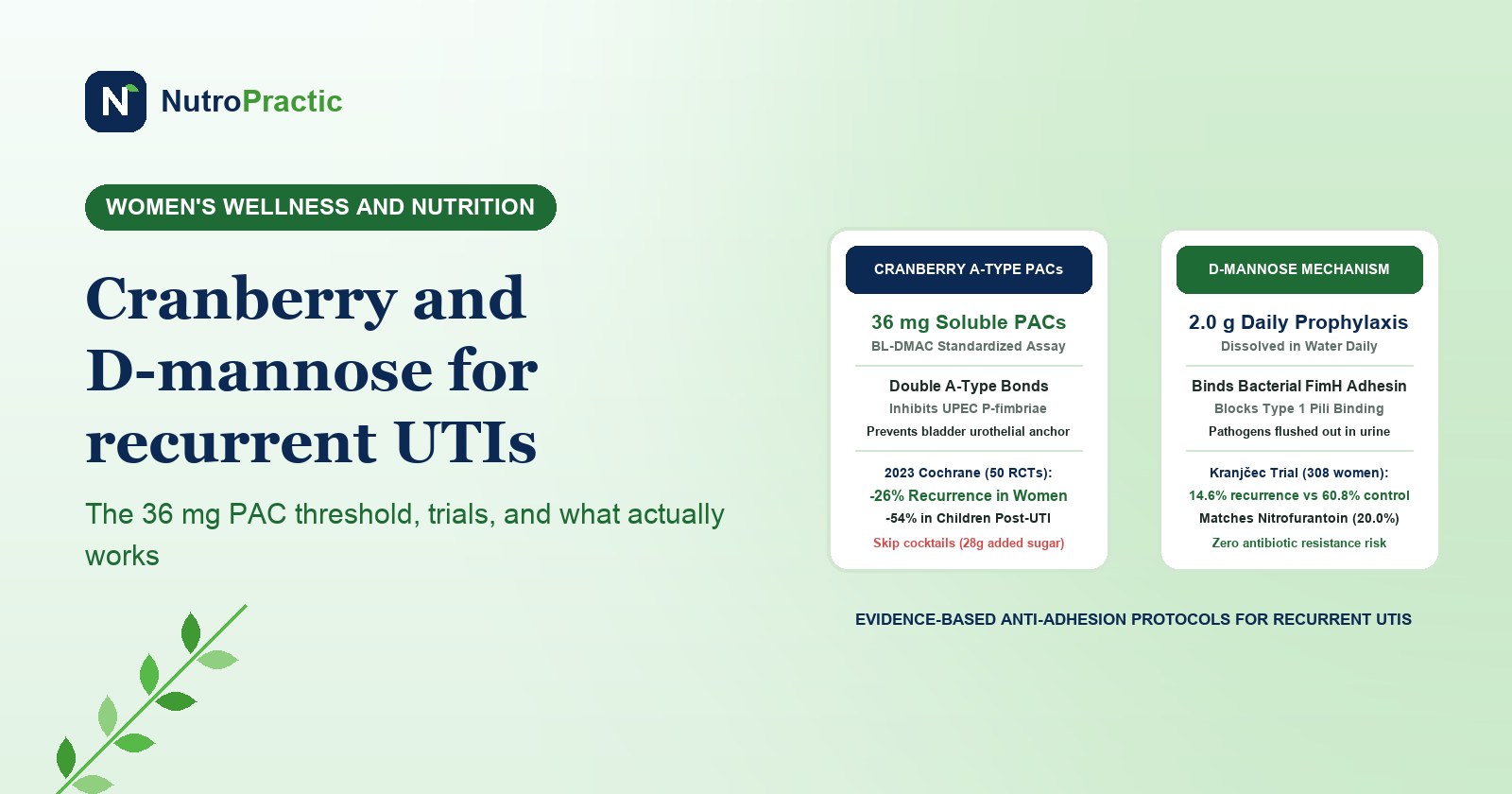
Cranberry and D-mannose for recurrent UTIs: the 36 mg PAC threshold, trials, and what actually works
Recurrent urinary tract infections cause immense distress, yet standard advice to drink grocery-store cranberry cocktail often fails due to heavy added sugars and negligible active compounds. Robust clinical trials reveal that prevention requires reaching a precise threshold: 36 mg of A-type proanthocyanidins (PACs) measured by BL-DMAC assay or 2 grams of daily D-mannose targeting bacterial FimH adhesin. Discover what the 2023 Cochrane review, head-to-head antibiotic trials, and urological guidelines prove about stopping recurrence naturally.
13 Nov 2026
Food and nutrition
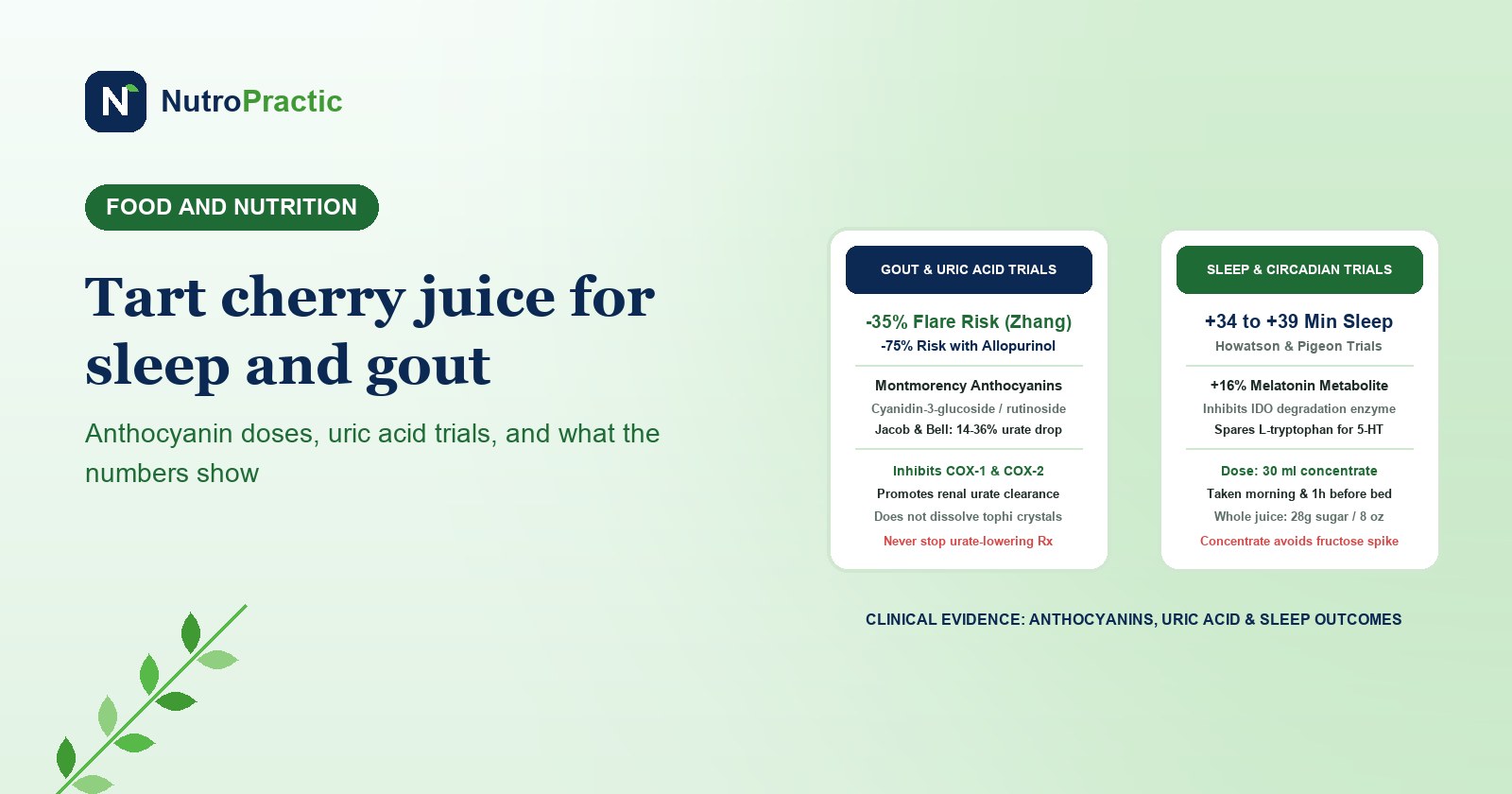
Tart cherry juice for sleep and gout: anthocyanin doses, uric acid trials, and what the numbers show
Tart cherry juice (Prunus cerasus, Montmorency) is frequently promoted as a natural remedy for insomnia and recurrent gout attacks. Clinical trials demonstrate measurable reductions in serum uric acid and acute flare frequency (including a 35% reduction in 2-day gout attack risk and up to 75% when paired with allopurinol), alongside a 34-to-39 minute increase in sleep duration. Discover the biochemical mechanisms of anthocyanins (cyanidin-3-glucoside), the tryptophan-sparing pathway, dosing protocols (30 ml concentrate vs 8 oz juice), sugar trade-offs, and why tart cherry cannot replace prescription urate-lowering therapy.
13 Nov 2026
Supplements and vitamins
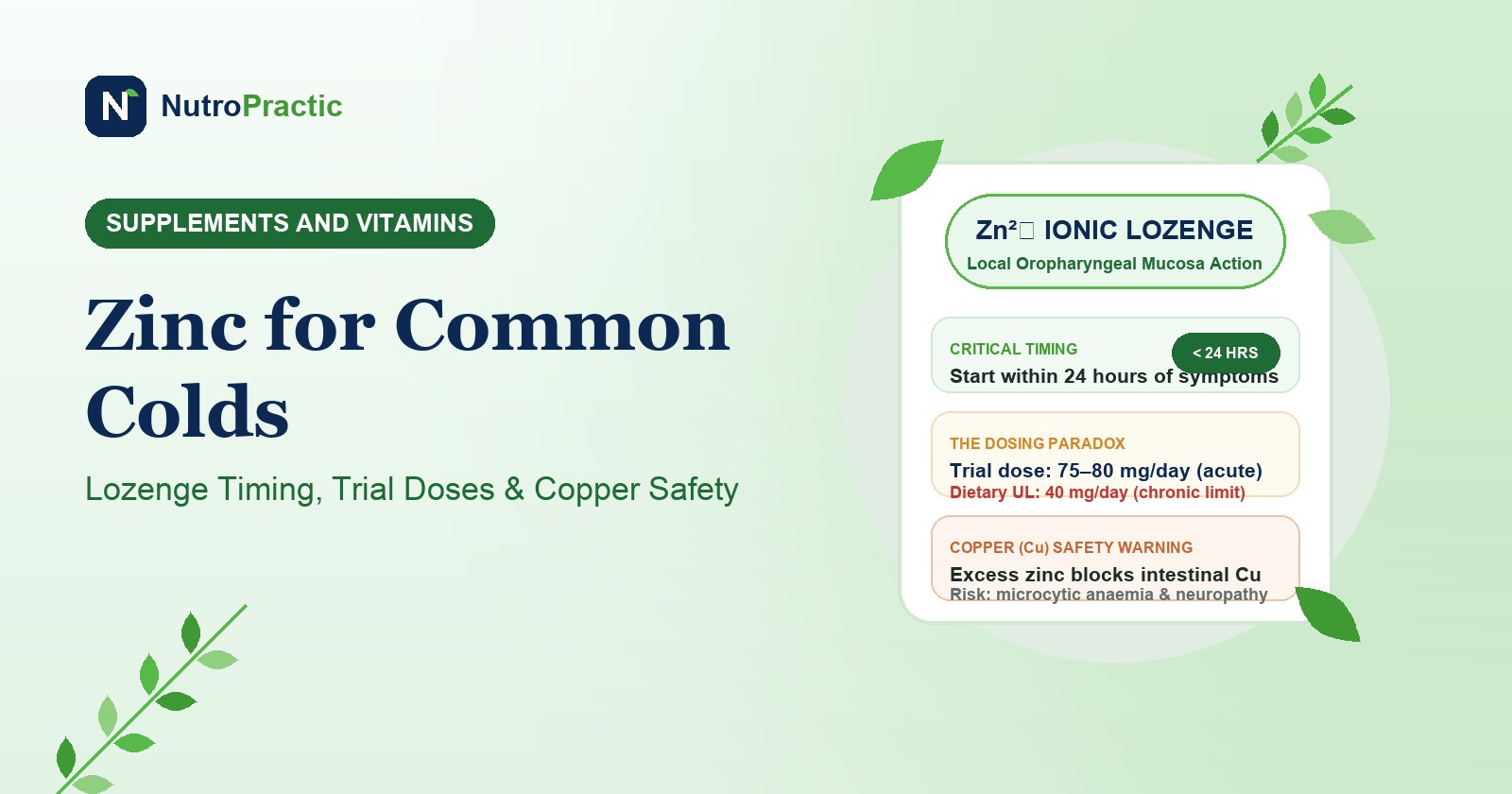
Zinc for common colds and immunity: trial doses, lozenge timing, and why 40 mg+ depletes copper
Randomized controlled trials confirm that zinc lozenges can reduce common cold duration by roughly 33%, but only when started within the first 24 hours of symptoms. Achieving this clinical effect requires doses of 75 to 80 mg daily of ionic zinc dissolved in the mouth—well above the 40 mg tolerable upper intake level. Here is the evidence on lozenge formulations, delivery timing, and why sustained high doses induce severe copper deficiency.
13 Nov 2026
Supplements and vitamins
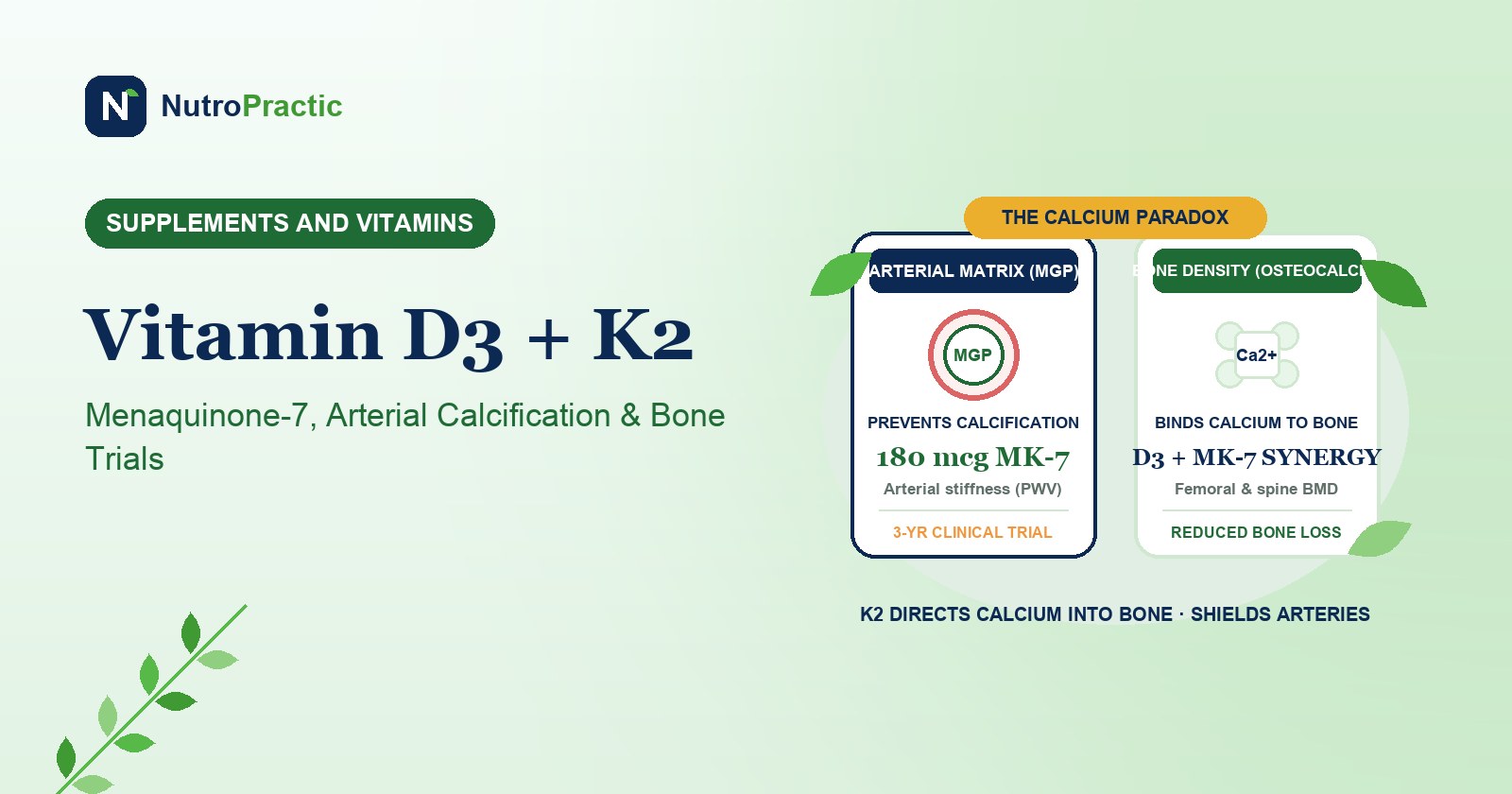
Vitamin D3 with K2: does adding menaquinone-7 actually protect arteries and bones in trials?
Vitamin D3 enhances intestinal calcium absorption, but without adequate vitamin K2, calcium can deposit in vascular walls instead of bone matrix. Clinical trials evaluating menaquinone-7 (MK-7) demonstrate improved carboxylation of Matrix Gla Protein, preserved arterial elasticity, and reduced bone mineral density loss. Discover what human clinical trials actually prove about cardiovascular calcification, bone density, MK-4 vs. MK-7 dosing, and critical drug interactions.
13 Nov 2026
Medicines and nutrition
Metformin stomach upset: meals, slower dose changes and extended release
About one in five people report a gut side effect with metformin. Use this seven-day symptom check to talk clearly about meal timing, slower titration and whether extended release may help.
12 Nov 2026
Medicines and nutrition
Oral iron or an infusion? Hepcidin, alternate-day dosing and when IV iron fits
A 60 mg iron dose can raise hepcidin into the next day. Here is what alternate-day trials measured, why more pills are not always more absorption, and the situations where clinicians move to IV iron.
12 Nov 2026
Everyday eating
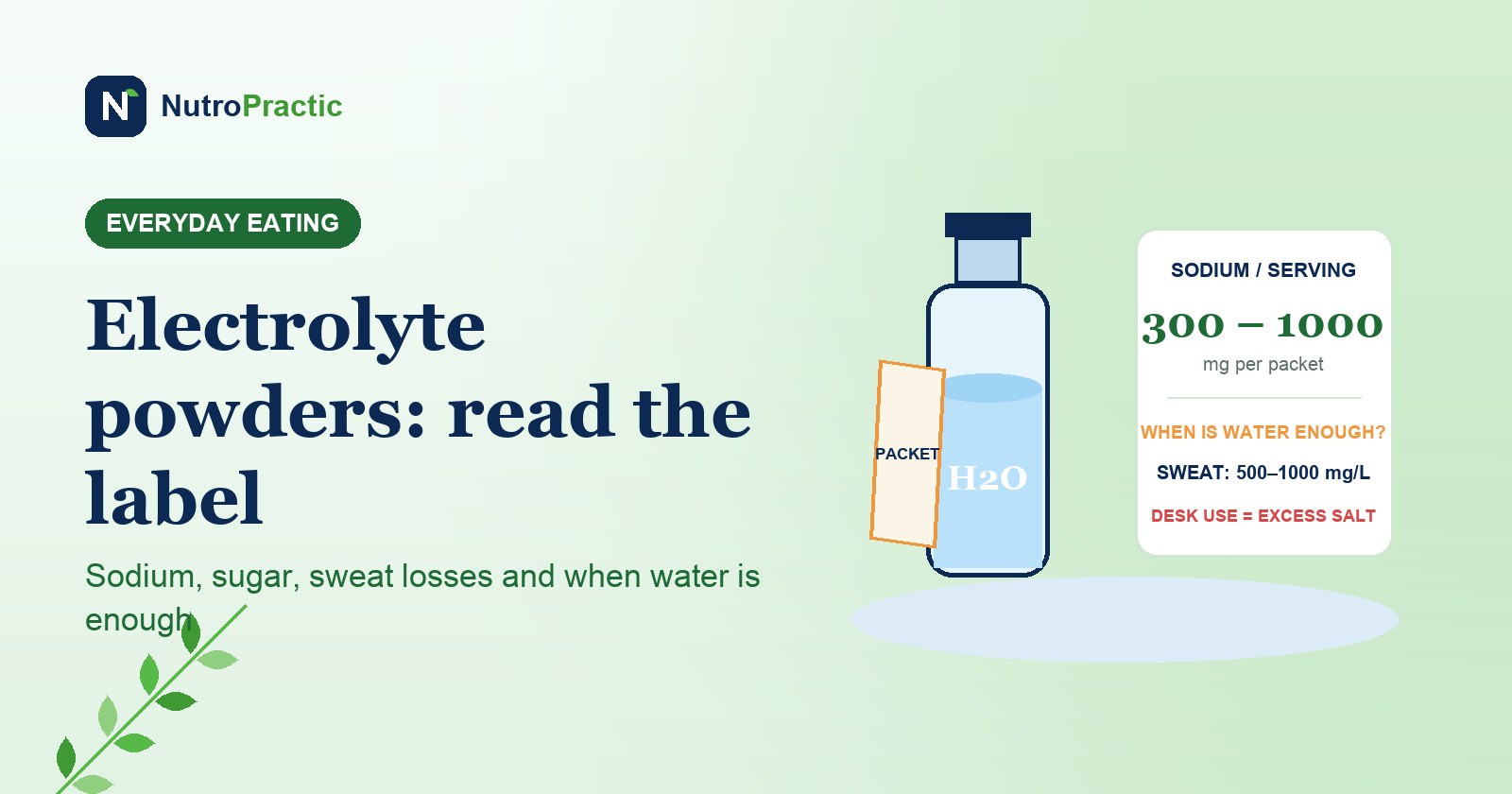
Electrolyte powders: sodium and sugar per bottle, and when water is enough
Packets deliver 300 to 1,000 mg sodium and up to 11 g sugar. Here is how popular drink mixes compare with actual sweat losses—and who actually needs them.
10 Nov 2026
Everyday eating
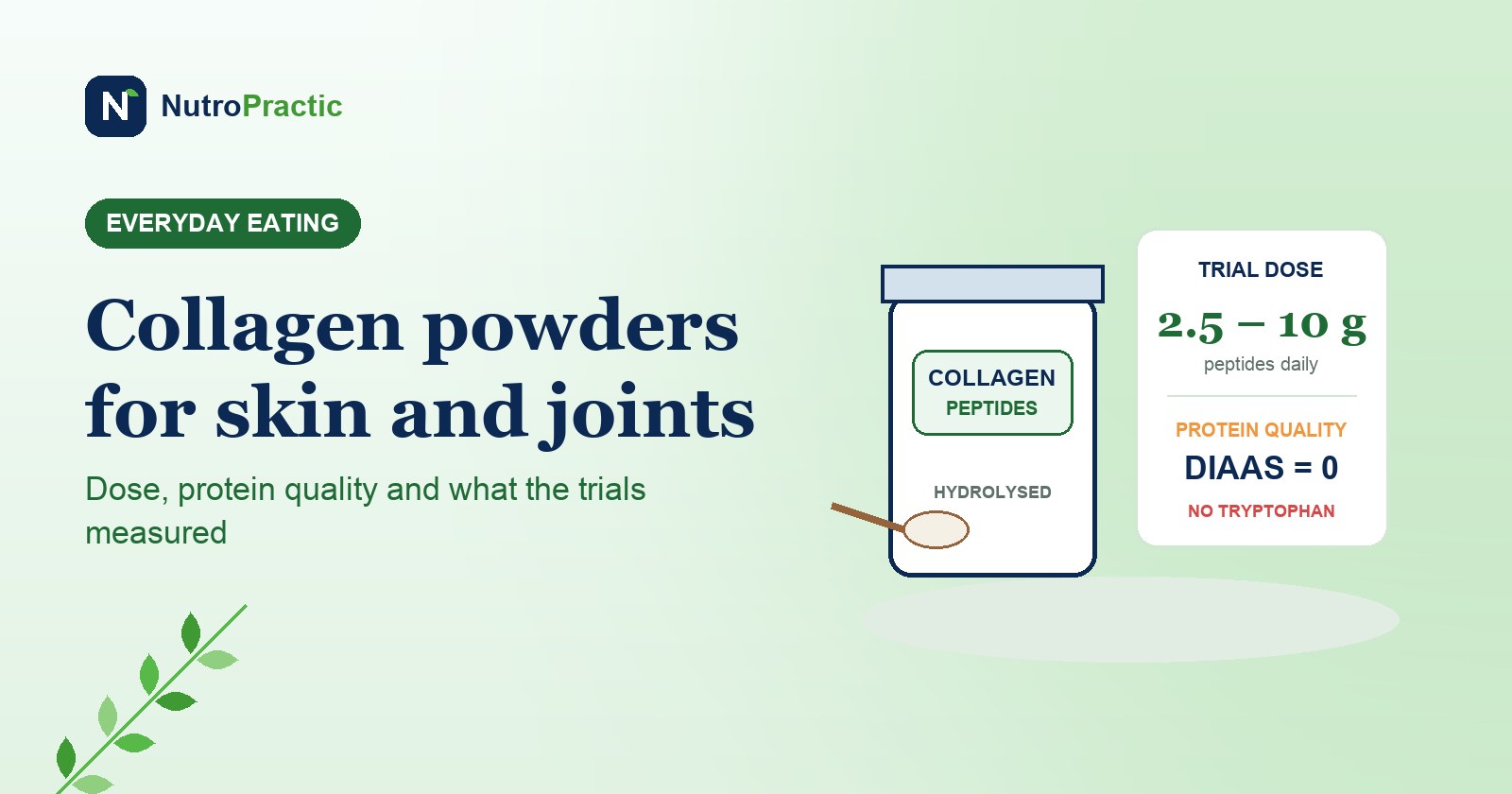
Collagen powders for skin and joints: dose, protein quality and what the trials measured
A 10 g scoop gives 9 g protein, but its protein quality score is zero. Here is what 19 skin trials and knee studies measured at 2.5 g to 10 g daily—and what collagen cannot do.
10 Nov 2026
Micronutrients
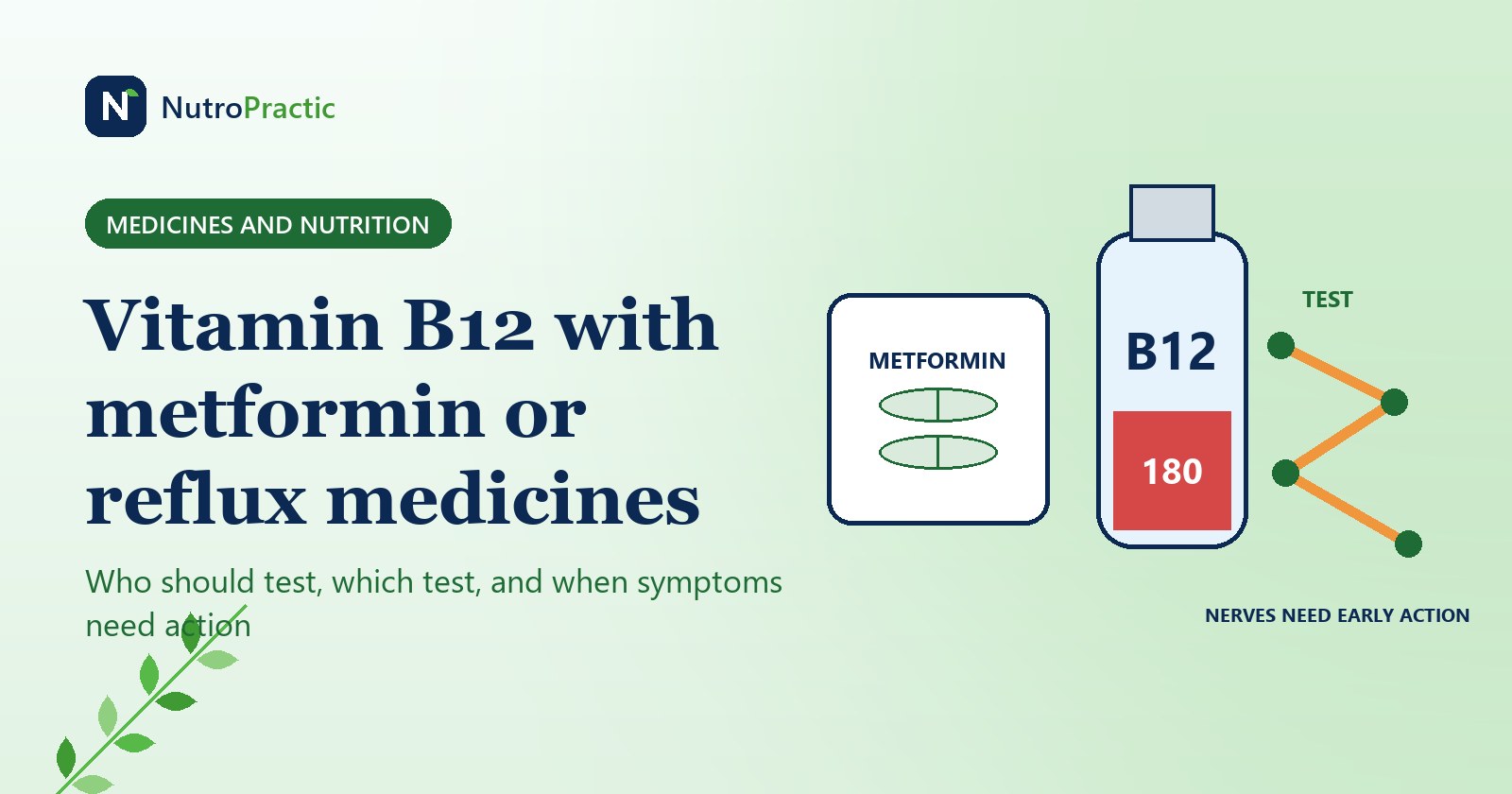
Vitamin B12 on metformin or acid-reflux medicines: who should test, and how often?
Metformin lowered B12 by 19% in a 4.3-year trial, but a PPI alone is not a rule for annual screening. Here is when to test, how to read 180 and 350 ng/L, when MMA helps, and which nerve symptoms should not wait.
9 Nov 2026
Heart health
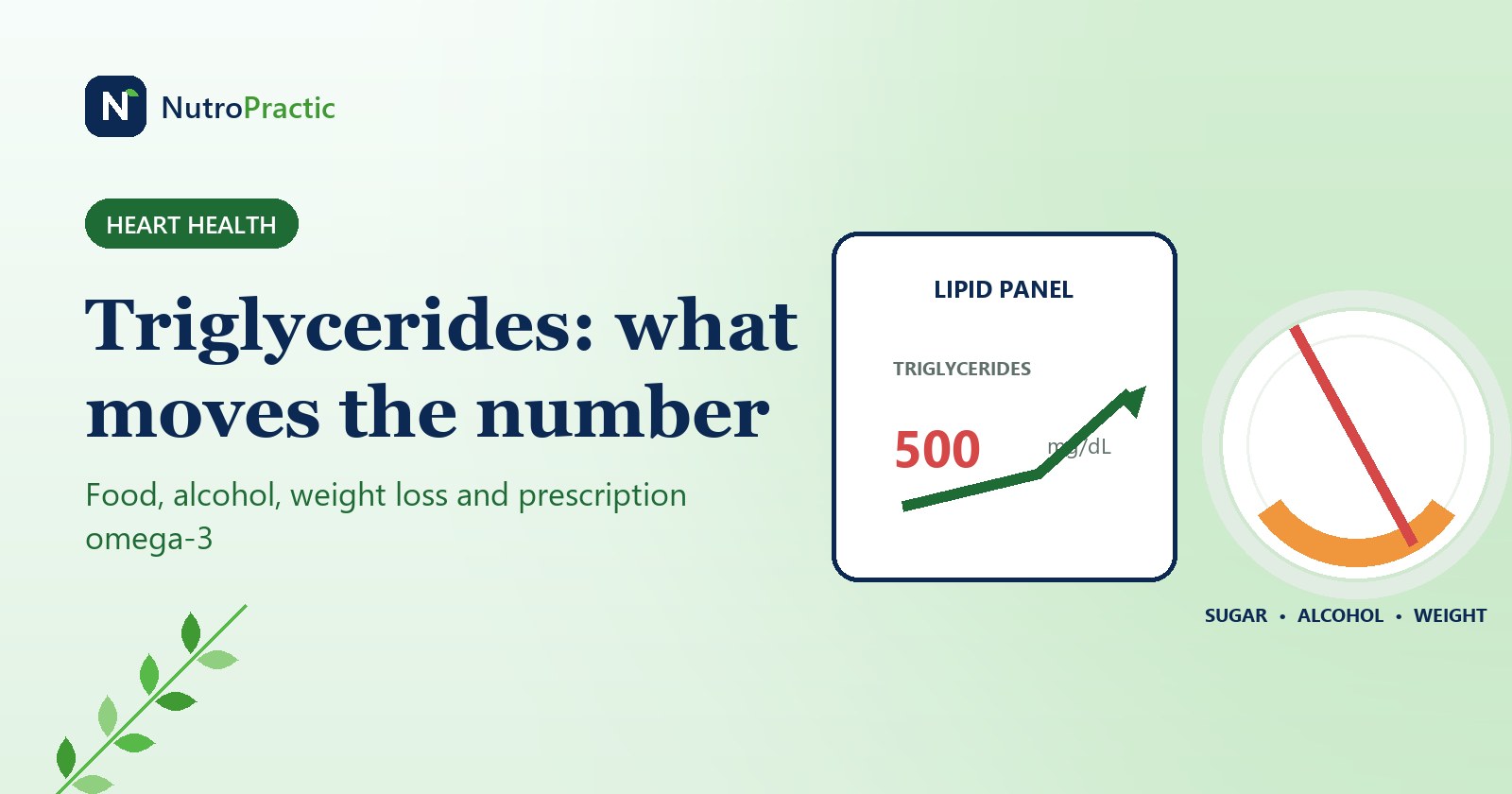
Triglycerides: what food, alcohol, weight loss and omega-3 actually change
A 5-10% weight loss often lowers triglycerides by about 20-30%, as can 4 g/day of prescription omega-3. Here is what 150, 500 and 1,000 mg/dL mean, which changes have numbers behind them, and when a result needs prompt care.
9 Nov 2026
Everyday eating
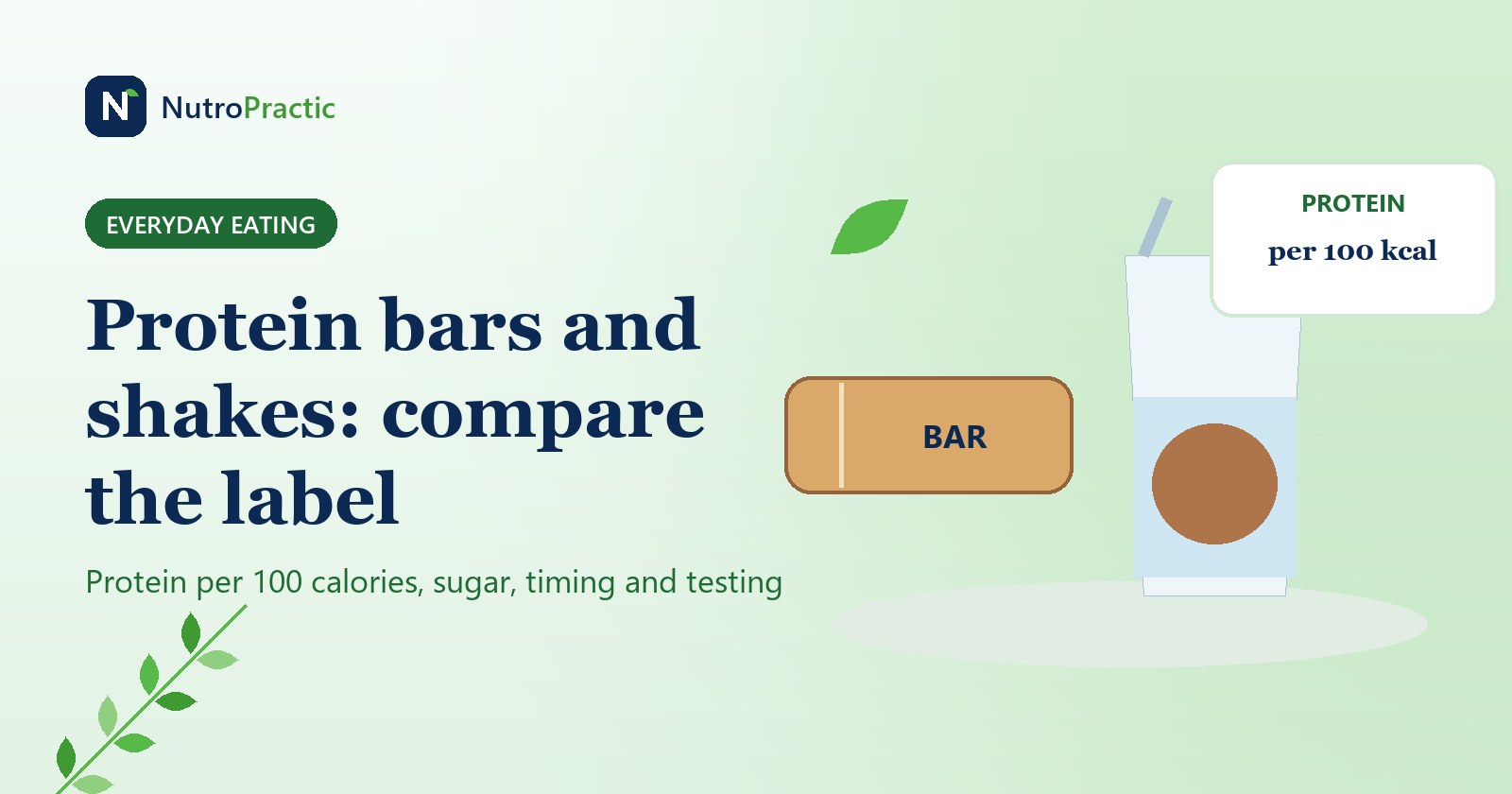
Protein bars and shakes: what you get per 100 calories
Four current labels range from 6.3 to 20 g protein per 100 kcal. Here is how bars, shakes, eggs, yogurt and lentils compare—and when a supplement actually helps.
6 Nov 2026
Everyday eating
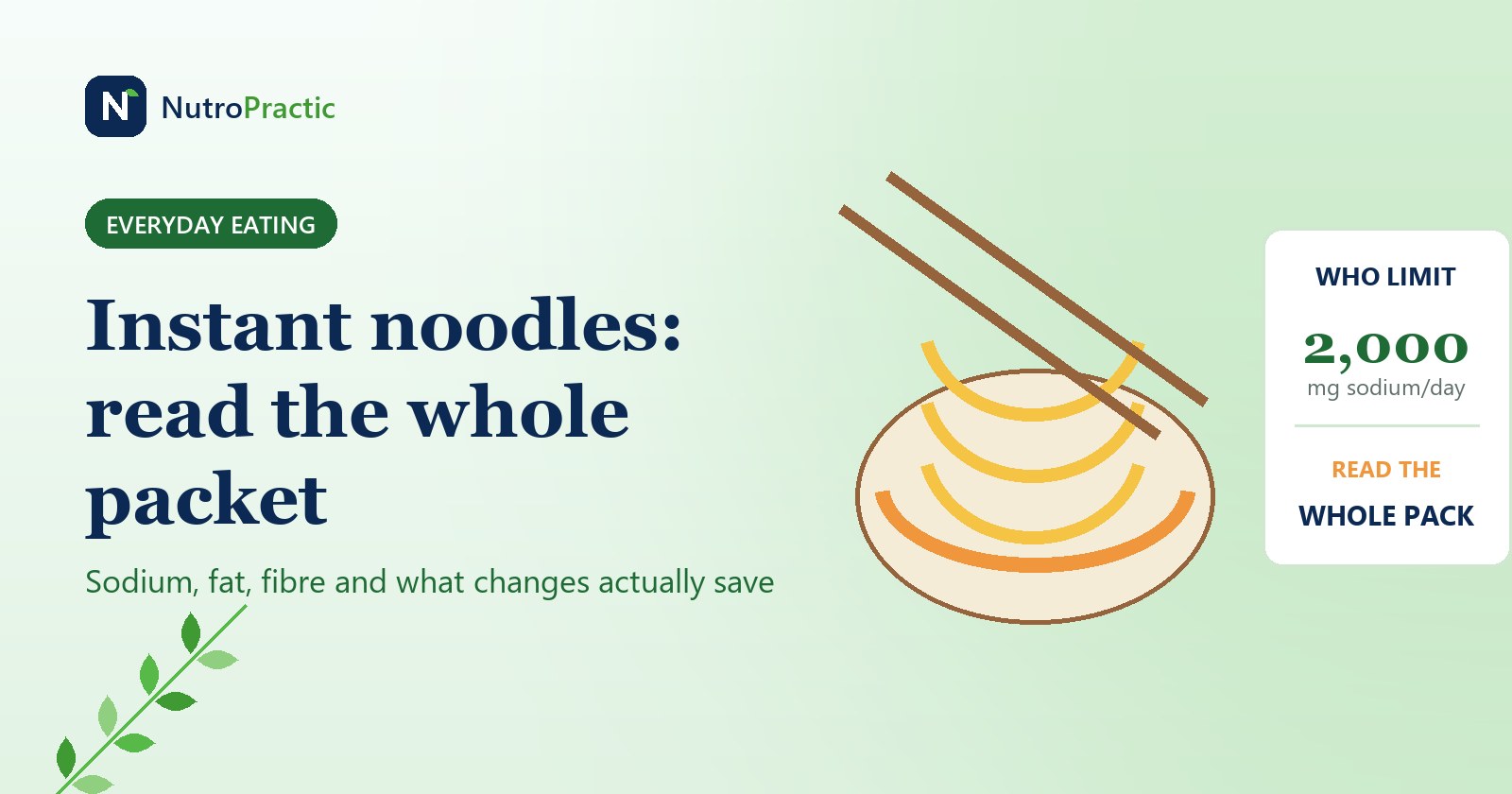
Instant noodles: the sodium in the whole packet, and what actually reduces it
Three official labels range from 750 to 1,520 mg sodium per packet. Here is the whole-pack arithmetic, what the broth study measured, and how to turn noodles into a more complete meal.
6 Nov 2026
Diabetes
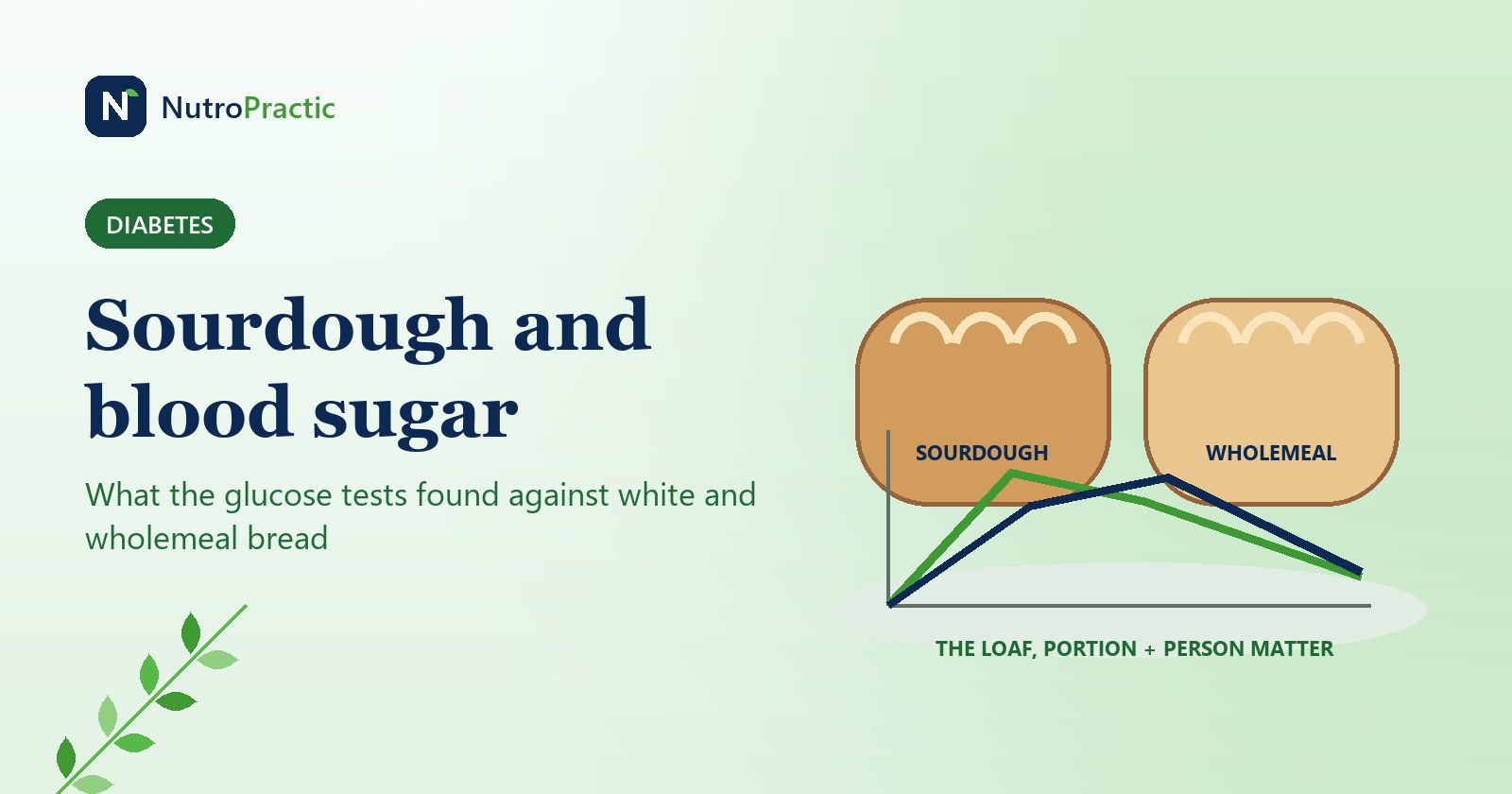
Sourdough and blood sugar: what the glucose tests found against white and wholemeal bread
Sourdough did not beat white bread on average in a 20-person crossover trial, and half responded better to white. A trial-by-trial look at fermentation, flour, portions, GI and how to test your own loaf fairly.
6 Nov 2026
Women's health
Eating while breastfeeding: extra calories, iodine, caffeine, fish and alcohol, with the actual numbers
Breastfeeding usually adds about 330–400 kcal a day, but the smaller numbers can matter more: 290 mcg iodine, 400 IU vitamin D for baby, 8–12 oz fish a week, and a caffeine total you can actually add up.
6 Nov 2026
Women's health
Nausea in pregnancy: ginger, vitamin B6, small meals and when it's hyperemesis, from the trials
Only 1.8% of women in one diary study had nausea just in the morning. Ginger at 1 g a day, B6 at 30 to 75 mg and doxylamine with B6 each have trial data, while diet advice has none. The score to track it, the doses, and the signs that mean a phone call.
5 Nov 2026
Diabetes
Vinegar before meals: what the trials measured on blood sugar, and how much is enough
Two teaspoons to a tablespoon with a starchy meal trims the glucose peak at 30 minutes, and the gap fades by two hours. HbA1c reviews range from -0.39 to -1.53, and we explain which to trust. Two gummies hold about 50 mg of acetic acid against 750 mg in a tablespoon.
5 Nov 2026
Diabetes
Pasta and blood sugar: al dente, cooled and reheated, and what the glucose tests measured
Head-to-head tests found little gap between 5 and 15 minutes of boiling. Chilling and reheating ranged from no change to a large drop. Moving from 80 g to 150 g adds 50 g of carbs. The tests, the sums, and legume and whole-wheat pastas per 100 g.
4 Nov 2026
Lifestyle
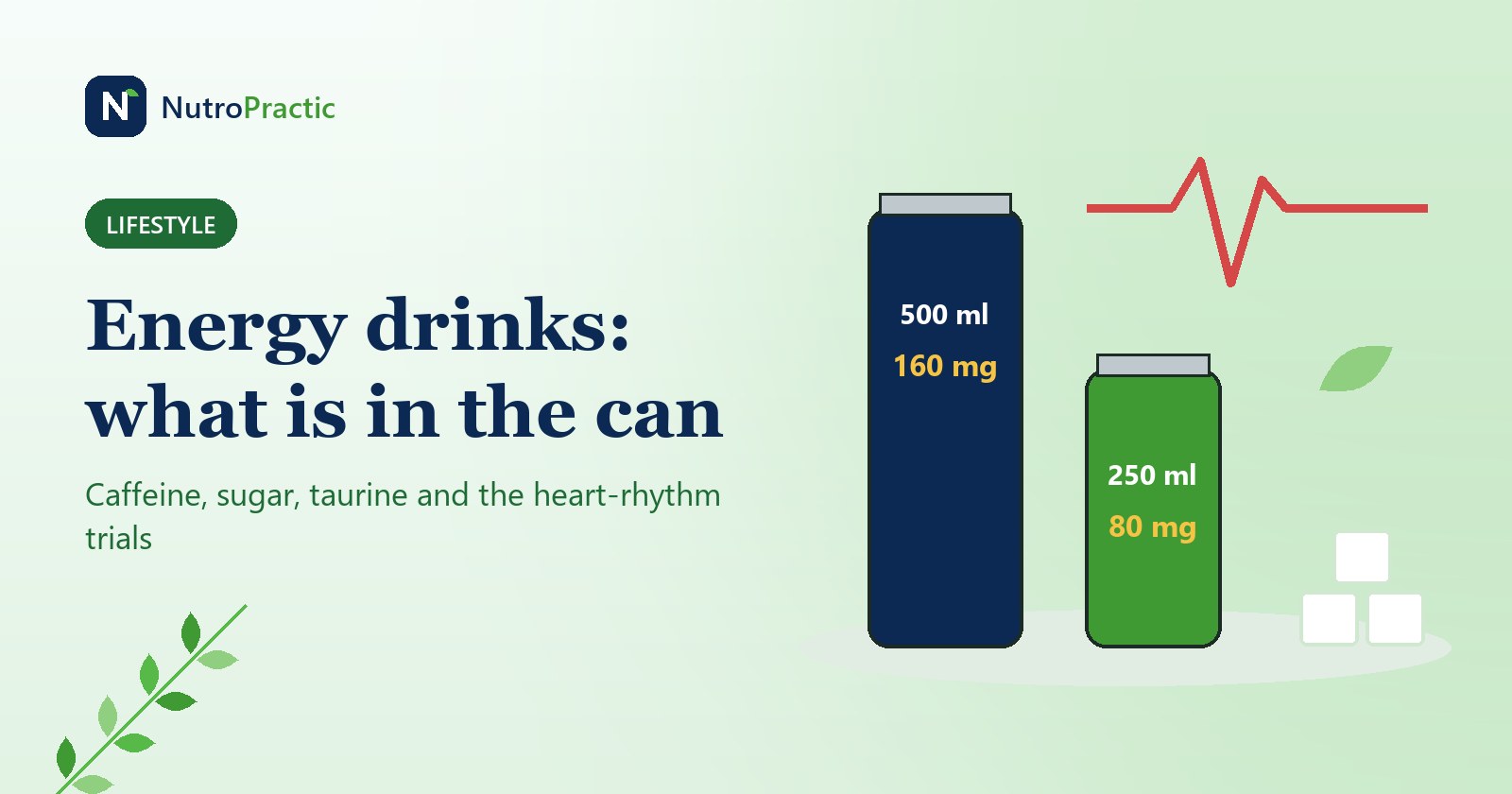
Energy drinks: caffeine, sugar and taurine per can, and what the emergency-visit and heart-rhythm studies found
From 80 mg to 300 mg of caffeine, and up to 55 g of sugar in one can. The numbers by brand, what they mean for a 50 kg teenager, what the QT and blood pressure trials measured, the old emergency-visit data and England's coming under-16 ban.
4 Nov 2026
Everyday eating
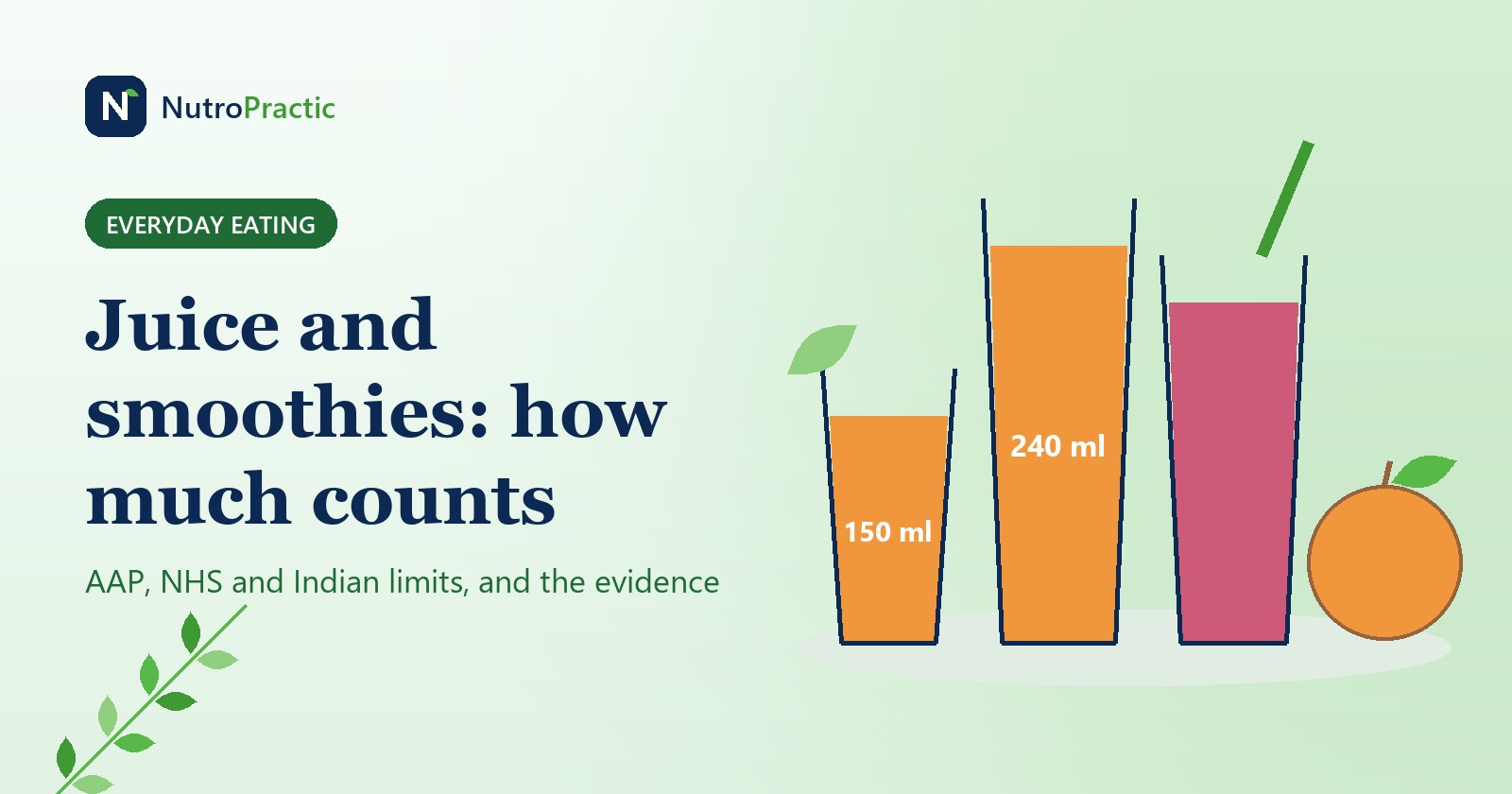
Fruit juice and smoothies for children and adults: how much counts, and what the AAP and NHS limits are based on
None under 1, 120 ml at 1 to 3, 150 ml for British adults, 250 ml for older Indian children. The limits side by side, sugar per glass against whole fruit, what the cohort studies on weight and diabetes found, and why smoothies are a closer call.
3 Nov 2026
Everyday eating
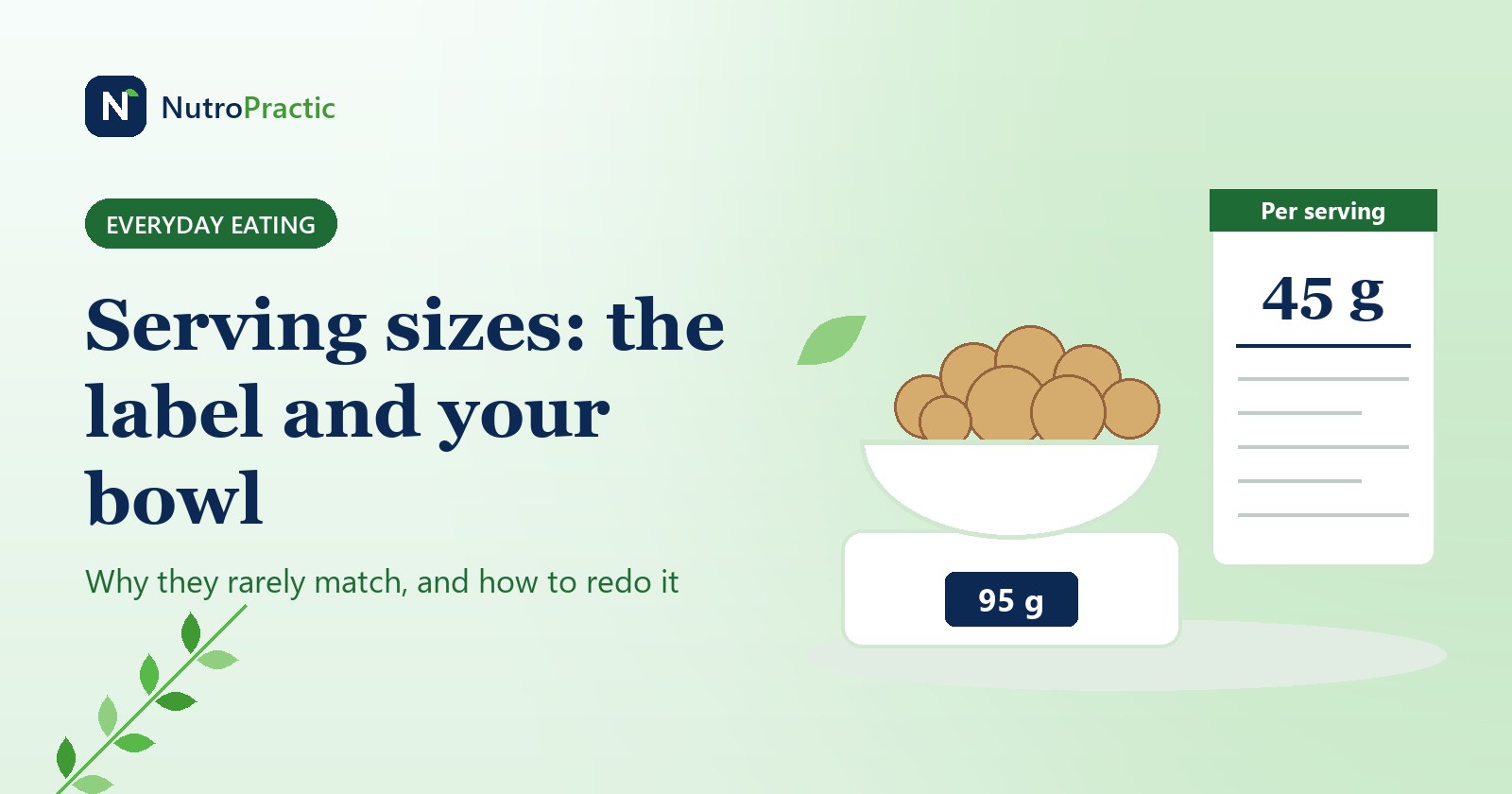
Serving sizes on food labels: why the numbers on the pack rarely match what you eat, and how to recalculate them
Adults in one UK test poured about 95 g of granola against a 45 g serving. Tropicana lists 150 ml in Britain and 240 ml in the US. What the FDA, EU and Indian rules require, and worked sums for cereal, crisps and peanut butter.
3 Nov 2026
Everyday eating
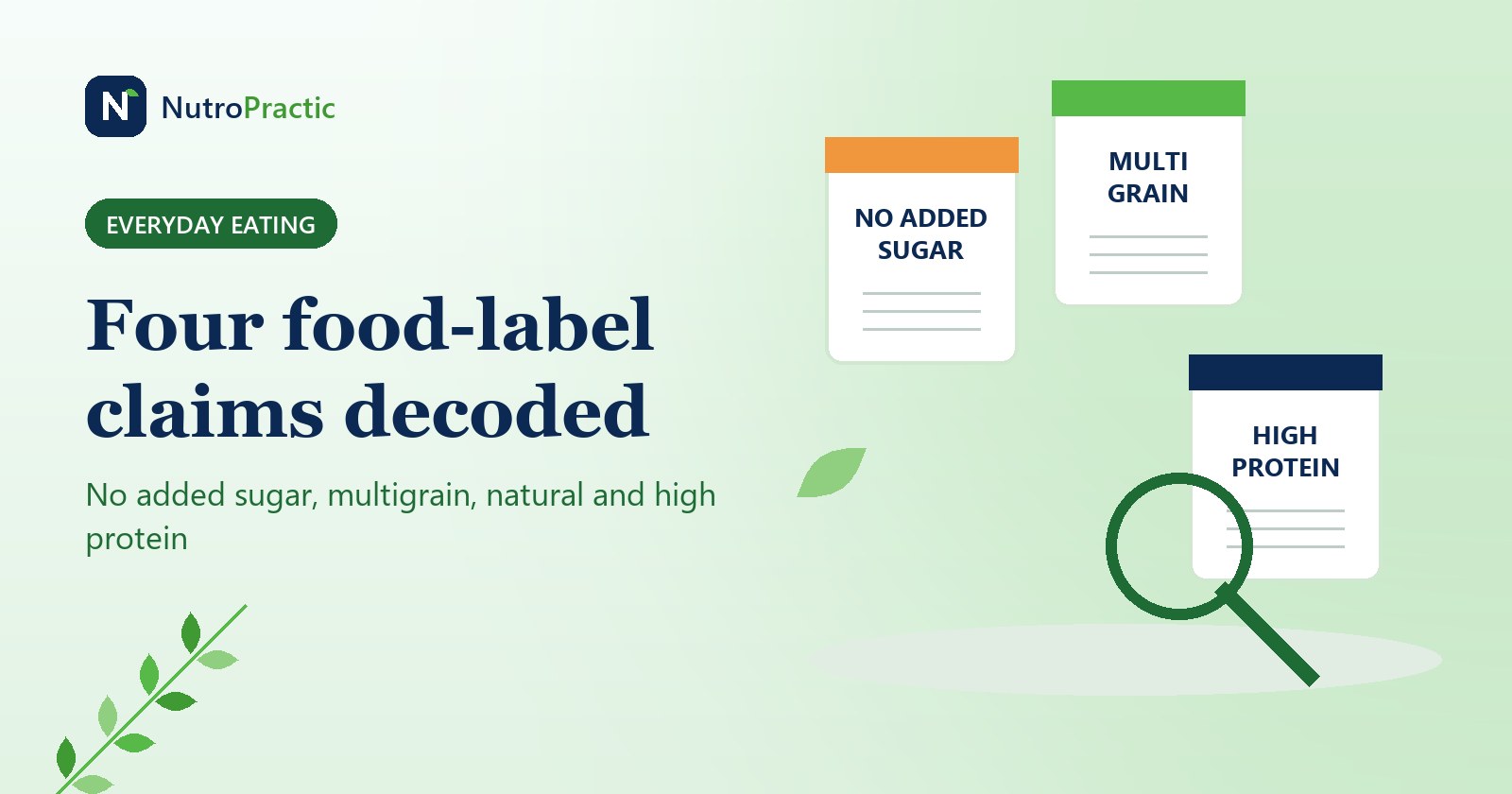
Food label claims decoded: 'no added sugar', 'multigrain', 'natural' and 'high protein'
A no-added-sugar biscuit with only 13% fewer calories. A 7-grain loaf with refined flour listed first. A 'high protein' bar that clears the legal line at 21%. What each claim legally requires in the EU/UK, US and India, with worked reads of real packs.
2 Nov 2026

Gut health
Probiotic capsules: which ones have trial evidence, what they can do, and when to skip them
Children on antibiotics: 8% got diarrhoea with a probiotic, 19% without. Older hospital patients: 10.8% with, 10.4% without. Which capsules have evidence, what three guidelines say about IBS, what a course costs per case prevented, and who shouldn't take them.
2 Nov 2026
Gut health
Gluten-free without coeliac disease: who actually benefits, and what the blinded gluten challenges found
In blinded trials only 16% of people who said gluten made them ill reacted to gluten rather than placebo, and in Oslo fructans caused more bloating than gluten. Who really needs to avoid it, how to get tested before you stop, how much gluten is in a slice of bread or a roti, and what gluten-free food costs (159% more in the UK) and lacks.
1 Nov 2026
Diabetes
Fenugreek, cinnamon and turmeric for blood sugar: what the trials in an Indian kitchen measured
Fenugreek seed at 5-10 g a day lowered HbA1c by about 0.85 points in pooled trials, and in a 3-year Hyderabad study 23% went on to diabetes against 55%. Cinnamon trims fasting glucose by 15-25 mg/dL, but a teaspoon of cassia tops the coumarin limit. Curcumin: about 0.3-0.4 points, and rare liver injury from capsules. Doses in teaspoons, and a fair way to test it at home.
1 Nov 2026
Diabetes
Potatoes and blood sugar: boiled, cooled, mashed or fried, and what the cohorts and trials found
Fries were linked to 20% higher diabetes risk per three servings a week in 205,000 US adults; boiled, baked and mashed potatoes to almost none. GI by cooking method, resistant starch in grams after chilling, the glycaemic load of a potato against a cup of rice, and how to fit aloo into an Indian plate.
30 Oct 2026
Children's nutrition
Picky eaters aged 2 to 8: what feeding studies show works at the table
Fussy eating peaks between two and six and is usually a normal stage, not a parenting failure. Feeding trials show what moves it: small repeated tastes, eating together, no pressure and the right kind of reward. Here is how to use them, and the signs that mean it's more than picky eating.
30 Oct 2026
Women's health
PCOS and food: what the diet trials show for cycles, insulin and weight
PCOS affects about one woman in ten, and most are told to "lose weight" with little else. Here is what drives it, why insulin matters even in slim women, how much weight loss brings cycles back, what the low-GI and Mediterranean trials found, what inositol and metformin do, and which tests to ask for.
30 Oct 2026
Indian kitchen
Millets in an Indian kitchen: what they do for blood sugar, and how to cook them
Ragi, jowar, bajra and the small millets are sold as the answer to diabetes. A meta-analysis of 65 studies says they help on average, but two Chennai studies found ragi meals no better than white rice and cooked foxtail millet with a GI of 89. What actually makes the difference, and how to cook each one so it does.
30 Oct 2026
Micronutrients
Magnesium: who is actually short, and what the sleep and cramp claims are worth
Almost half of Americans eat less magnesium than they need, yet a blood test rarely shows it, and the trials behind the two most popular reasons to take it are weak (sleep) or negative (night cramps). Who is genuinely at risk, where it does help, the foods that cover a day, and glycinate vs citrate vs oxide.
30 Oct 2026
Heart health
Lowering LDL cholesterol with food: what the portfolio diet trials showed
In a 2003 trial, four foods eaten together (oats and other sticky fibre, plant sterols, soy and nuts) lowered LDL almost as much as a low-dose statin. At home the average was about half that. How much each food does, a realistic day, and when food is not enough.
30 Oct 2026
Micronutrients
Iodine: the nutrient that plant-based milks and sea salt left out
Iodine runs the thyroid and builds a baby's brain, and in the UK, much of Europe and parts of North America women of childbearing age are now mildly short of it. The reason is often a healthy-looking swap: oat milk for dairy, sea salt for table salt. Where iodine comes from, who needs more, and the seaweed trap.
30 Oct 2026
Nutrition science
Intermittent fasting and time-restricted eating: what the head-to-head trials found
When trials give an eating window and plain calorie cutting the same calories, weight, blood sugar and cholesterol end up in much the same place. The window works by helping some people eat less. What the trials found, early versus late windows, the muscle catch, who shouldn't fast, and a 12-hour default.
30 Oct 2026
Joint health
Gout and uric acid: which foods matter, and how much diet can do
Gout is usually blamed on steak and beer. The studies say food does matter, but less than most people think: here is what lowers uric acid, what sets off a flare, what cherries really showed, and why most people with gout also need a tablet.
30 Oct 2026
Women's health
Eating with gestational diabetes: what the trials say about carbs, walking and the glucose meter
A gestational diabetes diagnosis at 26 weeks often comes with a leaflet and a lot of fear about carbohydrates. The trials point to something gentler: enough carbs of the right kind, spread through the day, a short walk after meals, and the meter as a guide. What to eat, when medicine is needed, and the follow-up that matters for years after.
30 Oct 2026
Everyday eating
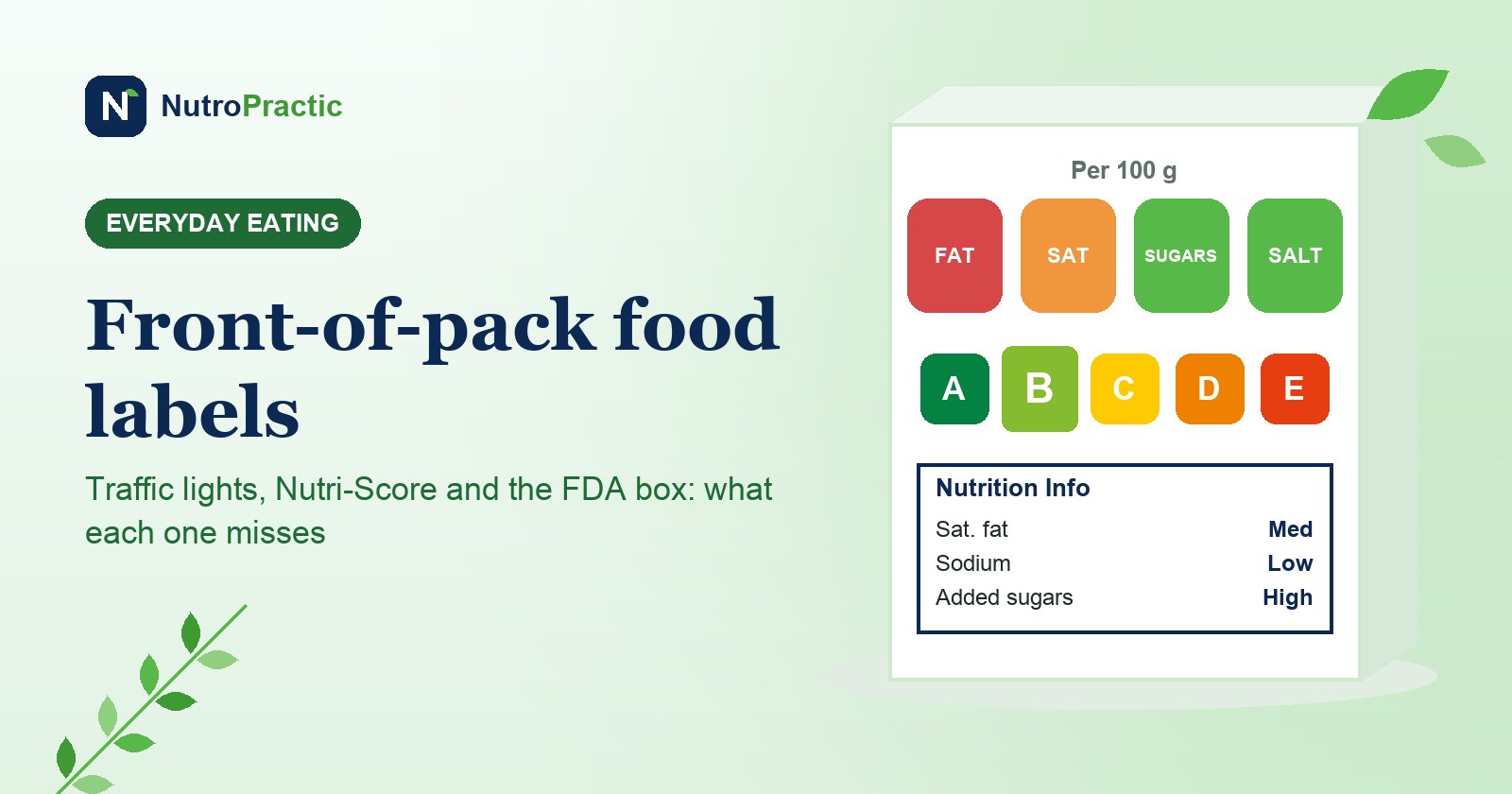
Front-of-pack food labels: Nutri-Score, traffic lights and the new FDA 'healthy' rule, and what each one misses
The same jar can be three reds in London, an E in Paris and say nothing in Chicago. How UK traffic lights, Nutri-Score (and its 2023 update), Canada's "High in" symbol, the FDA's new "healthy" rule and proposed Nutrition Info box work, where their lines are, what shopping studies found, and a worked read of Coca-Cola Zero, Nutella and olive oil under each.
30 Oct 2026
Liver health
Fatty liver (MASLD): how much weight loss reverses it, and what coffee and alcohol do
About one adult in three has a fatty liver, and most find out by accident on a scan. Biopsy studies show how much weight loss clears the fat, calms the inflammation and even shrinks scarring. Here are the numbers, what diet and drinks do, the new medicines and the one blood test worth asking for.
30 Oct 2026
Workplace wellness
Eating on night shifts: what shift-work studies found on meal timing, weight and blood sugar
The same meal raises blood sugar more at 3 am than at 1 pm. What the sleep-lab trials found when night workers ate only by day, how the Nurses' Health Study risk climbed with years of nights, what is left of a 3 am coffee at bedtime, and a meal plan for a 19:00-07:00 shift.
30 Oct 2026
Heart health
Coffee and your heart: what the trials found on rhythm, blood pressure and sleep
For years people with palpitations or atrial fibrillation were told to give up coffee. Two randomised trials and cohorts of half a million people now point the other way, with three real exceptions: sleep, very high blood pressure and how the coffee is brewed.
30 Oct 2026
Nutrition science
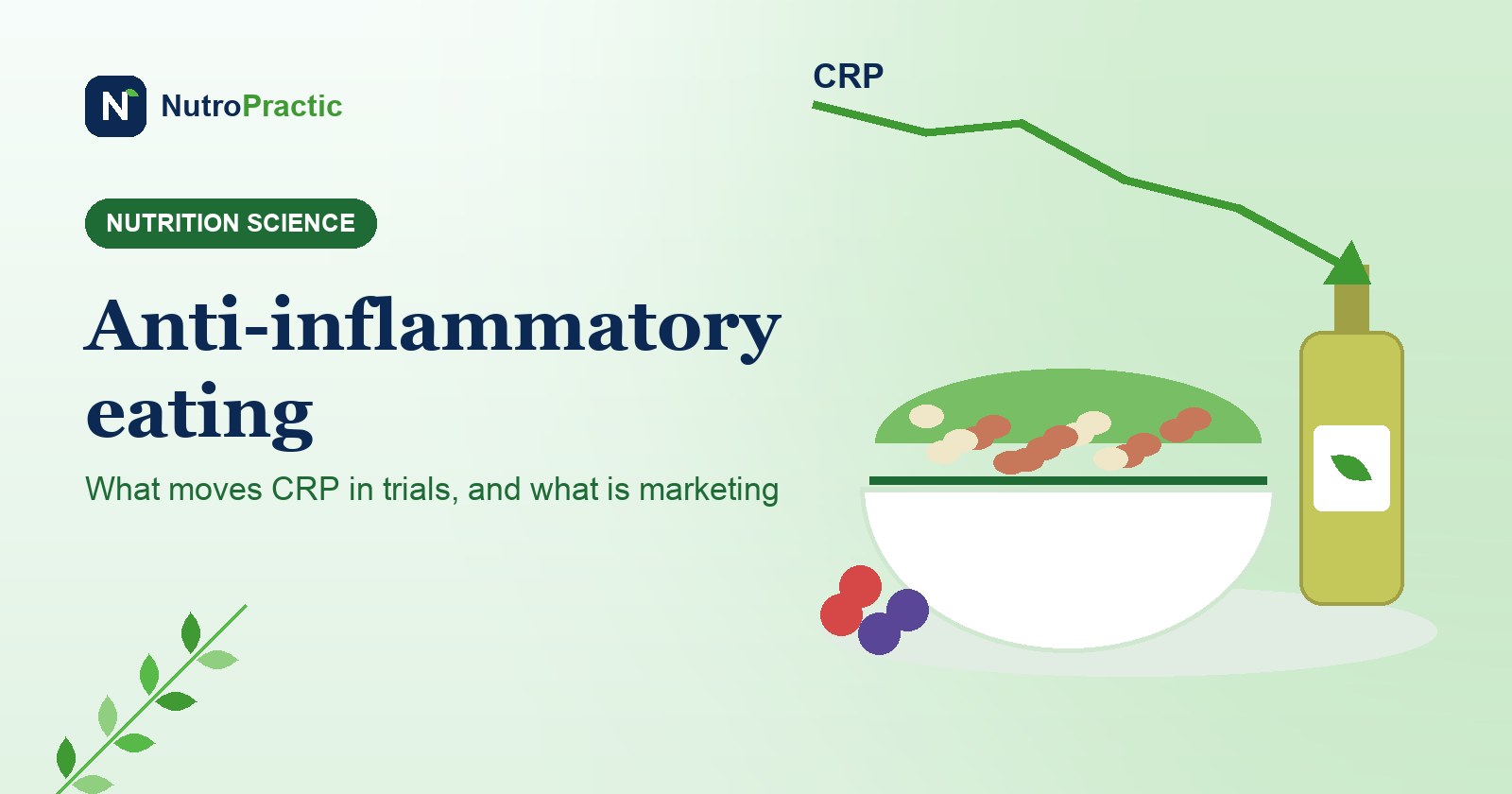
Anti-inflammatory eating: what moves CRP in trials, and what is marketing
"Anti-inflammatory" now sells everything from turmeric shots to celery juice. Chronic low-grade inflammation is real and measurable, though, and a few things reliably lower it in trials: losing excess weight, a Mediterranean pattern, more fibre, moving and sleeping. What the evidence shows, what the single-food claims are worth, and a plain week of meals.
30 Oct 2026
Women's health
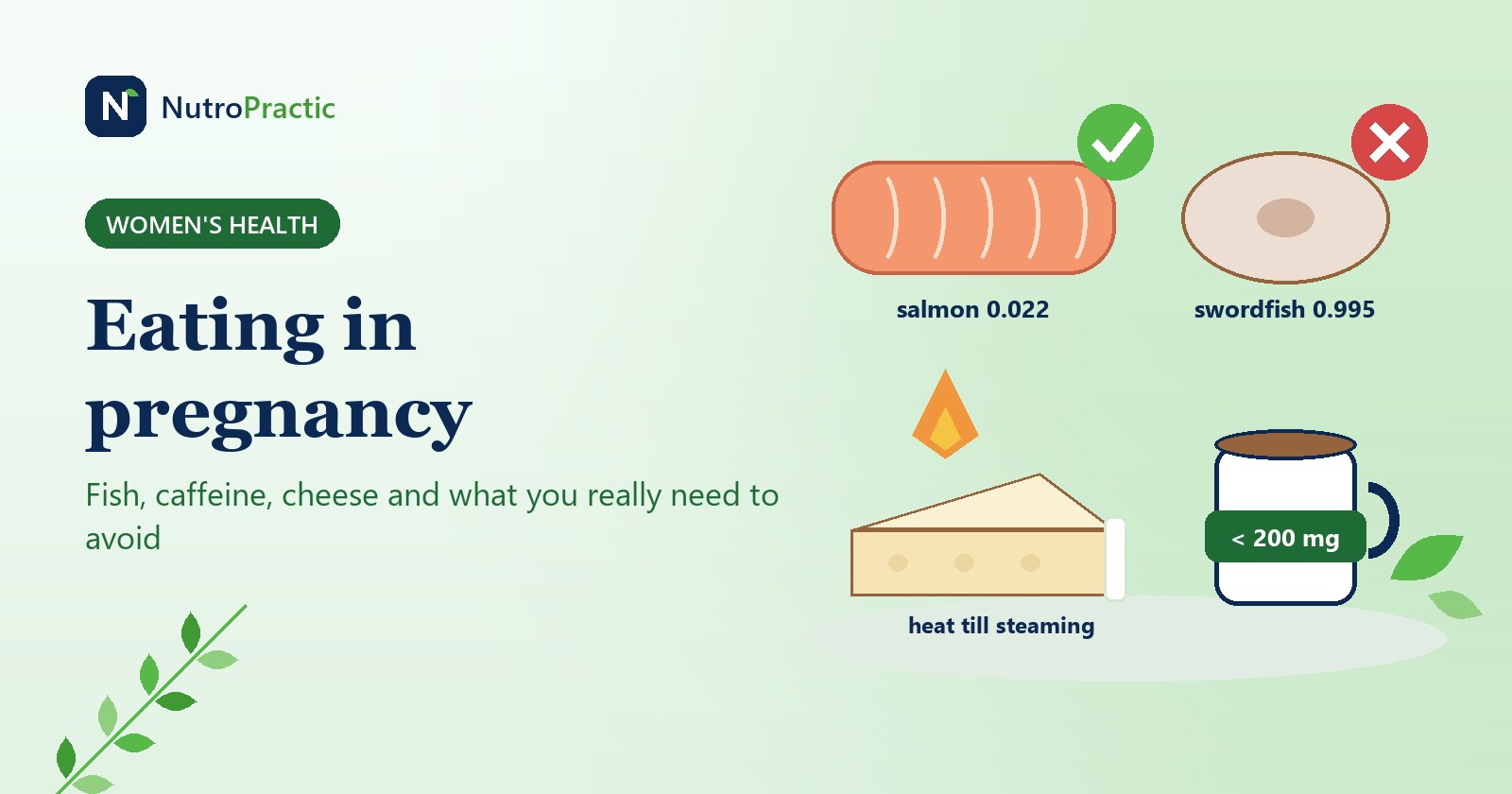
Eating in pregnancy: fish, caffeine, cheese and what you really need to avoid
Most fish is encouraged in pregnancy, not banned: 8-12 oz a week from the low-mercury list. The mercury numbers per fish, what 200 mg of caffeine looks like in real cups, which cheeses carry the listeria risk and how many cases there actually are, why liver is on the list, and how much weight to gain for your BMI.
29 Oct 2026
Lifestyle
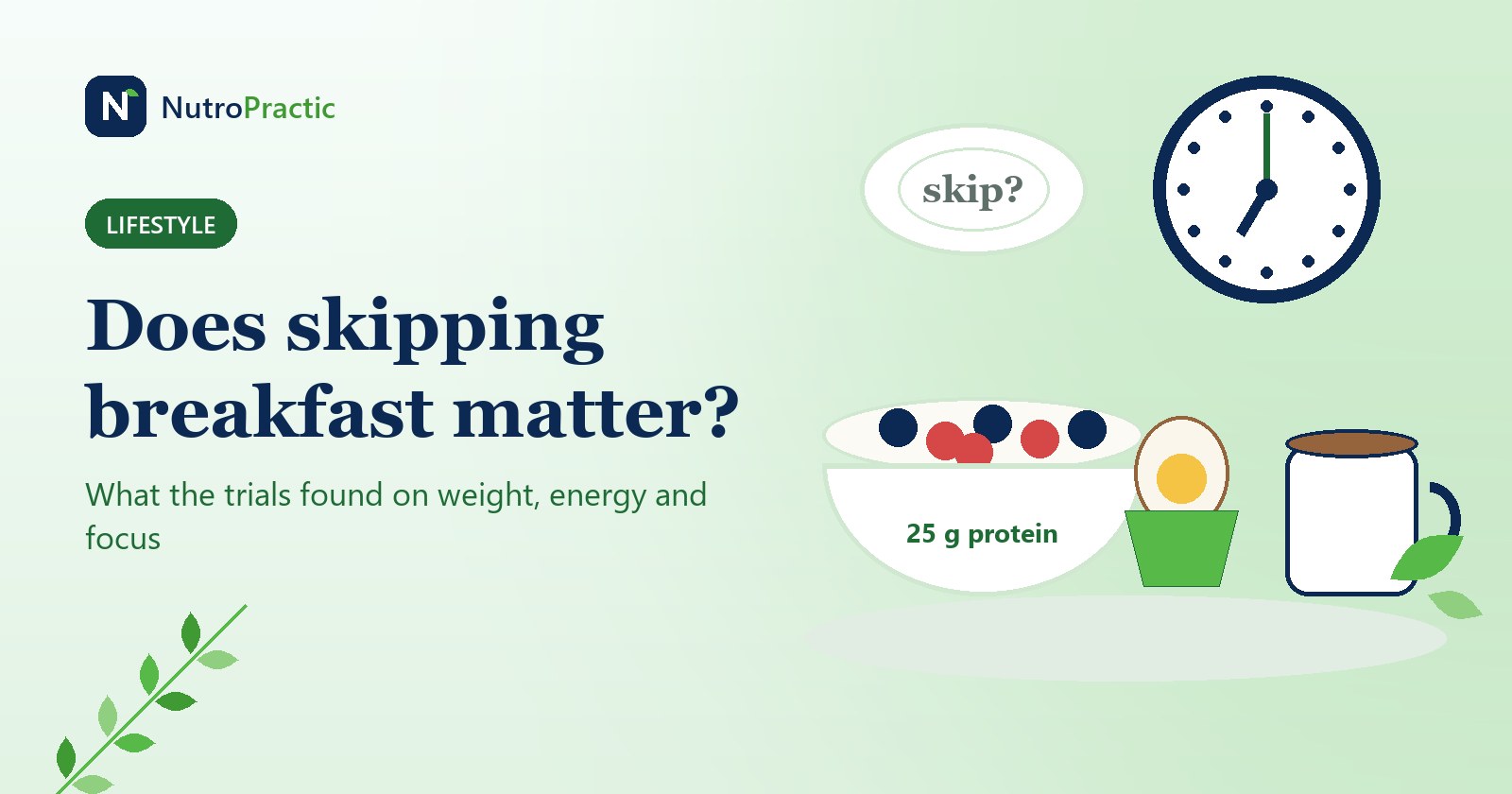
Does skipping breakfast matter? What the trials found on weight, energy and focus
In the trials, people told to eat breakfast ate about 260 kcal a day more and weighed 0.44 kg more, not less. What the Bath Breakfast Project measured on energy and activity, what school breakfast does for attention, why people with type 2 diabetes are the exception, and five breakfasts with 25 g of protein.
29 Oct 2026
Lifestyle
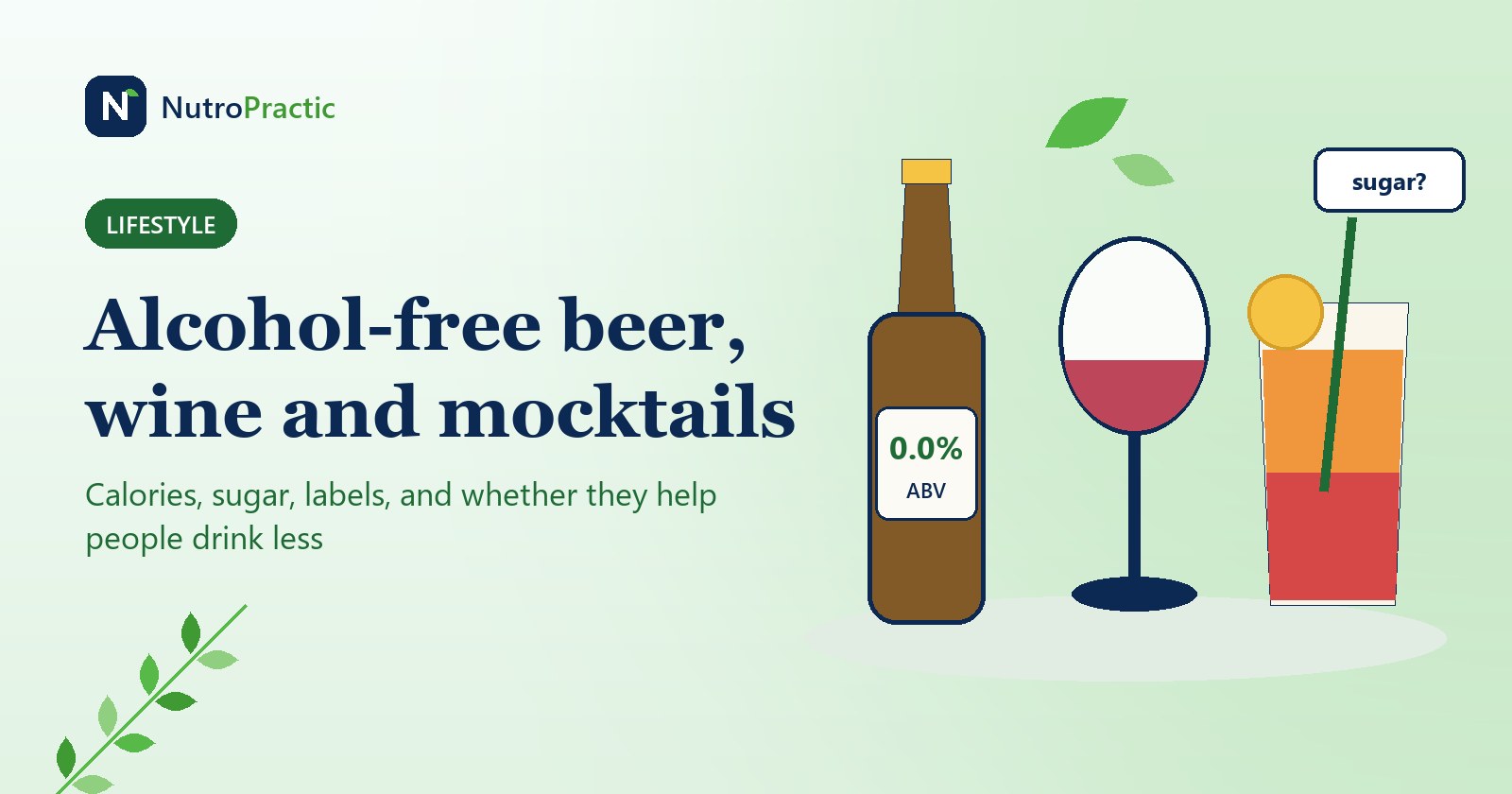
Alcohol-free beer, wine and mocktails: calories, sugar, and whether they help people drink less
A 0.0 lager has about half the calories of the regular one but more sugar, a juice-and-syrup mocktail can carry 37 g of sugar, and "alcohol-free" means 0.05% in the UK but under 0.5% in the US. What the labels say, and what pub, shop and Japanese trials found on whether these drinks cut how much alcohol people drink.
27 Oct 2026
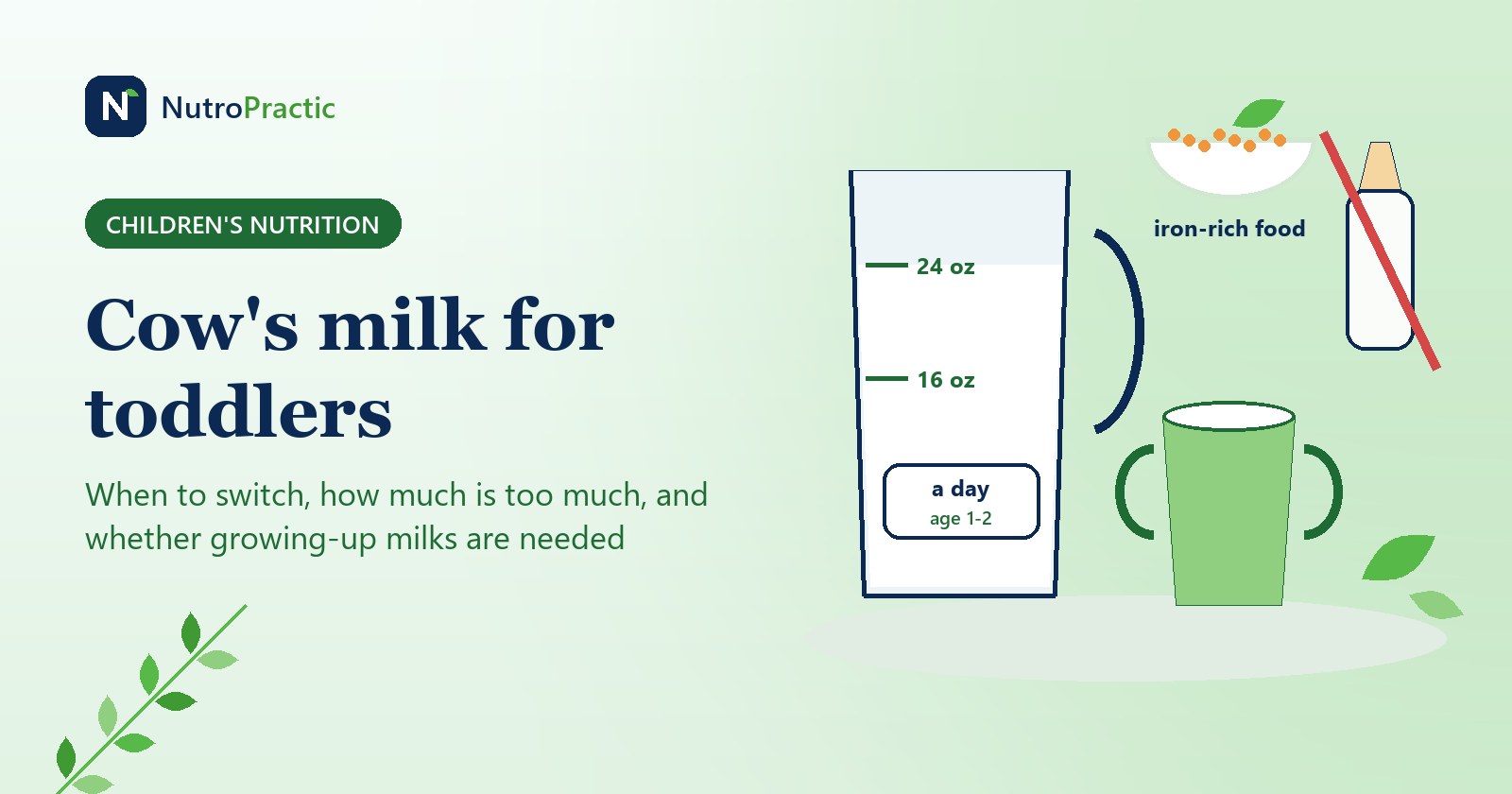
Children's nutrition
Cow's milk for toddlers: when to switch, how much is too much, and whether growing-up milks are needed
Whole milk as a drink from 12 months, about 2 cups a day, and no more than 24 oz or 750 ml: past that, milk crowds out the food that brings in iron. What the US, UK, Canadian, WHO and Indian guidance says, what the Toronto milk-and-iron study found, why toddler milks earn no place, and which plant milks work for under-5s.
27 Oct 2026
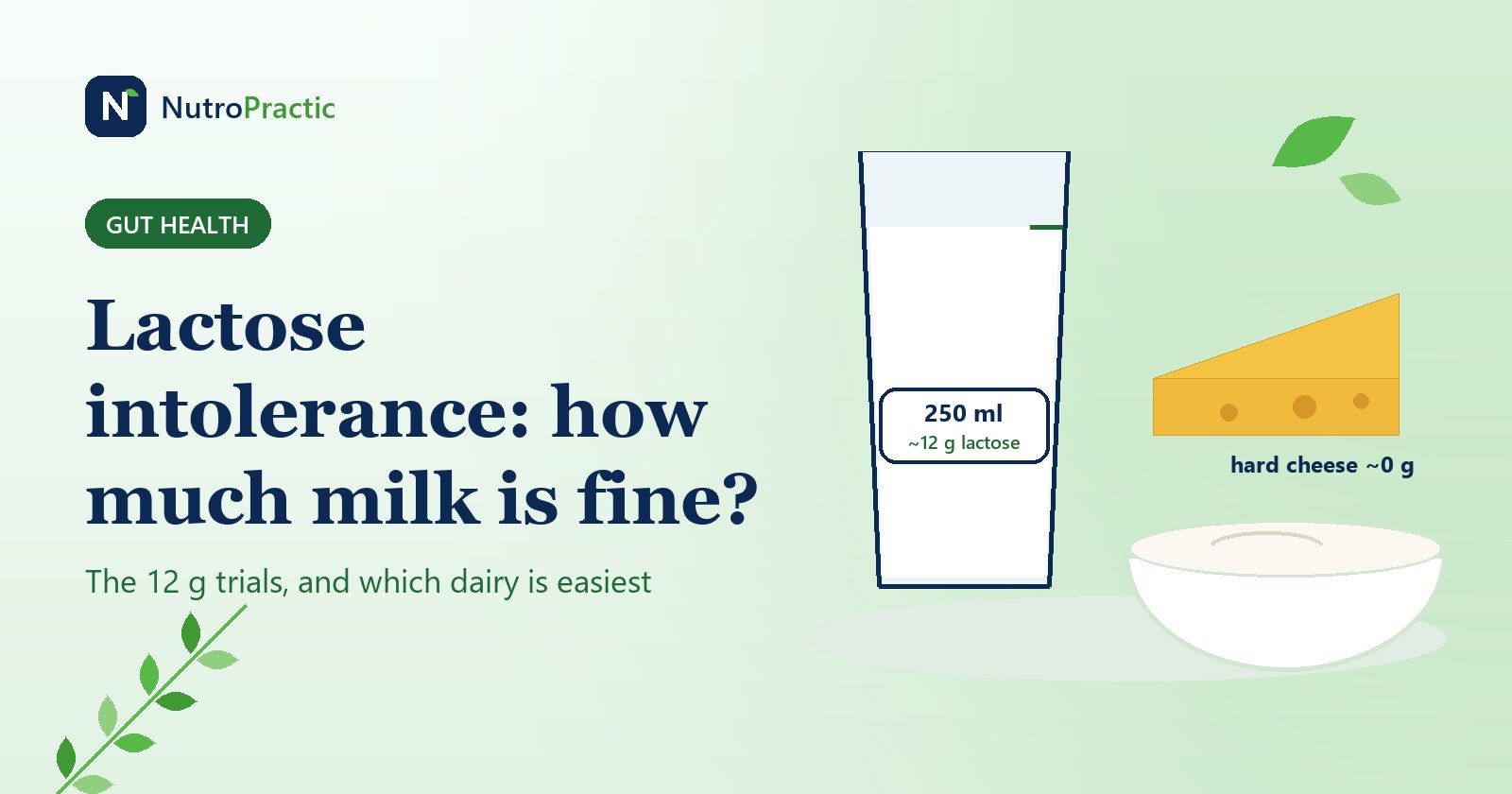
Gut health
Lactose intolerance: how much milk most people can actually tolerate, and which dairy is easiest
Most adults who don't digest lactose well still handle about 12 g at once, roughly a 250 ml glass of milk, in blinded trials. What the 12 g studies found, a lactose table for milk, yoghurt, cheese, chai and dahi, how lactase tablets and A2 milk compare, why the famous 68% figure was retracted, and how to keep calcium up if you cut back.
25 Oct 2026
Indian kitchen
Dal and pulses in an Indian kitchen: protein, soaking, gas and blood sugar
A katori of dal gives about 6 to 10 g of protein, depending on how much raw dal goes in. What India's food tables and the ICMR-NIN 2024 guidelines say about rice with dal, how much soaking, sprouting and pressure cooking cut phytate and the sugars behind the gas, the GI of chana dal and rajma, raw rajma safety, and a worked plate for diabetes.
25 Oct 2026
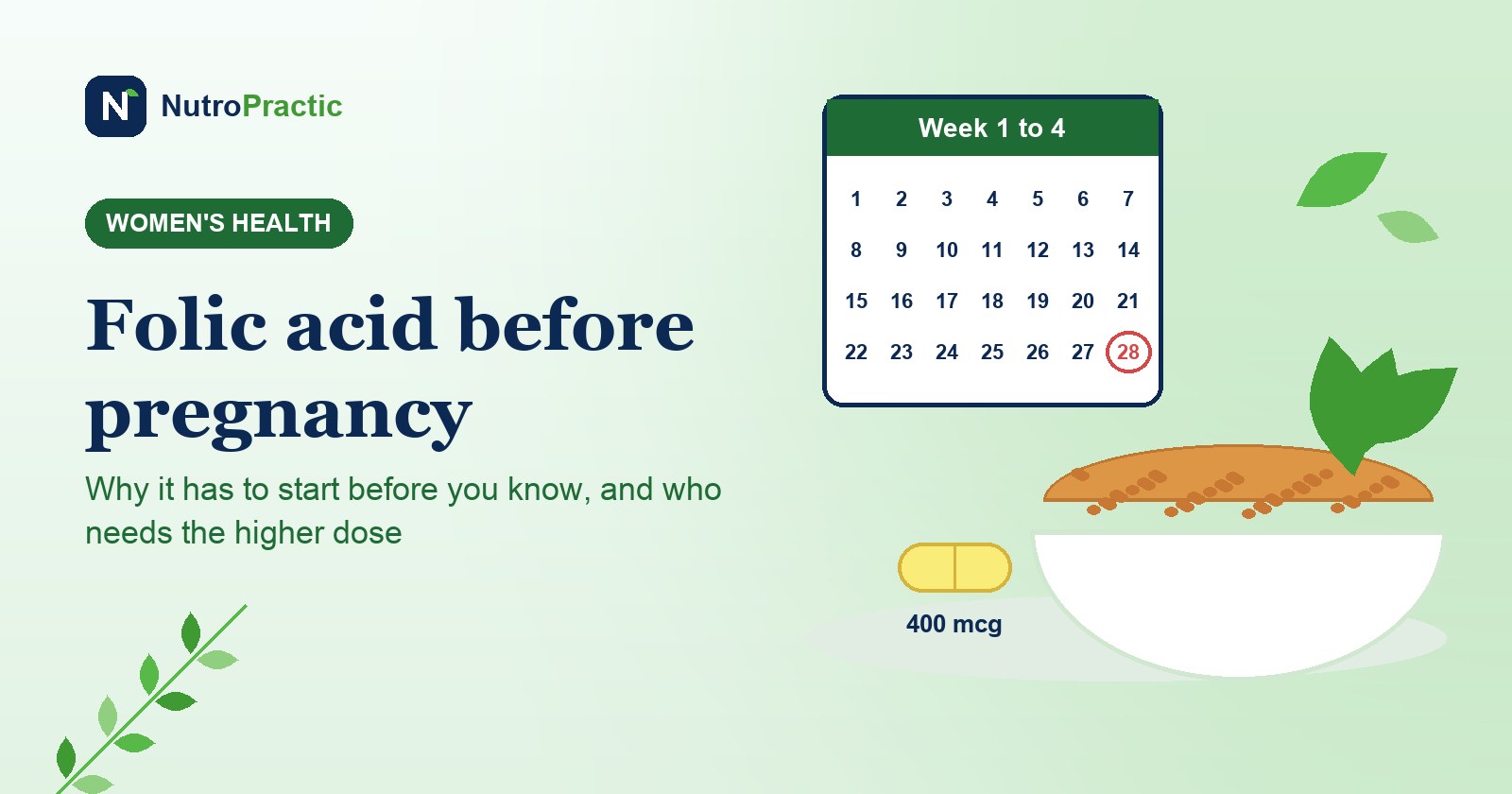
Women's health
Folic acid before pregnancy: why it has to start before you know, and who needs the higher dose
The neural tube closes 26 to 28 days after conception, about six weeks after the last period and before many people know they are pregnant. Folic acid cut neural tube defects by about 72% in the 1991 MRC trial, yet only about a third of women take it beforehand. The dose, who needs 4 or 5 mg, what changed for higher BMI, fortified flour from the US to the UK's 2026 law, folate foods and the B12 link.
25 Oct 2026
Heart health
Nuts and the heart: how many, which kind, and the weight worry
A 28 g handful of nuts a day went with 29% less coronary heart disease in pooled cohorts, and lowers LDL by about 5 mg/dL in trials. And the calories? USDA studies found the body keeps only 129 of an almond serving's 170 label calories. How much to eat, which nuts, Brazil nut limits, salt, and why nut eaters don't gain weight.
25 Oct 2026
Gut health
Constipation and food: kiwis, prunes, psyllium and what the head-to-head trials found
Two green kiwis a day added about 1.5 complete bowel movements a week in a 2023 trial across New Zealand, Italy and Japan, and beat psyllium overall; prunes beat psyllium in an earlier one. The doses the trials and the 2025 British dietitians' guideline used, what water, magnesium, coffee and rye bread add, IBS-C, isabgol, a four-week plan and the warning signs.
25 Oct 2026
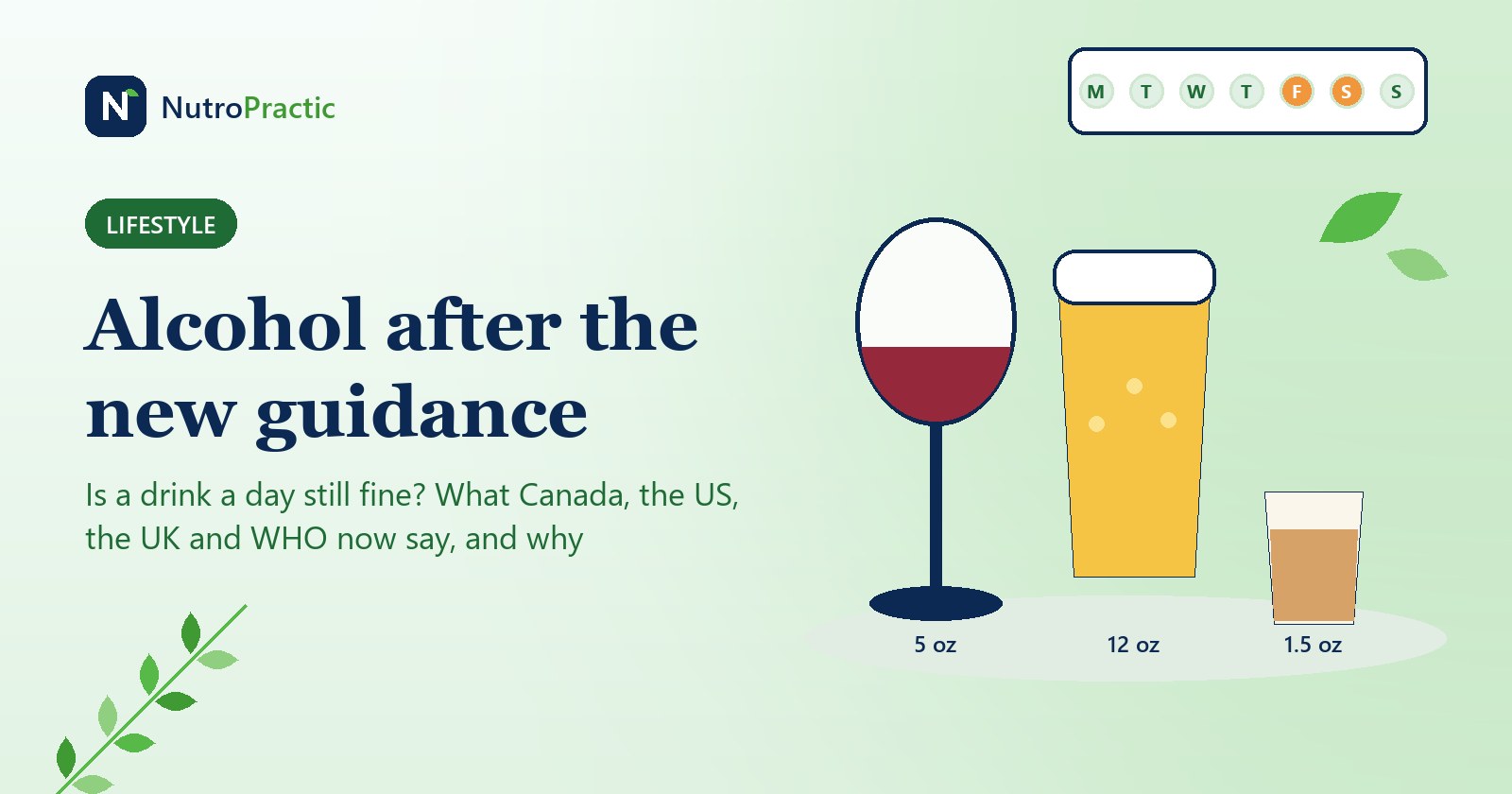
Lifestyle
Alcohol after the new guidance: is a drink a day still fine? What Canada, the US, the UK and WHO now say
Canada now calls two drinks a week low risk, the US Surgeon General linked alcohol to about 100,000 cancer cases a year, and the 2025-2030 US guidelines swapped their daily limits for "drink less". What the studies show about the J-curve, cancer, sleep and calories, with standard drinks by country.
23 Oct 2026
Children's nutrition
Peanuts, eggs and babies: why early introduction now prevents food allergy, from LEAP to today's advice
Parents were once told to keep peanuts away until age three. Then the LEAP trial found 17.2% of high-risk babies who avoided peanut were allergic at five, against 3.2% who ate it, and US peanut allergy diagnoses in toddlers have since fallen by about 43%. What the trials and guidelines say, with amounts, timing and the mistakes to avoid.
23 Oct 2026
Gut health
Heartburn and acid reflux: which food triggers the trials confirm, and what late meals, weight and a raised bed do
Up to 28% of North American adults get heartburn every week. Coffee showed no link across 15 studies, but going to bed within three hours of dinner came with 7.5 times the odds, a 1,000 kcal meal brought 65% more acid time than a 500 kcal one, and losing 3.5 BMI units cut the odds by about a third. What the trials say about food, weight, late meals and raising the bed, with a four-week plan.
22 Oct 2026
Everyday eating
Calories on the menu: what restaurant labelling studies found, and how to order well when eating out
Menu calorie labels arrived in the US in 2018 and England in 2022. Studies of millions of orders found drops of about 4 to 6%, and none at all in some places. What a restaurant meal really carries (977 kcal for a UK chain main course alone), a worked evening out, what eating out often does in long-term studies, and five ordering habits that save hundreds of calories.
22 Oct 2026
Children's nutrition
Feeding a teenage athlete: energy, iron, calcium and the sports drink question
Teenage athletes are growing and training at the same time, and under-eating (REDs) is found in up to 80% of female and 70% of male athletes in studies. A worked energy example for a 15-year-old footballer, protein and carbohydrate targets, iron and calcium in the growth spurt, when sports drinks help and when they are dessert, and the supplements to skip.
20 Oct 2026
Everyday eating
Eating well on a tight food budget: what the cost studies found, and the cheapest protein and fibre per dollar
Healthier diets cost about $1.48 a person a day more, according to a meta-analysis of 27 studies. What the USDA's Thrifty Food Plan costs in 2026, our price check of protein and fibre per dollar at September 2026 prices, why frozen and tinned vegetables are not second best, and a batch-cooked stew at $1.40 a serving.
20 Oct 2026
Heart health
Cooking oils: olive, seed oils, ghee and coconut, and what the trials actually compared
Olive oil is praised, seed oils are called toxic and ghee is said to be back. What PREDIMED compared, where the seed-oil argument from the Sydney and Minnesota trials comes from and why most evidence points the other way, what butter, ghee and coconut oil do to LDL, what smoke points tell you, how often to reuse frying oil, and where mustard and rice bran oil fit.
19 Oct 2026
Women's health
Hypothyroidism and food: soy, goitrogens, gluten and when to take levothyroxine
Food can't fix an underactive thyroid, but it can stop your tablet from working. When to take levothyroxine around breakfast, coffee, calcium and iron, what the studies say about broccoli, soy, selenium and gluten-free diets for Hashimoto's, and what to expect from your weight once treatment starts.
19 Oct 2026
Nutrition science
Sweeteners after the WHO advice: aspartame, stevia, erythritol and what the 2023 decisions meant
In 2023 the WHO advised against using sweeteners to control weight, and its cancer agency called aspartame 'possibly carcinogenic' a few weeks later. Neither means your diet drink is dangerous, and neither means it helps. What the reviews found, how much is allowed, why erythritol is the one to watch, and what to do if you have diabetes or simply want less sugar.
18 Oct 2026
Gut health
IBS and the low-FODMAP diet: what the trials show, and how to bring foods back
The low-FODMAP diet helps about half to three in four people with irritable bowel syndrome, and it was never meant to last. What IBS is, what to rule out first, what the trials found, the five FODMAP groups and their swaps, how reintroduction works, and the gentler first steps that work for many people without cutting anything out.
18 Oct 2026
Heart health
Eggs and cholesterol: what changed in the guidelines, and who should still count them
The US dropped its 300 mg cholesterol limit in 2015, then a 2019 study linked every extra half egg a day with more heart disease. Here is how much an egg really moves LDL, what the large studies found, why people with type 2 diabetes or high LDL may want a ceiling, and why what you eat with the egg matters more than the egg.
18 Oct 2026
Kidney health
Kidney stones and food: calcium, oxalate, salt, citrate and how much to drink
After a kidney stone, most people are told to cut out dairy. A five-year trial showed that low-calcium diets make calcium stones more likely to come back, not less. Here is what the evidence supports: how much to drink, why calcium belongs with meals, the few high-oxalate foods that matter, salt, meat, lemons, and the 24-hour urine test.
18 Oct 2026
Workplace wellness
Eating well at a desk job: what workplace wellness trials changed, and what didn't
Two large randomised trials found that classic workplace wellness programmes, with screenings, classes and rewards, changed almost nothing. Changing the food in front of people did: labels and placement, more good options, smaller defaults. Here is what the trials found, plus meeting food, desk lunches, the afternoon slump and the two-minute walk.
15 Oct 2026
Children's nutrition
A school lunchbox that keeps kids going until 3 pm: what studies on school meals found
Only 1.6% of packed lunches in an English survey met the standards school meals must meet, and only one in five held a vegetable. School meal studies in the US, UK and India show what changes when someone plans the plate. Here is what they found, a five-part lunchbox formula, a week of boxes and how to keep it safe until noon.
15 Oct 2026
Lifestyle
Food and sleep: what the trials found on late meals, kiwis, milk and caffeine
The foods with the biggest effect on sleep are the ones that take it away: coffee too late, a nightcap and a heavy dinner just before bed. The famous sleepy foods (kiwis, tart cherries, warm milk) rest on small studies. Here is what each one found, and an evening routine built on the parts that hold up.
15 Oct 2026
Everyday eating
How much water do you actually need? The 8 glasses myth and what the biggest water study found
Eight glasses a day was never based on a study. In 2022, researchers measured the water turnover of 5,604 people in 23 countries and found that needs vary far more than any rule allows. Here is how much most adults need to drink, what counts, why older people shouldn't wait for thirst, and when more (or less) really matters.
15 Oct 2026
Indian kitchen
Indian kitchen, steady sugar #1: rice, when you cook it far from home
For South Asian families in the UK, the US, Canada or Australia, the doctor's "cut down on rice" lands on the one food that makes dinner feel like home. Which rice to buy abroad, how much is a portion, and four changes that were measured in trials, without giving rice up.
12 Oct 2026
Diabetes
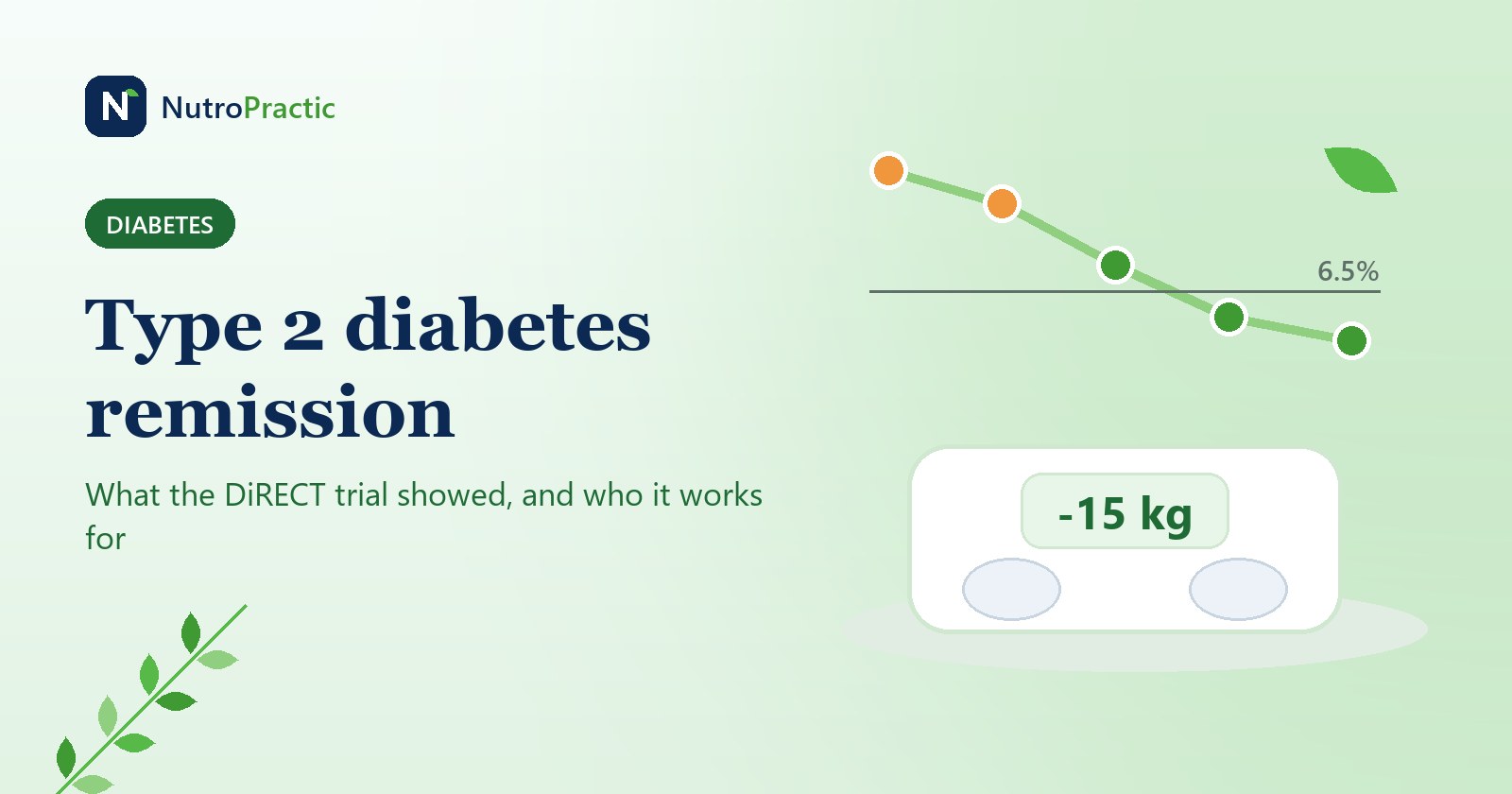
Type 2 diabetes remission through weight loss: what the DiRECT trial showed, and who it works for
Almost half of the people in one UK trial put their type 2 diabetes into remission in a year by losing weight. After five years it was 13%. What the trial did, why the amount of weight lost mattered more than the method, who it suits, and how to try it without hurting yourself.
11 Oct 2026

Healthy ageing
Creatine beyond the gym: what it does for older adults and women, and what it doesn't
Across 22 trials, adults in their late fifties to seventies who took creatine while doing resistance training gained about 1.4 kg more lean mass than those who trained without it. Two two-year trials found it did nothing for bone density after menopause. Where the evidence is solid, where it's early (memory, short nights), how much to take, and who should leave it alone.
10 Oct 2026
Heart health
Omega-3: oily fish, walnuts or capsules? What the big trials found
A daily fish-oil capsule did not lower heart attacks and strokes overall in a trial of 25,871 Americans, yet a prescription dose of one omega-3 cut them by a quarter in another. Both results are real. What separates them, why a handful of walnuts is not the same thing as a piece of salmon, how much fish a week is enough, and what to do if you don't eat fish at all.
10 Oct 2026
Gut health
Fibermaxxing without the bloat: a two-week plan that adds 4 grams at a time
Going from 15 grams of fibre to 40 overnight is how most people end up bloated by Wednesday and back on white toast by Friday. What the bean studies and an MRI trial show about gas, and a 14-day ramp that gets you to about 30 grams with a quiet gut.
10 Oct 2026
Heart health
Salt, potassium and blood pressure: what the DASH trials and the salt-substitute studies showed
In the DASH-Sodium trial, a better diet with less salt lowered systolic blood pressure by 11.5 points in people with hypertension, about what one tablet does. A potassium-enriched salt cut strokes by 14% in a 21,000-person trial. What those studies tested, where the sodium in your day really comes from, and swaps that don't make dinner taste of nothing.
10 Oct 2026
Micronutrients
Iron for women: why so many run low, and how to absorb more from the food you already eat
Nearly four in ten American girls and young women are short of iron, and most of them aren't anaemic, so a routine blood count misses it. What ferritin tells you, why the plate matters as much as the number on the label, and the small timing changes (lemon in, tea later) that get more iron out of the same meal.
10 Oct 2026
Gut health
Fermented foods and your gut: what one Stanford trial found, and which jars still have anything alive in them
In a 10-week Stanford trial, about six servings a day of yogurt, kefir, kimchi and kombucha made gut bacteria more diverse and lowered 19 inflammation markers. A high-fibre diet didn't, at least not in 10 weeks. What that does and doesn't prove, why your sourdough and shelf-stable sauerkraut don't count, and an easy way to eat more of the real thing.
8 Oct 2026
Women's health
Eating through menopause: what changes for your bones, muscle and heart, and what to put on the plate
Around the final period, bone density at the spine drops by about 2% a year and LDL cholesterol jumps within a year or two. Hot flushes get the attention, but these quieter changes are where food and strength training do the most. Targets for protein, calcium and vitamin D, an honest look at soy, and a week you can start on Monday.
8 Oct 2026
Weight-loss medicines
Eating on Ozempic, Wegovy or Mounjaro: protein first, so the weight you lose isn't your muscle
GLP-1 medicines shrink your appetite, and with it often your protein. In the big trials a quarter to more than a third of the weight lost was lean mass. What the 2025 joint nutrition advisory recommends, the arithmetic for your own target, and four small plates that get there.
8 Oct 2026
Global data
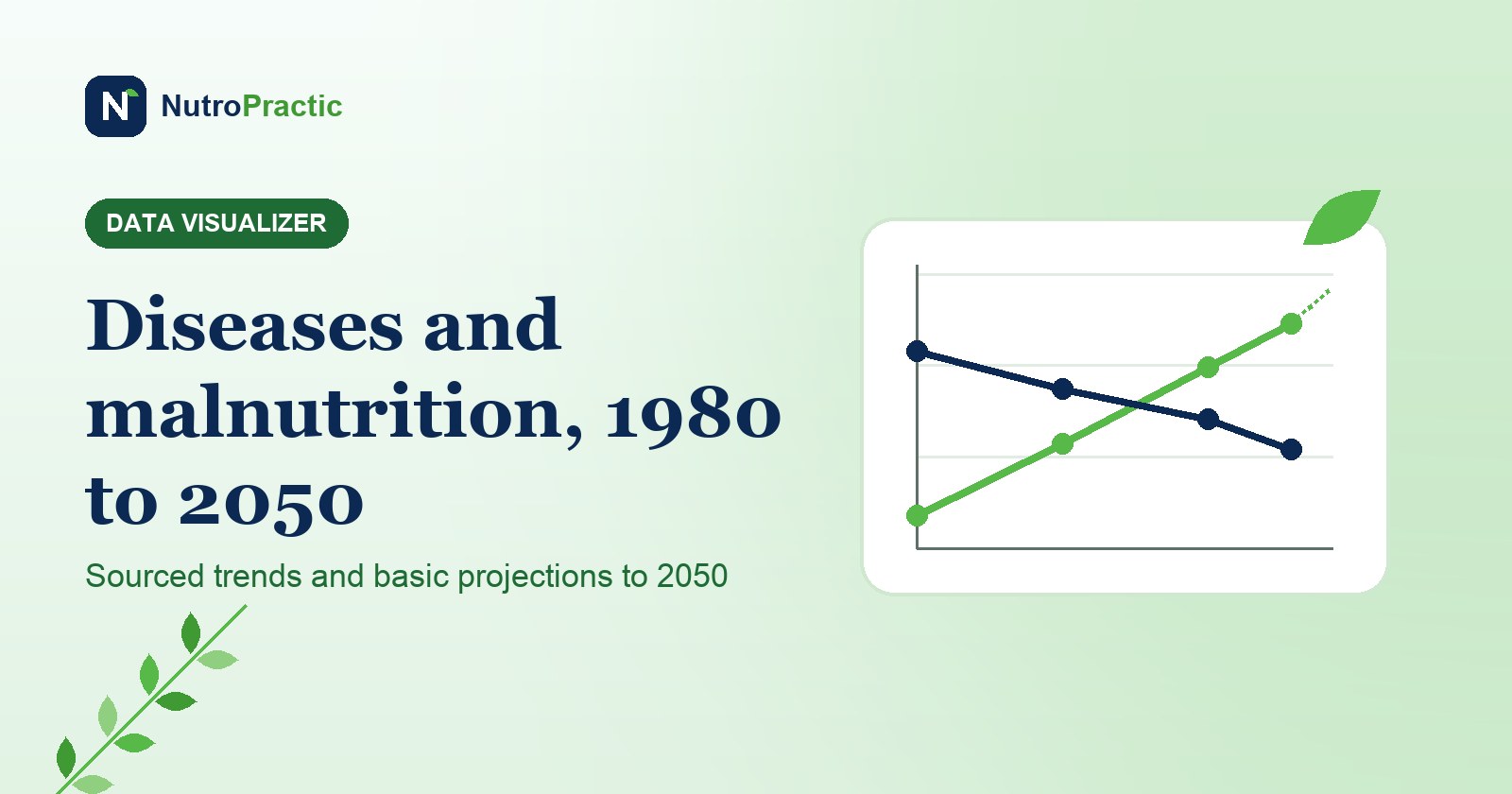
Diabetes, obesity, child malnutrition and hunger, 1980 to 2050: what the numbers show
How diabetes, obesity, child malnutrition and hunger have changed since 1980, with sourced figures and a basic projection to 2050. Click a condition to explore the chart and its facts.
5 Oct 2026
Indian kitchen
Rice, roti and blood sugar: building a balanced Indian plate with the ICMR-NIN 2024 guidelines
About one in nine Indian adults has diabetes and many more have prediabetes. You don't have to give up rice or roti. How the ICMR-NIN Dietary Guidelines for Indians (2024) suggest building a plate, plus simple habits that help keep blood sugar steady.
3 Oct 2026
Micronutrients
Vitamin D and B12: two common gaps, from northern winters to vegetarian kitchens
Vitamin D runs low in Canadian and European winters, and surprisingly often in sunny India too. Vitamin B12 is a risk for vegetarians, people over 50 and people on certain medicines. Who is at risk, what the official advice is in North America, Europe and India, and where to get both.
3 Oct 2026
Nutrition science
Ultra-processed foods: what the evidence says, and a realistic way to eat fewer
Ultra-processed foods now make up more than half of the calories eaten in the US and the UK. What counts as ultra-processed, what a landmark NIH trial and a 2024 BMJ review found, where the science is still uncertain, and simple swaps that don't require cooking everything from scratch.
3 Oct 2026
Everyday eating
The fibre gap: why most adults fall short, and an easy 30-gram day
Most adults in the US, Canada and Europe eat far less fibre than recommended, even though higher intakes are linked to lower rates of heart disease, type 2 diabetes and bowel cancer. How much you need, where it hides, and a sample day that gets you to 30 grams.
3 Oct 2026
Healthy ageing
Protein after 40: how much you really need, and why timing matters
The standard protein target was set to prevent deficiency, not to protect muscle as you age. What the research and expert groups suggest for adults over 40, how to spread protein across the day, and easy ways to hit 25 to 30 grams at breakfast.
3 Oct 2026
From the newsfeed
Nutrition research, analysed
A new analysis every hour: what a recent study found, the numbers behind it and the sources to check.
Clinical nutrition & ergogenic aids · November 23, 2026
Creatine shows solid strength and cognitive benefits, but umbrella review finds critical methodological flaws in the literature
An umbrella review of 45 meta-analyses confirmed creatine improves muscle strength, lean mass, and selected cognitive tasks, but warned that nearly half of published reviews suffer from critically low methodological quality.
Read the analysis
Cardiovascular health & public nutrition · November 23, 2026
88% of adults in Thailand exceed daily sodium limits while potassium excretion remains dangerously low
A nationwide survey using gold-standard 24-hour urine collections found Thai adults consume nearly double the World Health Organization sodium ceiling, driven by packaged seasonings, while eating very little dietary potassium.
Read the analysis
Sports nutrition & exercise physiology · November 23, 2026
Dietary glutathione correlates with aerobic fitness in athletes, but disappears once total calories and age are factored in
A study of 135 collegiate and masters athletes found that while eating more glutathione-rich foods initially seemed to track with higher VO2 max, the link vanished once age, sex, and total calorie intake were accounted for.
Read the analysisStart with a virtual consultation
Tell Dr. Triveni what you want to change. You will leave with a clear next step, whether you are in Toronto, London, New York or Chennai.