Most people assume raw vegetables are always healthier than cooked ones. With tomatoes, the opposite is true. Lycopene, the vivid red carotenoid pigment concentrated in tomato skins and flesh, is tightly trapped inside rigid plant cell walls and crystalline chromoplasts. Eating a raw tomato yields only a tiny fraction of its potential antioxidant power because your digestive tract struggles to unlock it.
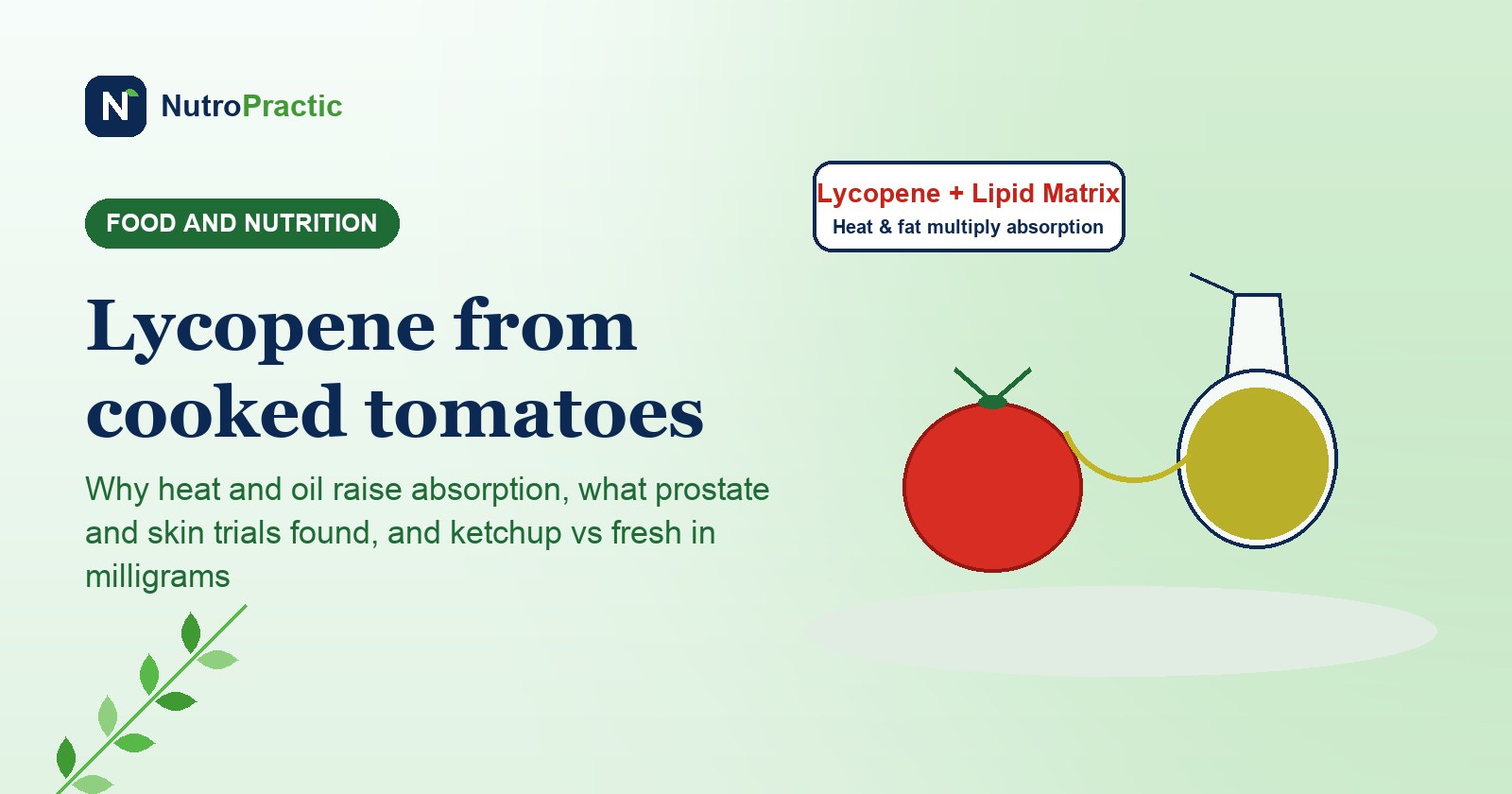
When you simmer tomatoes with a splash of olive oil, food chemistry changes everything. Thermal breakdown and dietary fats transform linear all-trans lycopene into bent cis-isomers that dissolve smoothly into lipid micelles, boosting circulating blood levels by two to three times. Here is what clinical trials show about prostate health and skin protection, how milligrams compare across sauces and ketchup, and how to cook for maximum absorption.
The food matrix: why heat and olive oil unlock lycopene
Lycopene is an acyclic carotenoid with 11 conjugated double bonds. In raw, vine-ripened tomatoes, more than 90% of lycopene exists as the linear all-trans geometric isomer. In this shape, lycopene forms rigid crystalline aggregates within plant chromoplasts that resist enzymatic breakdown in the human stomach.
Two physical steps are required to make it bioavailable:
- Heat ruptures cellular walls (thermal isomerization): Simmering tomatoes above 80°C weakens cellular matrices and induces stereochemical conversion into cis-isomers (primarily 5-cis, 9-cis, and 13-cis). Cis-isomers are shorter, less prone to crystallization, and substantially more soluble in lipid droplets.
- Lipids build the delivery vehicle (micellar incorporation): Carotenoids are strictly fat-soluble (log P ~ 15). To cross the intestinal mucosa, lycopene must be incorporated into mixed bile salt and phospholipid micelles. Without dietary fat, unabsorbed lycopene simply passes directly through the stool.
- The clinical trial numbers (Gartner et al. 1997 / Fielding et al. 2005): In a landmark crossover study published in the American Journal of Clinical Nutrition, human volunteers consuming tomato paste cooked with olive oil achieved 2.5 to 3.8 times higher plasma lycopene area under the curve (AUC) than those consuming fresh, raw tomatoes providing an identical milligram dose. Even modest culinary fat (3 to 5 grams of extra virgin olive oil per serving) was sufficient to drive complete micelle saturation.
Milligrams in the kitchen: paste, puree, ketchup vs fresh
Because industrial processing evaporates water and concentrates tomato solids, processed tomato products are significantly denser in lycopene than raw produce:
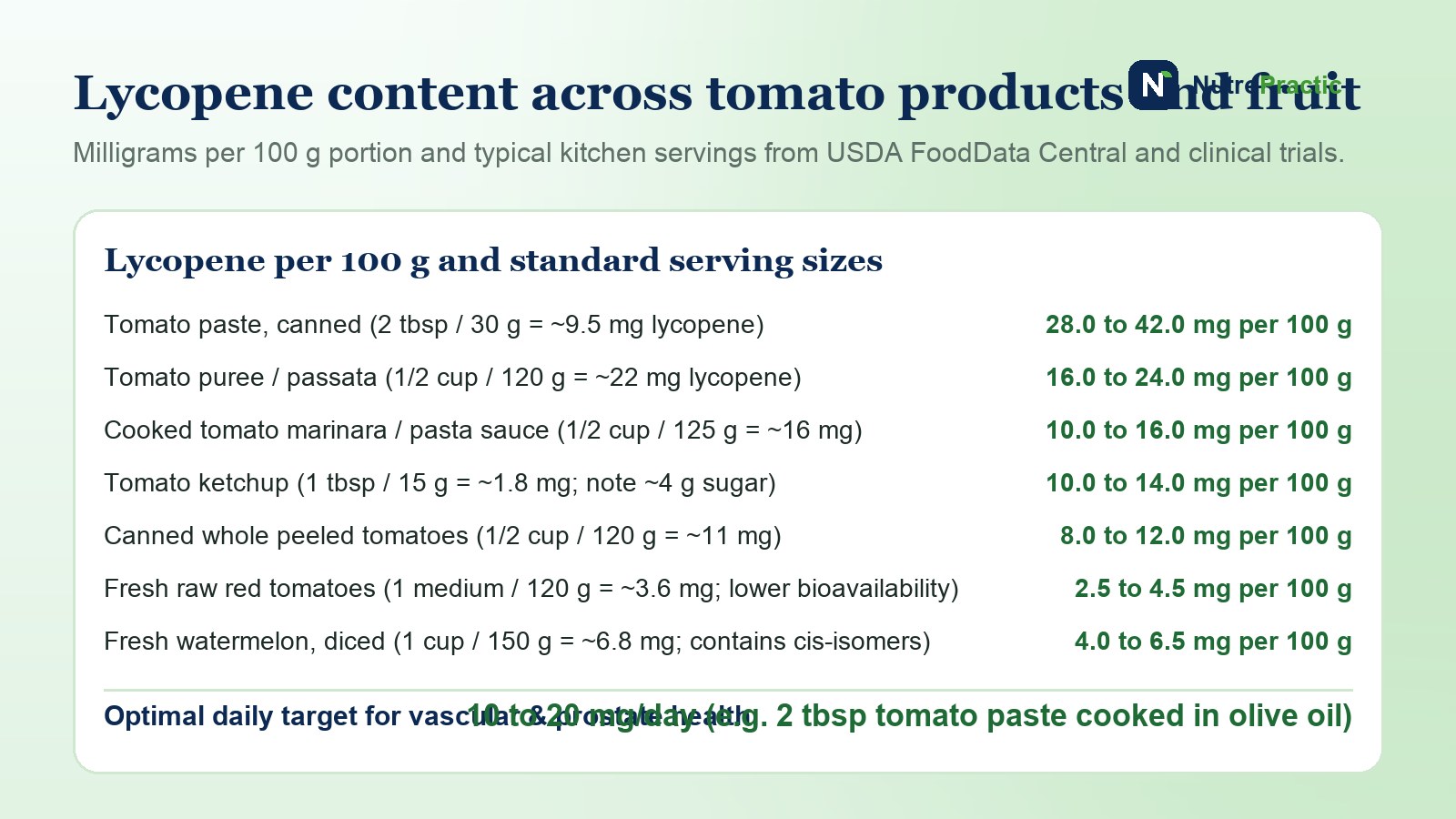
| Food item | Typical kitchen serving | Lycopene per serving | Lycopene per 100 g |
|---|---|---|---|
| Tomato paste (canned) | 2 tablespoons (30 g) | 9.0 to 12.5 mg | 30.0 to 42.0 mg |
| Tomato puree / passata | 1/2 cup (120 g) | 19.0 to 26.0 mg | 16.0 to 22.0 mg |
| Cooked marinara / pasta sauce | 1/2 cup (125 g) | 12.5 to 18.0 mg | 10.0 to 15.0 mg |
| Canned crushed / diced tomatoes | 1/2 cup (120 g) | 9.5 to 14.0 mg | 8.0 to 12.0 mg |
| Tomato ketchup | 1 tablespoon (15 g) | 1.5 to 2.1 mg | 10.0 to 14.0 mg |
| Fresh raw red tomato | 1 medium fruit (120 g) | 3.0 to 5.0 mg (<20% absorbed) | 2.5 to 4.2 mg |
| Fresh watermelon | 1 cup diced (150 g) | 6.5 to 9.5 mg | 4.5 to 6.5 mg |
| Pink grapefruit | 1/2 fruit (120 g) | 1.4 to 2.2 mg | 1.2 to 1.8 mg |
Notice the massive difference in culinary efficiency. Just two tablespoons of tomato paste stirred into a stew or curry provide around 10 mg of bioavailable lycopene. To match that from fresh raw salad tomatoes, you would need to eat between three and four whole medium tomatoes, and your body would still absorb far less of it.
What about ketchup? Ketchup is surprisingly high in lycopene per gram (~12 mg/100 g) because it is manufactured from concentrated tomato paste. However, commercial ketchup typically contains 4 grams of added sugar per tablespoon (about 25% to 30% sugar by weight), alongside high sodium. Using tomato paste or passata with olive oil, garlic, and herbs delivers the carotenoid density without the sugar spike.
What the prostate cancer research actually found
Lycopene's association with men's health is one of the most extensively studied relationships in nutritional oncology:
- Harvard Health Professionals Follow-Up Study (Giovannucci et al. 1995 & 2002): In a cohort of 47,894 male health professionals tracked over 12 to 20 years, men consuming two or more servings of tomato sauce per week had a 23% lower risk of prostate cancer compared to those eating less than one serving per month. For aggressive, advanced-stage, or metastatic prostate cancer, the risk reduction reached 35% to 50%.
- The cooked vs raw contrast in the cohort: Tellingly, the risk reduction was driven almost entirely by cooked tomato products (tomato sauce, canned tomatoes, and pizza sauce). Raw fresh tomatoes, tomato juice, and ketchup showed weak or non-significant protective associations, matching the bioavailability kinetics seen in metabolic wards.
- Chen et al. 2015 meta-analysis (Medicine): A systematic review of 26 studies involving 17,517 prostate cancer cases found that higher dietary intake of lycopene was associated with a 9% risk reduction, while higher circulating blood serum lycopene (reflecting true absorption) showed a statistically robust 18% lower risk (relative risk 0.82; 95% CI: 0.74 to 0.91).
- Mechanisms of action: Lycopene preferentially accumulates in prostate tissue (at concentrations 5 to 10 times higher than in liver or lung). In preclinical models, it suppresses insulin-like growth factor 1 (IGF-1) signaling, downregulates androgen receptor expression, upregulates antioxidant response element (ARE) enzymes via Nrf2, and inhibits matrix metalloproteinases involved in tumor angiogenesis.
Skin photoprotection: internal sunscreen from the pan
Lycopene is also a potent singlet oxygen quencher in dermal tissue. In clinical trials by Stahl et al. (Journal of Nutrition 2001, American Journal of Clinical Nutrition 2006):
- Volunteers consumed 40 grams of tomato paste daily (providing 16 mg of lycopene) along with 10 grams of olive oil for 10 to 12 weeks.
- When exposed to calibrated solar simulators, participants in the tomato paste group experienced a 32% to 40% reduction in UV-induced erythema (skin redness and sunburn severity) compared to control subjects eating only olive oil.
- The clinical perspective: Dietary lycopene behaves like a systemic, mild biological shield (equivalent to an internal SPF of approximately 1.3 to 2.0). It mitigates baseline mitochondrial DNA damage and photoaging from everyday sunlight, but it does not replace topical broad-spectrum sunscreen for intense sun exposure.
Cardiovascular and endothelial benefits
Beyond oncology and dermatology, circulating lycopene directly influences vascular tone:
- Endothelial function (Gajendragadkar et al. 2014, PLOS ONE / Cambridge University): In a randomised, double-blind trial of patients with cardiovascular disease, oral lycopene (7 mg daily for 2 months) improved endothelium-dependent vasodilation (EDV) by 53%, as measured by forearm plethysmography, normalizing vascular reactivity to levels seen in healthy controls.
- LDL oxidation and stroke risk (Karppi et al. 2012, Neurology): In a Finnish prospective cohort of 1,031 middle-aged men followed for 12 years, men in the highest quartile of serum lycopene had a 55% lower risk of stroke and a 59% lower risk of ischemic stroke compared to those in the lowest quartile.
Why pills fail where food succeeds
When researchers tested isolated synthetic lycopene supplements in clinical trials (such as the SU.VI.MAX trial and SELECT trial ancillary cohorts), the dramatic preventive effects observed in tomato-eating populations largely evaporated. Why?
- Carotenoid synergy: Whole tomatoes do not deliver lycopene alone. They contain a complex matrix of colorless carotenoids (phytoene and phytofluene), beta-carotene, vitamin C, potassium, and protective flavonoids such as rutin and naringenin. In human intestinal cell models, phytofluene enhances lycopene micellization and cellular uptake.
- Synthetic isomer purity: Most cheap synthetic lycopene tablets contain 100% all-trans isomer, lacking the cis-isomers created during kitchen simmering.
- Lycopenemia: Taking massive isolated supplement doses (>30 to 50 mg/day for several weeks) can saturate adipose tissue and skin, causing a harmless orange-yellow tinting of the palms and soles known as lycopenemia. Getting your 10 to 20 mg daily from food avoids excessive accumulation while maximizing dietary enjoyment.
What we'd do: the practical kitchen rules
- The 2-tablespoon paste habit: Add 2 tablespoons of concentrated tomato paste to soups, dals, bean stews, Shakshuka, or pasta sauces at least 3 to 4 times a week. That single step delivers 20 to 30 mg of lycopene weekly in its most bioavailable form.
- Always add fat to the pan: Never boil or steam tomatoes in plain water alone. Sauté with 1 to 2 teaspoons of cold-pressed extra virgin olive oil or ghee. The dietary lipids build the micelles your enterocytes need for uptake.
- Enjoy raw tomatoes for vitamin C, cooked for lycopene: Raw tomatoes in a fresh summer salad provide intact vitamin C and refreshing hydration. Cooked passata and canned tomatoes provide lycopene. You don't have to choose one over the other; use each for its distinct biological strength.
- Pair with mineral-rich foods: For cardiovascular and blood-pressure wellness, pair cooked tomato sauces with potassium-rich greens. Check our potassium from food guide and our dietary nitrate and blood pressure review to see how mineral balance supports arterial elasticity.
Looking to optimize your diet for cardiovascular longevity, prostate health, or metabolic wellness with evidence-based, customized food strategies? Dr. Triveni provides comprehensive virtual nutrition consultations.
Book a consultationThis article is general nutritional information, not medical advice. Consult your physician regarding cancer screening, prostate symptoms, or medical management of cardiovascular conditions.
Sources
Gartner C., Stahl W., Sies H., Lycopene is more bioavailable from tomato paste than from fresh tomatoes, Am J Clin Nutr 1997;66(1):116-122 (PubMed 9209178); Fielding J.M. et al., Increases in plasma lycopene concentration after consumption of tomatoes cooked with olive oil, Asia Pac J Clin Nutr 2005;14(2):131-136 (PubMed 15927929); Giovannucci E. et al., Intake of carotenoids and retinol in relation to risk of prostate cancer, J Natl Cancer Inst 1995;87(23):1767-1776; Giovannucci E. et al., A prospective study of tomato products, lycopene, and prostate cancer risk, J Natl Cancer Inst 2002;94(5):391-398; Chen P. et al., Lycopene and risk of prostate cancer: a systematic review and meta-analysis, Medicine (Baltimore) 2015;94(33):e1260; Stahl W. et al., Dietary tomato paste protects against ultraviolet light-induced erythema in humans, J Nutr 2001;131(5):1449-1451; Gajendragadkar P.R. et al., Effects of oral lycopene in established cardiovascular disease: a randomised, double-blind, placebo-controlled trial, PLOS ONE 2014;9(6):e99070; Karppi J. et al., Serum lycopene decreases the risk of stroke in men: a population-based follow-up study, Neurology 2012;79(15):1564-1570; USDA FoodData Central (Tomato paste, FDC ID 170461; Tomato puree, FDC ID 170462; Tomatoes, red, ripe, raw, FDC ID 170457). Read 20 Nov 2026.