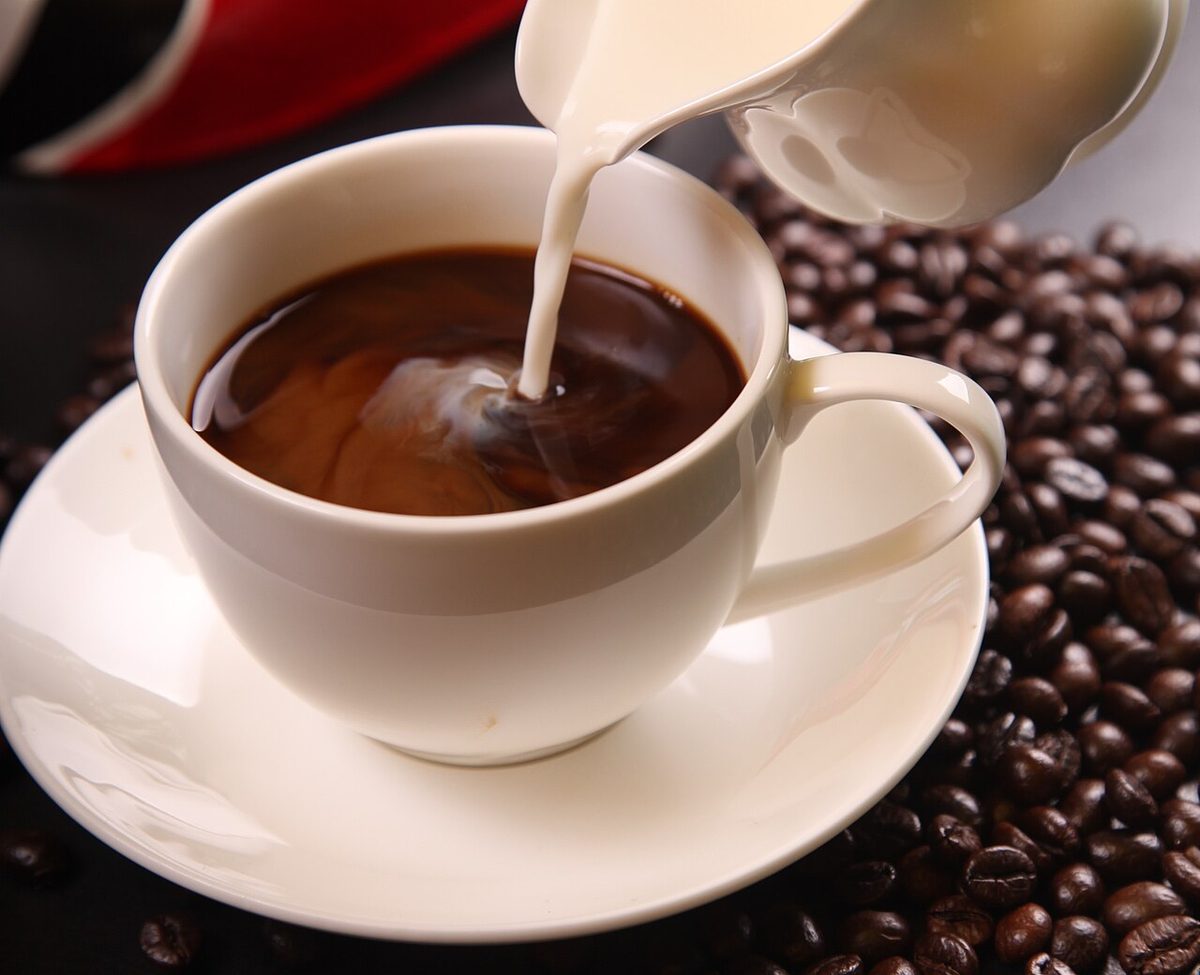
Millions of people turn to caffeine every morning to clear brain fog and power through demanding work. Yet caffeine is a blunt instrument. While it effectively blocks adenosine receptors to keep you awake, moderate to high doses frequently trigger side effects: autonomic tremors, accelerated heart rates, attentional restlessness, and a steep afternoon crash.
For centuries, Japanese tea masters and Buddhist monks noted that shade-grown green teas created a distinctly different state of consciousness: alert, clear, and calm, without the agitation of coffee. Over the past two decades, neuroscientists and nutritional pharmacologists isolated the biochemical driver of this effect: L-theanine (gamma-glutamylethylamide), a non-proteinogenic amino acid unique to the tea plant (Camellia sinensis). When combined in clinical ratios, L-theanine and caffeine demonstrate true synergistic nootropic activity. Here is what double-blind human trials measured, what happens to EEG alpha brain waves, and how many milligrams sit in ceremonial matcha, culinary powder, gyokuro, and sencha.
The cognitive trials: what happens when L-theanine meets caffeine
Most dietary supplement combinations fail rigorous clinical testing. The combination of L-theanine and caffeine is one of the rare exceptions, backed by multiple randomized, double-blind, crossover human trials testing cognitive performance under demanding conditions:
- Owen et al. (2008) — Attentional switching and distractibility: In a study published in Nutritional Neuroscience, researchers administered 50 mg caffeine alone, 100 mg L-theanine alone, the combination of both, or placebo to healthy adults undergoing 90 minutes of continuous cognitive testing. The combination significantly improved attentional task-switching accuracy at 60 and 90 minutes (p < 0.05) and reduced susceptibility to distracting background stimuli, an effect neither compound achieved in isolation.
- Haskell et al. (2008) — Working memory and visual processing: Published in Biological Psychology, this landmark trial tested 250 mg L-theanine with 150 mg caffeine. Participants demonstrated statistically significant improvements in Rapid Visual Information Processing (RVIP) reaction times, numeric working memory accuracy, and sentence verification speed. Crucially, the combination eliminated the self-reported headache and mental fatigue commonly observed when caffeine wore off.
- Giesbrecht et al. (2010) — Realistic dietary doses: Testing a practical ratio closer to natural tea (97 mg L-theanine combined with 40 mg caffeine), researchers found marked improvements in task-switching accuracy within the first 20 minutes, alongside significantly elevated subjective ratings of 'alert' and decreased feelings of tiredness and mental exhaustion.
Neurophysiology: EEG alpha oscillations and jitter buffering
Why does adding an amino acid fundamentally alter the stimulant experience? The mechanisms operate on central neurotransmission and brain electrical rhythms:
- Alpha brain wave generation (8 to 14 Hz): In a seminal EEG study led by Dr. Anna Nobre (2008) and high-density mapping by Gomez-Ramirez et al. (2007, 2009), oral L-theanine crossed the blood-brain barrier intact and induced significant increases in parieto-occipital alpha-band power. In neurophysiology, alpha rhythms do not signify sleepiness; rather, they reflect the brain's top-down sensory gating mechanism—actively suppressing irrelevant sensory inputs so attentional networks can focus without distraction.
- Glutamate receptor antagonism: L-theanine is a structural analogue of glutamate, the primary excitatory neurotransmitter. It binds weakly to ionotropic glutamate receptors (AMPA, kainate, NMDA), acting as a gentle competitive inhibitor. This prevents excessive neuronal hyper-excitation and excitotoxicity.
- Cardiovascular and blood pressure antagonism: Caffeine triggers peripheral vasoconstriction by antagonizing adenosine A1 and A2A receptors, elevating systolic and diastolic blood pressure. Rogers et al. (2008) demonstrated that 200 mg of L-theanine completely antagonized caffeine-induced increases in mean arterial blood pressure and peripheral vascular resistance, smoothing the autonomic surge that creates palpitations and hand tremors.
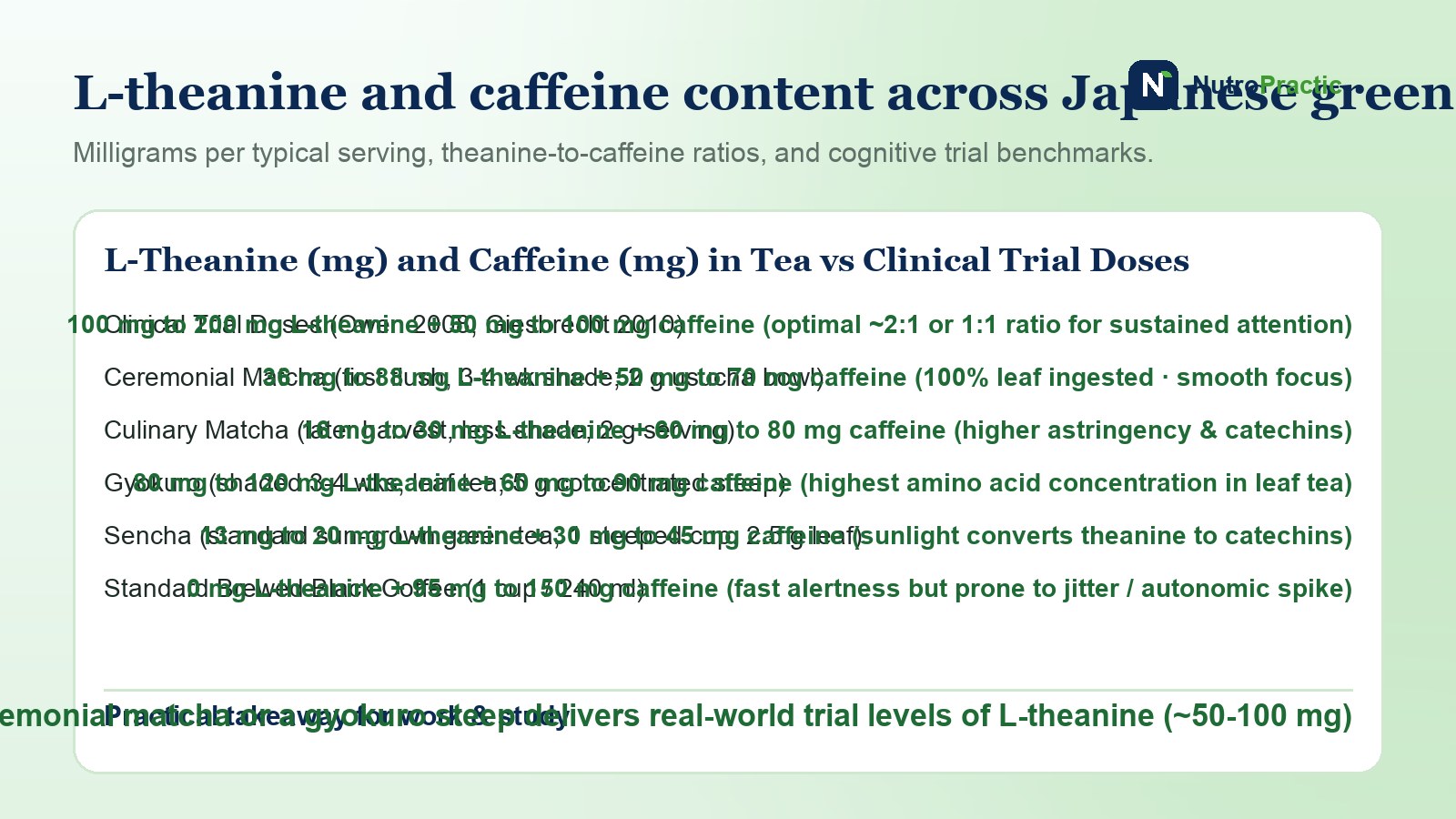
Milligrams in the cup: ceremonial matcha, culinary, gyokuro vs sencha
In the tea plant (Camellia sinensis), L-theanine is synthesized in the roots and transported to the tender shoots. When tea leaves are exposed to direct sunlight, ultraviolet radiation triggers an enzymatic conversion of L-theanine into astringent polyphenols called catechins (such as epigallocatechin gallate, EGCG). This botanical reality creates dramatic differences in theanine content across tea styles:
- Shading preserves L-theanine: To produce shaded teas like Gyokuro and Tencha (the unground whole leaf that becomes matcha), farmers construct black woven bamboo or mesh canopies (called tana or kanreisha) over the tea bushes for 21 to 28 days before harvest. Blocking 85% to 95% of sunlight halts the conversion of theanine into catechins, preserving immense quantities of sweet, umami-rich amino acids.
- The whole leaf advantage of matcha: When you steep loose-leaf tea in hot water, only about 50% to 65% of the leaf's amino acids extract into the liquor, while the rest remains trapped in the discarded wet leaves. With matcha, the whole tencha leaf is stone-ground into a micro-fine powder and whisked directly into water. You consume 100% of the leaf tissue, ingesting every single milligram of L-theanine, chlorophyll, and fiber.
- Ceremonial vs culinary matcha: Ceremonial grade matcha is harvested strictly during the first spring flush (ichibancha), using only the soft, shade-sheltered top two leaves and bud, with all fibrous stems and veins removed. It tests between 25 mg and 44 mg of L-theanine per gram of dry powder. Culinary matcha, harvested in summer or autumn from lower, older leaves with less shade time, contains higher catechins (astringency) and only 8 mg to 15 mg of L-theanine per gram.
Quantitative data: theanine and caffeine across drinks
| Beverage type | Leaf processing & cultivation | Standard kitchen serving | L-theanine per serving | Caffeine per serving | Theanine to caffeine ratio |
|---|---|---|---|---|---|
| Ceremonial Matcha | 1st flush spring; 3-4 wks full shade; stone-ground whole leaf | 1 traditional bowl (usucha, 2.0 g powder) | 36 to 88 mg | 50 to 70 mg | ~0.8:1 to 1.3:1 (balanced calm-alert) |
| Culinary / Latte Matcha | 2nd/3rd flush; partial shade; coarser grind | 1 teaspoon (2.0 g powder) | 16 to 30 mg | 60 to 80 mg | ~0.3:1 to 0.4:1 (more astringent) |
| Gyokuro (leaf steep) | 1st flush; 3-4 wks full shade; needle-rolled loose leaf | Concentrated steep (5.0 g leaf, 60°C water, 60 ml) | 80 to 120 mg | 60 to 90 mg | ~1.3:1 to 1.5:1 (highest leaf amino payload) |
| Sencha (standard green tea) | Sun-grown in open fields; steamed and rolled | 1 cup brewed (2.5 g leaf in 200 ml, 80°C, 60 s) | 13 to 20 mg | 30 to 45 mg | ~0.4:1 (catechins dominate umami) |
| Hojicha (roasted green tea) | Roasted sencha or bancha twigs over charcoal | 1 mug brewed (3.0 g in 250 ml, 95°C) | 8 to 14 mg | 10 to 20 mg | ~0.7:1 (low caffeine evening option) |
| Black Tea (English Breakfast) | Sun-grown; fully oxidized; broken leaf | 1 cup brewed (1 teabag / 2.0 g in 240 ml, 100°C) | 5 to 12 mg | 40 to 60 mg | ~0.15:1 to 0.2:1 (minimal theanine buffering) |
| Standard Drip Coffee | Roasted coffee beans (Coffea arabica / robusta) | 1 standard mug (240 ml) | 0 mg | 95 to 150 mg | 0:1 (pure adenosine blockade) |
How to brew and dose for sustained cognitive performance
If you wish to reproduce the sustained attention and jitter reduction demonstrated in clinical trials, apply these evidence-based principles:
1. Target the clinical ratio (1:1 to 2:1): The trials showing optimal attention-switching and task speed paired 100 to 200 mg of L-theanine with 50 to 100 mg of caffeine. Consuming too much caffeine (over 200 mg) overwhelms the calming effect of modest theanine doses.
2. Prepare ceremonial matcha correctly: Whisk 2.0 grams (approximately two traditional bamboo chashaku scoops or one level half-teaspoon) of sieved ceremonial grade matcha with 60 to 70 mL of hot water at 70°C to 75°C (158°F to 167°F). Boiling water scorches the tea and releases harsh bitter tannins. A single bowl delivers roughly 40 to 70 mg of L-theanine alongside 55 mg of caffeine, matching clinical parameters in a single food serving.
3. Brew Gyokuro at lower temperatures: Because L-theanine extracts readily at low temperatures while bitter catechins require heat to dissolve, brew Gyokuro with water cooled to 50°C to 60°C (122°F to 140°F) for 90 to 120 seconds. This produces a rich, savory liquor providing up to 100 mg of pure dietary L-theanine.
4. Pairing with coffee: If you prefer drinking drip coffee or espresso, pairing your morning cup with an isolated L-theanine capsule (100 mg to 200 mg) replicates the pharmacological synergy of shaded tea, eliminating caffeine-induced jitteriness and elevated blood pressure spikes. Track your daily stimulant load with our free caffeine counter tool.
5. Mind your evening cutoff: While L-theanine facilitates relaxation, caffeine has an average human elimination half-life of 5.0 to 7.0 hours in healthy adults. Drinking matcha or green tea past 2:00 PM or 3:00 PM can disrupt slow-wave sleep and REM architecture—see our companion analysis on coffee, rhythm, and sleep and energy drinks vs natural caffeine.
Looking to optimize your cognitive nutrition, daytime energy, and metabolic health with personalized dietary protocols? Book a 1-on-1 consultation with Dr. Triveni for expert, evidence-grounded nutrition advice.
References and clinical sources
1. Owen, G. N., et al. (2008). The combined effects of L-theanine and caffeine on cognitive performance and mood. Nutritional Neuroscience, 11(4), 193–198.
2. Haskell, C. F., et al. (2008). The effects of L-theanine, caffeine and their combination on cognition and mood. Biological Psychology, 77(2), 113–122.
3. Giesbrecht, T., et al. (2010). The combination of L-theanine and caffeine improves cognitive performance and increases subjective alertness. Nutritional Neuroscience, 13(6), 283–290.
4. Nobre, A. C., Rao, A., & Owen, G. N. (2008). L-theanine, a natural constituent in tea, and its effect on mental state. Asia Pacific Journal of Clinical Nutrition, 17(S1), 167–168.
5. Gomez-Ramirez, M., et al. (2007). The deployment of intersensory selective attention: a high-density electrical mapping study of the effects of theanine. Clinical Neuropharmacology, 30(1), 25–38.
6. Gomez-Ramirez, M., et al. (2009). The effects of L-theanine on alpha-band oscillatory brain activity during a visuo-spatial attention task. Brain Topography, 22(1), 44–51.
7. Rogers, P. J., et al. (2008). Time for tea: mood, blood pressure and cognitive performance effects of caffeine and theanine administered alone and together. Psychopharmacology, 195(4), 569–577.
8. Einöther, S. J., et al. (2010). The effect of tea compounds on sustained attention to visual stimuli. Comprehensive Psychiatry / Physiology & Behavior, 100(1), 127–130.
9. Yamamoto, T., et al. (1997). Chemistry and Applications of Green Tea. CRC Press (Japanese green tea amino acid and catechin profiles).