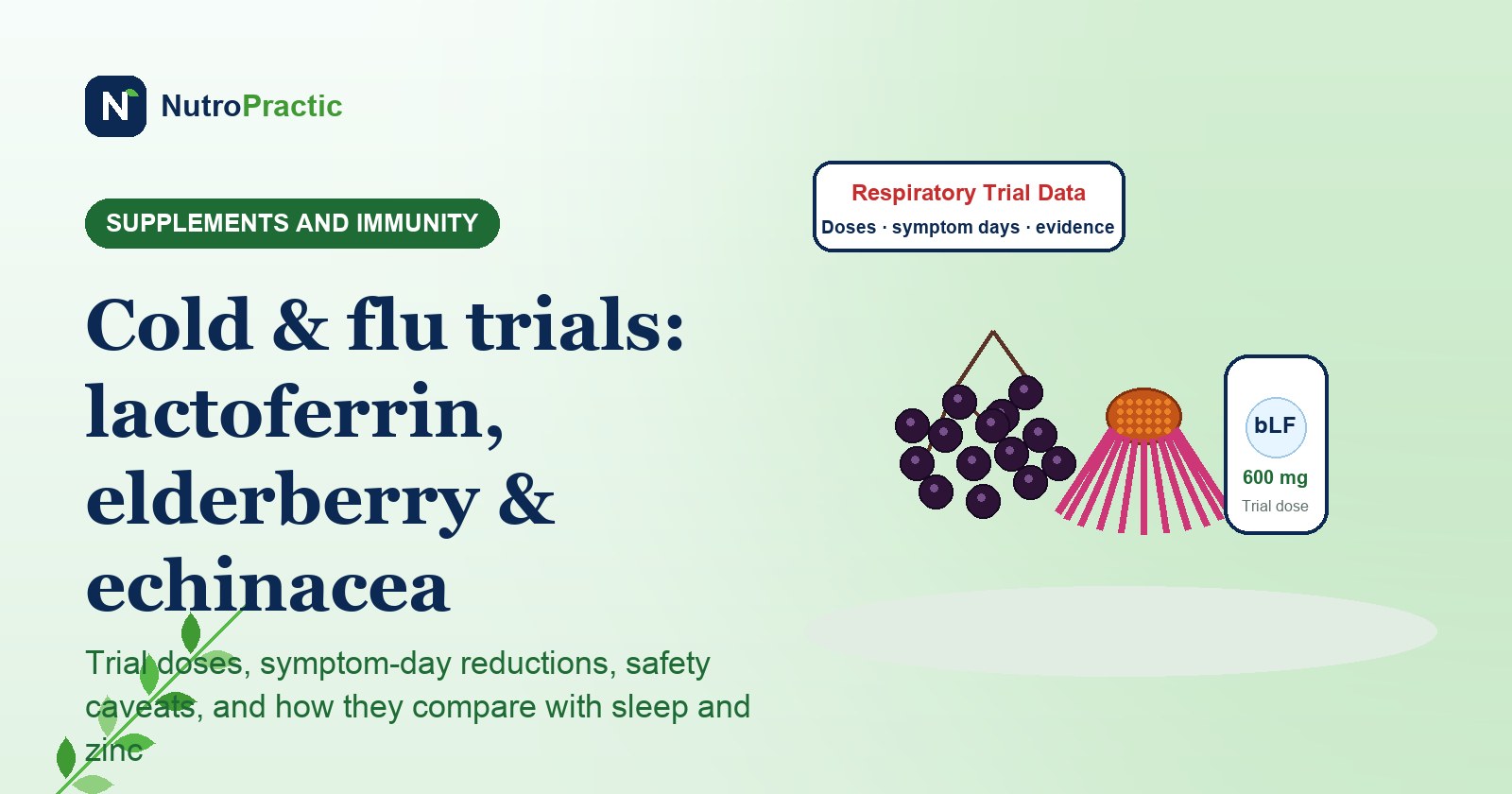
Whenever winter approaches or a scratchy throat sets in, pharmacy aisles and online storefronts promote herbal remedies, berry syrups, and specialty proteins promising to shield your immune system. Marketing copy regularly claims these compounds stop viruses in their tracks, shorten illness by half, and supercharge white blood cells. Yet real human physiology is more nuanced.
When you look past label slogans into double-blind, randomized, placebo-controlled clinical trials, the picture becomes clear. Some compounds demonstrate genuine, measurable benefits when taken at specific doses early in infection, while others show high product variability, marginal efficacy, or potential safety hazards. Here is what peer-reviewed research actually measured for bovine lactoferrin, elderberry, and echinacea, and how they stack up against clinical gold standards like zinc and sleep.
Bovine lactoferrin: mucosal iron binding and viral defense
Lactoferrin is an iron-binding glycoprotein naturally synthesized in mammalian exocrine secretions, particularly colostrum, breast milk, saliva, tears, and neutrophil granules. Bovine lactoferrin (bLF), purified from cheese whey or skim milk, shares approximately 77% sequence homology with human lactoferrin.
Biologically, lactoferrin operates through two primary antimicrobial mechanisms:
- Iron sequestration: With an iron-binding affinity roughly 300 times higher than serum transferrin, apo-lactoferrin (the iron-depleted form) scavenges free ferric (Fe3+) ions at mucosal surfaces, starving invading bacteria that rely on free iron to proliferate.
- Direct viral blockade: In cell culture and animal models, lactoferrin binds to heparan sulfate proteoglycans and viral capsid proteins on host cell membranes, sterically hindering respiratory viruses (including common adenoviruses, enteroviruses, and respiratory syncytial virus) from docking and entering epithelial cells.
In human clinical trials, the numbers reveal meaningful prophylactic effects for respiratory infections:
- The Vitetta et al. trial (2013): In a randomized, double-blind, placebo-controlled study published in Complementary Therapies in Medicine, healthy adults supplemented daily with 600 mg of a bovine lactoferrin and whey protein immunoglobulin fraction for 90 days. The lactoferrin group experienced a dramatic reduction in total cold episodes (48 reported colds vs 112 in the placebo arm, p < 0.001) and significantly fewer total symptom-days over the 3-month trial period.
- The Shin et al. trial (2018): Research evaluated bovine lactoferrin (200 mg to 600 mg/day) combined with lactoperoxidase. While overall symptom prevention across the entire population was modest, subgroup analysis demonstrated significant reductions in throat discomfort, nasal congestion, and absenteeism among individuals exposed to daily public contact.
- Dose and practical reality: Effective trial doses sit between 200 mg and 600 mg daily. It is exceptionally well-tolerated because it is a natural milk fraction, though individuals with severe dairy or whey allergies must exercise caution.
Elderberry (Sambucus nigra): anthocyanin trials and product variability
European black elderberry (Sambucus nigra) contains dense concentrations of polyphenols, particularly cyanidin-3-glucoside and cyanidin-3-sambubioside. In vitro, these anthocyanins appear to bind to viral hemagglutinin spikes, preventing the virus from attaching to human respiratory mucosal receptors.
Key human clinical trials evaluated standardized elderberry extracts for acute viral infections:
- The Zakay-Rones et al. trials (1995, 2004): In patients presenting with acute influenza A or B symptoms within 48 hours, a standardized elderberry syrup (Sambucol) administered at 15 mL four times daily (60 mL/day) for 5 days resulted in symptom resolution roughly 3.5 to 4.0 days faster than placebo (median recovery 2 to 4 days vs 6 to 8 days in placebo).
- The Tiralongo et al. air travel trial (2016): In a randomized, double-blind trial involving 312 economy-class air travelers flying intercontinentally, participants took a membrane-filtered elderberry capsule (300 mg daily for 10 days pre-flight, increasing to 900 mg daily around travel and post-arrival). While elderberry did not prevent travelers from catching a cold, those who became ill had a significantly shorter cold duration (4.75 days vs 6.88 days in placebo, p = 0.02) and a 50% lower total symptom severity score (247 vs 583, p = 0.05).
- The Wieland et al. systematic review (2021): A comprehensive systematic review published in BMC Complementary Medicine and Therapies evaluated all available randomized controlled trials. The authors concluded that while elderberry may reduce the duration and severity of colds by 1.5 to 2.5 days, evidence certainty remains low-to-moderate due to small sample sizes and significant heterogeneity among commercial products.
- Crucial safety caveat (cyanogenic glycosides): Raw, unripe elderberries and leaves contain sambunigrin, a cyanogenic glycoside that metabolizes into toxic hydrogen cyanide in the digestive tract. Ingestion of raw fruit causes severe nausea, vomiting, and diarrhea. Commercial syrups and standardized extracts undergo controlled thermal boiling that safely destroys sambunigrin. Never consume unheated homemade preparations from raw elderberry.
Echinacea: species mismatch, active extracts, and Cochrane findings
Echinacea is one of the most widely used botanical supplements in North America and Europe, yet it is also the source of the most contradictory clinical literature. The primary reason is botanical and chemical inconsistency: commercial products mix three different species (Echinacea purpurea, Echinacea angustifolia, Echinacea pallida), different plant parts (aerial flowering tops vs woody taproots), and distinct extraction solvents (aqueous vs high-proof ethanolic).
Pharmacologically, the immunomodulatory actions of Echinacea reside primarily in isobutylamides (alkylamides), which bind weakly to cannabinoid CB2 receptors on monocytes, as well as cichoric acid and polysaccharides that stimulate phagocytosis.
- The landmark Cochrane Systematic Review (Karsch-Völk et al. 2014): Analyzing 24 double-blind trials with 4,631 participants, the Cochrane authors found that individual trials generally failed to show statistically significant prevention. An exploratory pooled meta-analysis indicated a modest 10% to 20% relative risk reduction in cold incidence (risk ratio ~0.83). However, when evaluating treatment of active colds, rigorous low-risk-of-bias trials found no statistically significant shortening of cold duration.
- Extract variability: Preparations based on fresh pressed juice of Echinacea purpurea aerial parts or standardized ethanolic extracts (such as Echinaforce, Jawad et al. 2012) demonstrated better safety profiles and marginal prophylactic benefit over 4 months, whereas cheap root powders and dried teas in commercial teabags showed negligible clinical activity.
Clinical comparison: trial doses, symptom days, and evidence strength
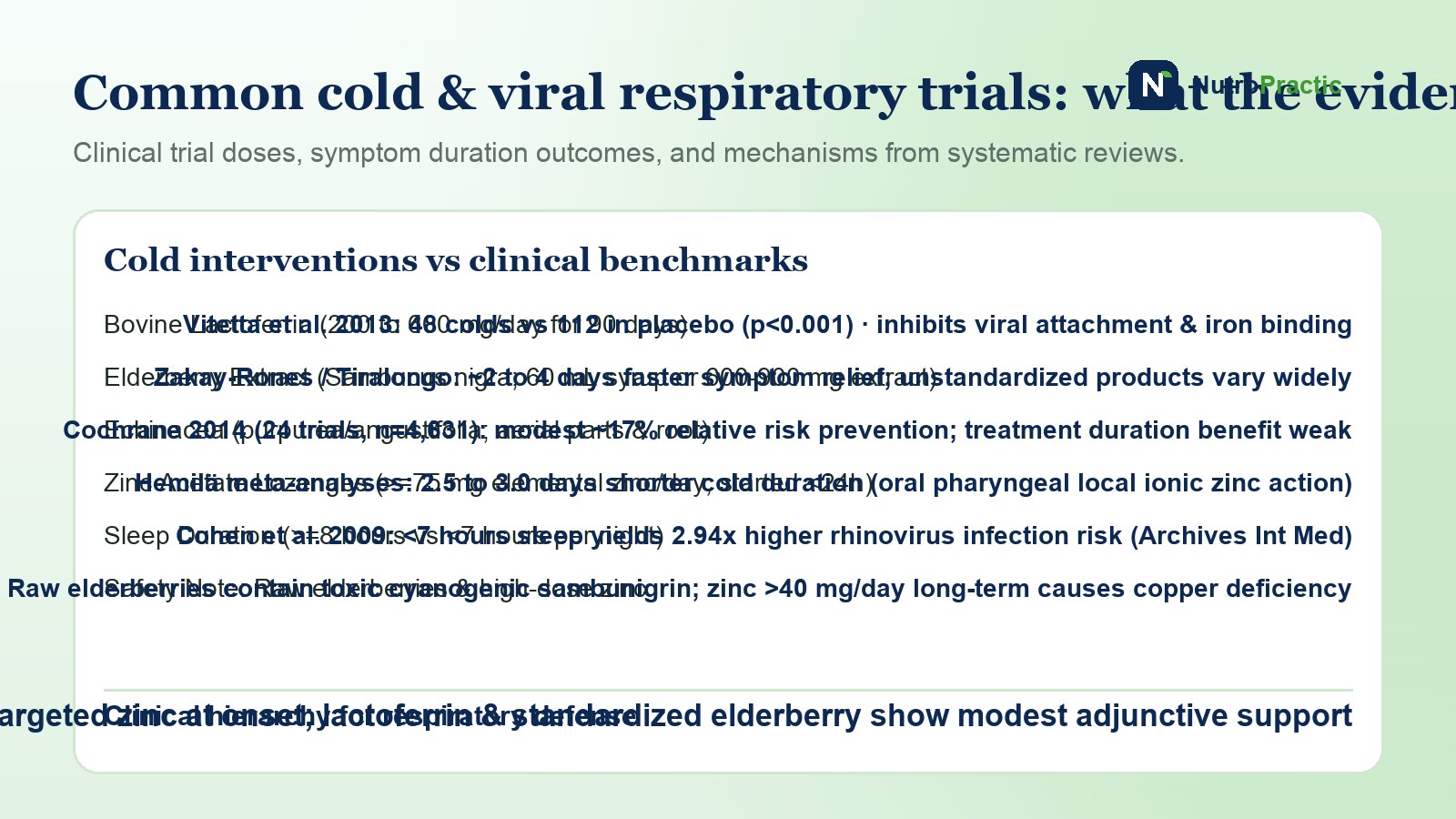
| Intervention | Clinical trial regimen | Primary mechanism | Symptom reduction | Evidence certainty | Major caveats |
|---|---|---|---|---|---|
| Bovine Lactoferrin | 200 to 600 mg daily oral (colostrum/whey fraction) | Free iron sequestration; cell surface mucosal viral blockade | Lower cold frequency (48 vs 112 colds in 90 d trial) | Moderate (growing RCT support) | High cost; caution with severe dairy/whey protein allergy |
| Standardized Elderberry | 15 mL syrup 4x/day (60 mL/d) or 600-900 mg extract | Anthocyanins inhibit viral hemagglutinin binding | 2.0 to 4.0 days faster recovery; ~50% symptom severity drop | Low to Moderate (promising trials, small cohorts) | Raw berries contain toxic cyanogenic sambunigrin; commercial syrups high in sugar |
| Echinacea (standardized) | 900 to 4,000 mg/d fresh aerial juice or ethanolic extract | Alkylamides modulate CB2 receptor & phagocytosis | Modest ~17% relative risk prevention; no proven duration drop | Low (extreme product heterogeneity across brands) | Ineffective when using dried unstandardized tea bags; potential Asteraceae pollen allergy |
| Zinc Acetate Lozenges | >=75 mg elemental zinc/day (dissolved in mouth q2-3h) | Direct local ionic Zn2+ inhibition of rhinovirus replication | 2.5 to 3.0 days shorter cold duration | High (multiple Cochrane & meta-analyses) | Must start <24h of onset; bad taste; avoid nasal sprays (anosmia risk); >40mg/d long term depletes copper |
| Sleep Adequacy (>=8 hours) | 8+ hours regular nocturnal sleep | Natural killer cell cytotoxicity & IL-6 / TNF-a circadian rhythm | 2.94x lower infection risk compared to <7 hours | Very High (prospective viral challenge cohorts) | Foundational behavioral metric; cannot be replaced by any pill or supplement |
The real benchmarks: why zinc and sleep lead the evidence
When functional medicine practitioners assess respiratory defense, botanicals should never distract from the two interventions with the strongest clinical trial backing:
- Zinc acetate / gluconate lozenges: Unlike oral pills swallowed whole, zinc lozenges that slowly dissolve in the oral pharynx release free ionic zinc (Zn2+) directly onto the oropharyngeal mucosa. Ionic zinc binds to rhinovirus capsid cleavage sites, physically halting viral replication. In multiple systematic reviews by Dr. Harri Hemilä, doses exceeding 75 mg of elemental zinc per day (divided into 10-15 mg lozenges every 2 to 3 hours while awake), initiated within 24 hours of first symptoms, shortened cold duration by an average of 2.7 to 3.0 days.
- Sleep duration (The Cohen et al. rhinovirus challenge): In a landmark prospective study published in Archives of Internal Medicine, 153 healthy adults had their sleep monitored for 14 consecutive days before being quarantined and administered live rhinovirus nasal drops. Participants who slept fewer than 7 hours per night were 2.94 times more likely to develop a clinical cold (95% CI, 1.18 to 7.30) than those sleeping 8 hours or more. Sleep efficiency below 92% was associated with a 5.5-fold increased risk.
Practical protocol: what to do when you feel a cold starting
If you wish to apply clinical evidence safely during respiratory season, structure your approach chronologically:
1. Protect your sleep window first: Prioritize 8 to 9 hours in bed at the earliest sign of fatigue or pharyngeal tickle. Cytokine production and natural killer cell activity depend directly on slow-wave sleep.
2. Start ionic zinc lozenges within 24 hours: Use zinc acetate or zinc gluconate lozenges (delivering 10 to 15 mg elemental zinc per lozenge) dissolved slowly every 2 to 3 hours, keeping total daily intake around 75 to 80 mg for no more than 4 to 5 days. Read our in-depth guide on zinc lozenge doses and copper balance.
3. Use standardized elderberry as an adjunct: If using elderberry, choose thermally processed, standardized syrups or membrane-filtered extracts providing 600 to 900 mg of extract daily for 3 to 5 days. Discontinue if gastrointestinal distress occurs.
4. Consider bovine lactoferrin for seasonal prophylaxis: For individuals in high-exposure environments (teachers, healthcare workers, frequent flyers), 200 to 600 mg daily of purified bovine lactoferrin provides evidence-backed mucosal support.
5. Do not rely on random dried teas: Skip commercial tea bags claiming immune miracles unless they state verified milligrams of standardized active alkylamides or anthocyanins. Pair your nutrition with whole foods rich in natural antioxidants—see our analysis on vitamin C food sources vs 1,000 mg tablets and foods that enhance sleep quality.
Looking to optimize your family's nutritional defense and supplement strategy based on clinical lab work and dietary intake? Book a personalized consultation with Dr. Triveni for an evidence-based wellness plan tailored to your health history.
References and clinical sources
1. Vitetta, L. et al. (2013). The clinical efficacy of a bovine lactoferrin/whey protein Ig-rich fraction (Lf/IgF) for the common cold: a double blind randomized study. Complementary Therapies in Medicine, 21(3), 164–171.
2. Shin, K. et al. (2018). Effects of orally administered lactoferrin and lactoperoxidase on symptoms of the common cold. International Journal of Health Sciences, 12(2), 24–30.
3. Zakay-Rones, Z. et al. (2004). Randomized study of the efficacy and safety of oral elderberry extract in the treatment of influenza A and B virus infections. Journal of International Medical Research, 32(2), 132–140.
4. Tiralongo, E. et al. (2016). Elderberry supplementation reduces cold duration and symptoms in air-travellers: a randomized, double-blind placebo-controlled clinical trial. Nutrients, 8(4), 182.
5. Wieland, L. S. et al. (2021). Elderberry for prevention and treatment of viral respiratory illnesses: a systematic review. BMC Complementary Medicine and Therapies, 21(1), 112.
6. Karsch-Völk, M. et al. (2014). Echinacea for preventing and treating the common cold. Cochrane Database of Systematic Reviews, (2), CD000530.
7. Hemilä, H. & Chalker, E. (2015). The effectiveness of high dose zinc acetate lozenges on various common cold symptoms: a meta-analysis. BMC Family Practice, 16, 24.
8. Cohen, S. et al. (2009). Sleep habits and susceptibility to the common cold. Archives of Internal Medicine, 169(1), 62–67.