Micronutrients & neurological health · November 23, 2026
Adequate dietary selenium intake linked to lower odds of epilepsy in dual population analysis
A two-stage study combining US national survey data with a clinical hospital cohort found that people consuming moderate amounts of dietary selenium had significantly lower odds of having epilepsy.

Selenium is an essential dietary trace mineral vital for the synthesis of selenoproteins, including glutathione peroxidases and thioredoxin reductases, which protect neural tissue from oxidative stress, lipid peroxidation, and neuroinflammatory damage. Because excessive free radicals can trigger neuronal hyperexcitability and lower seizure thresholds, researchers have investigated whether dietary selenium intake correlates with the risk and clinical presentation of epilepsy.
To clarify this relationship across diverse populations, a research team conducted a rigorous two-stage observational investigation. First, they analysed cross-sectional data from 12,887 participants in the US National Health and Nutrition Examination Survey (NHANES, 2013–2020), estimating 24-hour dietary selenium intake alongside serum selenium biomarkers. Second, they validated the epidemiological findings in an independent hospital-based case-control cohort in China comprising 94 patients with clinically diagnosed epilepsy and 92 healthy controls matched for age and sex.
In the NHANES cohort, weighted multivariable logistic regression demonstrated that individuals in the second and third quartiles of dietary selenium intake had significantly lower odds of epilepsy compared with those in the lowest intake quartile. Restricted cubic spline analysis revealed an L-shaped dose-response curve: the odds of epilepsy dropped sharply as selenium intake rose toward recommended daily allowances (around 55 to 100 mcg per day), beyond which additional intake yielded no further protective association. Analysis of circulating serum selenium confirmed this protective plateau.
In the independent clinical cohort, patients with epilepsy consumed significantly less dietary selenium than healthy controls. While higher selenium intake tracked consistently with reduced odds of epilepsy, exploratory analyses of drug resistance and cognitive performance in patients were imprecise. The researchers noted that while maintaining adequate selenium intake through foods like seafood, whole grains, and nuts supports neurological antioxidant defenses, megadose supplementation carries risks of selenosis (hair loss, brittle nails, neuropathy) and should never substitute for anti-seizure pharmacotherapy.
Dual-cohort selenium and epilepsy analysis (NHANES & hospital cohort)
12,887
US adults analysed in the NHANES 2013-2020 epidemiological cohort
186
participants in independent hospital case-control validation study (94 cases, 92 controls)
Q2 & Q3
intake quartiles showing significantly lower odds of epilepsy vs lowest quartile
55 mcg/d
recommended dietary allowance (RDA) for selenium in healthy adults
Two-stage observational study published in Frontiers in Nutrition on 11 November 2026.
- The brain prioritizes selenium retention above almost all other tissues; during systemic selenium deficiency, specialized selenoprotein transport systems preserve cerebral selenium levels.
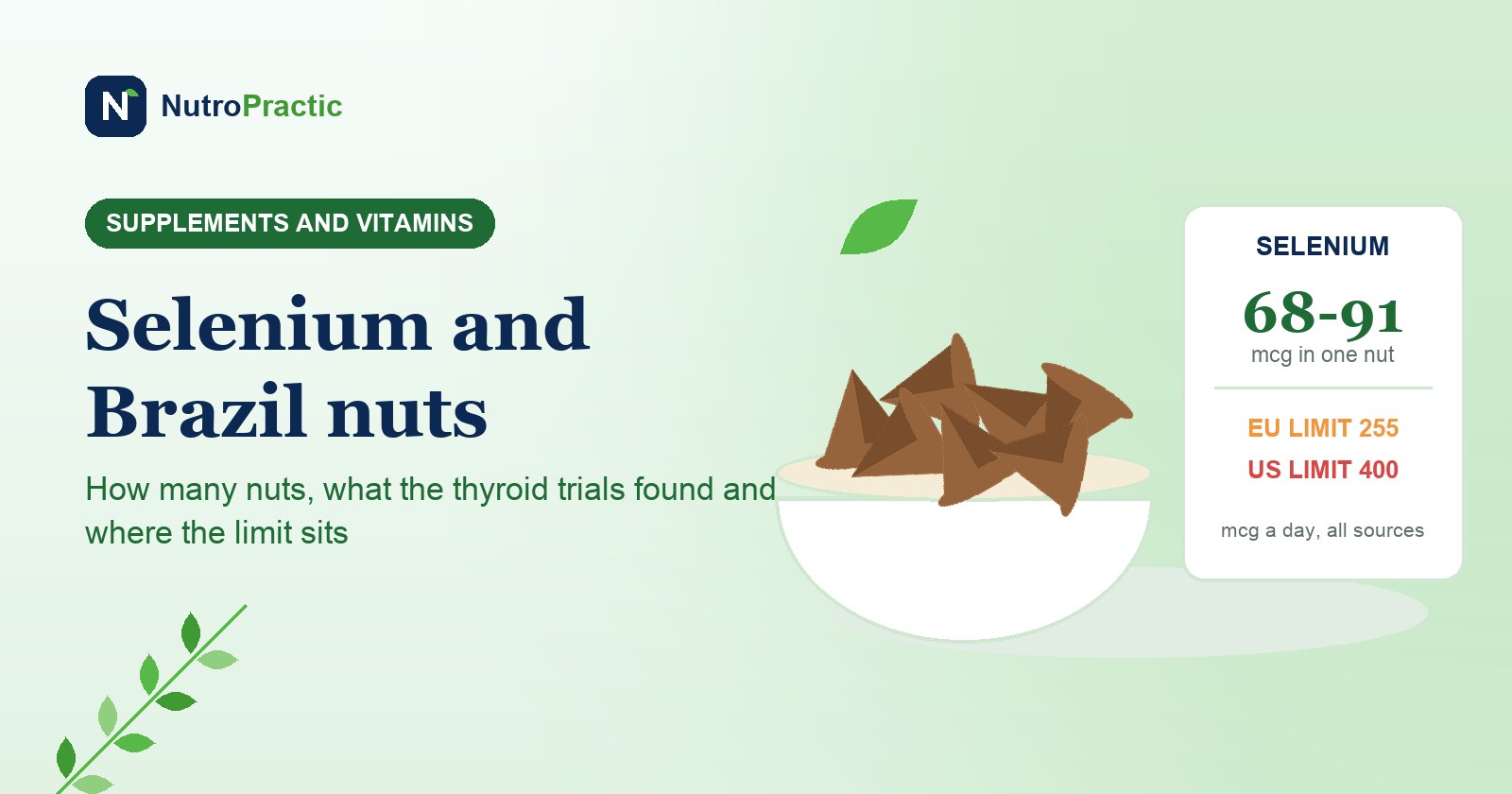
- A single Brazil nut can provide between 68 and 91 micrograms of selenium, easily exceeding an adult's entire daily requirement.
- Selenoprotein P (SELENOP) is the primary selenium transport vehicle in human plasma, delivering selenium across the blood-brain barrier via the ApoER2 receptor.
- Association between selenium intake and epilepsy in NHANES and an independent Chinese clinical cohortFrontiers in Nutrition · Open-access observational study published 11 November 2026.
- File:Bertholletia excelsa seeds closeup.jpgWikimedia Commons · Photo by Bernard Dupont, CC BY-SA 2.0.
Educational summary of nutrition research, not personal medical advice. Speak to your doctor or dietitian before changing your diet or supplements, especially if you are pregnant, take medicines or have a medical condition.
Analysis by NutroPractic from the sources listed. Written for general readers; it does not replace advice from your own doctor.
From our articles
Our guides on this subject
Plain-language guides on nutrition and wellness, backed by research.
Supplements and vitamins
Selenium: how many Brazil nuts, what the thyroid trials found, and where the upper limit sits
One Brazil nut holds 68 to 91 mcg of selenium on average, against a 255 mcg European ceiling. A table of nuts per day, what the Hashimoto trials measured, and why more is not better.
14 Nov 2026
Supplements and vitamins
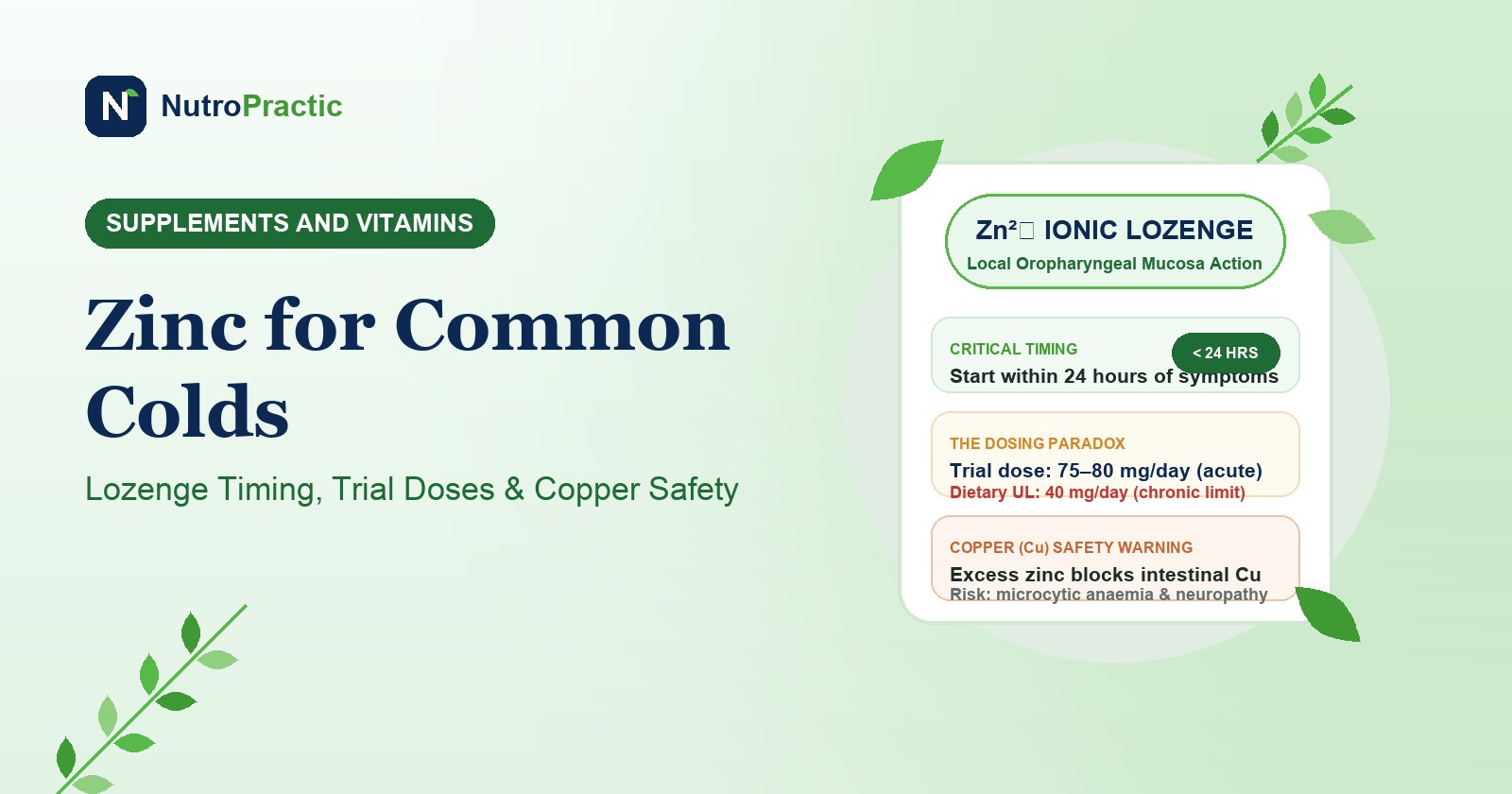
Zinc for common colds and immunity: trial doses, lozenge timing, and why 40 mg+ depletes copper
Randomized controlled trials confirm that zinc lozenges can reduce common cold duration by roughly 33%, but only when started within the first 24 hours of symptoms. Achieving this clinical effect requires doses of 75 to 80 mg daily of ionic zinc dissolved in the mouth—well above the 40 mg tolerable upper intake level. Here is the evidence on lozenge formulations, delivery timing, and why sustained high doses induce severe copper deficiency.
13 Nov 2026
Women's health
Eating while breastfeeding: extra calories, iodine, caffeine, fish and alcohol, with the actual numbers
Breastfeeding usually adds about 330–400 kcal a day, but the smaller numbers can matter more: 290 mcg iodine, 400 IU vitamin D for baby, 8–12 oz fish a week, and a caffeine total you can actually add up.
6 Nov 2026
Newsfeed for your website
Want this feed on your website?
Add it to any site with one copy-and-paste snippet. No sign-up, and it updates itself every hour.
Start with a virtual consultation
Tell Dr. Triveni what you want to change. You will leave with a clear next step, whether you are in Toronto, London, New York or Chennai.