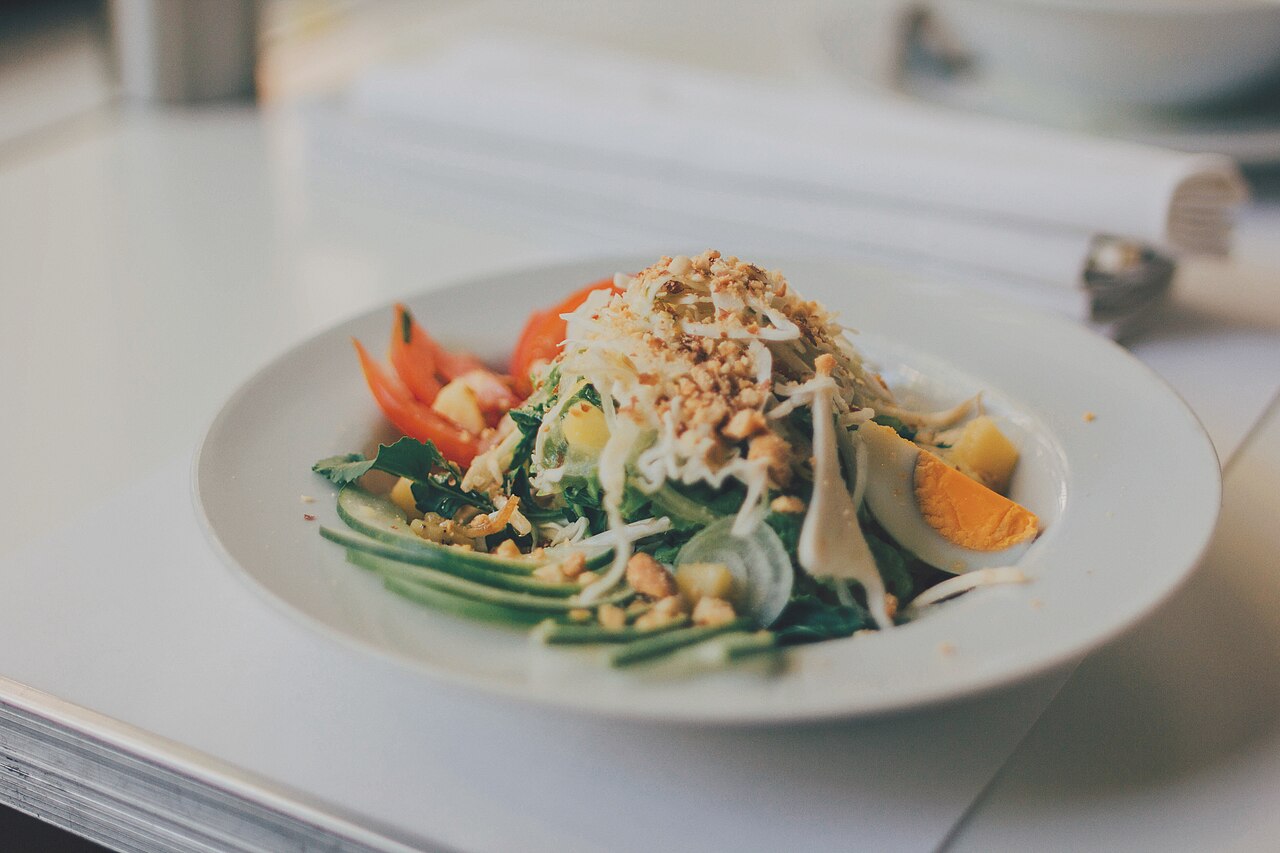
For decades, home cooks and wellness enthusiasts have been warned that extra virgin olive oil (EVOO) is too fragile for the stovetop. Persistent culinary folklore claims that heat instantly destroys its delicate antioxidants, that its smoke point is too low for sautéing, and that cooking turns unrefined oil toxic. Consequently, many households relegate premium olive oil to salad dressings while frying with heavily refined, high-smoke-point seed oils.
However, food chemistry, lipid oxidation assays, and randomized clinical trials tell the opposite story. Extra virgin olive oil is among the most chemically stable cooking fats available for home kitchens. Furthermore, the European Union has recognized its unique polyphenols with one of the most stringent health claims ever authorized. Here is the exact data behind olive oil polyphenols, cultivar concentrations, the EU law, and how domestic heat actually alters EVOO.
The EU health claim: Regulation 432/2012 and the 5 mg threshold
In 2011, the European Food Safety Authority (EFSA) completed a rigorous scientific evaluation of olive oil polyphenols, which culminated in the landmark European Commission Regulation (EU) No 432/2012. The legally authorized health claim states:
> "Olive oil polyphenols contribute to the protection of blood lipids from oxidative stress."
To bear this claim, European regulations mandate that an olive oil must deliver at least 5 mg of hydroxytyrosol and its derivatives (e.g. oleuropein complex and tyrosol) per 20 g of oil. In commercial concentration terms, this translates to a minimum threshold of 250 mg of qualifying biophenols per kilogram of oil (250 mg/kg).
The clinical foundation for this regulation comes primarily from the landmark EUROLIVE trial (Covas et al., 2006), published in Annals of Internal Medicine. In this multicenter, double-blind crossover study, 200 healthy European men consumed 25 mL daily of three chemically identical olive oils with varying polyphenol concentrations: low (2.7 mg/kg), medium (164 mg/kg), and high (366 mg/kg) over three 3-week periods. The findings demonstrated a linear, dose-dependent therapeutic effect:
- Circulating oxidized LDL: Decreased significantly only with medium and high polyphenol oils (-1.21 U/L and -1.53 U/L, p < 0.001).
- HDL cholesterol: Increased linearly across the polyphenol gradient (+0.025 mmol/L for low, +0.032 mmol/L for medium, and +0.045 mmol/L for high polyphenol oil).
- Lipid peroxidation biomarkers: Plasma malondialdehyde (MDA) and urinary isoprostanes dropped by 18% in the high-polyphenol cohort, proving that natural phenolics directly shield LDL particles from atherogenic oxidation.
Cultivars, harvest timing, and oleocanthal pharmacology
Not all extra virgin olive oils achieve the EU health claim threshold. Total phenolic content varies from under 100 mg/kg in supermarket blends to over 1,000 mg/kg in artisanal, single-estate early-harvest pressings. Two biological factors determine this concentration: cultivar genetics and harvest maturity.
| Olive cultivar | Typical origin | Total polyphenols (mg/kg) | Primary phenolic profile | Flavor profile & culinary characteristics |
|---|---|---|---|---|
| Picual | Jaén & Andalusia, Spain | 450 to 900 mg/kg | Exceptionally high oleocanthal, oleacein & hydroxytyrosol | Robust bitterness, intense peppery throat finish, highest thermal stability |
| Coratina | Puglia, Italy | 600 to 1,100 mg/kg | Very high oleuropein aglycone & tyrosol derivatives | Bold, pungent, intensely bitter artichoke and green almond notes |
| Moraiolo | Tuscany & Umbria, Italy | 500 to 850 mg/kg | High tyrosols and ligstroside derivatives | Herbaceous, robust, structured peppery finish |
| Koroneiki | Peloponnese & Crete, Greece | 350 to 650 mg/kg | Balanced hydroxytyrosol & oleocanthal | Fruity, grassy, moderate pepper, high domestic stability |
| Arbequina | Catalonia, Spain | 150 to 300 mg/kg | Lower total phenolics, predominantly free tyrosol | Delicate, floral, buttery, smooth; frequently falls below EU 250 mg/kg threshold |
| Leccino | Tuscany, Italy | 180 to 350 mg/kg | Mild phenolic fraction, lower oleocanthal | Soft, gentle, subtle fruitiness with minimal pepper |
| Supermarket Standard Blend | Mixed EU / Non-EU | 100 to 220 mg/kg | Degraded phenolics from late-harvest, bulk storage | Flat or mild flavor, rarely qualifies for EU Regulation 432/2012 health claim |
Harvest timing is equally critical. In October and early November, early-harvest green olives contain peak concentrations of bioactive secoiridoids, yielding 2 to 3 times more polyphenols than black, fully ripened olives harvested in January. Although green olives yield only 10% to 14% oil by weight (compared to 20% to 24% for ripe olives), the resulting oil possesses superior oxidative resistance and nutritional value.
One of the most biologically active compounds in fresh EVOO is oleocanthal (deacetoxy-ligstroside aglycone). In a famous 2005 paper published in Nature, Beauchamp et al. discovered that oleocanthal produces the exact same stinging, peppery irritation at the posterior pharynx as the non-steroidal anti-inflammatory drug (NSAID) ibuprofen. Pharmacological testing revealed that oleocanthal acts as a natural, non-selective inhibitor of both cyclooxygenase-1 (COX-1) and cyclooxygenase-2 (COX-2) enzymes. Consuming 50 g (roughly 3.5 tablespoons) of high-phenolic EVOO delivers an anti-inflammatory effect equivalent to approximately 10% of an adult ibuprofen dose, without causing gastric mucosal irritation.
Subsequent neurobiological research (Peyrot des Gachons et al., Journal of Neuroscience, 2011) clarified why oleocanthal burns only in the throat: it specifically activates TRPA1 (transient receptor potential ankyrin 1) ion channels, which are densely concentrated in the human glossopharyngeal and vagal nerve endings lining the pharynx, but absent from the anterior tongue.
Smoke point vs oxidative stability: why home cooking does not ruin EVOO
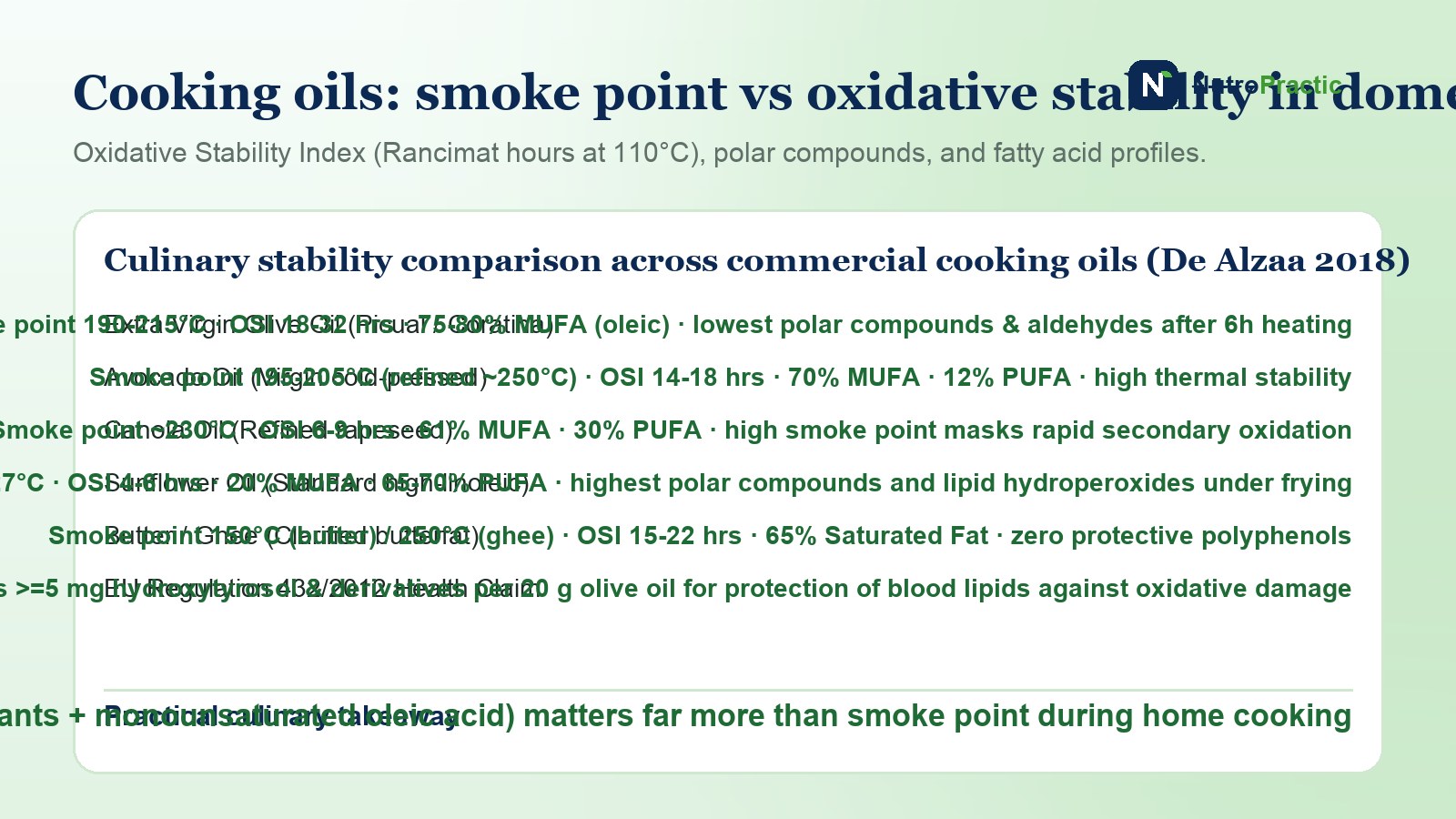
The common belief that EVOO is unsuitable for frying stems from conflating smoke point with thermal oxidative stability. Smoke point is simply the temperature at which an oil produces a visible bluish haze of volatile compounds under open laboratory conditions. In high-quality EVOO with low free acidity (<0.3%), the smoke point sits between 190°C and 215°C (375°F to 419°F). Standard domestic stovetop cooking occurs well below this ceiling: gentle sautéing runs at 120°C to 140°C, and pan-frying operates at 160°C to 180°C.
More importantly, smoke point does not correlate with an oil's safety or breakdown under heat. In a landmark comparative trial published in Acta Scientific Nutritional Health (De Alzaa et al., 2018), researchers heated 10 commercial cooking oils to 240°C and subjected them to continuous heating at 180°C for 6 hours. They measured total polar compounds, trans-fat formation, and volatile toxic secondary oxidation products (including aldehydes and lipid hydroperoxides). The findings shattered conventional wisdom:
- EVOO produced the lowest levels of total polar compounds and harmful aldehydes of all 10 oils, outperforming refined canola, grape seed, rice bran, and sunflower oils despite their higher official smoke points (225°C to 240°C).
- Canola and sunflower oils degraded rapidly: Refined seed oils are rich in polyunsaturated fatty acids (PUFAs) containing multiple methylene-interrupted double bonds. Under thermal stress, PUFAs undergo uninhibited free-radical chain reactions, accumulating hazardous lipid peroxides.
- The Rancimat Oxidative Stability Index (OSI): At 110°C, EVOO demonstrated an OSI of 18 to 32 hours before reaching oxidative breakdown, whereas refined canola oil broke down in 6 to 9 hours, and refined sunflower oil failed in just 4 to 6 hours.
Why is extra virgin olive oil so remarkably resilient? It possesses two built-in chemical shields:
1. Monounsaturated fatty acid dominance: 75% to 80% of EVOO is oleic acid (18:1), which has only a single double bond. Monounsaturated fats are roughly 10 to 40 times more resistant to oxidative rancidity than polyunsaturated linoleic (18:2) and alpha-linolenic (18:3) fats found in seed oils.
2. Endogenous antioxidant buffer: The high concentrations of hydroxytyrosol, oleuropein aglycones, and alpha-tocopherol actively intercept alkylperoxyl radicals, sacrificing themselves before the fatty acid backbone can oxidize.
Polyphenol retention during domestic cooking
While EVOO resists oxidation, what happens to its beneficial polyphenols when heated? Scientific assays indicate that thermal loss depends on temperature and duration:
- Sautéing at 160°C for 10 minutes: Retains 60% to 75% of initial polyphenol concentration. Hydroxytyrosol and oleocanthal partially hydrolyze into simpler phenols, but remain bioactive.
- Baking / Roasting at 180°C for 30 minutes: Retains 40% to 55% of total phenolics. If you start with a high-polyphenol oil (e.g. 600 mg/kg), the cooked dish still contains 250 to 330 mg/kg—meeting the EU therapeutic threshold even after baking.
- The vegetable transfer phenomenon (Ramírez-Anaya et al., Food Chemistry 2015): When vegetables (tomatoes, eggplant, pumpkin) are sautéed in EVOO, hydrophobic phenolics migrate into the vegetables, while hydrophilic vegetable antioxidants (like lycopene and beta-carotene) dissolve into the oil, multiplying bioavailable micronutrients compared to boiling.
How to select, store, and cook with high-polyphenol olive oil
To harness the cardiovascular benefits of the EU health claim and protect your kitchen from oxidized fats, apply these evidence-based selection and culinary rules:
1. Check for harvest year and cultivar: Look for dark glass bottles or tins displaying a specific harvest date (e.g. "Harvest 2025/2026") rather than an ambiguous expiration date. Choose high-phenolic cultivars like Picual, Coratina, or Koroneiki.
2. Embrace the peppery throat catch: Bitterness on the tongue and a pungent sting in the throat are physical hallmarks of potent oleuropein and oleocanthal. Smooth, buttery, bland oils are either low in phenolics or oxidized.
3. Aim for 20 g daily (1.5 tablespoons): To replicate the EUROLIVE lipid protection findings, incorporate 20 g of EVOO daily across your meals. Check our companion analysis on how dietary fat quality lowers LDL cholesterol on the portfolio diet and comparing cooking oils across health metrics.
4. Cook with confidence, store with care: Use EVOO for sautéing, pan-searing, and roasting up to 190°C (375°F). Store the bottle tightly sealed in a cool, dark cupboard away from the stove, as ambient light and oxygen degrade phenolics faster than a 10-minute sauté.
5. Evaluate your personalized lipid panel: If you have elevated ApoB, oxidized LDL, or metabolic syndrome, nutritional lipid therapy can be calibrated to your exact cardiovascular risk profile. Book a virtual consultation with Dr. Triveni for an individualized, evidence-based nutrition protocol.
References and clinical sources
1. European Commission (2012). Commission Regulation (EU) No 432/2012 of 16 May 2012 establishing a list of permitted health claims made on foods, other than those referring to the reduction of disease risk and to children's development and health. Official Journal of the European Union, L 136, 1–40.
2. Covas, M. I. et al. (2006). The effect of polyphenols in olive oil on heart disease risk factors: a randomized trial. Annals of Internal Medicine, 145(5), 333–341.
3. Beauchamp, G. K. et al. (2005). Phytochemistry: ibuprofen-like activity in extra-virgin olive oil. Nature, 437(7055), 45–46.
4. Peyrot des Gachons, C. et al. (2011). Unusual pungency on the tongue and throat of extra virgin olive oil is mediated by the TRPA1 receptor. Journal of Neuroscience, 31(3), 999–1009.
5. De Alzaa, F., Guo, X., & Ravetti, L. (2018). Evaluation of chemical and physical changes in different commercial oils during heating. Acta Scientific Nutritional Health, 2(6), 2–11.
6. Ramírez-Anaya, J. P. et al. (2015). Changes in the antioxidant properties of Mediterranean vegetables after cooking in extra virgin olive oil, deep-frying, and boiling. Food Chemistry, 188, 430–438.
7. Tuck, K. L. & Hayball, P. J. (2002). Major phenolic compounds in olive oil: metabolism and health effects. The Journal of Nutritional Biochemistry, 13(11), 636–644.