Gut health · November 23, 2026
The foods people with IBD blame for flares mostly did not track with active disease in 301 Norwegian patients
Patients often avoid foods they suspect cause relapses. When researchers compared those foods with endoscopy and stool tests, almost none lined up with active inflammation.
Many people with Crohn's disease or ulcerative colitis, the two main forms of inflammatory bowel disease (IBD), cut out foods they believe set off a relapse. Some of those foods are talked about as inflammatory and others as anti-inflammatory, but real-world evidence has been sparse.
The IBSEN III study in south-eastern Norway included 301 adults with IBD. Each completed a food frequency questionnaire about the previous year's habitual intake. Intakes were calculated two ways: splitting foods into ingredients, and as foods are consumed. Disease activity came from endoscopic indices and faecal calprotectin, a stool marker of gut inflammation, separating active from inactive disease.
Most foods that patients reported as triggers were not associated with disease activity, whether they were considered pro- or anti-inflammatory. Margarine was the exception: intake went with active IBD when foods were split into ingredients (OR 1.22, 95% CI 1.07 to 1.40, a link that lost significance when only endoscopy defined activity) and when foods were counted as eaten (OR 1.74, 95% CI 1.21 to 2.51, p = 0.003). No significant associations were found for macronutrients or for blood markers of nutritional status.
This was a cross-sectional study using a questionnaire, so it cannot say what a given person's trigger foods are or what happens when one is removed. The authors call the findings hypothesis-generating and ask for trials using objective disease measures. Until then, keeping a food and symptom diary and working with an IBD dietitian is more reliable than cutting out foods wholesale, which risks nutritional gaps.
Reported trigger foods and IBD activity, IBSEN III
301
adults with IBD
Most
patient-reported trigger foods showed no link with active disease
OR 1.22
margarine and active IBD with foods split into ingredients (95% CI 1.07-1.40)
None
significant links for macronutrients or blood nutritional markers
Cross-sectional study in Frontiers in Nutrition (Nutritional Epidemiology), published 17 November 2026. Hypothesis-generating.
- Faecal calprotectin is a protein released by white blood cells in the gut, so a high level in stool points to active intestinal inflammation.
- The two ways of counting food, by ingredients and as eaten, were used to check whether the way a food was grouped changed the answer.
- Heavy food avoidance can leave people short of protein, fibre and micronutrients, which is why dietitians advise testing triggers one at a time.
- Associations between potential trigger foods and disease activity in patients with inflammatory bowel disease; a cross-sectional studyFrontiers in Nutrition · Open-access cross-sectional study of 301 patients. Published 17 November 2026.
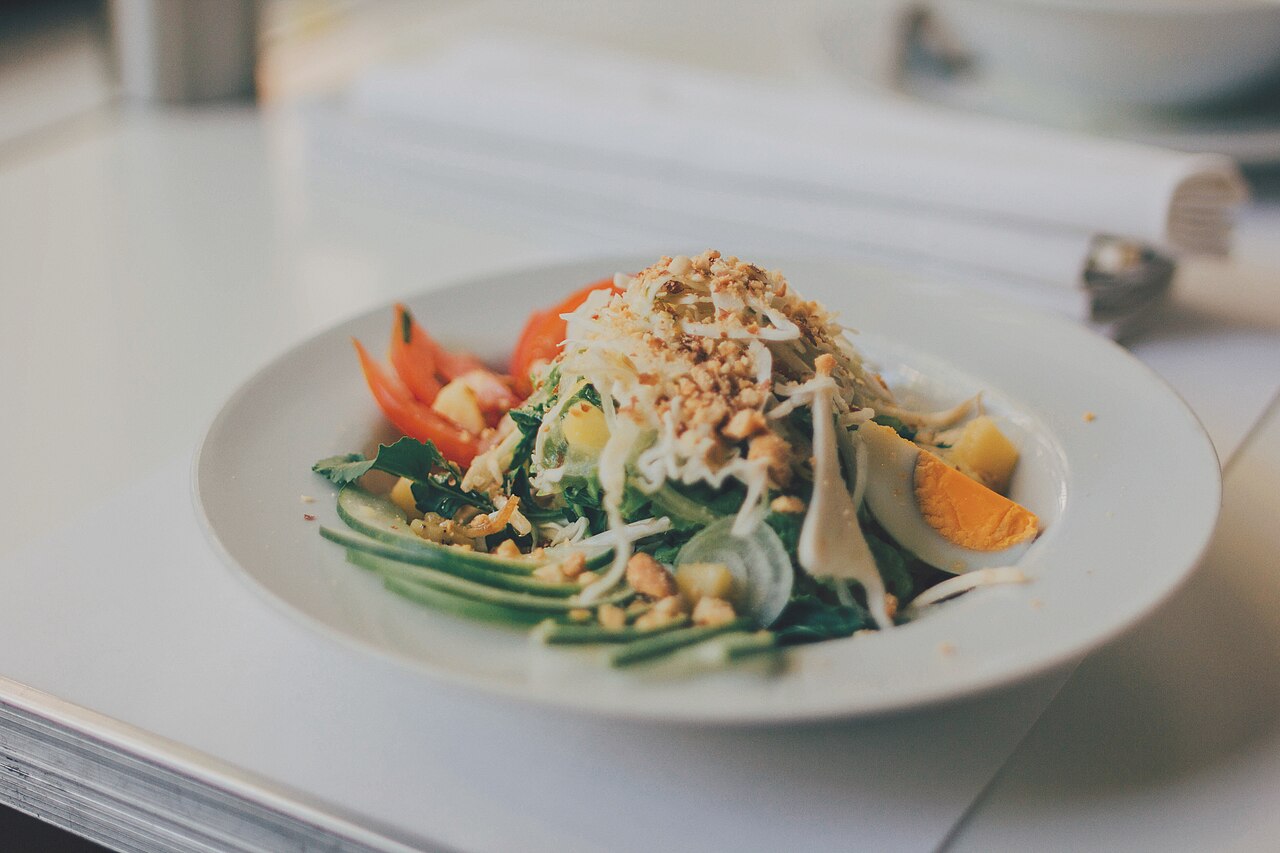
- File:Salad Bowl (Unsplash).jpgWikimedia Commons · Photo by Henrique Felix, CC0 public-domain dedication.
Educational summary of gut-health research, not medical advice. Do not stop treatment or cut out foods without advice from your gastroenterologist or dietitian.
Analysis by NutroPractic from the sources listed. Written for general readers; it does not replace advice from your own doctor.
From our articles
Our guides on this subject
Plain-language guides on nutrition and wellness, backed by research.

Gut health
Probiotic capsules: which ones have trial evidence, what they can do, and when to skip them
Children on antibiotics: 8% got diarrhoea with a probiotic, 19% without. Older hospital patients: 10.8% with, 10.4% without. Which capsules have evidence, what three guidelines say about IBS, what a course costs per case prevented, and who shouldn't take them.
2 Nov 2026
Gut health
Gluten-free without coeliac disease: who actually benefits, and what the blinded gluten challenges found
In blinded trials only 16% of people who said gluten made them ill reacted to gluten rather than placebo, and in Oslo fructans caused more bloating than gluten. Who really needs to avoid it, how to get tested before you stop, how much gluten is in a slice of bread or a roti, and what gluten-free food costs (159% more in the UK) and lacks.
1 Nov 2026

Gut health
Lactose intolerance: how much milk most people can actually tolerate, and which dairy is easiest
Most adults who don't digest lactose well still handle about 12 g at once, roughly a 250 ml glass of milk, in blinded trials. What the 12 g studies found, a lactose table for milk, yoghurt, cheese, chai and dahi, how lactase tablets and A2 milk compare, why the famous 68% figure was retracted, and how to keep calcium up if you cut back.
25 Oct 2026
Newsfeed for your website
Want this feed on your website?
Add it to any site with one copy-and-paste snippet. No sign-up, and it updates itself every hour.
Start with a virtual consultation
Tell Dr. Triveni what you want to change. You will leave with a clear next step, whether you are in Toronto, London, New York or Chennai.