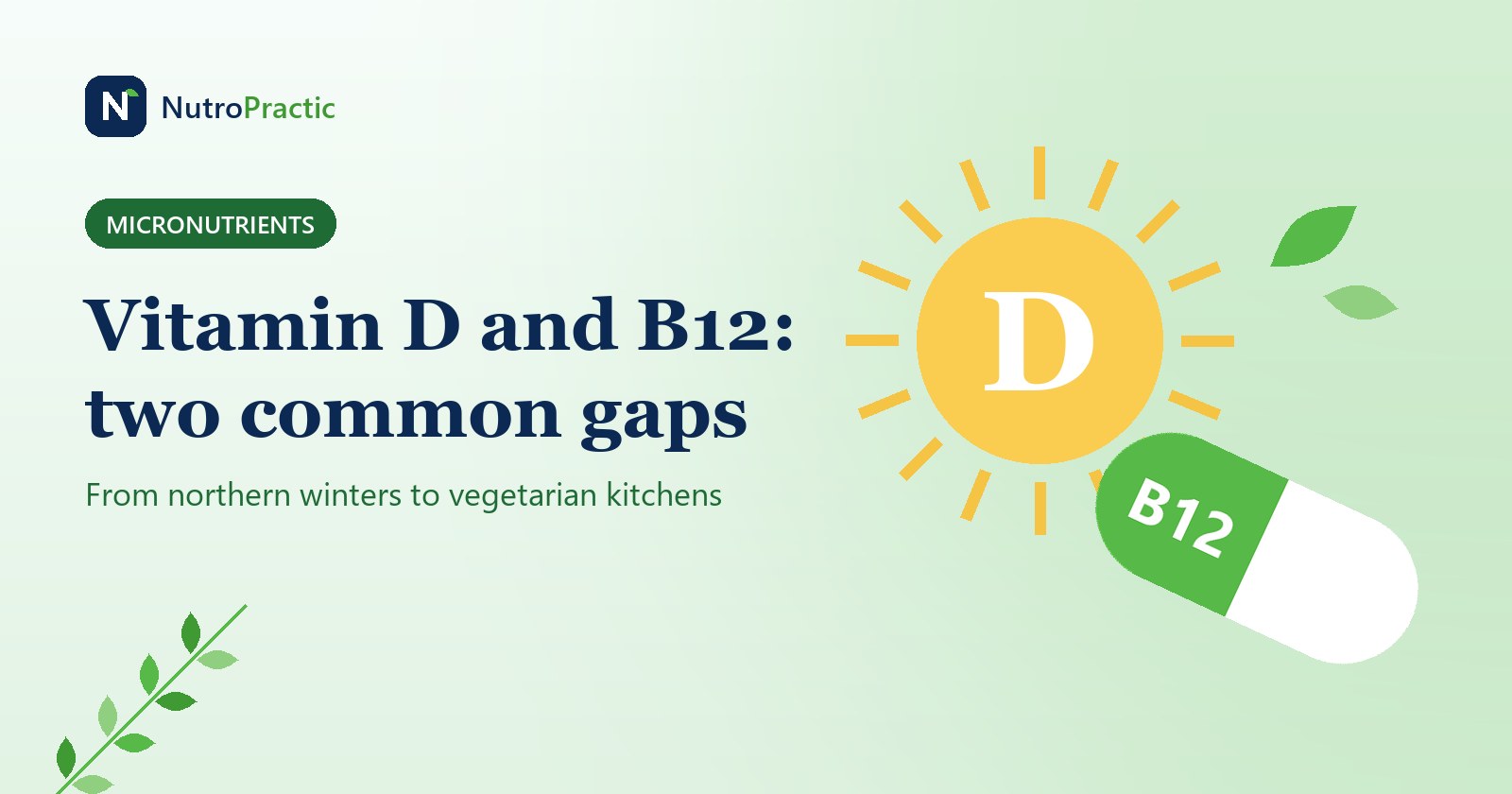
Most nutrients are easy to get from a varied diet. Vitamin D and vitamin B12 are two exceptions. Low levels are common on both sides of the world, for different reasons, and both can quietly affect your energy, bones and nerves for years before you notice.
Vitamin D: the sunshine vitamin that the sun doesn't always deliver
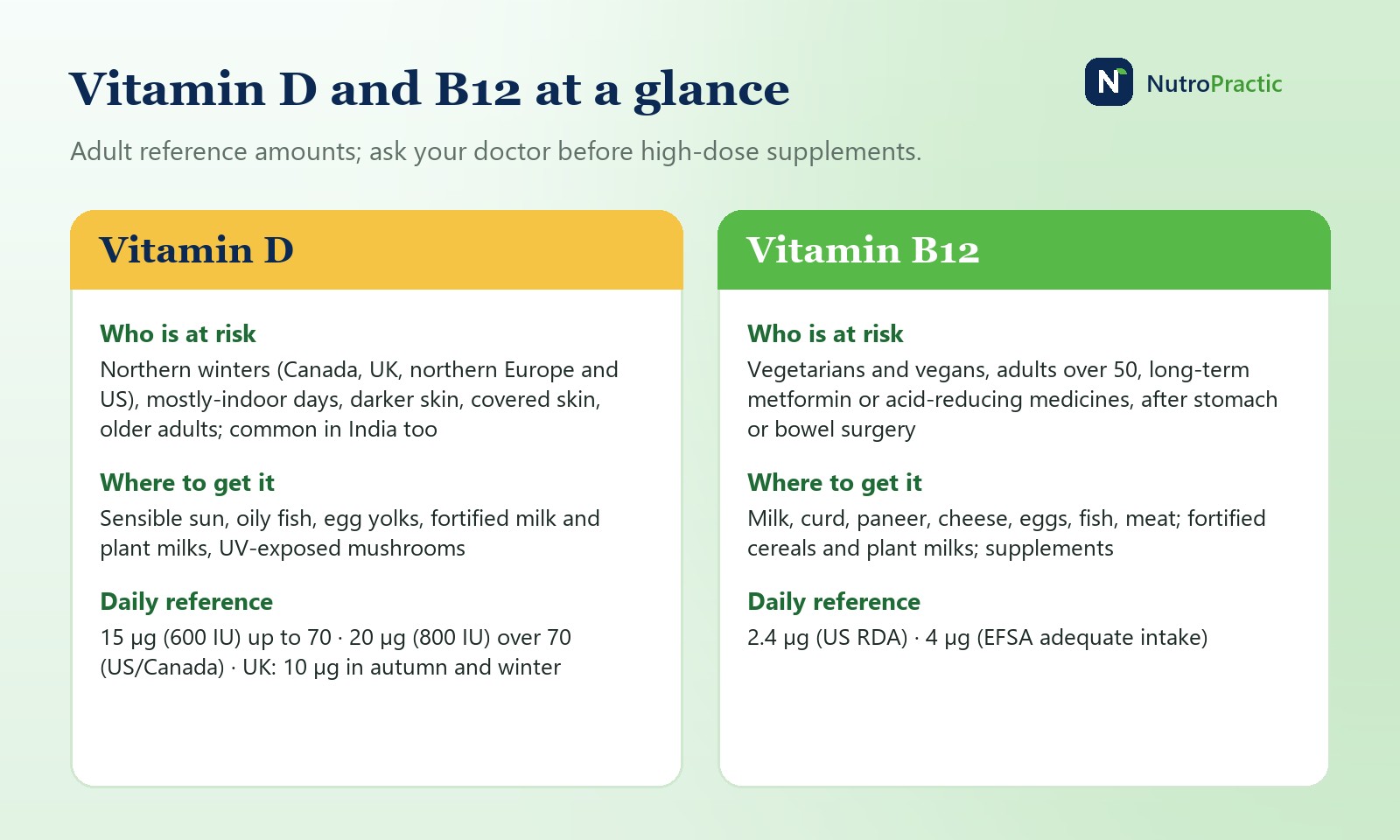
Your skin makes vitamin D from the sun's UVB rays. Food supplies only a little. In Canada, the UK and much of northern Europe and the northern US, the winter sun is too weak for the skin to make meaningful amounts from roughly October to March. That is why the UK's NHS advises that everyone should consider a daily 10 microgram (400 IU) vitamin D supplement in autumn and winter.
Sunny countries are not automatically safe. Many studies from India report vitamin D deficiency in a majority of the people tested, in cities and villages alike. Indoor work and study, covering most of the skin, air pollution, and darker skin (which needs more sun to make the same amount) all play a part.
How much you need
In the USA and Canada the RDA is 15 micrograms (600 IU) a day for adults up to 70, and 20 micrograms (800 IU) over 70. The European Food Safety Authority sets an adequate intake of 15 micrograms a day for adults. More is not better: the safe upper limit for adults in the US and EU is 100 micrograms (4,000 IU) a day, unless your doctor prescribes more to treat a deficiency.
Where to get it
Oily fish such as salmon, sardines and mackerel; egg yolks; fortified milk and plant milks (milk is fortified by law in Canada and widely in the US); some fortified cereals and spreads; and mushrooms exposed to UV light. Sensible daily sun on the arms and face helps when the season allows it.
Vitamin B12: the vegetarian's blind spot
Vitamin B12 keeps nerves healthy and is needed to make red blood cells. It is found naturally only in animal foods: milk, curd, cheese, eggs, fish and meat. Fortified foods and supplements are the other reliable sources.
That makes B12 a particular concern in India, where many people are lifelong vegetarians. Studies from several Indian cities have found low B12 in a large share of adults, especially vegetarians. Vegans everywhere are at high risk without supplements or fortified foods.
Other people at risk
Adults over 50: absorption falls with age, so the US National Academies advise getting most B12 from fortified foods or supplements after 50. People taking metformin for diabetes or acid-reducing medicines (such as proton-pump inhibitors) for a long time. People who have had stomach or bowel surgery or have conditions that affect absorption.
How much you need, and the warning signs
The US RDA for adults is 2.4 micrograms a day; EFSA sets an adequate intake of 4 micrograms a day. Signs of deficiency include tiredness, pale skin, a sore tongue, tingling or numbness in hands and feet, memory problems and low mood. Nerve damage from long-term deficiency can become permanent, so it is worth catching early.
A simple blood test can check both. If you are in a risk group, ask your doctor about testing before you start high-dose supplements.
A quick checklist
1. Live far from the equator, spend most daylight hours indoors, or have darker skin? Think about vitamin D, especially in winter. 2. Vegetarian or vegan, over 50, or on metformin or acid-reducing medicine? Think about B12. 3. Include fortified foods that suit your diet. 4. Get tested if you have symptoms or several risk factors, and take supplements at the dose your doctor suggests.
Vegetarian, vegan, or not sure your diet covers the basics? Dr. Triveni can review it with you in a 15-minute virtual consultation.
Book a 15-minute consultationSources
US National Institutes of Health, Office of Dietary Supplements, Vitamin D and Vitamin B12 fact sheets for health professionals. NHS (UK), Vitamin D. Health Canada, Vitamin D and calcium: updated Dietary Reference Intakes. EFSA, Dietary Reference Values for vitamin D (2016) and for cobalamin (vitamin B12) (2015). Institute of Medicine, Dietary Reference Intakes for Thiamin, Riboflavin, Niacin, Vitamin B6, Folate, Vitamin B12, Pantothenic Acid, Biotin, and Choline (1998). Aparna P. et al., Vitamin D deficiency in India, Journal of Family Medicine and Primary Care (2018). ICMR-National Institute of Nutrition, Dietary Guidelines for Indians (2024).