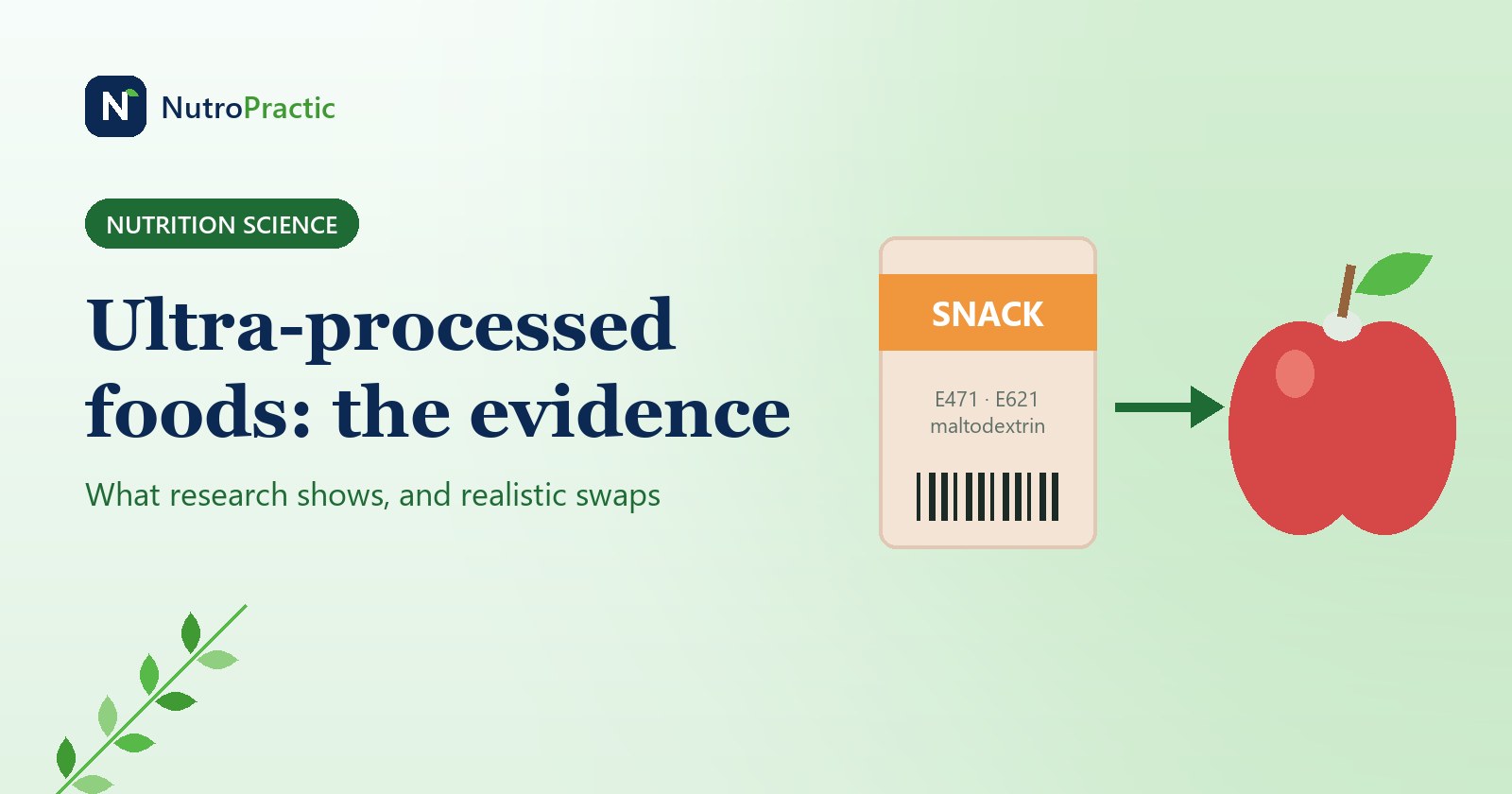
"Ultra-processed food" has gone from an academic term to a supermarket worry in a few years. In the US and the UK, ultra-processed foods supply more than half of the calories people eat, and in Canada close to half. Here is what the term means, what the research shows so far, and how to act on it without turning your kitchen upside down.
What makes a food "ultra-processed"?
Most research uses the NOVA classification, developed by researchers at the University of São Paulo. It sorts foods by how much and why they are processed, not by their nutrients:
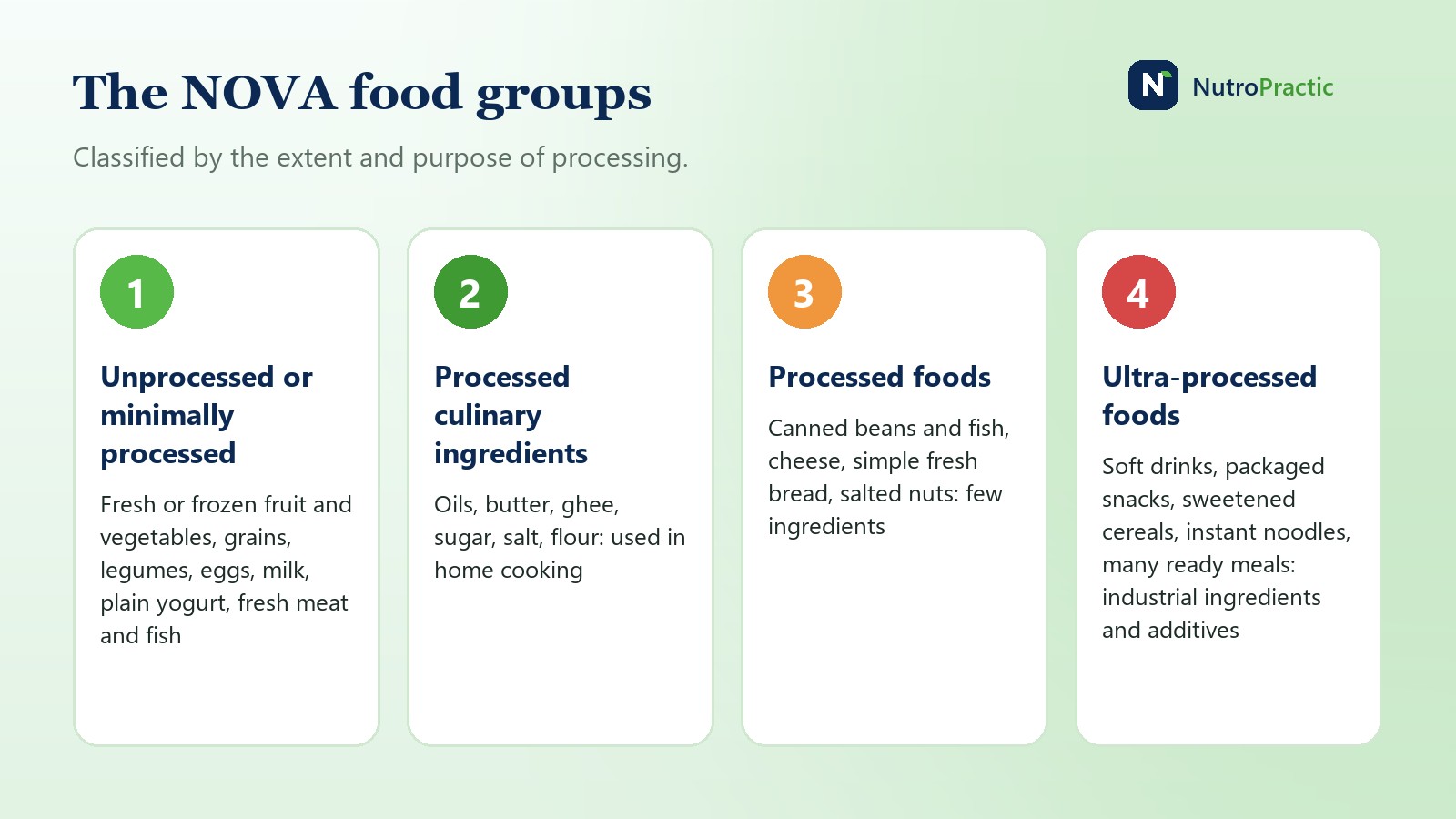
Ultra-processed foods (group 4) are industrial formulations made mostly from substances extracted from foods, such as refined starches, sugars, oils and protein isolates, plus additives like emulsifiers, flavourings, colours and sweeteners. Think soft drinks, packaged snacks, sweetened breakfast cereals, instant noodles, reconstituted meat products and many ready meals.
The trial that changed the conversation
In 2019 Kevin Hall and colleagues at the US National Institutes of Health ran a tightly controlled study. Twenty adults lived in a clinical centre for four weeks: two weeks on an ultra-processed diet and two weeks on an unprocessed diet, matched for calories, sugar, fat, fibre and salt on the plate. People could eat as much as they wanted.
On the ultra-processed diet they ate about 500 more calories a day and gained about 0.9 kg in two weeks. On the unprocessed diet they lost about the same amount. They also ate faster on the ultra-processed diet.
What large studies link them to
An umbrella review in the BMJ in 2024 pulled together 45 pooled analyses covering almost 10 million people. Higher intake of ultra-processed foods was linked with higher risk of 32 health outcomes. The evidence was rated convincing for a higher risk of death from cardiovascular disease, type 2 diabetes, and anxiety and common mental disorders, and highly suggestive for several others, including obesity and death from any cause.
What we don't know yet
Most of this evidence is observational, so it shows links rather than proof of cause. NOVA group 4 is also very broad: a fizzy drink and a packaged whole-grain bread can sit in the same group, and they are clearly not equal. Researchers are still working out how much of the harm comes from nutrients (sugar, salt, refined starch), from the way these foods are engineered to be eaten quickly, or from additives.
You don't need a perfect diet. Shifting the balance towards whole and minimally processed foods is what counts.
A realistic way to eat fewer
1. Upgrade the everyday items first. The foods you eat daily, such as breakfast cereal, bread, yogurt and drinks, make the biggest difference. Choose plain oats over sweetened cereal, plain yogurt with fruit over flavoured yogurt, water or sparkling water over soft drinks.
2. Use helpful shortcuts. Frozen vegetables and fruit, canned beans and fish, plain nuts, eggs, and pre-washed salad are processed but not ultra-processed. They make fast, home-style meals easy.
3. Read the ingredients list. A long list with things you wouldn't keep in a home kitchen (for example emulsifiers, flavour enhancers, hydrogenated oils, high-fructose corn syrup, maltodextrin) is a sign of an ultra-processed product.
4. Cook a little more, in batches. One evening of batch cooking (a pot of chilli, dal, soup or roasted vegetables) can replace several ready meals.
5. Make snacks the easy target. Packaged snacks are a large share of ultra-processed calories. Keep fruit, nuts, cheese, hummus or roasted chickpeas within reach.
Need help building simple, mostly-whole-food meals around your schedule? Book a 15-minute virtual consultation with Dr. Triveni.
Book a 15-minute consultationSources
Monteiro C. et al., Ultra-processed foods: what they are and how to identify them, Public Health Nutrition (2019). Hall K. et al., Ultra-processed diets cause excess calorie intake and weight gain: an inpatient randomized controlled trial of ad libitum food intake, Cell Metabolism (2019). Lane M. et al., Ultra-processed food exposure and adverse health outcomes: umbrella review of epidemiological meta-analyses, BMJ (2024). US National Center for Health Statistics, Ultra-processed food consumption in youth and adults: United States, August 2021–August 2023, NCHS Data Brief (2025). Rauber F. et al., Ultra-processed food consumption and chronic non-communicable diseases-related dietary nutrient profile in the UK (2008–2014), Nutrients (2018). Moubarac J.-C. et al., Consumption of ultra-processed foods predicts diet quality in Canada, Appetite (2017).