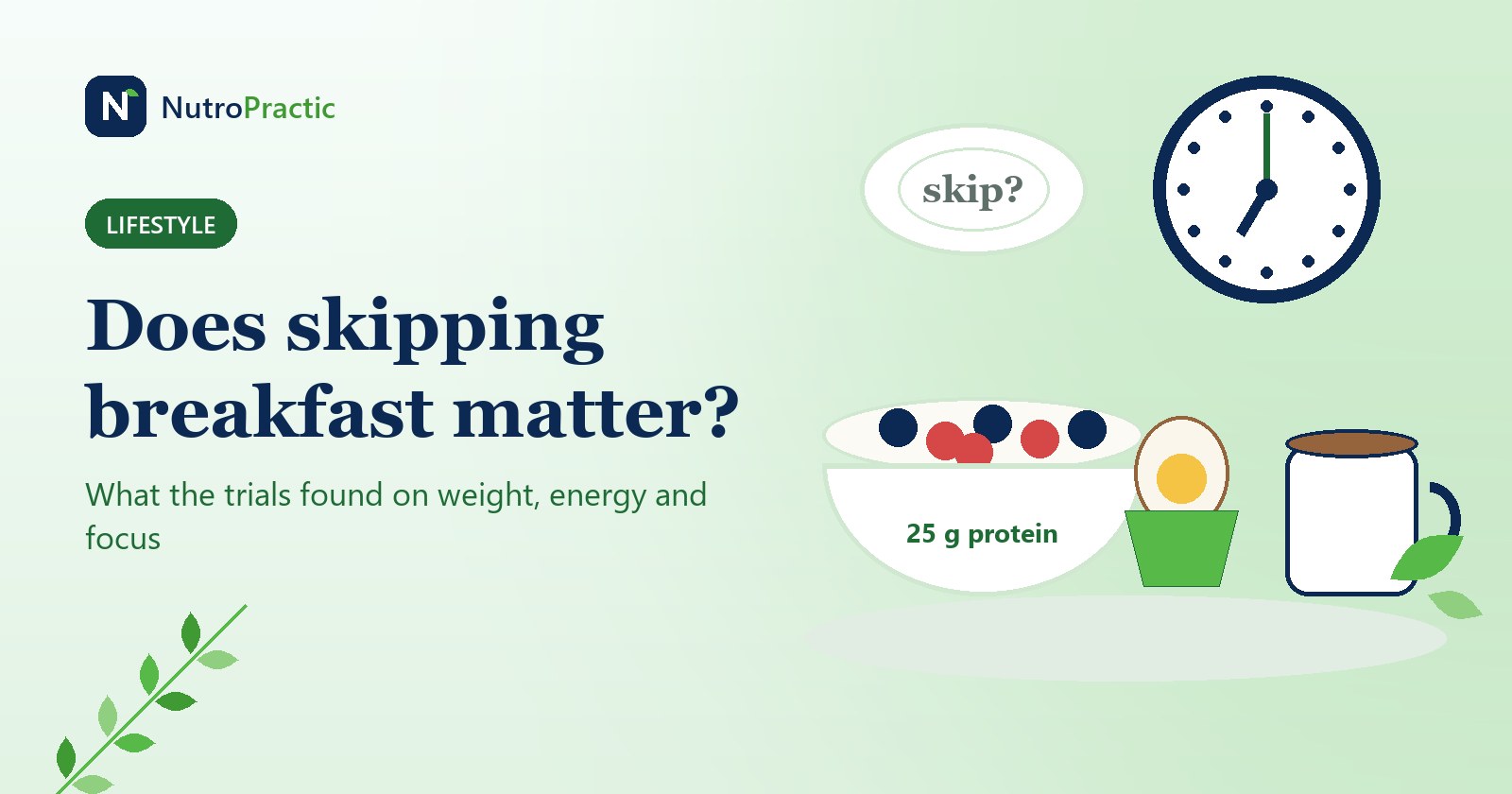
"Breakfast is the most important meal of the day" has been repeated for so long that it sounds like a finding. For most of the 20th century it rested on surveys: people who ate breakfast were slimmer and healthier than people who didn't. But breakfast eaters also smoked less, slept more regular hours and exercised more. The only way to separate breakfast from everything that travels with it is to randomise people to eat it or skip it, and since 2014 several groups have done exactly that.
The short version: for healthy adults trying to manage their weight, skipping breakfast does no harm, and in the trials it slightly helped. For children at school, and for people with type 2 diabetes, the picture is different. The details below, with the numbers.
Weight: what happened when people were told to eat it or skip it
The largest single test is the Dhurandhar trial (American Journal of Clinical Nutrition, 2014). Researchers at five US sites randomised 309 adults with overweight or obesity into three groups for 16 weeks: told to eat breakfast before 10:00, told to skip it, or given general healthy-eating leaflets that didn't mention breakfast. 283 finished. Weight change was the same in all three groups, and it made no difference whether people had been habitual breakfast eaters or skippers to begin with.
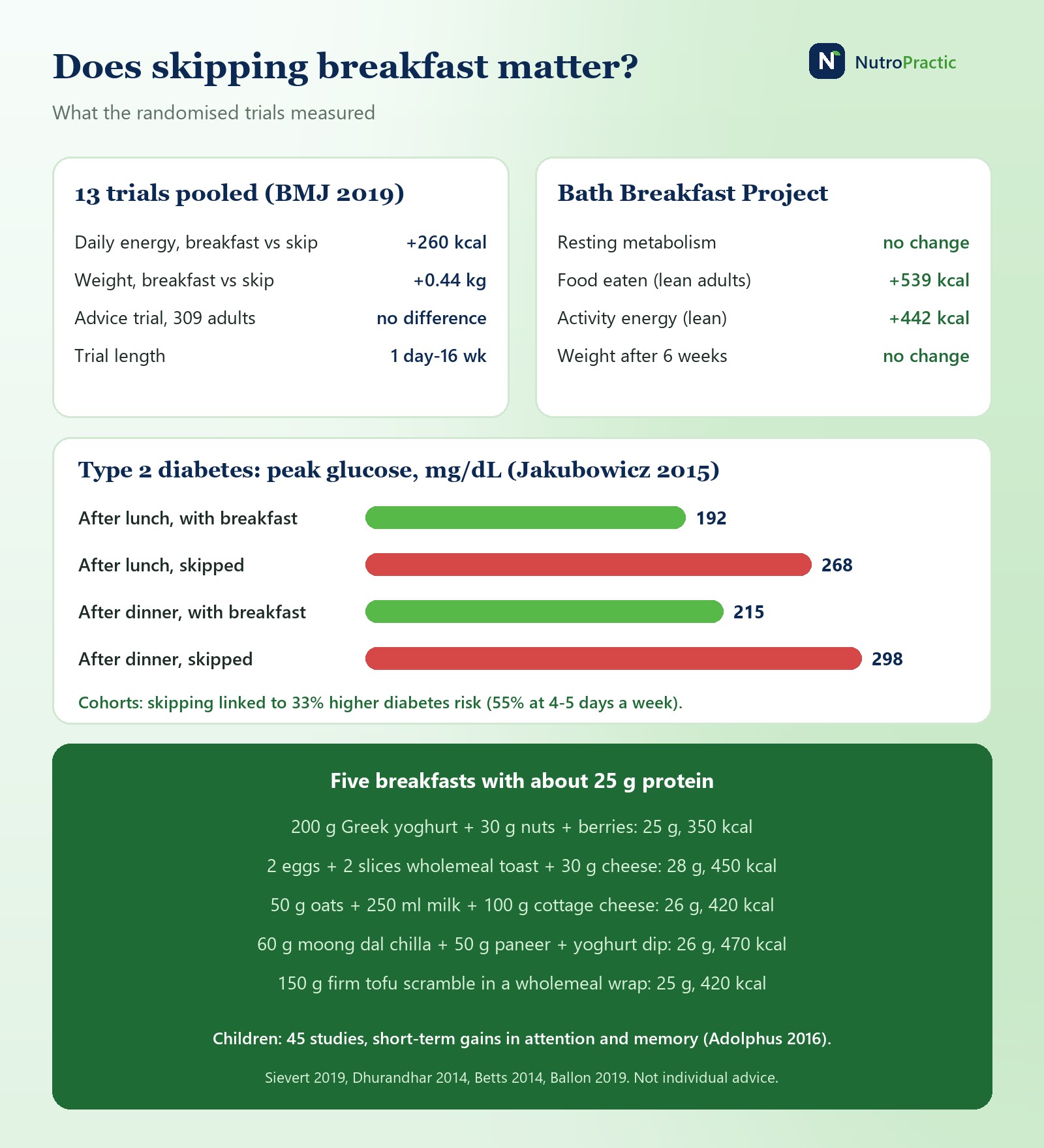
In 2019 a team at Monash University pooled every randomised trial they could find in adults in high-income countries (Sievert and colleagues, BMJ). Thirteen trials qualified. Seven measured weight and ten measured how much people ate across the whole day:
Daily energy intake, breakfast vs skipping: breakfast eaters ate 259.79 kcal a day more (95% CI 78.87 to 440.71)
Weight, breakfast vs skipping: breakfast eaters were 0.44 kg heavier (95% CI 0.07 to 0.82)
Trial length: 24 hours to 16 weeks
Consistency: moderate (I² = 43% for weight)
The idea behind "eat breakfast to lose weight" is that skipping it leaves you so hungry that you overeat later. The trials found that people did eat a little more at lunch after skipping, but not enough to make up for the whole breakfast. A worked example: a 350 kcal breakfast followed by a lunch 90 kcal smaller still adds 260 kcal to the day, which is almost exactly the pooled figure.
The authors flagged the weaknesses themselves: the trials were short, several were at high risk of bias, and many participants knew which group they were in. A 0.44 kg gap is small. The fair reading is not "breakfast makes you fat" but "adding a meal to help weight loss is not supported".
Energy and activity: the Bath Breakfast Project
If breakfast doesn't change weight, does it change how the body runs? The Bath Breakfast Project at the University of Bath measured it in more detail than any other trial: resting metabolic rate by gas analysis, physical activity by heart-rate and motion sensors worn day and night, and food intake by weighed diaries.
Lean adults (Betts and colleagues, 2014)
33 lean adults aged 21-60 were randomised for 6 weeks to eat at least 700 kcal before 11:00 or to have nothing but water until noon. Results:
Resting metabolic rate: no difference (within 11 kcal a day). Breakfast does not "kick-start the metabolism".
Food intake: 539 kcal a day more with breakfast (95% CI 157 to 920). Skippers ate a bit more later, but nowhere near the full breakfast.
Activity energy: 442 kcal a day more with breakfast (95% CI 34 to 851), mostly light activity during the morning.
Weight and body fat: no difference after 6 weeks.
Blood sugar: steadier in the afternoon and evening with breakfast by the final week.
Adults with obesity (Chowdhury and colleagues, 2016)
The same design in 23 adults with obesity found breakfast raised morning activity by 188 kcal (95% CI 40 to 335), but over the full 24 hours the difference was not significant. Energy intake was 338 kcal a day higher with breakfast, also not significant. Weight did not differ. Insulin sensitivity did improve with breakfast, a finding the researchers saw as worth a longer trial.
So the "energy" that breakfast eaters report is real in one sense: they moved more in the morning. In lean adults that roughly balanced the extra food. It doesn't make breakfast a weight tool, but if you feel sluggish and sit still all morning without it, that is a reason to eat it.
Focus: children at school
Children are where the case for breakfast is strongest. A systematic review from the University of Leeds (Adolphus and colleagues, Advances in Nutrition 2016) gathered 45 studies. In the 24 short-term studies that compared breakfast with no breakfast, eating it gave modest benefits the same morning, most clearly on attention, executive function and memory tasks, and most in children who were undernourished or habitually went without.
School programmes show the same direction with less certainty. England's Magic Breakfast evaluation (Education Endowment Foundation, 106 primary schools, revised in 2019) found pupils aged 6-7 in schools with a free universal breakfast club made about two months' extra progress in reading, writing and maths over a year, with better attendance and behaviour. The result for 10-11 year olds did not hold up after a schools allocation error was found, and the evaluation is now rated low to moderate security.
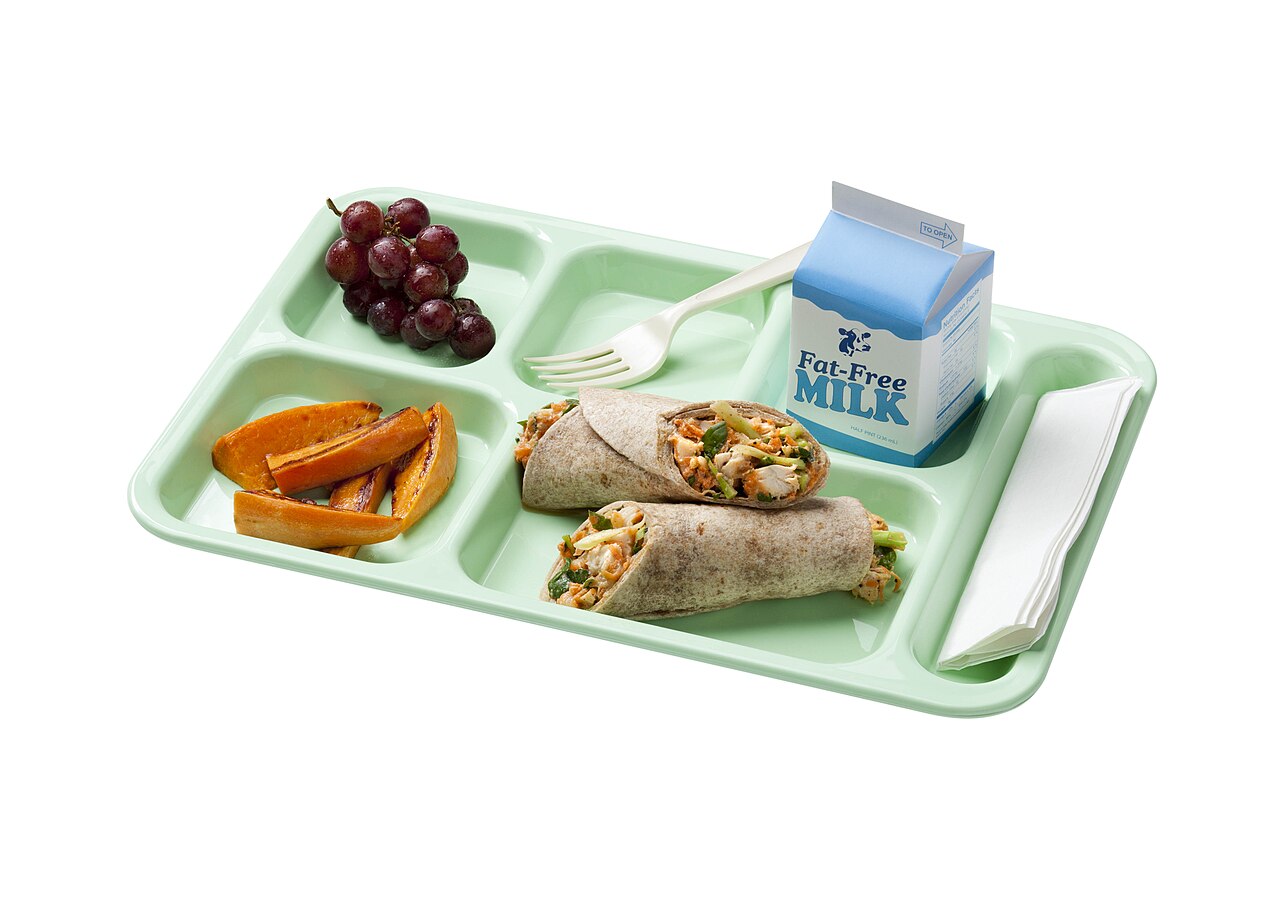
The practical point for parents: a child who leaves at 07:30 and has lunch at 12:30 is going five hours on nothing, at an age when the brain uses a much larger share of the body's glucose than in adults. Breakfast doesn't have to be big. For packed lunches and the rest of the school day, see what studies on school meals found.
Type 2 diabetes: the exception for adults
For adults with type 2 diabetes, skipping breakfast looks like a bad trade. In a crossover trial at Tel Aviv University (Jakubowicz and colleagues, Diabetes Care 2015), 22 adults with type 2 diabetes ate identical 700 kcal lunches and dinners on two test days, once with breakfast and once without:
Peak glucose after lunch: 268 mg/dL without breakfast vs 192 mg/dL with it
Peak glucose after dinner: 298 mg/dL without breakfast vs 215 mg/dL with it
Insulin response: delayed by about 30 minutes on the no-breakfast day
This is the "second-meal effect": a morning meal primes the body to handle the next one. The trial was small and lasted two days, but cohort studies point the same way. A 2019 meta-analysis of six cohorts (Ballon, Neuenschwander and Schlesinger, Journal of Nutrition; 96,175 people) found skipping breakfast linked to 33% higher risk of developing type 2 diabetes (22% after allowing for body weight), levelling off at 55% higher for people who skipped it four or five days a week. Cohorts can't prove cause, and skippers differ in many ways, but nothing in the evidence suggests skipping helps.
If you take insulin or a sulfonylurea (gliclazide, glimepiride), skipping a meal can also cause a low. Don't change your meal pattern without talking to your diabetes team. If you are aiming for remission, see what the DiRECT trial showed.
If you eat it: make it a protein breakfast
When breakfast does help, protein seems to be the part doing the work. In a crossover trial in 20 teenage girls who usually skipped breakfast (Leidy and colleagues, American Journal of Clinical Nutrition 2013), a 350 kcal breakfast with 35 g of protein reduced hunger through the morning and cut evening snacking on high-fat foods compared with skipping. A 350 kcal breakfast with 13 g of protein did less. Total daily calories didn't differ, so this is about appetite and food choices rather than weight on its own.
A target of 25-30 g of protein at breakfast also helps older adults keep muscle, as explained in Protein after 40. Five breakfasts that get there, using USDA FoodData Central values:
Greek yoghurt bowl: 200 g plain 0% Greek yoghurt (20 g protein) + 30 g mixed nuts (5 g) + berries = about 25 g protein, 350 kcal
Eggs on toast: 2 large eggs (12.6 g) + 2 slices wholemeal bread (8 g) + 30 g reduced-fat cheese (8 g) = about 28 g, 450 kcal
Overnight oats: 50 g oats (6.5 g) + 250 ml semi-skimmed milk (8.5 g) + 100 g cottage cheese or skyr (11 g) = about 26 g, 420 kcal
Moong dal chilla: 60 g moong dal (14.5 g) + 50 g paneer filling (9 g) + mint yoghurt dip (3 g) = about 26 g, 470 kcal
Tofu scramble wrap: 150 g firm tofu (18 g) + 1 wholemeal tortilla (5 g) + 30 g hummus (2.5 g) = about 25 g, 420 kcal
Compare a typical quick breakfast: a croissant and a large latte gives about 17 g of protein for around 420 kcal; a 30 g bowl of cornflakes with 200 ml of milk about 9 g for 210 kcal.
So, should you eat breakfast?
Healthy adult, not hungry in the morning, managing weight: skipping is fine. Don't force a meal you don't want. Keep your first meal a good one, not a mid-morning pastry.
Healthy adult who is hungry, sluggish or overeats at night without it: eat it, and make it protein-led.
Type 2 diabetes: eat breakfast, ideally protein with some slow carbohydrate, and keep the timing regular.
Children and teenagers: a breakfast before school, even a small one, is worth the effort.
Pregnancy, heavy training, or a history of disordered eating: regular meals, breakfast included.
If you skip breakfast as part of a time-restricted eating plan, note that the trials comparing eating windows have found weight loss comes mostly from eating less overall, not from the window itself.
Breakfast doesn't speed up your metabolism, and skipping it won't make you gain weight. Eat it if you are hungry, have diabetes or are sending a child to school, and make it about protein.
Not sure whether breakfast, a later first meal or something else fits your day, your blood sugar or your family? Dr. Triveni can build a meal pattern around your routine in a virtual consultation.
Book a consultationThis article is general information, not medical advice. If you have diabetes, take medicines that lower blood sugar, are pregnant or have a history of an eating disorder, talk to your doctor before changing when you eat.
Sources
Sievert K., Hussain S.M., Page M.J. et al., Effect of breakfast on weight and energy intake: systematic review and meta-analysis of randomised controlled trials, BMJ 364:l42 (2019). Dhurandhar E.J. et al., The effectiveness of breakfast recommendations on weight loss: a randomized controlled trial, Am J Clin Nutr 100(2):507-513 (2014).
Betts J.A. et al., The causal role of breakfast in energy balance and health: a randomized controlled trial in lean adults, Am J Clin Nutr 100(2):539-547 (2014). Chowdhury E.A. et al., The causal role of breakfast in energy balance and health: a randomized controlled trial in obese adults, Am J Clin Nutr 103(3):747-756 (2016).
Adolphus K., Lawton C.L., Champ C.L., Dye L., The effects of breakfast and breakfast composition on cognition in children and adolescents: a systematic review, Adv Nutr 7(3):590S-612S (2016). Education Endowment Foundation, Magic Breakfast: evaluation report (2016, revised 2019).
Jakubowicz D. et al., Fasting until noon triggers increased postprandial hyperglycemia and impaired insulin response after lunch and dinner in individuals with type 2 diabetes: a randomized clinical trial, Diabetes Care 38(10):1820-1826 (2015). Ballon A., Neuenschwander M., Schlesinger S., Breakfast skipping is associated with increased risk of type 2 diabetes among adults: a systematic review and meta-analysis of prospective cohort studies, J Nutr 149(1):106-113 (2019).
Leidy H.J. et al., Beneficial effects of a higher-protein breakfast on the appetitive, hormonal, and neural signals controlling energy intake regulation in overweight/obese, "breakfast-skipping," late-adolescent girls, Am J Clin Nutr 97(4):677-688 (2013). USDA FoodData Central for the breakfast protein figures.