School food environments · October 31, 2026
Around the 71 New Zealand primary schools studied, unhealthy food outlets outnumbered healthier ones by nearly four to one. Inside the school gate, the menu told a different story
A new mapping study counted nearby outlets and scored 71 primary-school menus. It found a striking neighbourhood food landscape, but only a weak link between it and what the canteen offered.
What children can buy on the way to and from school is part of their food environment, but it is rarely visible in a school menu. Researchers in New Zealand mapped every food outlet within 1.6 kilometres of 71 primary schools, then compared that local landscape with what each school canteen offered. The study, published on 26 October, is a snapshot rather than a test of what children ate, but its numbers give a clear sense of the choices surrounding a school day.
The average school had 45 food outlets in that radius. Unhealthy outlets outnumbered healthier ones, 23 to 6 on average. Takeaways made up 29.8% of the outlets and convenience stores 17.6%, and 83% of schools had at least one takeaway within 1.6 kilometres. Schools in more deprived areas had a denser surrounding food environment: the study estimated a 13% increase in outlet density for each one-unit rise in its deprivation score.
The canteen menus were not a mirror image of the street outside. On average, 19.7% of listed foods were rated healthy ('green'), 35.1% occasional ('amber') and 35.5% unhealthy ('red'). The relationship between the types and density of nearby outlets and a school’s menu was weak. A school can have a carefully managed menu while pupils still pass plenty of takeaway and convenience-food options; the reverse can also be true.
The result does not prove that a nearby takeaway causes a child to eat differently, and it cannot be assumed to apply outside New Zealand. The researchers did not measure purchases, diet, body size or health, and mapping services can miss businesses or misclassify them. Still, it is a useful reminder for parents, schools and policymakers: improving school food is not only about one counter at lunchtime. Practical support for nutrition guidance and the choices around the school gate may both matter.
Food outlets and canteen menus around 71 New Zealand primary schools (Public Health Nutrition, 26 October 2026)
71
Primary schools with a canteen menu analysed
1.6 km
Radius used to map nearby food outlets
45
Average number of food outlets around each school
23 vs 6
Average unhealthy versus healthy outlets nearby
83%
Schools with at least one takeaway within 1.6 km
19.7% / 35.1% / 35.5%
Average menu share rated green / amber / red
This cross-sectional study mapped outlets and scored menus at one point in time. It found a weak association between nearby outlets and canteen menus, and did not measure children’s purchases, overall diets or health outcomes.
- A cross-sectional study compares information collected at one point in time. It can show patterns but cannot establish that one factor caused another.
- The study classified menu foods using New Zealand’s green, amber and red system: green foods are everyday choices, amber foods are occasional choices and red foods are less healthy choices.
- Outlet density means how many places sell food in an area. It does not show whether a family uses them, how often, or what anyone buys there.
- A food environment includes more than restaurants: convenience stores, supermarkets, vending points, price, marketing, transport and foods at home can all shape a choice.
- School food availability and surrounding food outlet density in New Zealand primary schoolsPublic Health Nutrition, 26 October 2026 · Original cross-sectional study; mapping method, menu scores, outlet counts, associations and limitations.
- PubMed record PMID 42929257US National Library of Medicine · Structured abstract with the school sample, 1.6 km mapping radius and key numerical findings.
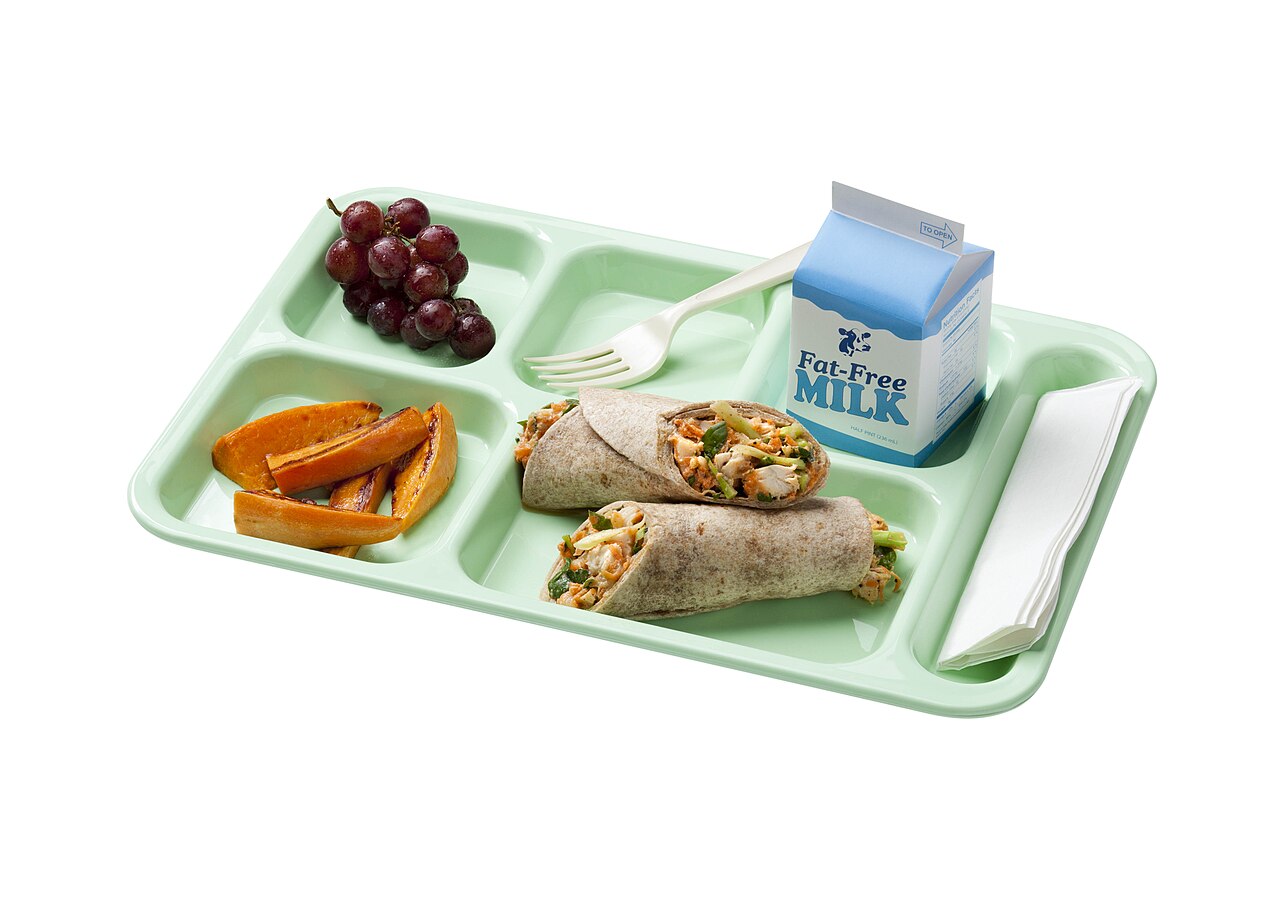
- A school tray showing a reimbursable school breakfastWikimedia Commons · Public-domain U.S. Department of Agriculture photograph used as a general illustration.
General information, not medical advice. This study mapped food outlets and school menus in New Zealand; it did not measure what individual children ate or their health. For individual nutrition questions, speak with a registered dietitian or your child’s healthcare professional.
Analysis by NutroPractic from the sources listed. Written for general readers; it does not replace advice from your own doctor.
From our articles
Read, then eat a little better
Plain-language guides on nutrition and wellness, backed by research.
Diabetes
Potatoes and blood sugar: boiled, cooled, mashed or fried, and what the cohorts and trials found
Fries were linked to 20% higher diabetes risk per three servings a week in 205,000 US adults; boiled, baked and mashed potatoes to almost none. GI by cooking method, resistant starch in grams after chilling, the glycaemic load of a potato against a cup of rice, and how to fit aloo into an Indian plate.
30 Oct 2026
Children's nutrition
Picky eaters aged 2 to 8: what feeding studies show works at the table
Fussy eating peaks between two and six and is usually a normal stage, not a parenting failure. Feeding trials show what moves it: small repeated tastes, eating together, no pressure and the right kind of reward. Here is how to use them, and the signs that mean it's more than picky eating.
30 Oct 2026
Women's health
PCOS and food: what the diet trials show for cycles, insulin and weight
PCOS affects about one woman in ten, and most are told to "lose weight" with little else. Here is what drives it, why insulin matters even in slim women, how much weight loss brings cycles back, what the low-GI and Mediterranean trials found, what inositol and metformin do, and which tests to ask for.
30 Oct 2026
Newsfeed for your website
Want this feed on your website?
Add it to any site with one copy-and-paste snippet. No sign-up, and it updates itself every hour.
Start with a virtual consultation
Tell Dr. Triveni what you want to change. You will leave with a clear next step, whether you are in Toronto, London, New York or Chennai.