India's largest diabetes survey, ICMR-INDIAB, published in The Lancet Diabetes & Endocrinology in 2023, estimated that 11.4% of adults have diabetes and 15.3% have prediabetes. That is roughly 101 million people with diabetes and 136 million more at high risk.
Food is a big part of the story. The ICMR-National Institute of Nutrition's Dietary Guidelines for Indians (2024) estimate that 56.4% of India's total disease burden is due to unhealthy diets. The good news: the fix doesn't require foreign foods or giving up rice and roti. It is mostly about proportions.
The problem: too much of the plate is cereal
Many Indian meals are built around a large mound of rice or a stack of rotis, with a small katori of dal and a little sabzi. That makes refined cereals the main source of calories and leaves protein, vegetables and fibre short. Cereal-heavy meals cause bigger rises in blood sugar after eating.
What the 2024 guidelines suggest
The guidelines introduce "My Plate for the Day", which spreads a day's food across eight groups. Key points: cereals and millets should provide no more than about 45% of daily calories; pulses, eggs, fish and meat about 14 to 15%; vegetables and fruits should make up a large share of what you eat, with green leafy vegetables every day; total fat within about 30% of calories; added sugar below 5% of calories; and salt within 5 g a day.
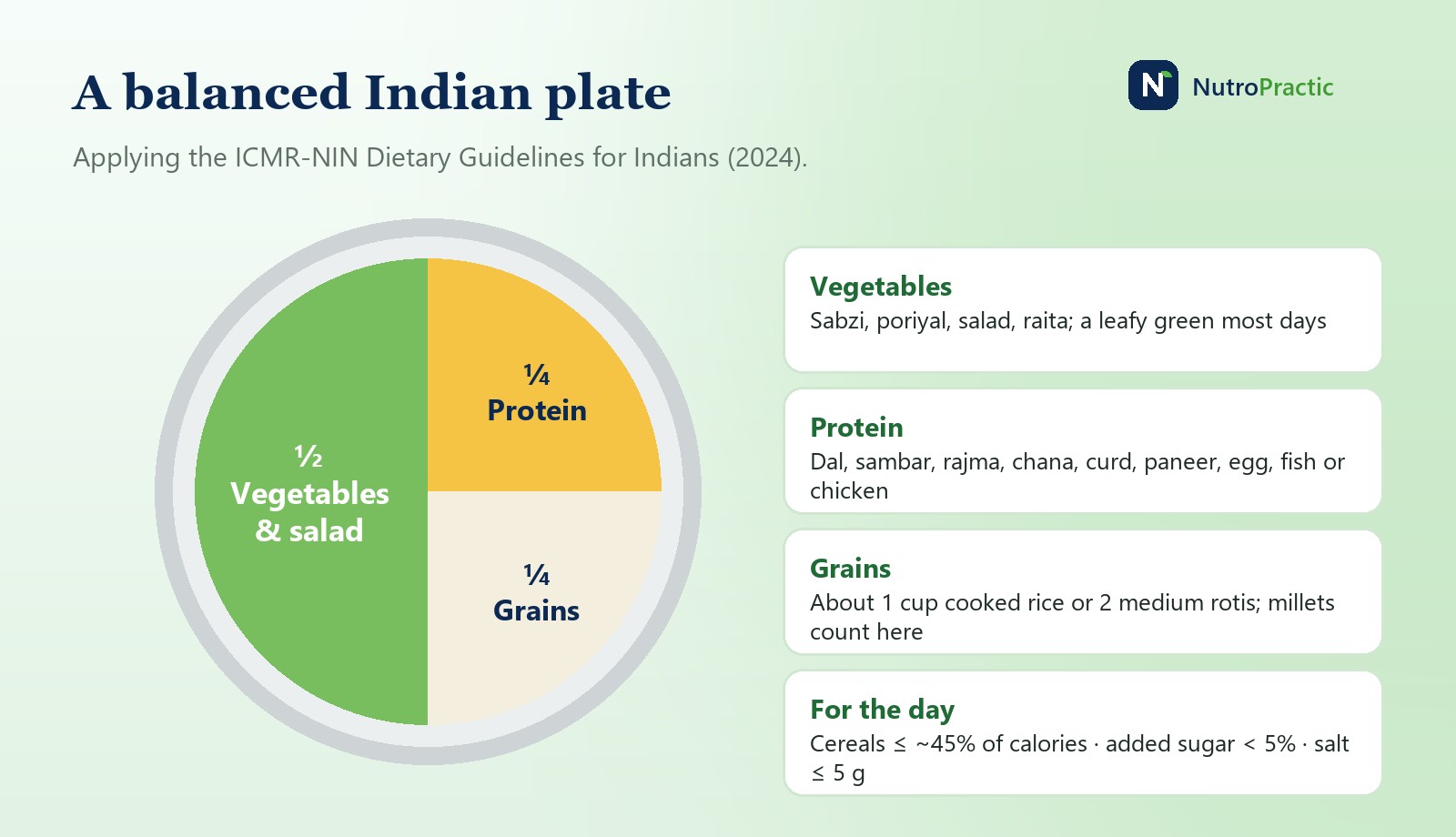
Turning it into a thali
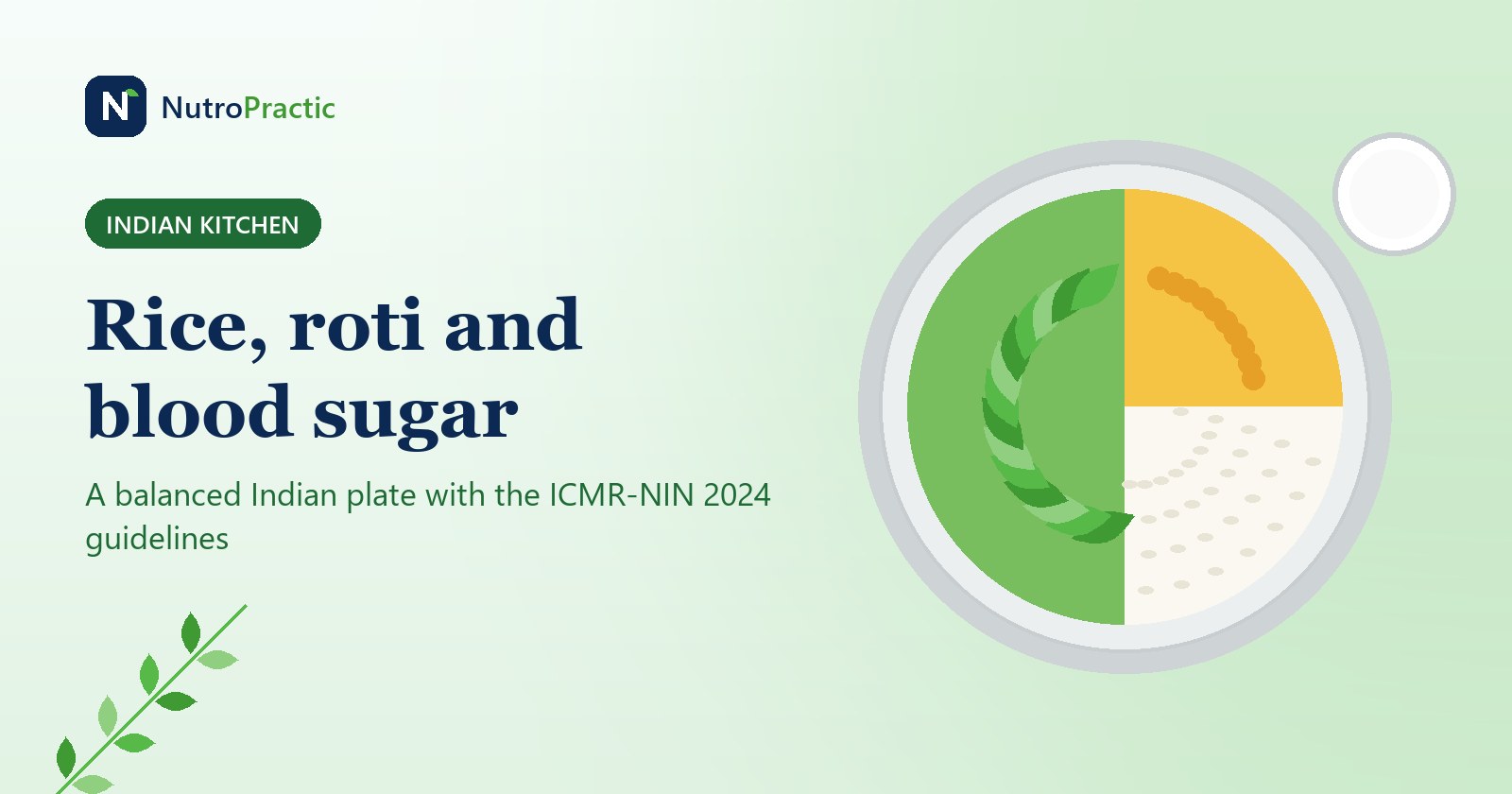
Half the plate: vegetables. Two sabzis, a kootu or poriyal, a bowl of salad or raita. Include a leafy green such as palak, methi, amaranth or drumstick leaves most days.
A quarter: protein. A full katori of thick dal or sambar, rajma, chana, curd, paneer, eggs, fish or chicken. Protein at every meal helps slow the rise in blood sugar and keeps you full.
A quarter: grains. About one cup of cooked rice, or two medium rotis, or millets such as ragi, jowar or bajra. Whole grains and millets bring more fibre, but they are still carbohydrates, so the portion still matters.
Five habits that help
1. Eat vegetables and protein first, rice or roti last. Small studies have found lower blood sugar after a meal when the carbohydrate part is eaten at the end.
2. Walk for 10 to 15 minutes after meals. Research in people with type 2 diabetes found that a short walk after each meal lowered blood sugar after eating more than one longer walk at another time of day.
3. Fix the chai and the snacks. Cut the sugar in tea and coffee gradually. Swap biscuits, namkeen and fried snacks for roasted chana, sprouts chaat, a fruit, buttermilk or a handful of nuts.
4. Watch the cooking oil and salt. Measure oil for the day instead of pouring freely, and go easy on pickles, papads and packaged foods, which are high in salt.
5. Don't skip breakfast and then overeat at night. Regular meals with protein make it easier to avoid large, late, cereal-heavy dinners.
If you already take medicine or insulin for diabetes, change your diet together with your doctor, because better eating can lower your blood sugar and your doses may need adjusting.
Want a plate plan built around your family's food, region and routine? Book a 15-minute virtual consultation with Dr. Triveni.
Book a 15-minute consultationSources
Anjana R.M. et al., Metabolic non-communicable disease health report of India: the ICMR-INDIAB national cross-sectional study (ICMR-INDIAB-17), The Lancet Diabetes & Endocrinology (2023). ICMR-National Institute of Nutrition, Dietary Guidelines for Indians (2024). Shukla A. et al., Food order has a significant impact on postprandial glucose and insulin levels, Diabetes Care (2015). Reynolds A. et al., Advice to walk after meals is more effective for lowering postprandial glycaemia in type 2 diabetes mellitus than advice that does not specify timing, Diabetologia (2016).