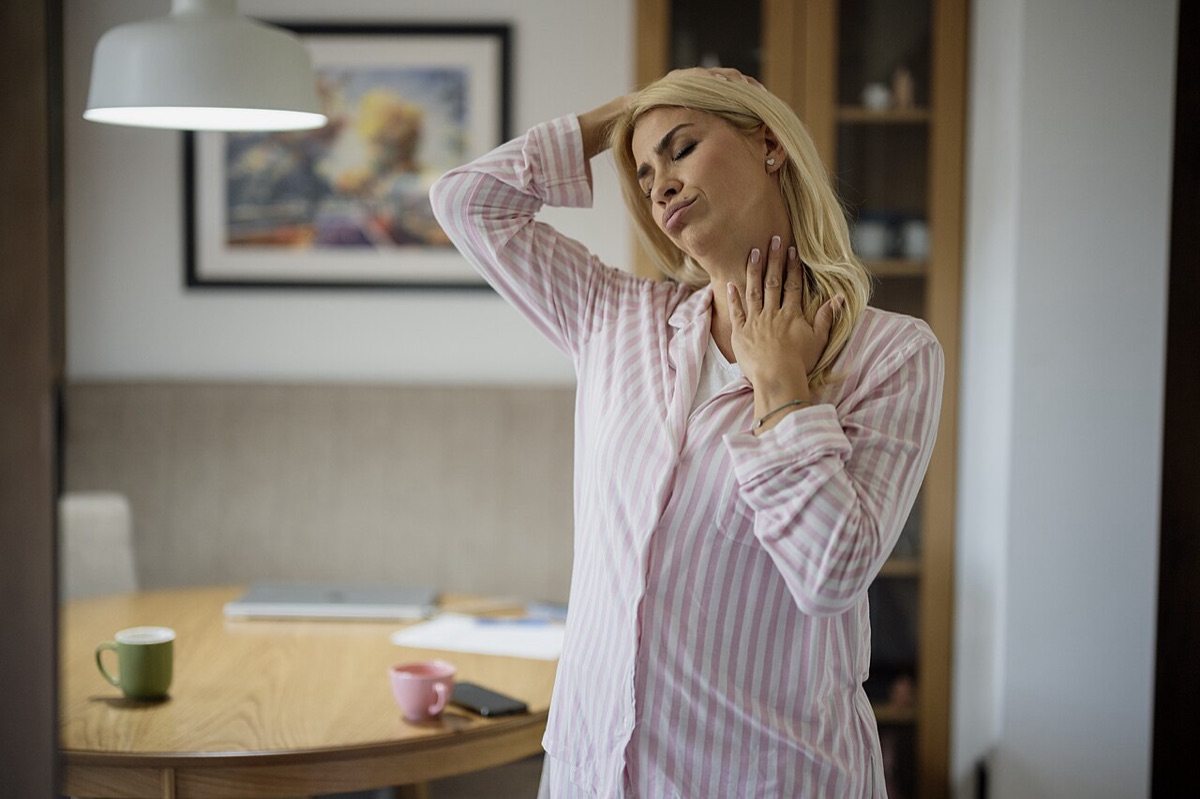
An underactive thyroid is one of the most common hormone problems there is, and it is far more common in women than in men. In the large US NHANES III survey, about 4.6% of adults had low thyroid function on a blood test, most of them mildly. A survey in eight Indian cities found about one adult in ten. Levothyroxine, the replacement hormone, is among the most prescribed medicines in the US, the UK and India.
Once the diagnosis is made, the food questions start. Can I eat broccoli? Is soy off limits? Should I go gluten-free? Will the weight come off now? The honest answer is that food can't fix an underactive thyroid, but it can quietly stop your tablet from working. Here is what the studies show, starting with the part that matters most.
Food can't replace the hormone
In most adults in countries with enough iodine, hypothyroidism is caused by Hashimoto's thyroiditis: the immune system slowly damages the thyroid until it can't make enough hormone. No diet has been shown to restart a gland that has lost that capacity, and no supplement does what levothyroxine does. When TSH is clearly raised, the tablet is the treatment.
What food can do is narrower and still useful: make sure the tablet is absorbed the same way every day, keep the few foods and supplements that get in its way at a distance, keep iodine in the normal range, and deal with the tiredness and weight changes that come with the condition.
When to take levothyroxine
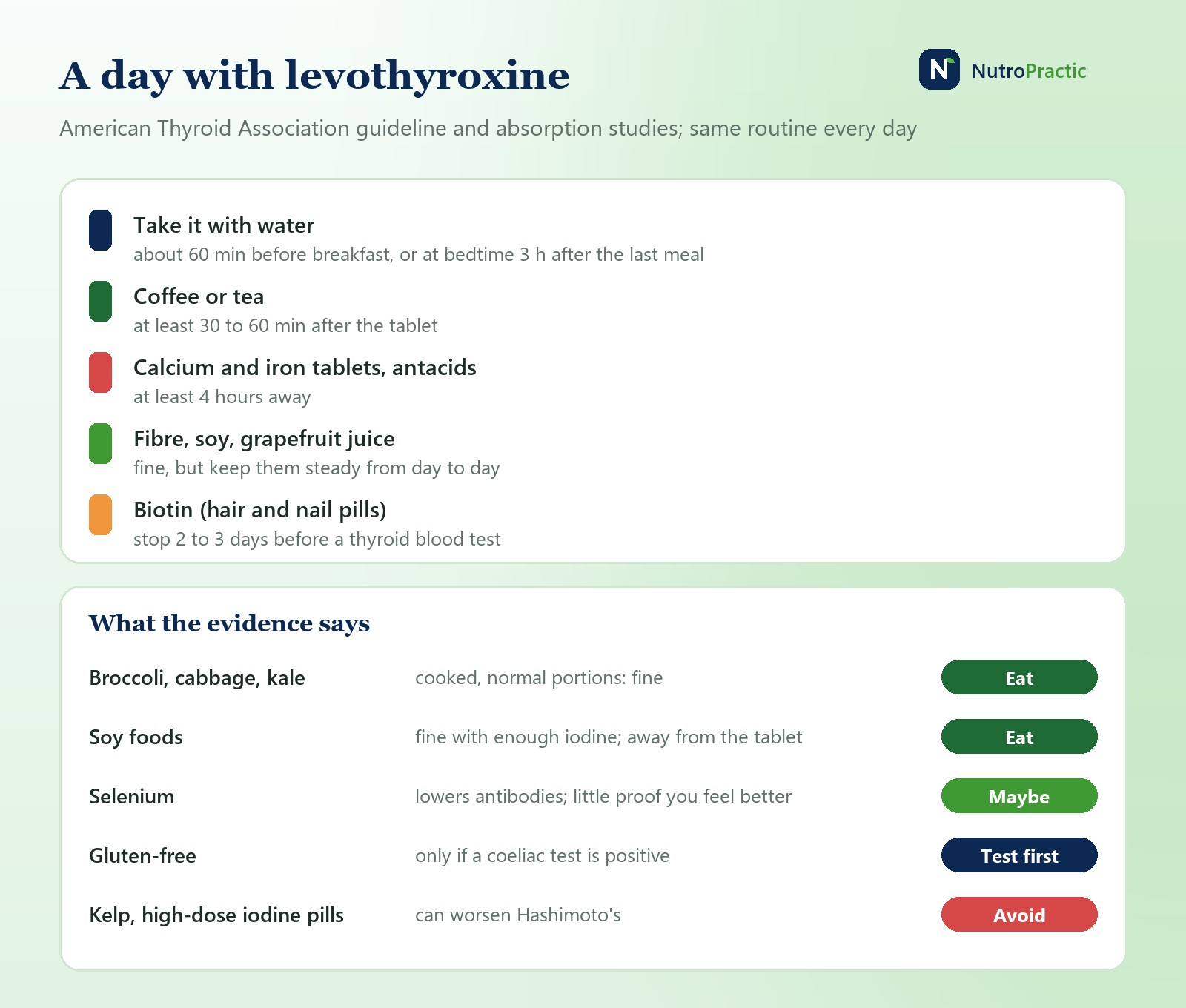
Levothyroxine is absorbed in the small intestine, and food easily gets in the way. The American Thyroid Association's guideline advises taking it with water, about 60 minutes before breakfast, or at bedtime, at least three hours after the last meal, and doing the same thing every day. In a Dutch trial (Bolk and colleagues, 2010), 90 patients swapped between morning and bedtime doses; thyroid hormone levels were, if anything, slightly better at bedtime, and later trials and a meta-analysis found no real difference in TSH. So the best time is the one you can keep.
The gap before food matters more than people think. In a US trial (Bach-Huynh, 2009), TSH was lowest and steadiest when the tablet was taken an hour before breakfast and highest when it was taken with breakfast. If you have always taken it with breakfast and your dose is stable, don't switch on your own: changing the routine changes how much you absorb, so plan it with your doctor and recheck the blood test six to eight weeks later.
Coffee, calcium, iron and the other things that get in the way
Coffee. In an Italian study (Benvenga, 2008), espresso drunk with the tablet clearly cut how much levothyroxine reached the blood; drunk an hour later, it made no difference. Tea seems to do something similar. If an hour without coffee is not going to happen, ask about the liquid or soft-gel forms of levothyroxine, which coffee affects much less.
Calcium and iron. Calcium carbonate (in many calcium tablets and antacids) and iron tablets both bind levothyroxine in the gut. In a small study in JAMA (Singh, 2000), calcium carbonate taken with the tablet cut its absorption and raised TSH within three months, and a 1992 study found the same for ferrous sulfate. The usual advice is to keep calcium and iron supplements at least four hours away from levothyroxine. This matters most for women: iron in pregnancy and calcium after menopause are exactly when the clash happens. Calcium-fortified juice and plant milks count too.
The rest. High-fibre breakfasts and bran, soy foods, grapefruit juice, and medicines such as acid-reducing tablets (PPIs), cholesterol binders and some phosphate binders can all lower absorption. None of them is banned. The aim is consistency: if you eat a lot of fibre or soy, eat it every day and away from the tablet, and let your dose be set around it.
Biotin (vitamin B7, common in hair, skin and nail supplements) doesn't change thyroid function, but it can wreck the blood test and make results look like an overactive thyroid. The US FDA has warned about it. Stop biotin two or three days before a thyroid test, and tell the lab you take it.
Broccoli, cabbage and the goitrogen worry
Cruciferous vegetables (broccoli, cabbage, kale, cauliflower, Brussels sprouts, bok choy, mustard greens) contain glucosinolates, which break down into compounds that can stop the thyroid taking up iodine. That is where the warnings come from. In practice, the doses that cause trouble are extreme. The case everyone quotes, in the New England Journal of Medicine in 2010, was a woman in her eighties who ate 1 to 1.5 kg of raw bok choy a day for several months and ended up in intensive care.
At normal portions there is no good evidence of harm, especially when iodine intake is adequate. Cooking (steaming, boiling, stir-frying) inactivates much of the enzyme that releases these compounds. The vegetables bring fibre, folate, vitamin C and potassium, and people with an underactive thyroid have the same reasons as everyone else to eat them. The only habit worth changing is a large raw kale or cabbage juice every day: cook some of it, or rotate your greens.
Soy
Soy isoflavones can inhibit an enzyme the thyroid uses to make hormone, and soy can reduce how much levothyroxine is absorbed. Reviews of the human trials (Messina and Redmond, 2006, and later ones) found that soy doesn't cause hypothyroidism in people with normal thyroid function who get enough iodine.
The trial that gives pause comes from Hull in the UK (Sathyapalan, 2011). Sixty people with a mildly underactive thyroid (subclinical hypothyroidism), not yet on treatment, took soy protein with 16 mg of isoflavones a day, about what a traditional Asian diet supplies, for eight weeks; six of them, one in ten, became overtly hypothyroid. A later trial by the same group, with a higher dose, found no clear change in thyroid levels. The practical reading: tofu, tempeh, edamame and soy milk are fine as part of meals. If your thyroid is already borderline, skip concentrated isoflavone pills, and if you take levothyroxine, keep soy away from the tablet and eat it steadily rather than in bursts.
Selenium and Brazil nuts
The thyroid holds more selenium per gram than any other organ, and selenium is part of the enzymes that activate thyroid hormone and protect the gland. Many trials in Hashimoto's have given 100 to 200 micrograms a day. A 2024 meta-analysis in the journal Thyroid (Huwiler and colleagues, 35 trials) found that selenium lowered TSH in people not on levothyroxine and lowered TPO antibodies, with no more side effects than placebo, but the trials mostly could not show that people felt better or needed less medicine.
Selenium has a narrow window. Above the adult upper limit of 400 micrograms a day it causes brittle nails and hair loss, and in large US trials selenium supplements were linked to more type 2 diabetes. Food is the safer route: fish, eggs, meat, lentils and wholegrains. One or two Brazil nuts a few times a week cover most adults, but the selenium in a single nut varies hugely with the soil, so don't eat a handful a day. A selenium supplement for Hashimoto's is reasonable to discuss with your doctor, especially where soil selenium is low, as in much of Europe, but it is a small lever.
Iodine: enough, but not more
Iodine is the raw material for thyroid hormone, and too little causes hypothyroidism and goitre. Our iodine article covers who runs short today: people who use sea salt or little salt, and those who have swapped dairy for plant milks. But in Hashimoto's, extra iodine can make things worse, and kelp tablets, daily seaweed snacks and 'thyroid support' supplements can hold many times the daily need. Get iodine from iodised salt in moderation, dairy, eggs and fish, and avoid high-dose iodine supplements unless a doctor prescribes them. Pregnancy is the exception, when a prenatal vitamin with 150 micrograms is advised in many countries; ask your doctor if you have thyroid disease.
Gluten-free for Hashimoto's?
Going gluten-free for Hashimoto's is popular online, and the idea isn't absurd. Coeliac disease is more common in people with autoimmune thyroid disease, and untreated coeliac disease can stop levothyroxine being absorbed. Anyone with Hashimoto's who needs an unusually high dose, or has bloating, diarrhoea, anaemia or low ferritin, should have a coeliac blood test while still eating gluten.
For people without coeliac disease, the evidence is thin. A small Polish study of 34 women (Krysiak, 2019) found that six months gluten-free lowered thyroid antibodies a little. A 2023 meta-analysis (Piticchio, Frontiers in Endocrinology) pooled the few small studies, found modest falls in antibodies and TSH, and concluded that the evidence is not enough to recommend the diet to everyone with Hashimoto's. Antibody levels also don't map neatly onto how you feel. If you want to try it, do it properly for a few months and recheck, rather than staying on a restrictive diet for life on hope.
Food can't fix an underactive thyroid, but it can quietly stop your tablet from working.
Weight: what treatment does and doesn't do
Many people blame their thyroid for weight gain and expect treatment to take it off. Hypothyroidism slows metabolism a little and makes the body hold salt and water, so some gain is common, usually a few kilograms. When treatment starts, part of it goes, but much of that is water. In a Boston University review of newly treated patients, only about half lost weight over two years, and the average loss was about 4 kg.
Once TSH is back in range, your energy needs are about the same as anyone else's of your size and age, and weight loss works the same way: more protein and fibre, fewer ultra-processed foods and sugary drinks, strength training and steady walking. Asking for a higher dose to lose weight is risky: too much hormone thins bones and strains the heart, particularly after menopause. If your weight keeps rising on a stable dose, look at food, sleep and activity, and ask whether other medicines or the menopause are part of it. Our menopause article covers the muscle and bone side.
A short checklist
Take the tablet the same way every day, with water, an hour before breakfast or at bedtime three hours after eating.
Coffee and tea 30 to 60 minutes later, and calcium, iron and antacids at least four hours away.
Keep fibre and soy steady, rather than cutting them out.
Eat your greens, mostly cooked. Skip kelp and high-dose iodine pills.
Selenium from food, or a supplement only after a talk with your doctor.
Coeliac test first if you're thinking of going gluten-free, or if your dose keeps climbing.
Recheck TSH six to eight weeks after any change in routine, brand, supplements or weight, and as soon as a pregnancy is confirmed.
Tired, gaining weight, or unsure how to fit levothyroxine around breakfast, coffee and supplements? Dr. Triveni plans meals around thyroid treatment as part of her women's health packages, in a virtual consultation.
Book a consultationThis article is general information, not medical advice. Don't change your levothyroxine dose, brand or timing without your doctor. If you are pregnant or planning a pregnancy, tell your doctor about your thyroid treatment straight away, because the dose usually needs to rise.
Sources
Jonklaas J. et al., Guidelines for the treatment of hypothyroidism, American Thyroid Association, Thyroid 24(12):1670-1751 (2014). Hollowell J.G. et al., Serum TSH, T4, and thyroid antibodies in the United States population (1988 to 1994): NHANES III, J Clin Endocrinol Metab 87(2):489-499 (2002). Unnikrishnan A.G. et al., Prevalence of hypothyroidism in adults: an epidemiological study in eight cities of India, Indian J Endocrinol Metab 17(4):647-652 (2013). Bolk N. et al., Effects of evening vs morning levothyroxine intake: a randomized double-blind crossover trial, Arch Intern Med 170(22):1996-2003 (2010). Bach-Huynh T.G. et al., Timing of levothyroxine administration affects serum thyrotropin concentration, J Clin Endocrinol Metab 94(10):3905-3912 (2009).
Benvenga S. et al., Altered intestinal absorption of L-thyroxine caused by coffee, Thyroid 18(3):293-301 (2008). Singh N. et al., Effect of calcium carbonate on the absorption of levothyroxine, JAMA 283(21):2822-2825 (2000). Campbell N.R. et al., Ferrous sulfate reduces thyroxine efficacy in patients with hypothyroidism, Ann Intern Med 117(12):1010-1013 (1992). US FDA, Biotin (vitamin B7): safety communication, may interfere with lab tests (2017, updated 2019).
Chu M., Seltzer T.F., Myxedema coma induced by ingestion of raw bok choy, N Engl J Med 362:1945-1946 (2010). Messina M., Redmond G., Effects of soy protein and soybean isoflavones on thyroid function in healthy adults and hypothyroid patients: a review of the relevant literature, Thyroid 16(3):249-258 (2006). Sathyapalan T. et al., The effect of soy phytoestrogen supplementation on thyroid status and cardiovascular risk markers in patients with subclinical hypothyroidism, J Clin Endocrinol Metab 96(5):1442-1449 (2011).
Huwiler V.V. et al., Selenium supplementation in patients with Hashimoto thyroiditis: a systematic review and meta-analysis of randomized clinical trials, Thyroid 34(3):295-313 (2024). NIH Office of Dietary Supplements, Selenium: fact sheet for health professionals. Krysiak R. et al., The effect of gluten-free diet on thyroid autoimmunity in drug-naive women with Hashimoto's thyroiditis, Exp Clin Endocrinol Diabetes 127(7):417-422 (2019). Piticchio T. et al., Effect of gluten-free diet on autoimmune thyroiditis progression in patients with no symptoms or histology of celiac disease: a meta-analysis, Front Endocrinol 14:1200372 (2023). American Thyroid Association, Does treatment of hypothyroidism lead to weight loss?, Clinical Thyroidology for the Public.