Chronic pain · October 30, 2026
Twenty women with fibromyalgia kept food diaries, wore trackers and gave blood. Half their calories came from ultra-processed food, but stress was what tracked their pain
A small Bournemouth University study measured almost everything at once: diet, sleep, steps, heart rhythm, stress, inflammation in the blood and how much pressure each woman could take before it hurt. The diet showed up in the blood. The stress showed up in the pain.

Fibromyalgia is long-lasting, widespread pain that comes with poor sleep, tiredness and often low mood, and it mostly affects women. There is no blood test for it, and the nervous system of people who have it seems to turn the volume up on pain signals. People living with it hear a lot of advice about anti-inflammatory diets, sleep and exercise, but few studies have measured all of those things in the same people at the same time. A pilot study published in Nutrients on 25 October tried to do exactly that.
Researchers at Bournemouth University in England screened 55 volunteers and enrolled 20 women aged 18 to 65 with a doctor-confirmed diagnosis, between May and August 2025. Their median age was 48, and they had been diagnosed for a median of five and a half years. Each woman came in fasting for a blood test (three inflammation markers: IL-6, TNF-alpha and IL-10), filled in questionnaires on pain, stress and sleep, and took home a three-day food diary and a Fitbit to wear for two weeks. When she came back, a researcher pressed a gauge into her shoulder and shin muscles to find the point where pressure became painful, and tested how well her body could damp pain down on its own.
The diaries were scored two ways. One was a dietary inflammatory index, which weights 29 nutrients by how they have been linked to inflammation in earlier research; the group's median score was clearly on the pro-inflammatory side. The other was how much of each woman's energy came from ultra-processed food: a median of 50%. The women walked a median of about 6,100 steps a day and slept about seven and a half hours a night by the tracker, though their own sleep-quality scores were poor.
The clearest signal was not about food. Women who reported more stress had worse fibromyalgia impact scores, more signs of a sensitised nervous system and more pain right now, with correlations of 0.64 to 0.68, which is strong for this kind of study. After allowing for age and time since diagnosis, each extra point on the 40-point stress scale went with about 2.3 points more on the 100-point fibromyalgia impact questionnaire.
Diet did show up, but in the blood rather than in the pain. Women whose diets scored as more inflammatory had higher IL-6 (correlation 0.46). More ultra-processed food went with lower pain thresholds, meaning they hurt sooner under pressure, but those links (around −0.4) fell short of statistical significance. Among the blood markers, higher TNF-alpha went with lower pressure-pain thresholds (−0.55). Steps, sleep hours and heart-rate variability from the trackers showed nothing worth reporting. One result went against expectations: women who rated their sleep as worse actually showed stronger built-in pain damping.
The authors are blunt about what this can and can't say. Twenty people is very few, everything was measured at one point in time, and when the team corrected for the many comparisons they had made, none of the associations survived. IL-10 could only be measured in 13 of the 20 women, and the trackers are not lab-grade sleep or heart tests. They describe the results as estimates to plan a larger study, not evidence of cause. Still, it is a useful reminder for anyone living with fibromyalgia: diet and inflammation may be one thread, but in this group, stress was the one most tightly wound around the pain.
Exploring Relationships Between Multimodal Lifestyle Factors, Inflammatory Biomarkers, and Pain Processing in Women with Fibromyalgia: An Exploratory Pilot Study (Nutrients, 2026)
20 of 55
Women with fibromyalgia enrolled out of those screened, Bournemouth University, May to August 2025; no dropouts
50%
Median share of daily energy from ultra-processed food in three-day food diaries (middle half of women: 38% to 61%)
0.68
Correlation between perceived stress and fibromyalgia impact score, the strongest link in the study
+2.3
Points on the 100-point fibromyalgia impact questionnaire per extra point on the 40-point stress scale, after age and time since diagnosis
0.46
Correlation between a more inflammatory diet score and blood IL-6
0
Associations that held up after correcting for multiple comparisons
Exploratory cross-sectional pilot study (n = 20 women, 18 to 65, 2016 ACR criteria; median age 48, median 66 months since diagnosis), registered NCT07074275. Diet from a 3-day food diary (two weekdays, one weekend day) analysed in Nutritics; energy-adjusted Dietary Inflammatory Index (EDII) from 29 components, median 3.32; ultra-processed food by NOVA. Fitbit Charge 6 for 14 days: median 6,140 steps/day, 7.5 h sleep. Median BMI 28.1, Perceived Stress Scale 25 (IQR 20 to 28), FIQ 63.6, Central Sensitization Inventory 66, PSQI 12, worst pain 7/10. Spearman correlations: stress with FIQ 0.68, CSI 0.67, current pain 0.64 (all p ≤ 0.002); EDII with IL-6 0.46 (p = 0.04), with IL-10 0.47 (n = 13, p = 0.10), with TNF-α 0.22 (p = 0.36); UPF with trapezius pressure-pain threshold −0.44 (p = 0.054), tibialis −0.40 (p = 0.080); TNF-α with overall pressure-pain threshold −0.55 (n = 19, p = 0.021); BMI with current pain 0.49 (p = 0.028). Adjusted for age and disease duration: stress β = 2.27 for FIQ (95% CI 1.45 to 3.09) and 1.69 for CSI (1.07 to 2.31). Steps, sleep duration and HRV: no moderate-to-strong associations. None of the associations met the Benjamini–Hochberg FDR threshold. Seven of 20 IL-10 samples and one TNF-α sample were below the assay range. Figures from the open-access article (CC BY): abstract, methods, results, Table 1 and discussion.
- The dietary inflammatory index used here was built from a review of about 6,500 studies on foods, nutrients and inflammation markers. The full version scores 45 food parameters; the Bournemouth team could calculate 29 of them from the food diaries.
- The women's median stress score was 25 out of 40. The paper notes that an earlier study comparing people with fibromyalgia and pain-free controls found an average of about 21 in its fibromyalgia group.
- IL-10 is usually described as an anti-inflammatory signal, yet here it was higher in women with more inflammatory diets and higher BMI. The authors suggest the body may raise it to push back against inflammation.
- To test the body's own pain damping, a blood-pressure cuff on the upper arm was pumped up until it hurt, and the researchers checked how much the shoulder's pain threshold rose while the cuff was on.
- A meta-analysis cited by the authors found people with fibromyalgia tend to have higher TNF-alpha, IL-6, IL-8 and IL-10 in their blood than people without it.
- Exploring Relationships Between Multimodal Lifestyle Factors, Inflammatory Biomarkers, and Pain Processing in Women with Fibromyalgia: An Exploratory Pilot StudyNutrients (MDPI) · The study, published 25 October 2026 (open access, CC BY); figures from the abstract, methods, results, Table 1, discussion and limitations
- Full textMDPI · Article page with tables, figures and supplementary files
- Trial registration NCT07074275ClinicalTrials.gov · Registration of the study (retrospective, 30 June 2025, before data collection ended)
- Woman stretching in home kitchen during morning routineWikimedia Commons · The image, CC BY 2.0 (Nenad Stojkovic); an illustration, not a person from the study
General information, not medical advice. This pilot study of 20 women found associations, none of which held up after correcting for multiple tests; it can't show that diet or stress cause fibromyalgia pain. If you live with fibromyalgia, talk to your doctor, a pain specialist or a registered dietitian before changing your diet or treatment.
Analysis by NutroPractic from the sources listed. Written for general readers; it does not replace advice from your own doctor.
From our articles
Our guides on this subject
Plain-language guides on nutrition and wellness, backed by research.
Nutrition science
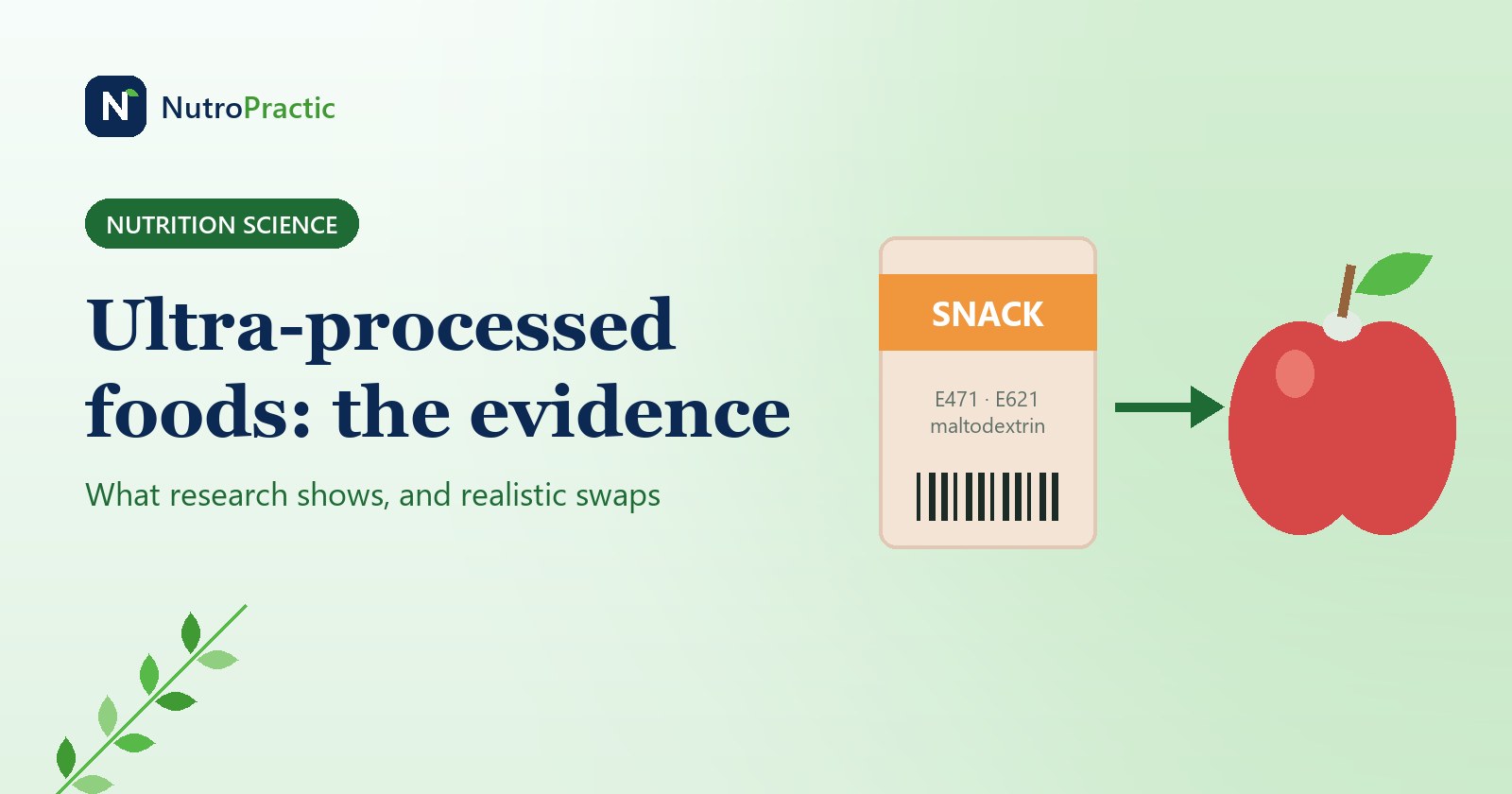
Ultra-processed foods: what the evidence says, and a realistic way to eat fewer
Ultra-processed foods now make up more than half of the calories eaten in the US and the UK. What counts as ultra-processed, what a landmark NIH trial and a 2024 BMJ review found, where the science is still uncertain, and simple swaps that don't require cooking everything from scratch.
3 Oct 2026
Diabetes
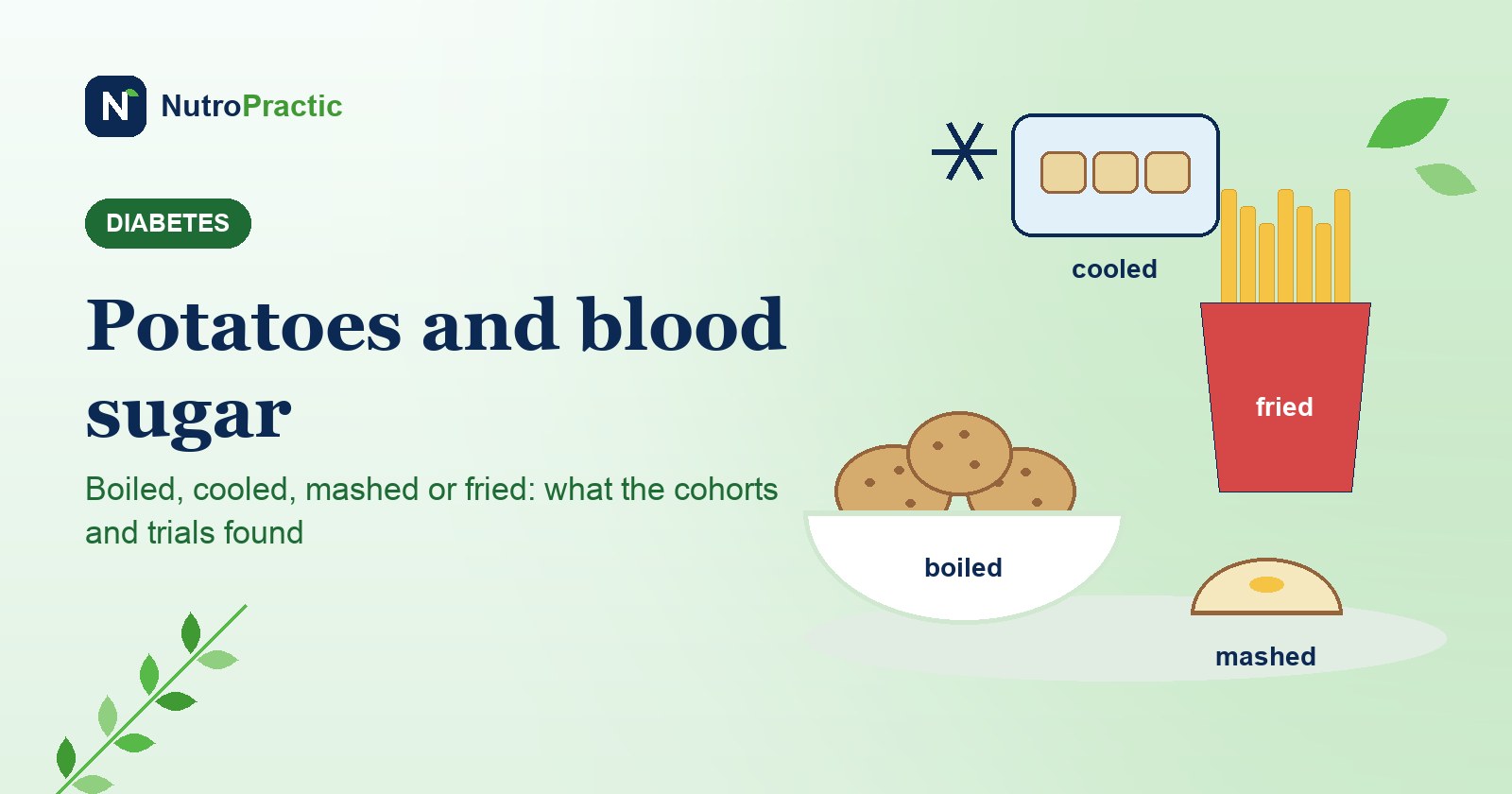
Potatoes and blood sugar: boiled, cooled, mashed or fried, and what the cohorts and trials found
Fries were linked to 20% higher diabetes risk per three servings a week in 205,000 US adults; boiled, baked and mashed potatoes to almost none. GI by cooking method, resistant starch in grams after chilling, the glycaemic load of a potato against a cup of rice, and how to fit aloo into an Indian plate.
30 Oct 2026
Children's nutrition
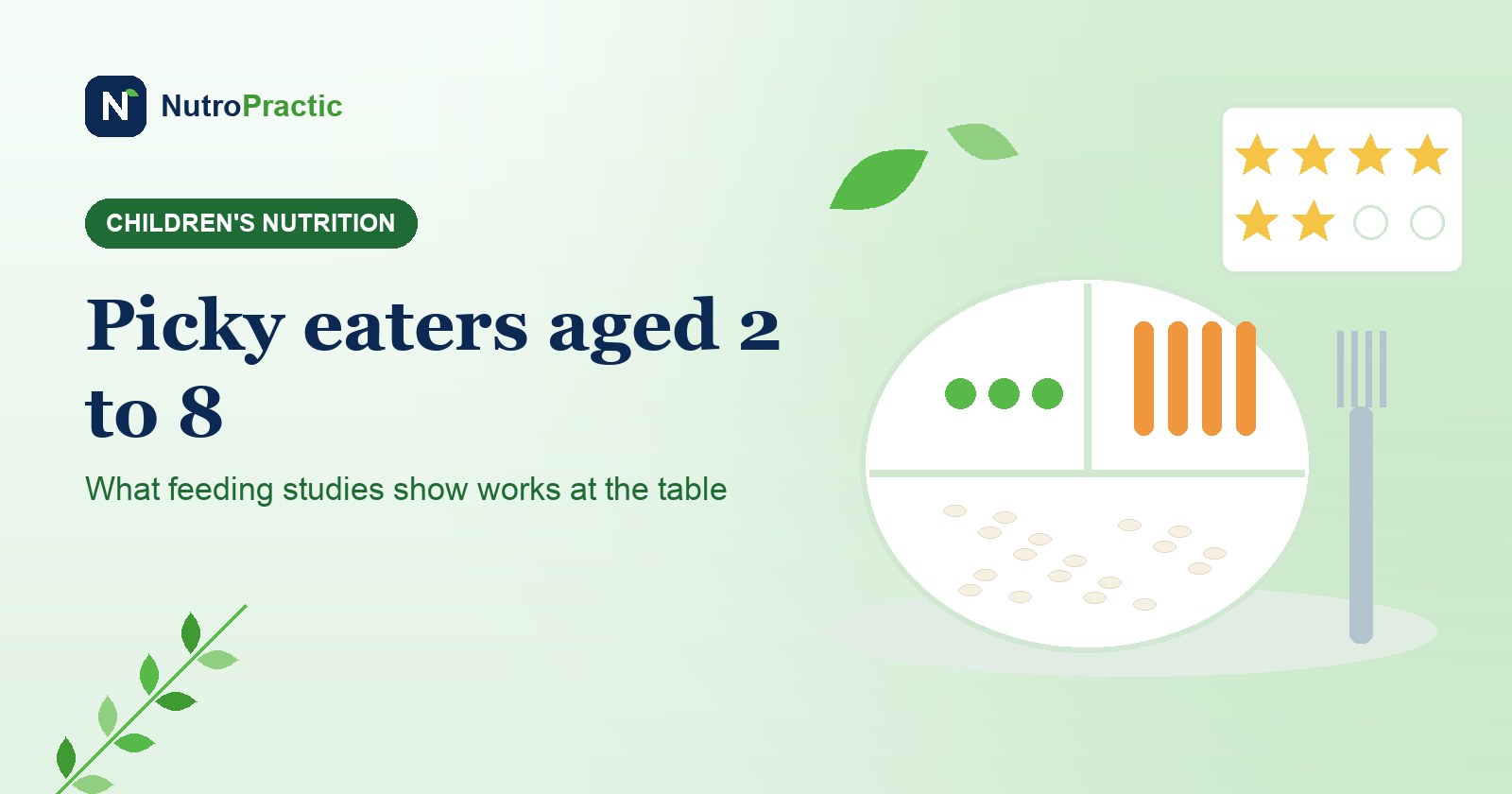
Picky eaters aged 2 to 8: what feeding studies show works at the table
Fussy eating peaks between two and six and is usually a normal stage, not a parenting failure. Feeding trials show what moves it: small repeated tastes, eating together, no pressure and the right kind of reward. Here is how to use them, and the signs that mean it's more than picky eating.
30 Oct 2026
Newsfeed for your website
Want this feed on your website?
Add it to any site with one copy-and-paste snippet. No sign-up, and it updates itself every hour.
Start with a virtual consultation
Tell Dr. Triveni what you want to change. You will leave with a clear next step, whether you are in Toronto, London, New York or Chennai.