Few functional foods carry as unique and dual a clinical reputation as tart cherry juice (Prunus cerasus). In primary care clinics and rheumatology practices, two very different patient populations arrive asking about the exact same dark red bottle: individuals living with recurrent, excruciating gout flares who dread the next middle-of-the-night toe swelling, and individuals struggling with fragmented, unrefreshing sleep who wake up at 3:00 AM unable to drift back off.
Nutritional folklore often blurs where science ends and wishful thinking begins. Can drinking tart cherry juice truly purge uric acid crystals from swollen joints? Can a bedtime glass replace clinical sleep aids? And more importantly, does the substantial natural sugar content in fruit juice undermine the very metabolic benefits patients seek? To place tart cherry in its proper clinical context, we must examine the specific chemistry of Montmorency anthocyanins, analyze what human randomized trials measured, and establish clear boundaries between dietary support and prescription pharmacotherapy. If you are navigating broader dietary purine management, explore our foundational gout and uric acid dietary guide.
Montmorency tart cherries: The anthocyanin chemistry
The cherries celebrated in scientific literature are not the sweet, glossy dark cherries found piled high in supermarket produce aisles (such as the Bing or Rainier varieties, Prunus avium). The trials almost universally evaluate sour or tart cherries (Prunus cerasus), specifically the ruby-red Montmorency cultivar cultivated extensively in Michigan and parts of Europe.
Tart cherries owe their intense tartness and rich pigmentation to an extraordinarily dense concentration of polyphenolic compounds, predominantly anthocyanins—water-soluble flavonoid pigments with profound anti-inflammatory and antioxidant activities:
• Specific anthocyanin profile: Montmorency cherries are exceptionally rich in cyanidin-3-glucoside (C3G), cyanidin-3-rutinoside (C3R), and cyanidin-3-sophoroside. Fresh Montmorency cherries deliver approximately 60 to 80 mg of total anthocyanins per 100 grams, which is five- to tenfold higher than standard sweet cherry varieties. Commercial tart cherry juice concentrate concentrates these bioactives further, providing upwards of 600 to 1,000 mg of total polyphenols per 30 ml serving.
• Cyclooxygenase (COX) enzyme inhibition: Groundbreaking in vitro studies led by Dr. Muraleedharan Nair at Michigan State University demonstrated that cyanidin anthocyanins isolated from tart cherries potently inhibit both COX-1 and COX-2 enzymes. At concentrations readily achievable after concentrated juice consumption, their anti-inflammatory activity was comparable to over-the-counter NSAIDs such as ibuprofen and naproxen, suppressing the production of inflammatory prostaglandin E2 (PGE2) without inducing gastric mucosal toxicity.
• Renal urate transporter modulation: In addition to dampening inflammatory cascades, anthocyanins and hydroxycinnamic acids in tart cherries modulate renal tubular handling. Pharmacological assays indicate they act as mild inhibitors of URAT1 (urate transporter 1) and GLUT9 (glucose transporter 9) in the renal proximal tubules, promoting uricosuric excretion—flushing excess uric acid out of systemic circulation into the urine.
Tart cherries differ fundamentally from sweet cherries: their exceptionally high concentration of cyanidin-3-glucoside and cyanidin-3-rutinoside acts simultaneously on cyclooxygenase inflammation pathways and renal tubular urate clearance.
Gout and uric acid: What human clinical trials demonstrate
Gout is driven by chronic hyperuricemia: when circulating serum urate exceeds its physiological saturation threshold of approximately 6.8 mg/dL (around 400 µmol/L), monosodium urate (MSU) crystals precipitate in synovial joints, tendons, and bursae. When local factors trigger macrophages to engulf these sharp crystals, an intense NLRP3-inflammasome-driven flare erupts. Here is what human clinical investigations have documented regarding tart cherry intake:
1. The Boston University Gout Cohort (Zhang et al. 2012, Arthritis & Rheumatism):
In the largest clinical observational study conducted on cherry intake, Dr. Yuqing Zhang and colleagues at Boston University tracked 633 patients with confirmed gout over a 12-month period. Patients were monitored online and surveyed during baseline periods and immediately following acute gout flares. The findings revealed dramatic statistical risk reductions:
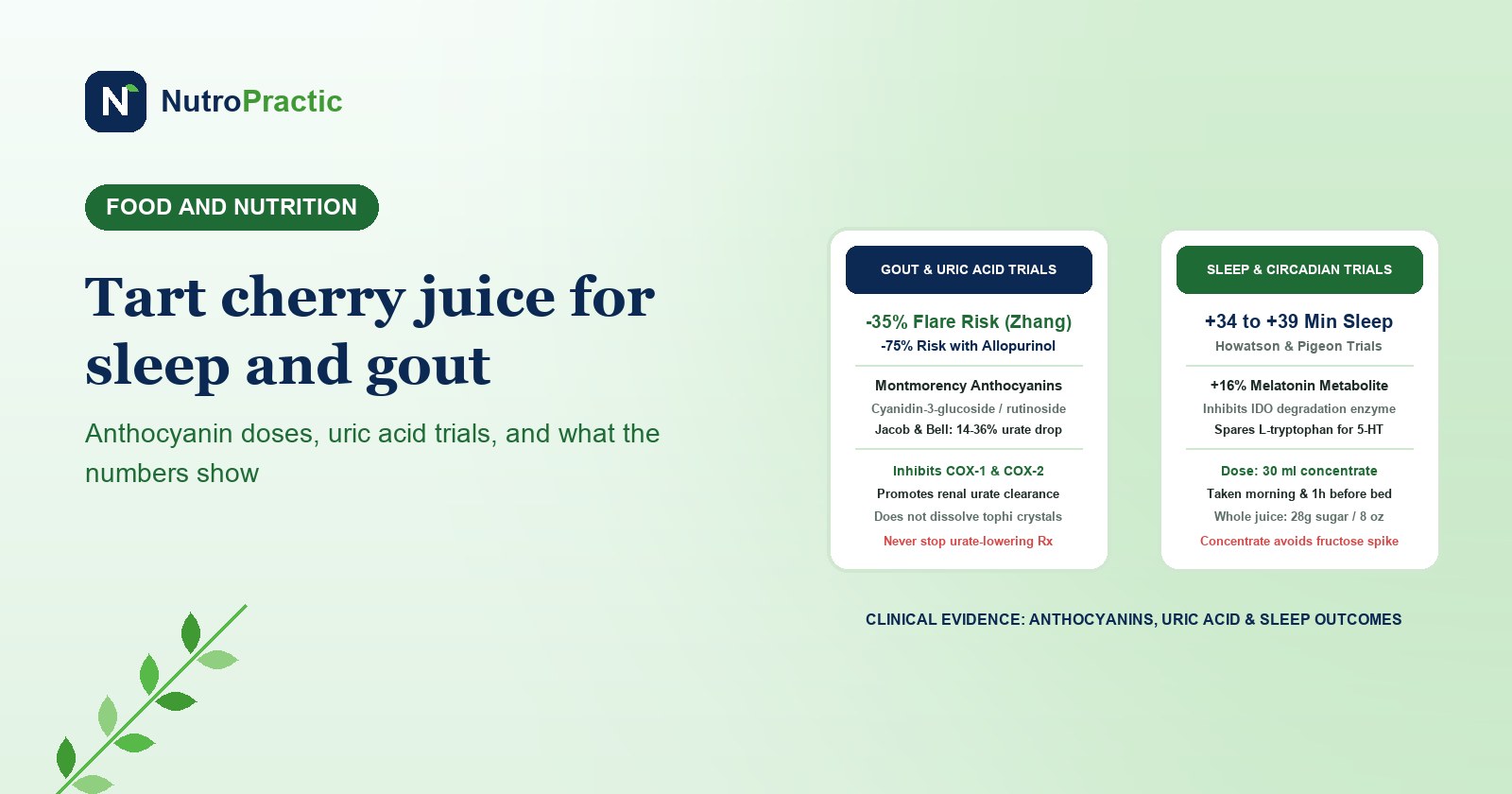
• 35% reduction in acute flare risk: Patients who consumed fresh cherries or tart cherry extract over a 2-day exposure window demonstrated a 35% lower risk of recurrent gout attacks compared to periods without cherry consumption (multivariate odds ratio [OR] 0.65; 95% CI 0.50–0.85; p < 0.001).
• Dose saturation at 3 servings: The protective effect plateaued at 3 servings of cherries (or 3 tablespoons of extract) over 48 hours. Consuming larger volumes yielded no additional risk reduction, confirming a biological saturation threshold.
• Synergy with Allopurinol (75% risk reduction): Most critically, when cherry consumption was paired with the patient's prescribed urate-lowering medication (allopurinol), the combined risk of a gout flare dropped by an astonishing 75% (OR 0.25; 95% CI 0.11–0.58). This demonstrates that tart cherry anthocyanins complement, rather than replace, standard medical maintenance therapy.
2. Acute plasma and urinary urate clearance (Jacob et al. 2003, Journal of Nutrition):
Dr. Robert Jacob and researchers at the USDA Western Human Nutrition Research Center investigated the immediate metabolic impact of cherry ingestion in healthy adult women who consumed 2 servings (280 g) of cherries following an overnight fast. Within 5 hours post-consumption, plasma urate dropped significantly by 14% (falling from 214 µmol/L to 183 µmol/L). Crucially, this drop in bloodstream urate was matched by a concurrent, significant increase in urinary urate excretion (rising from 63 mg to 202 mg per 5 hours), proving an active uricosuric mechanism.
3. Concentrate dosing and inflammatory markers (Bell et al. 2014, Scand J Med Sci Sports):
Investigating Montmorency tart cherry concentrate (30 ml and 60 ml doses diluted in water), researchers documented a rapid serum urate drop of approximately 36% at peak absorption (hours 2 to 3), alongside marked reductions in high-sensitivity C-reactive protein (hs-CRP) and erythrocyte sedimentation rate (ESR). Repeated daily dosing maintained lower baseline inflammatory cytokines.
Sleep duration and latency: The circadian evidence
While joint patients were discovering tart cherry juice for flare prevention, sleep researchers were uncovering an unexpected second benefit: measurable improvements in sleep duration, sleep latency, and sleep efficiency in randomized clinical trials.
The landmark Howatson trial (European Journal of Nutrition, 2012):
Dr. Glyn Howatson and colleagues conducted a double-blind, randomized, placebo-controlled crossover study on 20 healthy adults. Participants drank either 30 ml of Montmorency tart cherry juice concentrate (diluted in 200 ml of water) or an identical-looking fruit placebo twice daily (upon waking and 30 minutes before the evening meal) for 7 consecutive days. Sleep was measured continuously via wrist actigraphy and verified with validated sleep diaries:
• +34 minutes of sleep duration: Participants in the tart cherry arm gained an average of 34 minutes of additional total sleep time per night compared to placebo (p < 0.05).
• Enhanced sleep efficiency: Sleep efficiency (the percentage of time in bed actually spent asleep) significantly increased, while nocturnal wake bouts and daytime grogginess declined.
• Biomarker confirmation: Total 24-hour urinary excretion of 6-sulfatoxymelatonin (aMT6s)—the primary clinical metabolite of melatonin—increased by 15% to 16% in the tart cherry group, confirming a measurable rise in circulating circadian melatonin.
The Pigeon insomnia trial in older adults (Journal of Medicinal Food, 2010):
In a randomized, double-blind crossover pilot trial led by Dr. Wilfred Pigeon at the University of Rochester, 15 older adults suffering from chronic primary insomnia consumed 8 oz of tart cherry juice blend morning and night for two weeks. Tart cherry consumption produced modest but clinically meaningful gains: participants experienced a significant decrease in insomnia severity and achieved an average gain of 39 minutes of reduced wakefulness throughout the night.
The dual sleep mechanism: Melatonin and tryptophan preservation
How does a simple fruit juice influence neurochemical sleep architecture? Early speculation suggested tart cherries were simply an oral melatonin supplement. However, laboratory assays reveal that Montmorency cherries contain roughly 13.5 nanograms of phytomelatonin per gram of fruit—a biologically detectable amount, but far lower than the milligram doses found in over-the-counter sleep aids. Clearly, another biochemical mechanism is at work.
In 2018, Dr. Jack Losso and colleagues at Louisiana State University published clinical research explaining the missing biological link: the preservation of L-tryptophan through IDO inhibition.
1. The IDO breakdown pathway: The essential amino acid L-tryptophan is the obligatory biochemical precursor for serotonin and melatonin. In the presence of systemic inflammation and oxidative stress, the immune enzyme indoleamine 2,3-dioxygenase (IDO) is heavily upregulated. IDO shunts tryptophan away from serotonin production, degrading it into kynurenine metabolites (some of which are neurotoxic and induce sleep fragmentation).
2. Polyphenolic enzyme blockade: The high concentrations of procyanidins and anthocyanins in tart cherries potently inhibit IDO activity. By blocking this inflammatory breakdown pathway, tart cherry bioactives spare circulating L-tryptophan, allowing it to cross the blood-brain barrier where it can be converted into serotonin and subsequently into endogenous melatonin within the pineal gland.
3. Suppression of nocturnal cytokines: Tart cherry anthocyanins reduce circulating interleukin-6 (IL-6) and tumor necrosis factor-alpha (TNF-α), pro-inflammatory cytokines that directly interfere with slow-wave restorative sleep.
Comparing the options: Tart cherry vs sweet cherries, NSAIDs, and allopurinol
To understand where tart cherry fits in a clinical treatment plan, it helps to compare it directly against dietary alternatives, acute anti-inflammatory pharmaceuticals, and definitive prescription urate-lowering therapy:
| Intervention / Agent | Typical Clinical Dose | Primary Active Components | Biochemical Mechanism | Uric Acid Impact | Sleep Impact | Key Clinical Caveats |
|---|---|---|---|---|---|---|
| Montmorency Tart Cherry Concentrate | 30 ml (2 tbsp) concentrate diluted in water twice daily | Cyanidin-3-glucoside, cyanidin-3-rutinoside, procyanidins (~60-80 mg anthocyanins/100g) | Inhibits COX-1/COX-2; inhibits renal URAT1/GLUT9; inhibits IDO enzyme (spares L-tryptophan) | 14% to 36% acute reduction in serum urate; promotes urinary urate excretion | +34 to +39 min sleep duration; +16% urinary 6-sulfatoxymelatonin | Reduces acute flare risk (-35%), but cannot dissolve established tophi or replace maintenance ULT |
| Fresh Sweet Cherries (Bing, Rainier) | 1 to 2 cups (150–300 g) fresh whole fruit | Lower anthocyanin density; higher proportion of glucose and fructose | Mild antioxidant activity; minor COX inhibition | Modest transient reduction (~5-10%); high fructose payload counters benefit at large intakes | Negligible circadian or sleep duration impact in clinical trials | Seasonal availability; higher caloric and sugar density per mg bioactive anthocyanin |
| NSAIDs (Naproxen, Ibuprofen, Indomethacin) | Naproxen 500 mg BID or Ibuprofen 600-800 mg TID during acute flare | Synthetic small molecules (propionic acid / indole derivatives) | Potent, non-selective inhibition of COX-1 and COX-2; halts prostaglandin synthesis | No effect on serum uric acid production or renal urate excretion | No direct benefit; may disturb sleep due to dyspepsia or central effects | First-line for acute flare pain, but risks peptic ulceration, renal impairment, and hypertension; not for chronic prevention |
| Urate-Lowering Therapy (Allopurinol, Febuxostat) | Allopurinol 100–300+ mg daily titrated to target serum urate <6.0 mg/dL | Purine analogue (Allopurinol / Oxypurinol) or non-purine inhibitor (Febuxostat) | Competitive / non-competitive inhibition of xanthine oxidase; stops uric acid creation at the source | Dramatically reduces serum urate (>40-60%); dissolves established tophi and depletes body crystal pool | No direct circadian effect; improves sleep indirectly by abolishing nocturnal flares | The gold standard for chronic gout; requires gradual dose titration and baseline renal function monitoring |
The sugar caveat: Whole juice vs. tart cherry concentrate
One of the most frequent clinical missteps made by patients managing metabolic conditions is purchasing standard ready-to-drink "tart cherry juice" bottles off grocery store shelves. While whole juice contains beneficial polyphenols, it carries a significant metabolic trade-off:
• 25 to 28 grams of sugar per 8 oz glass: A standard 8 oz (240 ml) glass of reconstituted tart cherry juice delivers roughly 130 to 140 calories and between 25 and 28 grams of simple carbohydrates, primarily fructose and glucose. Drinking two glasses daily adds over 50 grams of simple sugars to your dietary intake.
• The Fructose-Uric Acid Paradox: Fructose metabolism in the liver differs fundamentally from glucose. Hepatic fructokinase phosphorylates fructose without negative feedback control. This consumes intracellular ATP at high velocity, generating an accumulation of adenosine monophosphate (AMP). The excess AMP enters the purine catabolic cascade, where it is rapidly degraded into inosine, hypoxanthine, xanthine, and ultimately uric acid. In individuals with pre-existing metabolic syndrome or impaired renal clearance, consuming high doses of liquid fructose can paradoxically trigger a rise in serum urate, canceling out the uricosuric benefit of the fruit's anthocyanins.
• The clinical solution: Opt for 100% pure Montmorency tart cherry concentrate (30 ml or 2 tablespoons, which provides the trial-tested anthocyanin dose with only ~15-18g total carbohydrates and zero added syrups or cane sugar) diluted in water, or utilize standardized freeze-dried tart cherry capsules (delivering 500 to 1,000 mg of Montmorency skin extract with negligible calories and zero fructose).
Critical medical caveats: What tart cherry cannot do
As an evidence-based clinical practice, NutroPractic emphasizes strict diagnostic honesty. While tart cherry juice is a valuable, evidence-backed adjuvant, patients must understand its definitive physiological boundaries:
1. It does not dissolve tophi: When monosodium urate crystals accumulate over years, they form dense, chalky granulomas known as tophi inside joints, ear cartilage, and periarticular tissues. Dissolving established tophi requires lowering and sustaining serum urate well below 5.0 mg/dL (300 µmol/L) for many consecutive months. Tart cherry juice produces an average urate reduction of 10% to 20% in baseline studies—nowhere near enough to reverse tophaceous gout. Tophi require titrated urate-lowering medication (such as allopurinol, febuxostat, or pegloticase).
2. It cannot replace chronic urate-lowering therapy (ULT): Stopping allopurinol or febuxostat to rely solely on cherry juice is one of the most common causes of preventable, severe gout flares. The Boston University trial demonstrated that tart cherry works best as an adjunct—cutting flare risk by 75% when taken alongside allopurinol, compared to only 35% on its own.
3. It is not an acute rescue medication: When a full-blown gout attack strikes, the macrophage inflammatory cascade is already in high gear. Drinking cherry juice during an active flare will not provide the rapid, potent anti-inflammatory relief of first-line flare therapies (colchicine, NSAIDs, or oral prednisone). Flare medications must be initiated immediately at the earliest onset of symptoms.
4. Chronic Kidney Disease (CKD) potassium precautions: Tart cherry juice is naturally high in potassium (~400 mg per serving). In patients with advanced kidney disease (CKD stage 4 or 5) who have impaired potassium excretion and risk hyperkalemia, fruit juice concentrates should only be used under nephrology supervision.
How to take tart cherry: A practical clinical protocol
If you and your physician decide to incorporate tart cherry into your wellness routine, here is how to maximize clinical efficacy based on the published trials:
• Selection: Purchase 100% pure unsweetened Montmorency tart cherry concentrate (Prunus cerasus) or third-party verified standardized capsules (minimum 500 mg extract standardized for anthocyanins). Avoid "cherry cocktail," "cherry juice blends," or products with added sugars or high-fructose corn syrup.
• Timing for sleep support: Take 30 ml (2 tablespoons) of concentrate diluted in 150 to 200 ml of cool or warm water, consumed 30 to 60 minutes before bedtime. Consistently taking it nightly allows the tryptophan-sparing IDO inhibition to stabilize.
• Timing for gout flare reduction: Take 30 ml twice daily—once in the morning and once in the evening—diluted in water. Always drink an additional glass of plain water alongside it to support renal urate clearance and maintain healthy urine flow.
• Hydration baseline: No amount of tart cherry can overcome dehydration. Maintain an overall fluid intake of 2.0 to 2.5 liters of water daily to prevent nocturnal urinary urate concentration.
Managing recurrent gout flares, hyperuricemia, and sleep disruption requires a comprehensive medical and nutritional plan. Dr. Triveni reviews your serum urate history, renal labs, medications, and lifestyle in a personalized virtual consultation.
Book a consultationThis article is for informational and educational purposes only and does not constitute individual medical advice, diagnosis, or treatment. Never discontinue or adjust prescription medications—including allopurinol, febuxostat, colchicine, or sleep aids—without consulting your treating physician. If you experience sudden, severe joint swelling, high fever, or signs of septic arthritis, seek prompt emergency medical evaluation.
Scientific references
Zhang Y. et al., Cherry consumption and decreased risk of recurrent gout attacks, Arthritis Rheum 64(12):4004-4011 (2012).
Howatson G. et al., Effect of tart cherry juice (Prunus cerasus) on melatonin levels and enhanced sleep quality, Eur J Nutr 51(8):909-916 (2012).
Pigeon W.R. et al., Effects of a tart cherry juice beverage on the sleep of older adults with insomnia: a pilot study, J Med Food 13(3):579-583 (2010).
Jacob R.A. et al., Consumption of cherries lowers plasma urate in healthy women, J Nutr 133(6):1826-1829 (2003).
Bell P.G. et al., Montmorency tart cherry (Prunus cerasus L.) concentrate lowers uric acid and vascular biomarkers of inflammation, Scand J Med Sci Sports 24(6):880-890 (2014).
Losso J.N. et al., Pilot Study of the Tart Cherry Juice for the Treatment of Insomnia and Investigation of Mechanisms, Am J Ther 25(2):e194-e201 (2018).
Kelley D.S. et al., Anthocyanin-rich tart cherries for the management of inflammation, metabolic syndrome, and gout, Nutrients 10(3):368 (2018).
Seeram N.P. et al., Cyclooxygenase inhibitory and antioxidant cyanidin glycosides in cherries and berries, Phytomedicine 8(5):362-369 (2001).