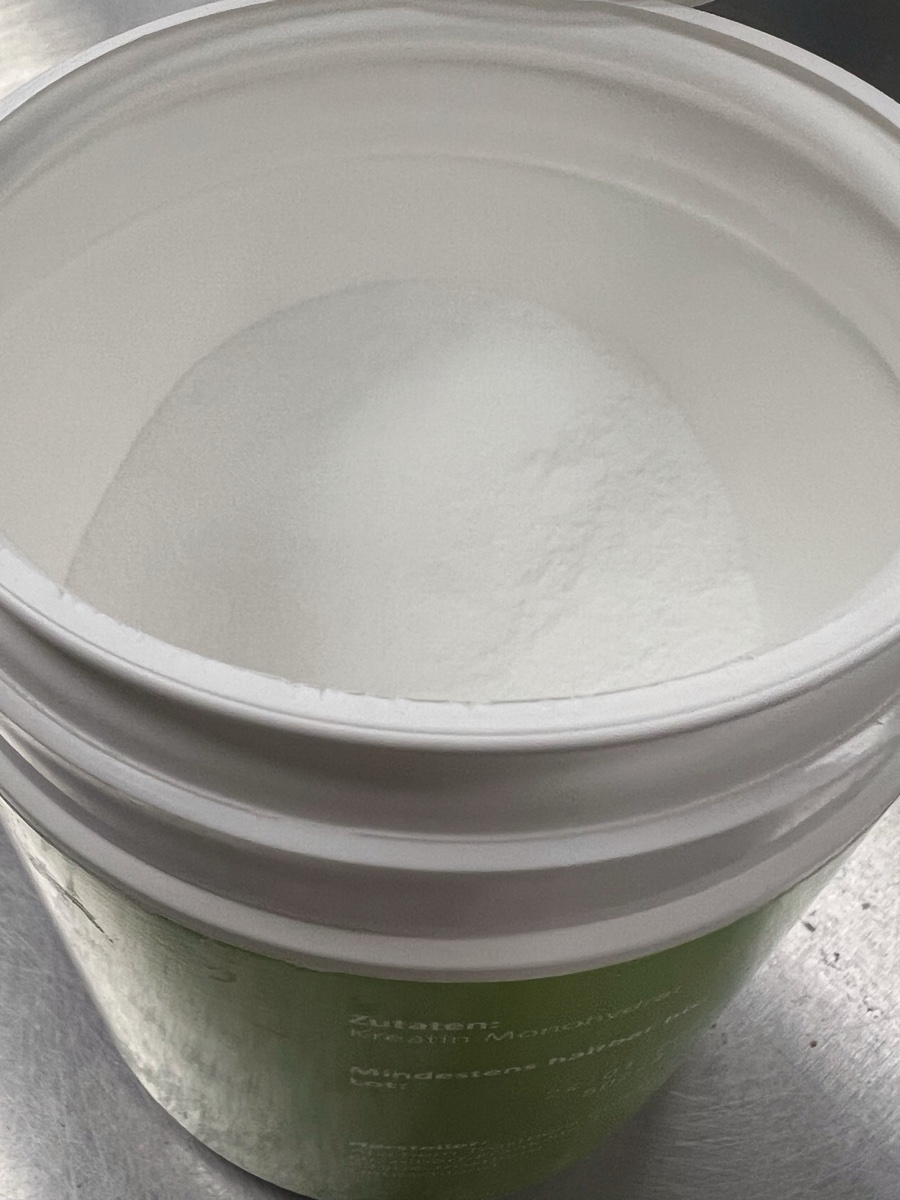
For nearly four decades, creatine monohydrate has been packaged in bulky black tubs adorned with lightning bolts and aggressively marketed toward young men lifting weights in gym basements. This legacy of hyper-masculine marketing has created a pervasive, unfortunate misconception: that creatine is purely a muscle-building supplement designed for male athletes.
In reality, women may have the most to gain from creatine supplementation across their entire lifespan. Female physiology features distinct biochemical characteristics: women naturally possess 70% to 80% lower endogenous creatine stores than men, consume significantly less dietary creatine from red meat, and undergo cyclical hormonal shifts that alter creatine kinase activity in the brain and skeletal muscle.
Beyond athletic strength, contemporary clinical trials demonstrate that creatine acts as a critical cellular bioenergetic buffer in the female brain, mitigating mental fatigue during sleep deficits, improving outcomes in clinical depression trials, and preserving bone architecture after menopause. For a deeper look at bone and hormonal health during middle age, explore our clinical guide on nutrition through menopause.
Let us unpack the female phosphocreatine system, what randomized controlled trials reveal about cognition and mood, the truth behind the 'water weight' myth, and how postmenopausal women can protect bone density.
The female phosphocreatine deficit: why women need creatine
Creatine is an amino acid derivative synthesized in the liver and kidneys from arginine, glycine, and methionine. In tissue cells, it binds to a phosphate group to form phosphocreatine (PCr), creating an immediate, high-energy reservoir that replenishes adenosine triphosphate (ATP) during rapid energy depletion via the enzyme creatine kinase (CK).
Why do women experience unique vulnerabilities in this system?
• Lower baseline stores: Because women have lower average skeletal muscle mass and consume fewer grams of organ meats, beef, and pork, their total body creatine pool is significantly smaller than that of men.
• Estrogen and progesterone modulation: Creatine kinase expression and phosphocreatine turnover are directly influenced by female sex hormones. Research shows that creatine kinase activity is lowest during the luteal phase (when progesterone dominates and estrogen fluctuates) and drops precipitously after menopause as 17beta-estradiol declines.
• Pregnancy demands: During pregnancy, fetal growth and placental bioenergetics demand substantial maternal creatine. Fetal tissue relies heavily on maternal creatine transport across the placenta, depleting maternal stores unless dietary intake compensates.
Women naturally have 70% to 80% lower endogenous creatine reserves than men, and brain creatine kinase activity fluctuates cyclically alongside estrogen and progesterone.
Cognitive performance and sleep deprivation in trials
While 95% of total body creatine resides in skeletal muscle, the remaining 5% is concentrated in high-demand organs—primarily the brain, which consumes roughly 20% of the body's resting energy budget. When cognitive tasks become demanding or sleep is restricted, neuronal ATP consumption outpaces mitochondrial oxidative phosphorylation, causing local phosphocreatine depletion.
Randomized, double-blind trials indicate that oral creatine supplementation crosses the blood-brain barrier via the SLC6A8 transporter, increasing brain phosphocreatine concentrations by 5% to 15% and enhancing mental stamina under stress:
| Study / Author | Population & Design | Dose & Protocol | Cognitive / Neurological Metric | Clinical Finding |
|---|---|---|---|---|
| Rae et al. (Proc Biol Sci 2003) | Double-blind crossover RCT (n=45 young adults, predominantly female/vegetarian) | 5 g/day for 6 weeks | Raven's Advanced Progressive Matrices & Working Memory (Wechsler Auditory Digit Span) | Significant improvement in working memory span (from 7.05 to 8.5 items, p < 0.001) and rapid processing speed. |
| McMorris et al. (Physiol Behav 2006) | Double-blind RCT in sleep-deprived adults (24-hour continuous wakefulness) | 20 g/day (5 g QID for 7 days) | Executive function, random number generation, spatial recall, and mood state | Creatine completely abolished the typical decline in executive function and complex memory caused by sleep loss. |
| Dording et al. (J Clin Psychopharmacol 2013) | Double-blind RCT in women with Major Depressive Disorder failing SSRIs (n=52) | 5 g/day creatine monohydrate adjunctive to Escitalopram (8 weeks) | Hamilton Depression Rating Scale (HAM-D) scores at weeks 2, 4, and 8 | Double the remission rate; women receiving creatine demonstrated significantly faster HAM-D score reductions as early as week 2. |
| Lyoo et al. (Am J Psychiatry 2012) | Randomized, double-blind trial in females with unipolar depression (n=52) | 5 g/day creatine monohydrate + Lexapro | Brain 31P-MRS bioenergetics and clinical remission | Creatine group showed significant increases in frontal lobe phosphocreatine and rapid, sustained antidepressant efficacy. |
| Roschel et al. (Nutrients 2021) | Systematic review of creatine in women's health across the lifespan | 3 to 5 g/day maintenance | Mood, cycle-related cognitive fatigue, and neuroprotection | Concluded creatine is an underutilized neurological therapeutic for women during luteal phase, postpartum, and perimenopause. |
The depression trials in women are particularly compelling. In the landmark Lyoo et al. trial, women taking 5 grams of creatine alongside their prescribed SSRI showed measurable clinical improvements within two weeks, whereas standard antidepressant monotherapy typically requires 6 to 8 weeks to alter neuronal monoamine dynamics. Magnetic resonance spectroscopy (31P-MRS) confirmed this was driven by restored prefrontal cortex bioenergetics.
Dispelling the 'bloating' myth: intracellular vs subcutaneous water
The primary barrier preventing women from trying creatine is fear of weight gain and 'water retention'. Many women worry that creatine will make their face appear puffy, cause ankle swelling, or add soft, spongy inches around their waist.
This fear stems from a fundamental misunderstanding of cellular biophysics:
• Intracellular osmotic hydration: Creatine is an osmolytic compound. When transported into myocytes (muscle cells) via sodium-dependent cotransporters, it draws water into the intracellular compartment—inside the muscle cell membrane. It does not pool in the extracellular or subcutaneous space beneath the skin.
• Enhanced muscle protein synthesis: Intracellular cell swelling is an established biochemical trigger for protein synthesis and glycogen storage while inhibiting cellular breakdown. It gives muscles a firm, healthy, hydrated tone rather than a puffy appearance.
• Avoiding the loading phase: Aggressive loading protocols popularized by bodybuilders (taking 20 grams a day for 5 days) saturate the gut with unabsorbed solute, which can cause temporary gastrointestinal distress and transient fluid shifts. By skipping the loading phase and taking a gentle 3 to 5 grams daily, women experience zero sudden fluid shifts or stomach discomfort.
Bone mineral density in postmenopausal women
Following menopause, the steep decline in ovarian estrogen accelerates bone resorption by osteoclasts, leading to rapid decreases in bone mineral density (BMD) and heightened vulnerability to osteopenia and fractures. Can creatine protect bone?
Clinical trials offer a clear, critical answer: creatine alone without exercise does not build bone. However, when combined with progressive resistance training, creatine acts as a synergistic catalyst for bone remodeling:
• The Chilibeck 2-Year Trial (Medicine & Science in Sports & Exercise, 2015): In a landmark 2-year randomized trial of 130 postmenopausal women, participants performed supervised whole-body resistance training 3 days per week while taking either 0.14 g/kg creatine (roughly 8 g/day) or placebo. The creatine group exhibited significant preservation of femoral neck bone geometry (section modulus and buckling ratio) and a marked reduction in bone resorption marker NTx.
• Candow et al. (Bone, 2021): Meta-analysis of postmenopausal trials confirmed that creatine combined with heavy loading significantly enhances upper-body and lower-body muscular strength by 10% to 15% more than training alone. Stronger muscle contractions translate directly into greater mechanical strain on the attached periosteum, stimulating osteoblast mineral deposition.
• Osteoblast bioenergetics: Lab models show that osteoblasts (bone-forming cells) rely heavily on creatine kinase during initial collagen matrix synthesis and mineralization. Supplying exogenous creatine fuels osteoblast longevity and activity.
Dr. Triveni's clinical protocol: how women should take creatine
Implementing creatine into your daily wellness routine is straightforward, safe, and inexpensive. Follow these clinical guidelines:
• Choose Creatine Monohydrate: Do not buy expensive liquid creatines, buffered forms (Kre-Alkalyn), or creatine ethyl ester. 100% pure Creapure or micronized creatine monohydrate is the exact formulation validated across thousands of clinical safety trials. It is tasteless, odourless, and dissolves cleanly.
• Standard dose: 3 to 5 grams daily: A single level scoop (3 to 5 grams) taken once per day will fully saturate brain and muscle stores within 3 to 4 weeks. There is zero need for a 20-gram loading phase.
• Take with a meal or morning beverage: Stir into morning water, warm herbal tea, oatmeal, or a protein shake. Consuming creatine alongside carbohydrates or protein slightly enhances cellular uptake via insulin-mediated sodium-potassium ATPase activity.
• Renal safety check: Creatine is one of the most rigorously tested supplements in medical literature. In individuals with healthy baseline kidney function, daily long-term creatine supplementation does not cause renal damage. Note that creatine supplementation naturally increases serum creatinine (a benign byproduct), which can artificially skew automated eGFR blood tests. If you undergo routine blood tests, inform your physician that you take creatine monohydrate.
Scientific references and clinical trials
1. Rae C, et al. Oral creatine monohydrate supplementation improves brain performance: a double-blind, placebo-controlled, cross-over trial. Proc Biol Sci. 2003;270(1529):2147-2150.
2. McMorris T, et al. Effect of creatine supplementation and sleep deprivation, with mild exercise, on cognitive and psychomotor performance, mood state, and plasma concentrations of catecholamines and cortisol. Physiol Behav. 2006;90(1):21-28.
3. Lyoo IK, et al. A randomized, double-blind placebo-controlled trial of oral creatine monohydrate augmentation for enhanced response to a selective serotonin reuptake inhibitor in women with major depressive disorder. Am J Psychiatry. 2012;169(9):937-945.
4. Chilibeck PD, et al. Effects of creatine and resistance training on bone health in postmenopausal women. Med Sci Sports Exerc. 2015;47(8):1587-1595.
5. Candow DG, et al. Creatine supplementation for older adults: Focus on sarcopenia, osteoporosis, frailty and cachexia. Bone. 2021;144:115883.
6. Roschel H, et al. Creatine supplementation and brain health. Nutrients. 2021;13(2):586.
Medical Disclaimer: This article is for informational and educational purposes only and does not substitute for personalized medical diagnosis or treatment. Individuals with pre-existing renal disease or chronic kidney dysfunction should avoid creatine supplementation without direct nephrological oversight.