Sourdough has acquired the glow of a food that is traditional, fermented and therefore automatically gentle on blood sugar. Some sourdough loaves really do produce a smaller rise than some yeast breads. But the label alone does not tell you that—and one unusually careful trial found no average advantage at all.
The honest answer depends on the flour, how finely it was milled, the fermentation, loaf density, slice weight and your own response. Here is what the head-to-head tests found, and how to compare two loaves without fooling yourself.
The trial that tested the claim most directly
Korem and colleagues ran a randomised crossover study in 20 healthy adults. Each person ate either industrial white bread or wholegrain sourdough for one week, had a two-week washout, then crossed to the other bread. Morning meals were matched to 50 g available carbohydrate: that took 110 g white bread but 145 g sourdough.
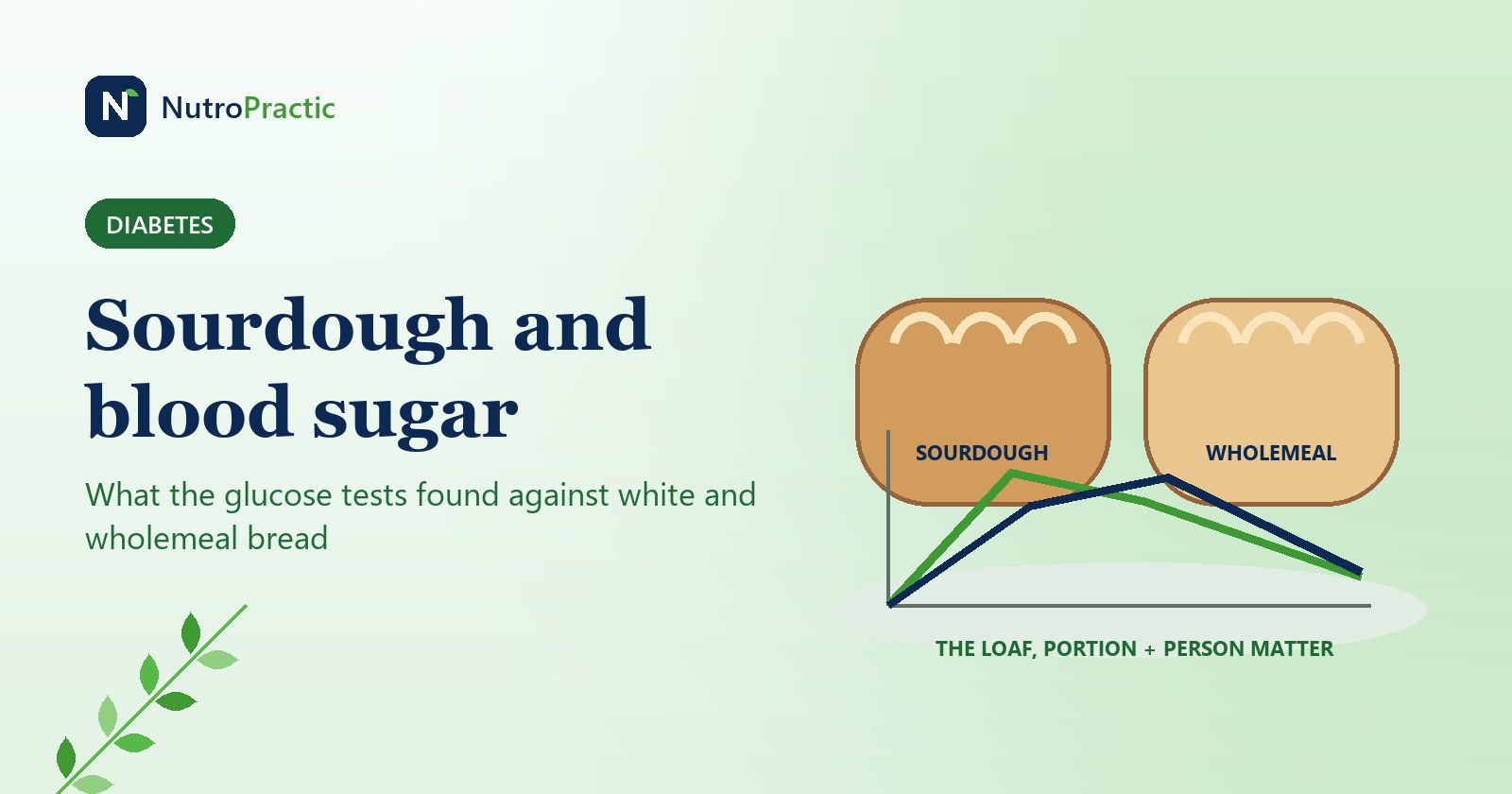
On average there was no significant difference in the main glucose outcomes or in 18 other clinical measurements. The surprise was individual: 10 of 20 people had a lower glucose response to the white bread. Published GI figures—about 70 for white bread and 54 for sourdough—would therefore have picked the wrong bread for half this group.
The researchers built a microbiome model that distinguished the better bread with an ROC AUC of 0.83, but 20 people is far too small to turn that into a consumer test. It does show why a population average cannot promise what one person's glucose will do. It also was not a clean test of fermentation alone: wholegrain sourdough and industrial white bread differed in flour and processing as well as starter.
White, wholegrain and sourdough in the actual trials
| Study | People and breads | Result |
|---|---|---|
| Korem 2017 | 20 healthy adults; wholegrain sourdough vs industrial white, 50 g available carbs | No average winner; 10 of 20 responded better to white |
| Stamataki 2012 | 12 overweight/obese men for equal carbs; five breads including sourdough, wholegrain and white | Sprouted grain reduced response; sourdough and other wholegrain breads had no consistent advantage over white |
| Zamaratskaia 2017 | 24 healthy adults; sourdough rye, unfermented wholegrain rye, refined yeast-wheat crispbread | Some appetite benefit for sourdough rye; lowest insulin response after unfermented rye |
That table is why neither wholegrain nor sourdough is a glucose result by itself. Whole grains are still valuable for fibre and micronutrients, but a finely milled wholemeal loaf can digest quickly. Sourdough fermentation can create organic acids that slow starch digestion, yet it can also break down some viscous fibre. The direction depends on the loaf.
What the reviews conclude
A 2024 systematic review and meta-analysis (Rolim and colleagues) reported lower incremental post-meal glucose with sourdough, particularly whole-wheat sourdough. That is the favourable reading. But trials used different flours, starters, fermentation times, comparators and outcome measures, and fasting insulin did not fall.
A newer 2026 review examined 27 human studies that explicitly compared sourdough with yeast-fermented bread. Starowicz and colleagues judged the evidence for better glucose or insulin control in healthy adults neither sufficient nor convincing, with very low certainty for fermentation evidence overall. The fair conclusion is not that sourdough never helps. It is that the word on the packet cannot guarantee the effect.
GI is not the meal: do the carbohydrate sum
Glycaemic index tests a fixed carbohydrate dose. Glycaemic load adds the amount you actually eat: GI × available carbohydrate ÷ 100. On labels where fibre is included in total carbohydrate, available carbohydrate is total carbohydrate minus fibre; in countries where fibre is already separate, use the labelled carbohydrate figure. Check the local label convention.
| Example, not a brand claim | Available carbs | Assumed GI | Estimated load |
|---|---|---|---|
| 2 white slices, 30 g carbs | 30 g | 70 | 21 |
| 2 sourdough slices, 36 g carbs | 36 g | 54 | 19 |
| 1 sourdough slice, 18 g carbs | 18 g | 54 | 10 |
The arithmetic explains why a dense, large sourdough slice can erase much of a lower GI, and why portion often moves the result more than fermentation. Those GI values are literature averages, not measurements of the imaginary loaves in the table. Slice weights vary, so compare grams per slice as well as the serving the packet chooses.
How to buy a loaf without relying on the front label
1. Look for wholegrain flour as the first ingredient if you want more fibre. 2. Compare total carbohydrate and fibre per slice, then check the slice weight. 3. Prefer a loaf you enjoy enough to portion consistently. 4. Do not assume a long ingredient list makes the glucose response worse. 5. Know that a bread may be called sourdough and still use baker's yeast; fermentation time is rarely stated. 6. Add protein, vegetables or salad rather than eating bread alone.
The same hierarchy appears in our pasta and blood sugar trial review: portion first, the actual product second, and the fashionable processing claim later. For an Indian meal framework, see rice, roti and a steady-sugar plate.
A fair two-loaf test at home
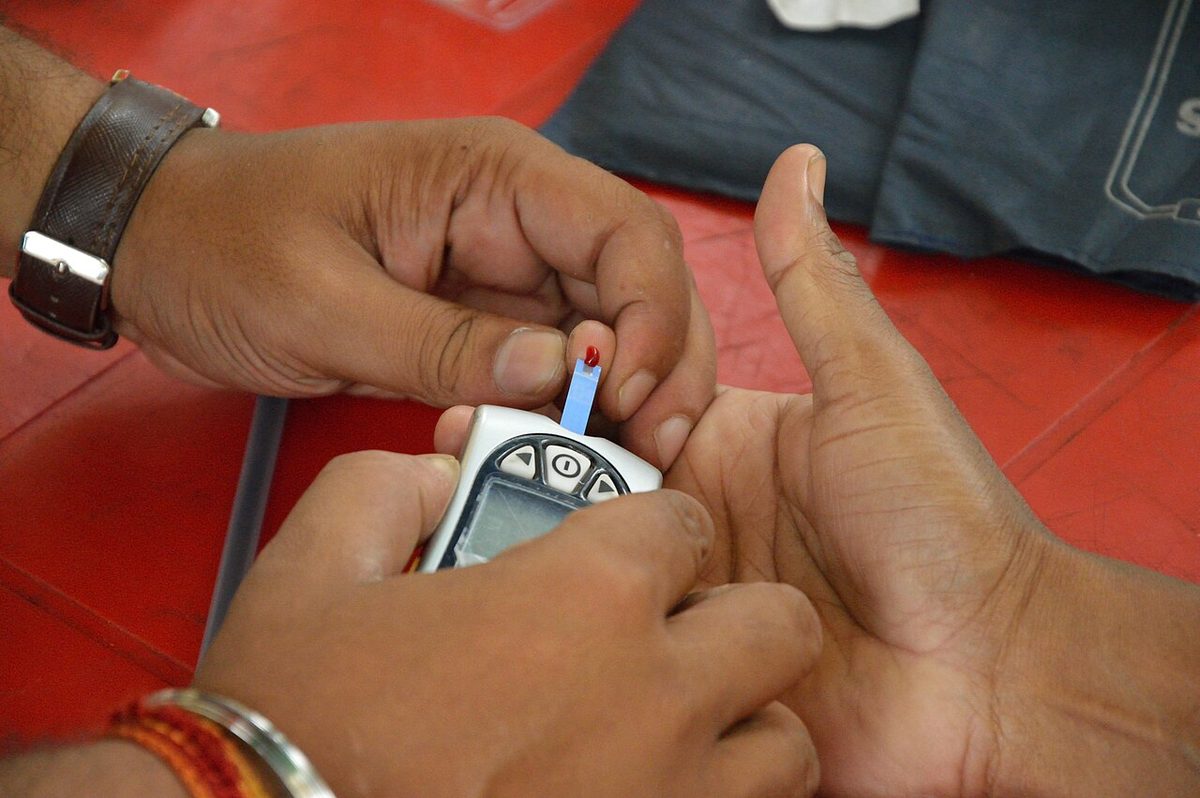
If you have diabetes and already use a meter or CGM, your own repeat comparison is more direct than buying a microbiome test. This is an observation exercise, not a diagnosis: do not change insulin or medicines from it.
1. Use the same available-carbohydrate amount, not merely two slices: for 30 g, that might be two smaller slices of one loaf and 1½ large slices of another. 2. Keep toppings, time of day, previous meal and activity as similar as practical. 3. Check before the meal and at one and two hours, or compare the full CGM curve. 4. Test each loaf on at least two separate days; one reading can reflect sleep, stress, exercise or sensor noise. 5. Compare the rise and the whole curve, not just the highest single dot.
Sourdough can be the better bread. The word sourdough cannot tell you whether this loaf, in this portion, is better for you.
Want bread to fit your glucose readings, medicines and usual meals rather than a generic rule? Dr. Triveni can build an individual diabetes meal plan with you.
Book a consultationThis article is general information, not medical advice. If you have diabetes—especially if you use insulin or a sulfonylurea—discuss meal and medicine changes with your diabetes team. Home comparisons do not diagnose diabetes, and bread is not a treatment.
Sources
Korem T. et al., Bread affects clinical parameters and induces gut microbiome-associated personal glycemic responses, Cell Metabolism 25:1243–1253 (2017). Stamataki N.S. et al., Acute impact of sourdough and whole-grain breads, Journal of Nutrition and Metabolism 2012:184710. Zamaratskaia G. et al., Impact of sourdough fermentation on appetite and postprandial metabolic responses, British Journal of Nutrition 118:686–697 (2017).
Rolim M.E. et al., Consumption of sourdough bread and changes in glycemic control and satiety, Critical Reviews in Food Science and Nutrition 64:801–816 (2024). Starowicz M. et al., Effects of sourdough and yeast fermented breads consumption on glycaemia, systematic review (2026). Scazzina F. et al., Sourdough bread: starch digestibility and postprandial glycemic response, Journal of Cereal Science 49:419–421 (2009).