Three weeks into a GLP-1 medicine, a common day looks like this: half a coffee for breakfast, a few bites of a sandwich at lunch, a small dinner that feels like a big one. The scale goes down quickly, which is the point. The problem is what's missing from that day. Count the protein and it often comes to 40 or 50 grams, about half of what the body needs to hold on to its muscle while it loses fat.
This guide is for anyone taking semaglutide (Ozempic, Wegovy), tirzepatide (Mounjaro, Zepbound) or a similar medicine, or caring for someone who is. It doesn't replace your prescriber's advice, and it isn't about whether to take the medicine. It's about eating well while you do.
Why muscle is the thing to watch
Any fast weight loss takes some lean tissue along with fat. GLP-1 medicines are no exception, and the trials measured it with body scans. In the semaglutide trial STEP 1, about 38% of the weight lost was lean mass (5.3 kg of 13.6 kg). In the tirzepatide trial SURMOUNT-1, the share was closer to a quarter. Lean mass isn't all muscle (it includes water and organs), but muscle is part of it, and it's the part you'll want later.
Muscle keeps you strong on stairs, steady on your feet and better at handling blood sugar. It's also slower to rebuild than to lose, especially after 40. If the medicine is ever stopped and some weight comes back, it tends to come back as fat. That's why the nutrition and obesity societies now put protein and strength training at the top of the list.
What the 2025 advisory recommends
In May 2025 four US organisations (the American College of Lifestyle Medicine, the American Society for Nutrition, the Obesity Medicine Association and The Obesity Society) published a joint advisory on nutrition for people on GLP-1 therapy. On protein it says:
1.2 to 1.6 g of protein per kilogram of body weight per day while you are actively losing weight, against the usual 0.8 g/kg for adults. Because it's unclear whether that should use your current weight or an adjusted one, it also gives a simpler range: 80 to 120 g a day for most adults.
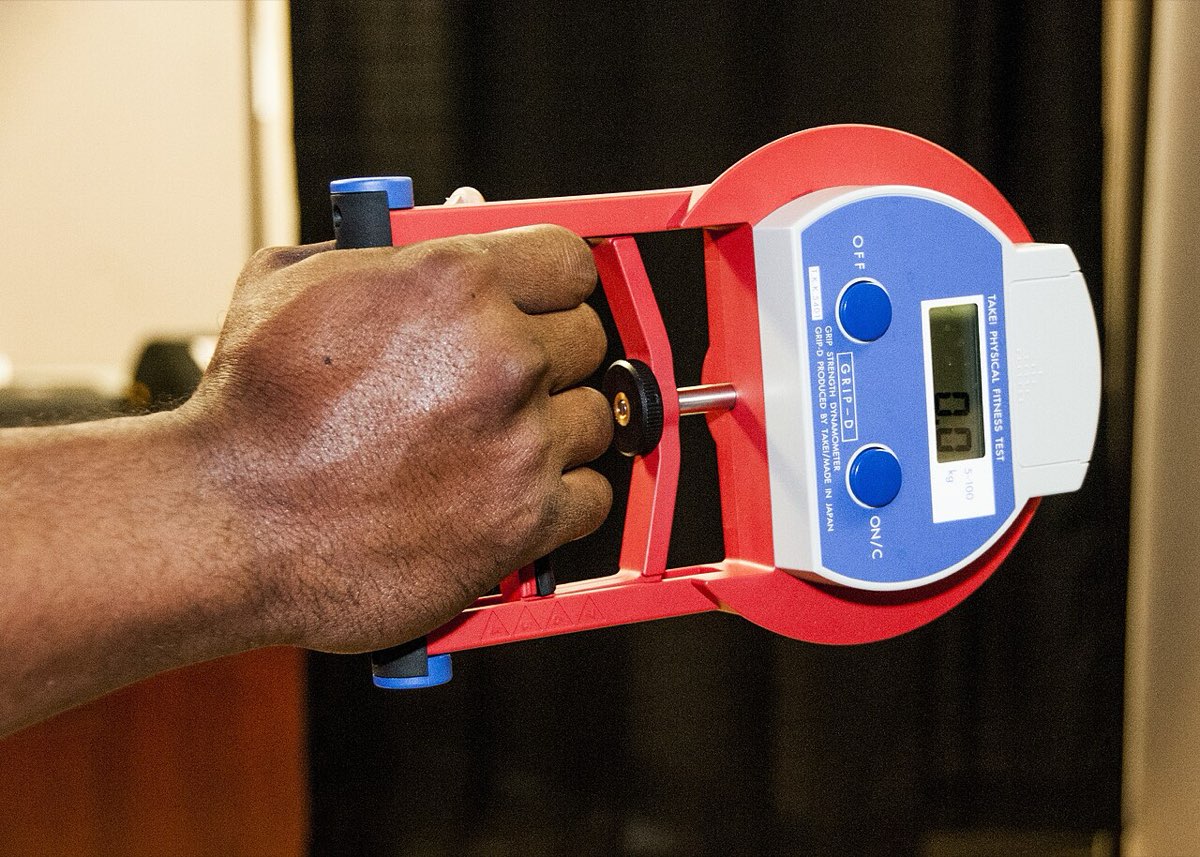
Strength training at least three times a week, plus at least 150 minutes of moderate activity such as brisk walking. Protein gives muscle the material; resistance exercise tells the body to keep using it.
If you have kidney disease, protein targets are different. Ask your doctor before raising your intake.
Work out your own number
Take someone who weighs 85 kg (187 lb). At 1.2 g/kg that's about 100 g a day; at 1.6 g/kg, about 135 g. With a small appetite, 135 g is hard work, so the lower end of the range, or the 80 to 120 g band, is a realistic place to start. In pounds: multiply your weight in lb by 0.55 for the lower end.
Then divide by the number of times you actually eat. Four small meals of 20 to 30 g each is easier on a GLP-1 stomach than three big ones, and it suits muscle too: the body uses protein better in steady portions than in one large dinner. We explain the per-meal idea in more detail in Protein after 40.
To skip the arithmetic, the free GLP-1 protein calculator does it for your weight and the number of times you eat, and suggests foods that make up each portion, including vegetarian and vegan ones.
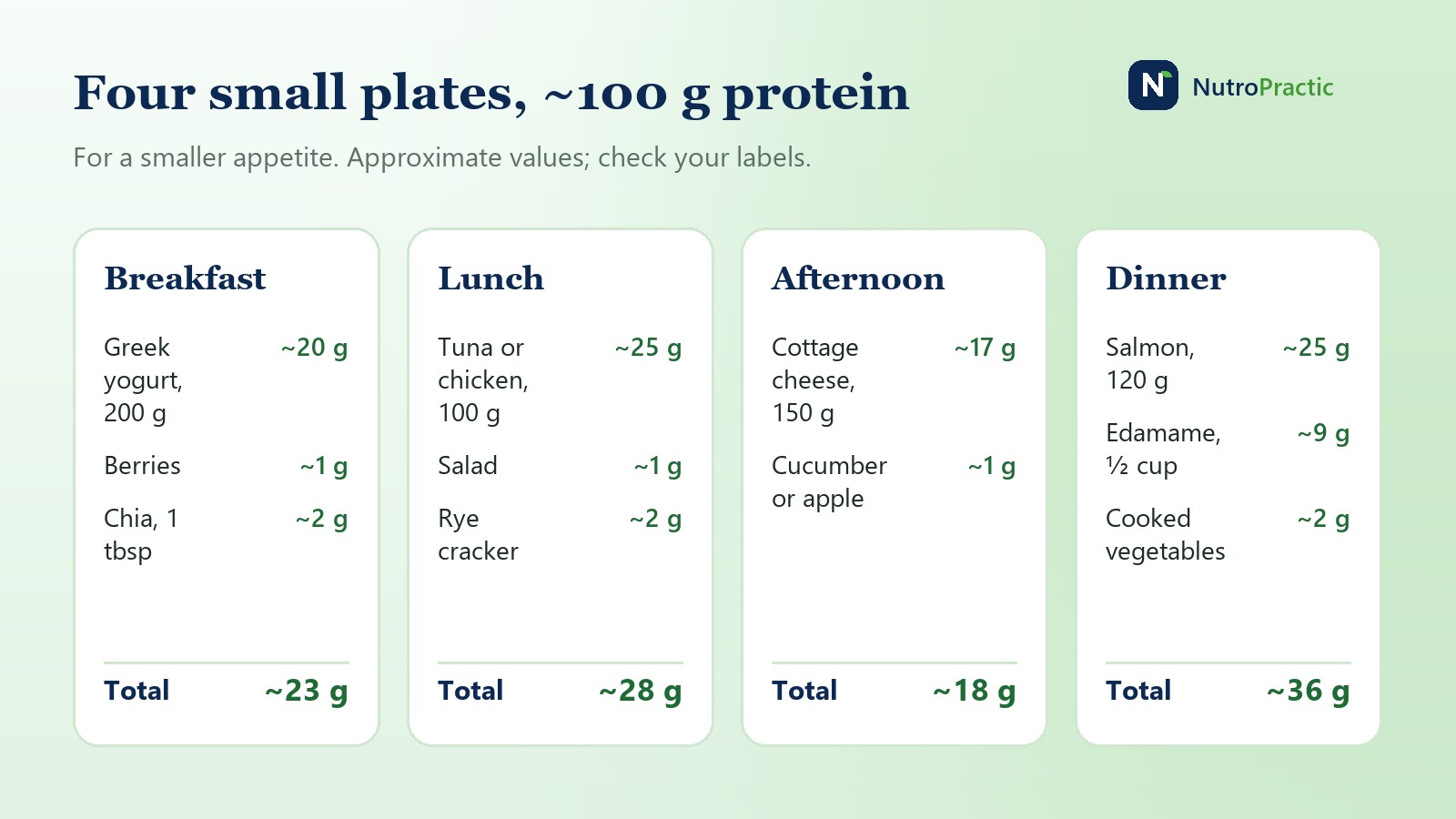
Eating protein when you're not hungry
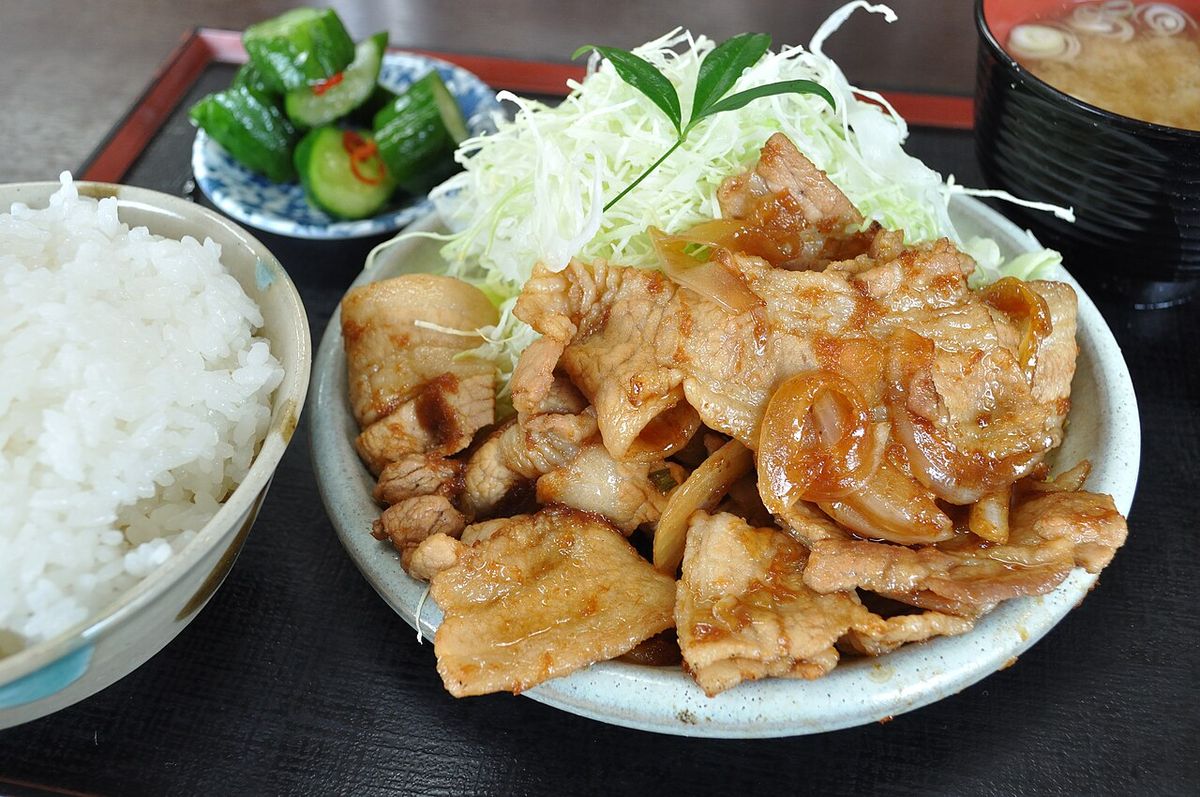
Protein first. Eat the fish, eggs, yogurt or tofu on your plate before the bread, rice or pasta. On a GLP-1 medicine you often stop after a few bites, so make them count.
Choose dense, soft foods. Greek yogurt (about 10 g per 100 g), cottage cheese (about 11 g per 100 g), eggs (about 6 g each), canned tuna or salmon, chicken, firm tofu, edamame, lentils. Soft and cold foods are usually easier when you feel slightly sick.
Drink some of it. A glass of milk or soy milk adds about 8 g. A protein shake can add 20 to 30 g on the days nothing else appeals. It's fine as a fill-in, not as the whole diet.
Keep it small and often. The advisory suggests a small breakfast and then small meals every three to four hours, which is also the most reliable way to fit 100 g into a day with a small appetite.
The rest of the plate still matters
Eating less food means fewer vitamins and minerals. The advisory lists iron, calcium, magnesium, zinc and vitamins A, D, E, K, B1, B12 and C as nutrients to keep an eye on. Vegetables, fruit, whole grains and dairy or fortified alternatives cover most of them; your doctor can check the rest with a blood test.
Fluids and fibre help with constipation, one of the most common side effects. Add fibre gradually, from food, and drink through the day. When nausea is the problem, the advisory suggests avoiding fatty meals and, for a while, very high-fibre foods, then building them back up.
A simple plan for the next two weeks
1. Write down your protein target: weight in kg × 1.2, or start at 80 to 100 g. 2. For three days, note what you actually eat and add up the protein. Most people are surprised. 3. Pick one small change: Greek yogurt at breakfast, or a protein snack in the afternoon. 4. Book two or three short strength sessions a week, even body-weight squats and wall push-ups at home. 5. Check in with your prescriber about vitamins if you're eating very little.
On a GLP-1 medicine and not sure your meals are covering what you need? Dr. Triveni can look at what you eat now and build a plan around your appetite in a 15-minute virtual consultation.
Book a 15-minute consultationThis article is general information, not medical advice. Talk to your doctor or prescriber before changing your diet or exercise, especially if you have kidney disease, diabetes treated with insulin or sulfonylureas, or a history of disordered eating.
Sources
Mozaffarian D. et al., Nutritional priorities to support GLP-1 therapy for obesity: a joint Advisory from the American College of Lifestyle Medicine, the American Society for Nutrition, the Obesity Medicine Association, and The Obesity Society, Obesity 33(8):1475-1503 (2025). Wilding J. et al., Once-weekly semaglutide in adults with overweight or obesity (STEP 1), NEJM (2021), with its body-composition substudy. SURMOUNT-1 body-composition substudy (tirzepatide), Diabetes, Obesity and Metabolism (2025). Protein values: USDA FoodData Central (approximate, brands vary). Food Business News: GLP-1 ranks as the No. 1 health trend for 2026.