Geriatric gastrointestinal epidemiology & frailty · November 22, 2026
Chronic diarrhea tracks with frailty, functional disability, and polypharmacy in community-dwelling older adults
An epidemiological study of community-dwelling older adults published in Nutrients established that chronic diarrhea—characterized by Bristol Stool Form Scale types 6 and 7—is independently associated with significantly elevated odds of frailty, impairment in basic and instrumental activities of daily living, and polypharmacy, highlighting altered stool consistency as an overlooked clinical biomarker.

Bowel dysfunction is extraordinarily common in geriatric medicine, yet clinical attention and research funding have overwhelmingly focused on chronic constipation. Loose or watery stools in older individuals are frequently dismissed as benign, transient, or an inevitable consequence of aging. However, frequent unformed bowel movements can provoke insidious nutrient malabsorption, subclinical dehydration, electrolyte disturbances, and heightened fecal urgency, which may directly impair physical independence and quality of life in older age.
To elucidate the broader clinical significance of persistent loose stool consistency, researchers conducted a comprehensive cross-sectional epidemiological investigation published in Nutrients. The study examined a nationally representative cohort of community-dwelling adults aged 65 and older, defining chronic diarrhea as a habitual or predominant stool consistency classified as Bristol Stool Form Scale (BSFS) Type 6 (fluffy pieces with ragged edges, a mushy stool) or Type 7 (entirely watery, no solid pieces).
Multivariable logistic regression models revealed that chronic diarrhea affected approximately 9.5% of community-dwelling older adults and was strongly and independently associated with major geriatric syndromes after comprehensive adjustment for age, sex, race, education, and medical comorbidities. Older adults suffering from chronic diarrhea had significantly higher odds of exhibiting physical frailty and pre-frailty compared to those with formed stools. Furthermore, affected individuals suffered from marked functional disability, displaying elevated odds of impairment in both Basic Activities of Daily Living (BADLs, such as bathing and dressing) and Instrumental Activities of Daily Living (IADLs, including managing medications and meal preparation).
The epidemiological analysis also identified prominent associations with polypharmacy—the concurrent use of multiple prescription medications—which can both cause and exacerbate chronic gastrointestinal motility disturbances and mucosal inflammation. Additionally, older adults with chronic diarrhea were significantly more likely to rate their overall dietary quality as poor, reflecting symptom-driven food avoidance and restricted dietary variety. The authors concluded that chronic diarrhea should be recognized not as an isolated digestive nuisance, but as a critical clinical red flag and contributor to geriatric vulnerability, warranting multidisciplinary nutritional, pharmacological, and geriatric evaluation.
Epidemiological analysis of chronic diarrhea in older adults (Nutrients, Nov 2026)
9.5%
Prevalence of chronic loose or watery stools (BSFS types 6–7) in adults 65+
Significant
Elevated multivariable adjusted odds of physical frailty and exhaustion
BADL & IADL
Marked impairment in functional independence for basic and instrumental daily living
Polypharmacy
Strong positive association with high prescription medication burdens
Cross-sectional epidemiological investigation of community-dwelling adults aged 65+ in Nutrients (November 2026, doi: 10.3390/nu18223809).
- The Bristol Stool Form Scale classifies stool into seven types based on gastrointestinal transit time, where types 6 and 7 indicate abnormally rapid transit.
- Chronic diarrhea in older adults can trigger occult electrolyte imbalances and subclinical volume depletion that dramatically increases the risk of orthostatic falls.
- Frailty is a biological syndrome of decreased physiological reserve that leaves individuals vulnerable to disproportionate functional decline following minor stressors.
- Common medications, including metformin, proton pump inhibitors, and NSAIDs, are recognized pharmacological triggers of chronic diarrhea in geriatric cohorts.
- Associations Between Chronic Diarrhea and Geriatric Syndromes, Dietary Habits, and Health Outcomes Among Community-Dwelling Older AdultsNutrients · Cross-sectional epidemiological investigation in community-dwelling older adults. Published 16 November 2026.
- Shogayaki set mealWikimedia Commons · Photo by Ocdp, CC0 public domain dedication.
Educational summary of geriatric medicine and gastrointestinal research. Older adults experiencing persistent changes in bowel habits or unexplained weight loss should seek a comprehensive clinical evaluation from a geriatrician or gastroenterologist.
Analysis by NutroPractic from the sources listed. Written for general readers; it does not replace advice from your own doctor.
From our articles
Our guides on this subject
Plain-language guides on nutrition and wellness, backed by research.
Medicines and nutrition
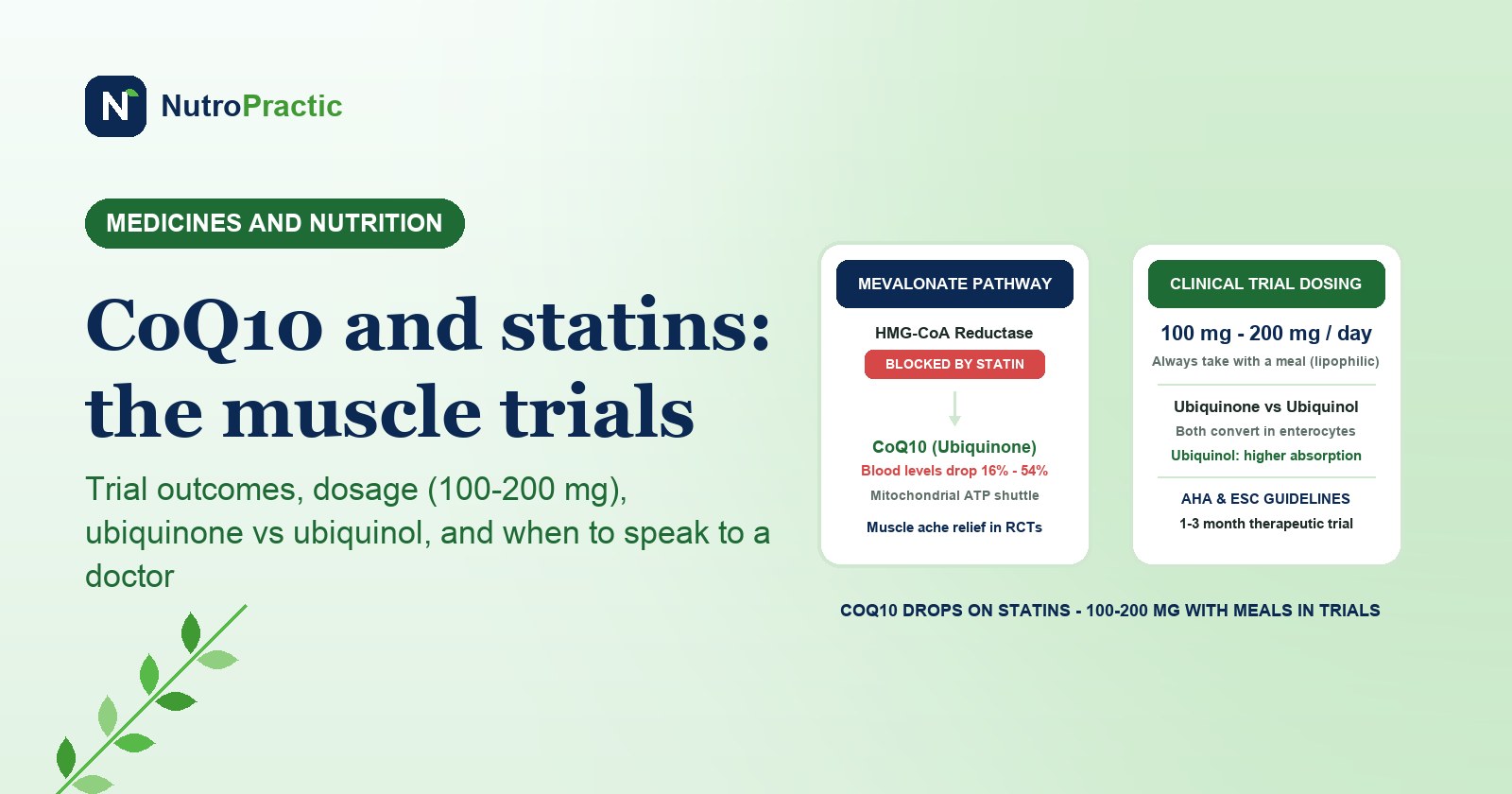
CoQ10 and statins: what the muscle symptom trials found, and who might benefit
Statin-associated muscle symptoms lead up to 30% of patients to discontinue life-saving cholesterol therapy. While statins deplete circulating CoQ10 by 16% to 54%, randomized clinical trials show mixed results for myalgia relief. Explore the trials, ubiquinone vs ubiquinol bioavailability, recommended doses, and clinical guideline recommendations.
14 Nov 2026

Women's wellness and nutrition
Creatine for women: cognitive performance, menstrual cycle phases, and bone density beyond muscle building
Creatine is widely stereotyped as a bodybuilding supplement for men, but female physiology tells a very different story. Women exhibit 70% to 80% lower endogenous creatine stores, reduced dietary intake, and cyclical fluctuations in brain creatine kinase across the follicular and luteal phases. Robust clinical trials demonstrate that 3 to 5 grams of daily creatine monohydrate enhances cognitive performance during sleep deprivation, augments clinical response in unipolar depression, preserves femoral neck bone geometry in postmenopausal women, and causes cellular intracellular hydration rather than subcutaneous bloating.
13 Nov 2026
Healthy ageing
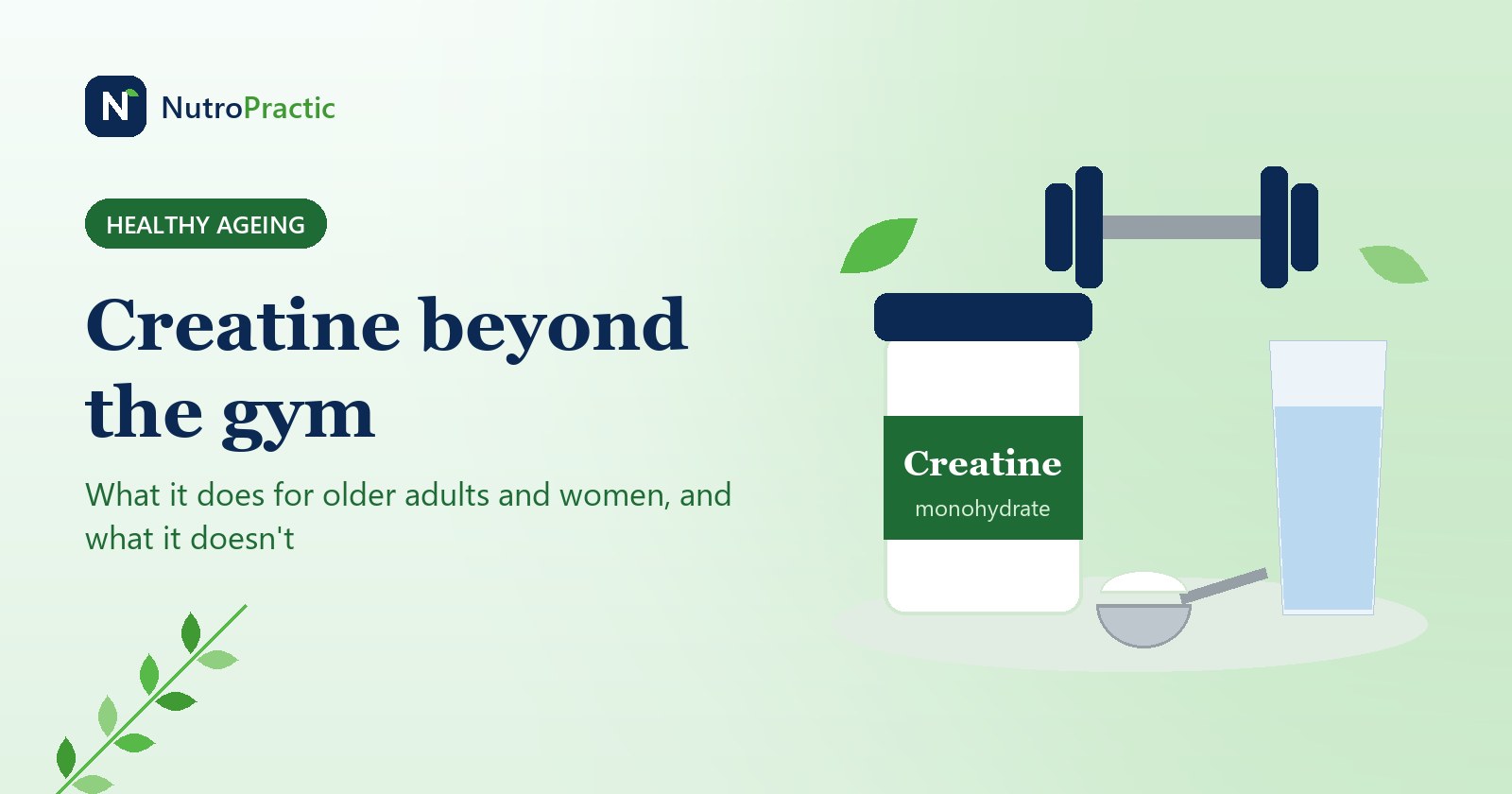
Creatine beyond the gym: what it does for older adults and women, and what it doesn't
Across 22 trials, adults in their late fifties to seventies who took creatine while doing resistance training gained about 1.4 kg more lean mass than those who trained without it. Two two-year trials found it did nothing for bone density after menopause. Where the evidence is solid, where it's early (memory, short nights), how much to take, and who should leave it alone.
10 Oct 2026
Newsfeed for your website
Want this feed on your website?
Add it to any site with one copy-and-paste snippet. No sign-up, and it updates itself every hour.
Start with a virtual consultation
Tell Dr. Triveni what you want to change. You will leave with a clear next step, whether you are in Toronto, London, New York or Chennai.