Black seed (Nigella sativa, also sold as black cumin or kalonji) is one of the few supplements with a stack of randomised trials on blood sugar, enough that several research groups have pooled the results since 2019. The pooled answer points one way: fasting glucose lower by roughly 10 to 20 mg/dL. The trials behind it are small, short and uneven. Here are the actual numbers, what changed with oil versus powder, how much thymoquinone is really in a bottle, and what the liver and kidney data say.
What the pooled trials found for fasting glucose and HbA1c
Each meta-analysis below combines randomised trials of Nigella sativa (oil, seed powder or capsules) against placebo or no treatment. Figures are weighted mean differences (WMD), the average gap between the black seed group and the control group, with 95% confidence intervals.
| Meta-analysis | Trials / people | Fasting glucose | HbA1c | Other findings |
|---|---|---|---|---|
| Askari et al., 2019 | 17 randomised trials | -9.93 mg/dL (CI -13.44 to -6.41) | -0.57% (CI -0.77 to -0.37) | After-meal glucose -14.79 mg/dL; oil worked better than powder for fasting glucose |
| Hallajzadeh et al., 2020 | 50 trials | -15.18 mg/dL (CI -19.82 to -10.55) | -0.45 (CI -0.66 to -0.23) | LDL -18.45 and triglycerides -15.73 (mg/dL); CRP and TNF-alpha not significant |
| Musazadeh et al., 2026 | 31 trials, 2,145 people with metabolic disease | -18.62 mg/dL (CI -23.30 to -13.95) | -0.56 (CI -0.79 to -0.33) | Weight -1.59 kg; systolic BP -3.25 mmHg; no change in HOMA-IR or insulin |
| 2025 dose-response review | 82 trials, 5,026 people; doses 200 to 4,600 mg/day, 1 to 48 weeks | Significant reduction | Significant reduction | Also reported lower ALP; authors called it a promising add-on |
Read the pattern rather than any single number. A fall of 10 to 20 mg/dL in fasting glucose and about half a point of HbA1c is real but modest. The 2026 review also found no effect on insulin or insulin resistance (HOMA-IR), so the glucose change is not simply better insulin sensitivity. The authors themselves describe the benefits as modest and the study quality as variable.
Oil versus powder: which doses were tested
The 2019 pooled analysis is the only one of these whose abstract says outright that oil beat powder for fasting glucose. None of the reviews set an optimal dose. Three single trials show what real regimens looked like:
| Trial | Form and dose | People and length | Result |
|---|---|---|---|
| Bamosa et al., 2010 | Capsules of seed powder, 1, 2 or 3 g/day, on top of diabetes tablets | 94 adults with type 2 diabetes, 12 weeks | 2 g/day group: fasting glucose down 45, 62 and 56 mg/dL at weeks 4, 8 and 12; HbA1c down 1.52%; weight unchanged |
| Kaatabi et al., 2015 | Seed powder, 2 g/day, with usual tablets | 114 adults (57 per group), 1 year | Fasting glucose 195 to 172 mg/dL vs 180 to 180 on placebo; HbA1c 8.6 to 8.2% vs 8.2 to 8.5% |
| Heshmati et al., 2015 | Cold-pressed oil soft gels, 3 g/day (one three times a day) | 72 adults, 12 weeks, double blind against sunflower oil | Fasting glucose, HbA1c, triglycerides and LDL improved against placebo; the insulin-resistance change lost significance after adjustment |
These trials were add-ons: everyone kept taking their diabetes medicines. That matters twice. First, nothing here shows black seed replacing a prescription. Second, adding something that lowers glucose to medicines that already lower it is a reason to tell your doctor and watch for low readings. The Bamosa trial also shows no dose-climb: 2 g did better than 1 g or 3 g in that study (the abstract names 2 g as the effective dose), an argument against assuming more is better.
How much thymoquinone is in a bottle? A worked calculation
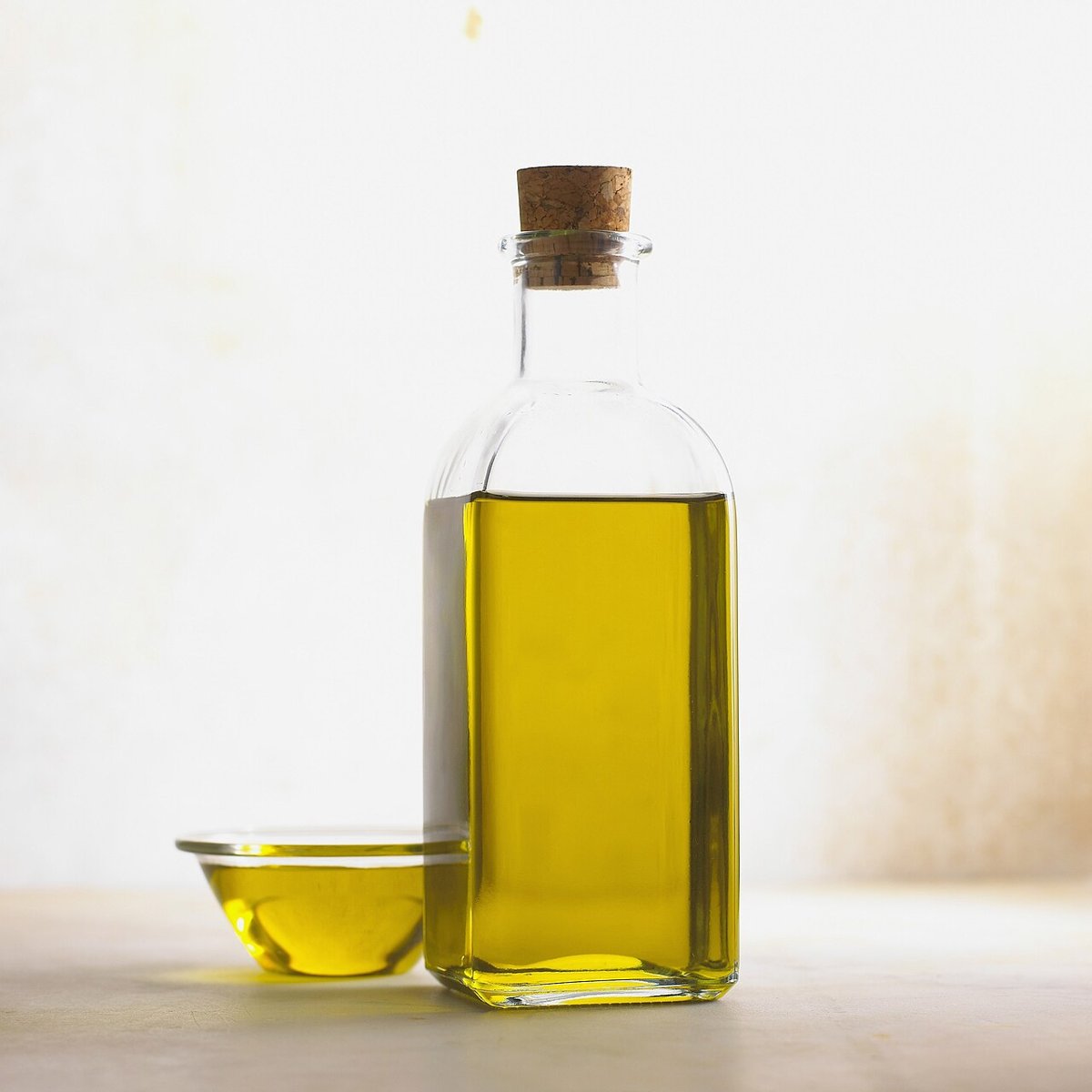
Thymoquinone is the compound most often credited for black seed's effects, and the trials above did not measure it. A 2022 analysis tested six commercial black seed oils and five oil capsule products and found thymoquinone from <strong>3.08 to 809.4 mg per 100 g</strong>. That is 0.003% to 0.81% by weight, and the top product held about 263 times more than the bottom one (809.4 divided by 3.08).
| Daily dose of oil | Lowest product (3.08 mg/100 g) | Highest product (809.4 mg/100 g) |
|---|---|---|
| 1 g | 0.03 mg thymoquinone | 8.1 mg |
| 3 g (the Heshmati trial dose) | 0.09 mg | 24.3 mg |
| 4 mL (the study's own example) | about 0.1 mg | about 30 mg (the study's own estimate) |
The practical point: two bottles with the same label dose can differ by hundreds of times in thymoquinone, and the trial results cannot tell you whether thymoquinone produced them. The same paper puts a safe daily intake at under 48.6 mg thymoquinone per adult based on the literature, and calls for regulating labelled content. Ask the maker for a certificate stating thymoquinone per gram, not just "cold-pressed" or "100% pure".
Liver and kidney data: what the trials checked
Black seed often gets listed with herbs that can harm the liver, so it helps to separate what the trials show from what is assumed.
- Liver enzymes in pooled trials: a 2020 review of 19 trials (1,295 people) found lower alkaline phosphatase (ALP) overall (WMD -10.8 U/L, 9 trials, 710 people) and lower AST in trials longer than 12 weeks (WMD -11.3 U/L, only 2 trials, 201 people). ALP fell by 11.3 U/L at 1,100 to 1,500 mg/day (5 trials, 340 people). Heterogeneity was high (I-squared 75.7% for ALP).
- Fatty liver: a 2021 meta-analysis of five trials (358 people) found lower ALT, AST and fasting glucose than placebo in non-alcoholic fatty liver disease.
- Reports of liver injury: the US National Library of Medicine's LiverTox record states that hepatotoxicity from black cumin seed extracts has not been reported.
- Kidney marker flag: the 2020 review reported higher blood urea nitrogen (BUN) in the two trials giving more than 2,000 mg/day (101 people), although the overall BUN result across 12 trials was a small fall. The abstract's own numbers on this point are inconsistent, so treat it as a caution about high doses, not a measured harm.
None of this removes the need for monitoring. These were short trials, mostly 12 weeks or less, in people followed by clinics. If you have liver disease, take statins or other medicines processed by the liver, or have kidney disease, ask for ALT, AST and creatinine before starting and after about 12 weeks, and keep the dose within the 1 to 3 g/day tested.
What we recommend
- Set expectations: at best, about 10 to 20 mg/dL off fasting glucose and about 0.5 points off HbA1c, on top of diet, activity and medicines. It is not an alternative to them.
- If you try it: pick one product with a stated thymoquinone content, use 1 to 3 g/day (the tested range) and log fasting readings for 12 weeks so you can see whether it did anything for you.
- Tell your prescriber if you take diabetes medicines, because glucose could run lower than before.
- Skip doses above 2 g/day of powder without a reason: the Bamosa trial's 3 g arm did not beat 2 g, and the pooled kidney flag appeared above 2,000 mg/day.
- Food first: see our article on fenugreek, cinnamon and turmeric for blood sugar, and fatty liver and weight loss if liver enzymes are your concern.
Managing blood sugar and unsure which supplements are worth your money? Dr. Triveni offers virtual nutrition consultations that turn your readings, medicines and food habits into a plan you can follow.
Book a consultationThis article provides educational nutrition information and does not constitute medical advice. If you take diabetes medicines or anticoagulants, or have liver or kidney disease, speak to your doctor before starting any supplement.
Sources
1. Askari G, et al. (2019). Effect of Nigella sativa (black seed) supplementation on glycemic control: a systematic review and meta-analysis of clinical trials. PMID: 30873688
2. Hallajzadeh J, et al. (2020). Effects of Nigella sativa on glycemic control, lipid profiles, and biomarkers of inflammatory and oxidative stress: a systematic review and meta-analysis of randomized controlled clinical trials. PMID: 32394508
3. Musazadeh V, et al. (2026). The effect of Nigella sativa supplementation on cardiometabolic health in patients with metabolic diseases: a GRADE-assessed systematic review and meta-analysis. PMID: 41858302
4. Does Nigella sativa supplementation improve cardiovascular disease risk factors? A GRADE-assessed systematic review and dose-response meta-analysis of 82 randomized controlled trials (2025). PMID: 40714301
5. Bamosa AO, et al. (2010). Effect of Nigella sativa seeds on the glycemic control of patients with type 2 diabetes mellitus. PMID: 21675032
6. Kaatabi H, et al. (2015). Nigella sativa improves glycemic control and ameliorates oxidative stress in patients with type 2 diabetes mellitus. PMID: 25706772
7. Heshmati J, et al. (2015). Nigella sativa oil affects glucose metabolism and lipid concentrations in patients with type 2 diabetes: a randomized, double-blind, placebo-controlled trial. Food Research International.
8. The effect of Nigella sativa on the measures of liver and kidney parameters: a systematic review and meta-analysis of randomized-controlled trials (2020). PMID: 32201245
9. Effect of Nigella sativa in the treatment of nonalcoholic fatty liver disease: a systematic review and meta-analysis of randomized controlled trials (2021). PMID: 33728708
10. Screening of thymoquinone content in commercial Nigella sativa products to identify a promising and safe study medication (2022). PMID: 36079759
11. NCBI LiverTox: Black cumin. NBK591552