Vitamin D · November 6, 2026
Women on placebo reached 57% at the vitamin D target around summer, then slipped. Weekly calcifediol held above 93%, in a drug-maker's analysis of 261 women that didn't test it against ordinary vitamin D
A placebo arm that rose and fell with the calendar and a capsule that didn't make a clean picture. The blood numbers are convincing. What they can and can't tell you depends on who was left out and what the capsule was compared with.
Calcifediol is the form of vitamin D the liver makes from the vitamin before it circulates in the blood, so taking it skips one step. A randomised, double-blind phase II/III trial tested a weekly 100 µg capsule across Europe, with centres in countries including Spain, France, Italy and the Czech Republic. This new paper looks back at the women only: 192 who took calcifediol and 69 who took placebo for a year, all starting with low blood levels of 25-hydroxyvitamin D, or 25(OH)D. A little over a third, 100 women, had severe deficiency, at 10 ng/mL or less.
The blood results are clear. In the calcifediol group, average levels began at 12.21 ng/mL, reached 23.68 by week 4 and 39.47 by week 16, then stayed above 41 ng/mL. At week 4, 68.2% of women on calcifediol had reached at least 20 ng/mL, against 5.8% on placebo. From week 16, more than 93% stayed there. For the higher 30 ng/mL target, the share was above 76% from week 16 to week 52, while placebo peaked at 6.2%.
The placebo arm is the most interesting line on the chart. With no active treatment, 57.4% reached 20 ng/mL by week 24, and the average climbed to 20.36 ng/mL, then slid to 16.68 by week 52. Those higher readings coincided with more visits falling in August or September, and the authors point to the seasons and sunshine. Diet might have played a part too, since vitamin D intake was never measured. The capsule group showed no such dip.
Safety looked unremarkable over the year, with adverse events of any cause in 35.9% on calcifediol and 33.3% on placebo. Readings of 80 ng/mL or more, a level the study tracked as elevated, turned up only with calcifediol, in 1.6% of women, none of whom had a related adverse event. Raised calcium was about equally rare (2.1% against 2.9%). Women with raised parathyroid hormone, a typical result of low vitamin D, fell from 19.7% to 4.6% on the capsule and from 22.1% to 17.0% on placebo.
Then the caveats. This was a post hoc analysis, done after the main trial, and it left out anyone who needed rescue vitamin D during the study. The authors acknowledge that this may have selected the placebo women who were recovering by themselves, which if anything would make the capsule's advantage look smaller. The trial was funded by the manufacturer, FAES FARMA, three of the authors are its employees, and two others were paid as investigators. Almost all participants were White, and no formal test compared the treatment effect across body-weight or menopause groups, so the similar results there are only suggestive.
Above all, the comparison was with a dummy pill. This paper can't say whether calcifediol works better than an ordinary vitamin D3 supplement, and blood levels aren't the same as stronger bones or fewer falls. Those weren't what this analysis measured. For a woman with a confirmed deficiency, it is decent evidence that this regimen corrects the number and holds it through winter. Whether it deserves a place over standard vitamin D3 is a separate question.
The capsule against the calendar
261
Women in this post hoc analysis: 192 on weekly calcifediol 100 µg and 69 on placebo, for 52 weeks
12.21 to 39.47
Mean 25(OH)D in ng/mL on calcifediol, baseline to week 16; above 41 thereafter
68.2% v 5.8%
Women at 20 ng/mL or more by week 4, calcifediol v placebo
>93% v ≤57.4%
At 20 ng/mL or more from week 16 on calcifediol, against placebo's highest rate, at week 24
1.6%
Women on calcifediol with a reading of 80 ng/mL or more; none on placebo
6.8% v 15.9%
Stopped treatment early, calcifediol v placebo
Exploratory, women-only post hoc analysis of a randomised, double-blind trial, excluding women given rescue vitamin D (cholecalciferol). Funded by FAES FARMA S.A., with three authors employed by the company. Vitamin D from food wasn't assessed. The outcome is a blood level, not fractures, falls or symptoms.
- The authors checked why the placebo arm's numbers wobbled: its best results at weeks 16 and 24 lined up with a larger share of visits in August or September. No such pattern appeared with the capsule.
- Week-52 results looked much alike by body size: among women on calcifediol, 87.5% of those with overweight and 93.7% of those with obesity were at 20 ng/mL or more. Earlier work has linked higher BMI with a weaker response to ordinary vitamin D3, which is why the authors looked.
- Levels were measured at one central laboratory in Germany, which reduces the differences that can arise when each site uses its own lab.
- Women in the analysis ranged in age from 18 to 84, with an average of about 52 on calcifediol, and more than half of those whose status could be classified were postmenopausal.
- Weekly Calcifediol 100 µg in Women with Vitamin D Deficiency: A Post Hoc Analysis of a Randomised Placebo-Controlled Phase II/III TrialNutrients, 4 November 2026 (CC BY) · Primary study; population, responder rates, levels, safety, limitations, funding and conflicts read in the full text.
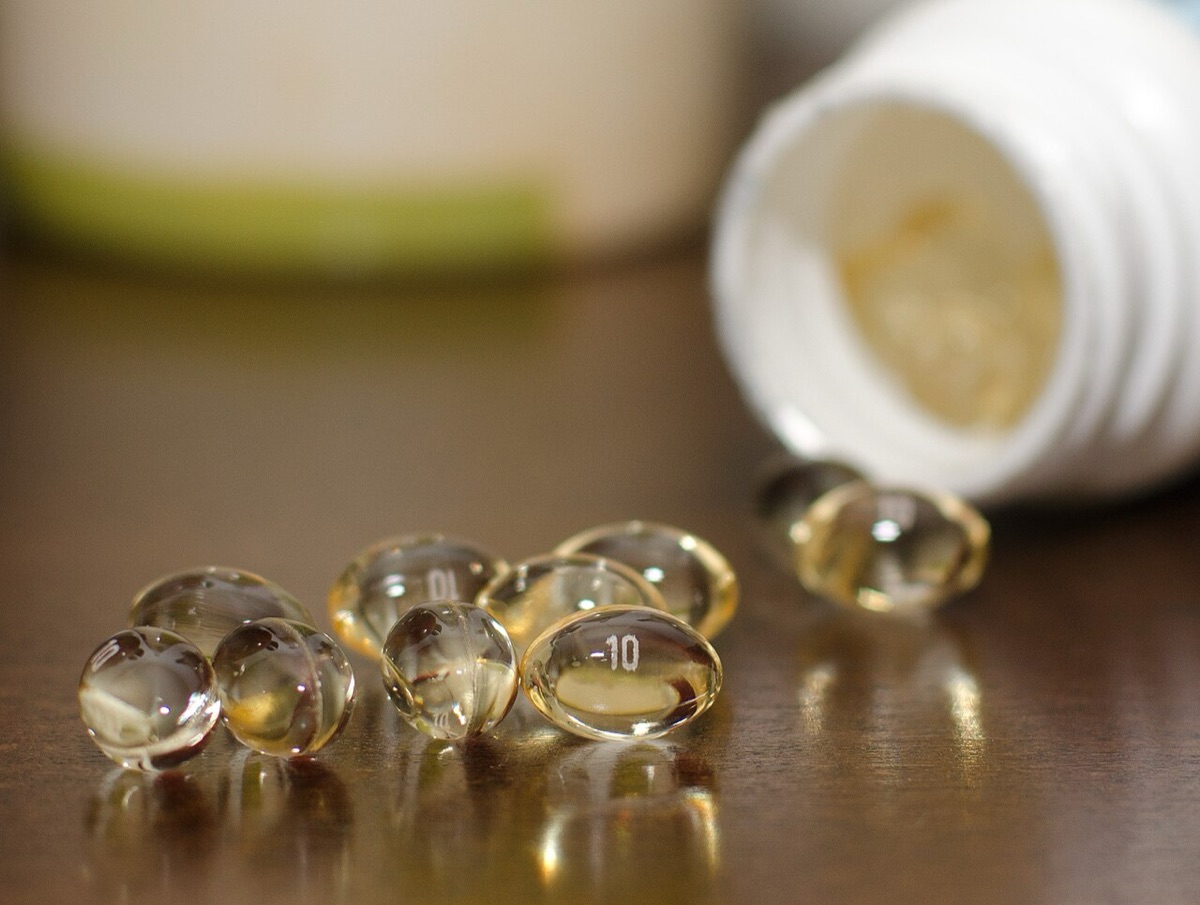
- SoftgelsWikimedia Commons · Photograph by Globallystoners, CC0; general illustration only.
General information, not medical advice. Vitamin D in high doses can cause harm, and calcifediol isn't interchangeable with a standard vitamin D3 supplement microgram for microgram. Have your level checked and talk to your doctor before starting or changing any vitamin D product, especially if you have kidney disease, a history of high calcium or take other medicines.
Analysis by NutroPractic from the sources listed. Written for general readers; it does not replace advice from your own doctor.
From our articles
Our guides on this subject
Plain-language guides on nutrition and wellness, backed by research.
Micronutrients
Vitamin D and B12: two common gaps, from northern winters to vegetarian kitchens
Vitamin D runs low in Canadian and European winters, and surprisingly often in sunny India too. Vitamin B12 is a risk for vegetarians, people over 50 and people on certain medicines. Who is at risk, what the official advice is in North America, Europe and India, and where to get both.
3 Oct 2026
Women's health
Nausea in pregnancy: ginger, vitamin B6, small meals and when it's hyperemesis, from the trials
Only 1.8% of women in one diary study had nausea just in the morning. Ginger at 1 g a day, B6 at 30 to 75 mg and doxylamine with B6 each have trial data, while diet advice has none. The score to track it, the doses, and the signs that mean a phone call.
5 Nov 2026
Diabetes
Vinegar before meals: what the trials measured on blood sugar, and how much is enough
Two teaspoons to a tablespoon with a starchy meal trims the glucose peak at 30 minutes, and the gap fades by two hours. HbA1c reviews range from -0.39 to -1.53, and we explain which to trust. Two gummies hold about 50 mg of acetic acid against 750 mg in a tablespoon.
5 Nov 2026
Newsfeed for your website
Want this feed on your website?
Add it to any site with one copy-and-paste snippet. No sign-up, and it updates itself every hour.
Start with a virtual consultation
Tell Dr. Triveni what you want to change. You will leave with a clear next step, whether you are in Toronto, London, New York or Chennai.