Anthropometry & metabolic risk · November 20, 2026
Universal waist-to-height ratio cutoff of 0.5 missed visceral fat across different ethnic groups in 3,566 adults
A nationwide NHANES analysis revealed that the commonly recommended 0.5 waist-to-height ratio fails to capture true DXA-verified visceral adiposity in overweight adults, requiring tailored cutoffs ranging from 0.55 to 0.59 depending on sex and ethnicity.
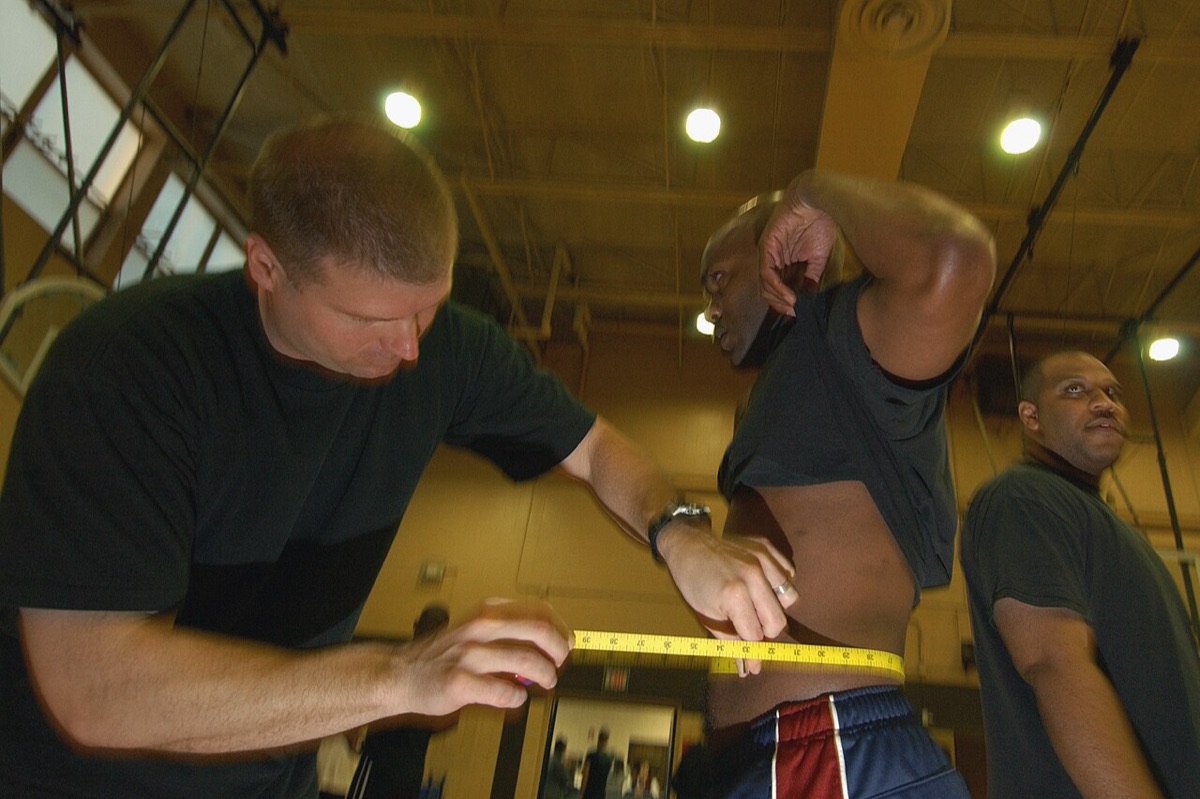
While Body Mass Index (BMI) remains the standard clinical metric for categorizing body weight, it famously fails to differentiate between subcutaneous fat, lean muscle, and pathogenic visceral adipose tissue. In response, public health guidelines have increasingly promoted the waist-to-height ratio (WtHR), frequently citing a universal thumb-rule: keep your waist circumference below half your height (a cutoff of 0.50).
To determine whether a single 0.50 threshold accurately reflects internal abdominal adiposity across diverse populations, researchers evaluated 3,566 overweight adults (BMI 25.0 to 29.9 kg/m²) participating in the continuous National Health and Nutrition Examination Survey (NHANES 2011–2018). Crucially, all participants underwent whole-body dual-energy X-ray absorptiometry (DXA) scans with direct quantification of visceral adipose tissue (VAT).
Using receiver operating characteristic (ROC) curve modeling, the investigators found that a universal 0.50 cutoff demonstrated poor specificity for detecting true visceral obesity. Optimal ethnic- and sex-specific cutoffs were substantially higher: 0.57 for White men and 0.58 for White women; 0.55 for Black men and 0.57 for Black women; 0.56 for Asian men and 0.59 for Asian women; and 0.57 for Hispanic men and 0.59 for Hispanic women.
The authors concluded that relying on a rigid, one-size-fits-all 0.50 threshold misclassifies metabolic risk in overweight individuals. Clinical and nutritional consultations should apply demographic-adjusted waist-to-height thresholds alongside metabolic lab panels to properly evaluate cardiovascular and diabetic risk.
DXA-validated waist-to-height ratio cutoffs for visceral adiposity in NHANES
3,566
Overweight adults (BMI 25–29.9) evaluated with whole-body DXA scans
0.55–0.57
Optimal WtHR threshold range for detecting visceral obesity in men
0.57–0.59
Optimal WtHR threshold range for detecting visceral obesity in women
DXA VAT
Direct quantification of deep visceral adipose tissue as reference standard
Cross-sectional analysis of NHANES 2011–2018 cycles examining sex- and ethnicity-specific anthropometric cutoffs.
- Visceral adipose tissue surrounds vital abdominal organs and drains directly into the portal vein, releasing free fatty acids and inflammatory cytokines into the liver.
- Unlike visceral fat, subcutaneous fat stored under the skin produces comparatively lower amounts of pro-inflammatory adipokines.
- A waist-to-height ratio accounts for stature differences better than raw waist circumference, but body fat distribution patterns vary significantly by ethnicity.
- DXA scanning separates total abdominal tissue into subcutaneous and visceral fat compartments using automated anatomical contour algorithms.
- Waist-to-Height Ratio Cut-Off Points for Central Obesity in Individuals with Overweight Across Different Ethnic Groups in NHANES 2011–2018Nutrients / MDPI · Cross-sectional study of 3,566 overweight adults assessing DXA visceral adipose tissue. Published November 2024.
- Physical Training Leader measures waistWikimedia Commons · Photo by TSgt Rob Jensen, US Air Force, public domain dedication.
Educational review of anthropometric research. Anthropometric indices should be interpreted alongside blood pressure, lipid panels, and glycemic markers.
Analysis by NutroPractic from the sources listed. Written for general readers; it does not replace advice from your own doctor.
From our articles
Read, then eat a little better
Plain-language guides on nutrition and wellness, backed by research.

Women's health
Inositol for PCOS: the 40:1 ratio, trial doses, and food milligrams
Why do randomized trials in polycystic ovary syndrome prioritize the 40:1 myo to D-chiro inositol ratio? Here is the science behind the ovarian epimerase paradox, clinical ovulation and insulin metrics, and why cantaloupe cannot replace 4,000 mg trial powder.
21 Nov 2026

Everyday eating
Extra virgin olive oil polyphenols: the EU health claim, smoke point myths, and cooking stability
Does extra virgin olive oil degrade when cooked? What does the EU 5 mg polyphenol health claim require, how does oleocanthal act like ibuprofen, and why does oxidative stability matter more than smoke point in domestic frying? Here is the clinical and culinary data.
21 Nov 2026

Food and nutrition
L-theanine and caffeine: what cognitive trials measured on sustained attention, and milligrams in matcha vs green tea
Combining L-theanine with caffeine produces clean focus without caffeine jitters. Here is what randomized trials measured on attention-switching, EEG alpha brain waves, and the exact milligrams across ceremonial matcha, culinary powder, gyokuro, and sencha.
20 Nov 2026
Newsfeed for your website
Want this feed on your website?
Add it to any site with one copy-and-paste snippet. No sign-up, and it updates itself every hour.
Start with a virtual consultation
Tell Dr. Triveni what you want to change. You will leave with a clear next step, whether you are in Toronto, London, New York or Chennai.