Sleep · October 19, 2026
80 teenagers logged what they ate and wore sleep trackers for up to three weeks. Researchers went looking for a 'vitamin sleep' and found none: no vitamin or mineral went with better sleep in every analysis
A Brigham Young University team matched 26 vitamins and minerals in teenagers' diets against sleep measured on wrist trackers. A few nutrients, potassium among them, lined up with slightly more efficient sleep on some nights, but nothing held up across the board, and the authors call their results early signals, not advice. Here's what they found, and why most of these teens were short on potassium anyway.
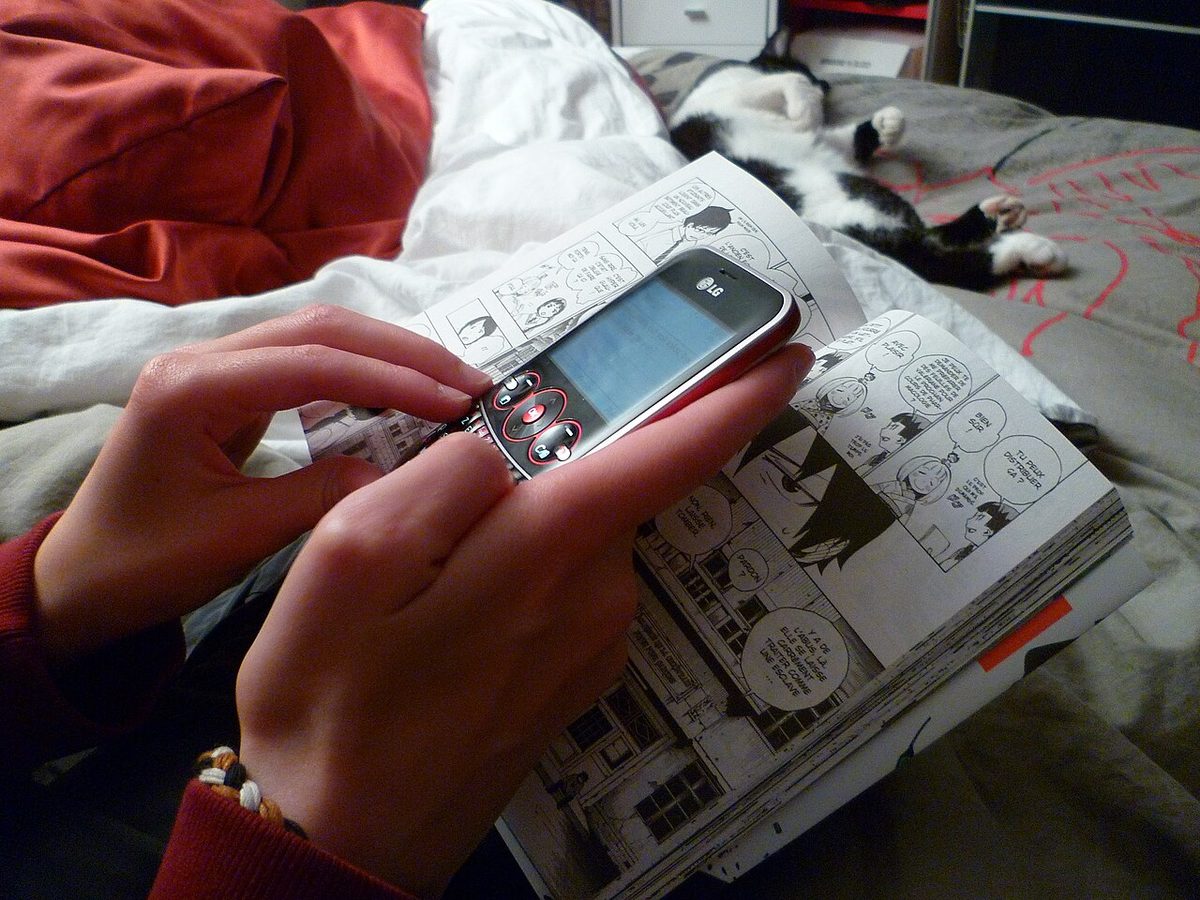
Many teenagers sleep too little, and many don't eat the recommended amounts of several vitamins and minerals. It's tempting to link the two and look for a nutrient that helps young people sleep. A study published on 16 October in Frontiers in Nutrition, titled 'In search of vitamin sleep', set out to do exactly that, and its answer is mostly no.
Researchers in the psychology and nutrition departments of Brigham Young University in Provo, Utah, reanalysed data from two studies of teenagers run in 2022 and 2023, during both school and summer months. Eighty young people aged 14 to 18 (average age 15.5) completed at least one food diary and were included. They recorded everything they ate over 24 hours on two or three random days using the US National Cancer Institute's online ASA-24 tool, which estimates 26 vitamins and minerals. They also wore a wrist activity tracker for 7 to 20 days to measure when they fell asleep, how long they slept, how much of their time in bed was spent asleep (sleep efficiency) and how long they lay awake after first dropping off. Questionnaires covered daytime sleepiness and whether each teen was a 'morning' or 'evening' type, and a lab session measured when their body started releasing the sleep hormone melatonin in the evening.
The team looked in two ways: whether what a teen ate on a given day matched how they slept that night, and whether their average intake matched their average sleep. They ran the analyses separately for girls and boys and corrected for the large number of comparisons. A handful of links came up. More potassium went with slightly higher sleep efficiency the same night in both girls and boys, and with falling asleep earlier in girls. More retinol (a form of vitamin A) went with higher sleep efficiency in girls and an earlier bedtime in boys. Others pointed the wrong way: more vitamin B12 went with lower sleep efficiency in girls and more time awake in the night in boys, and more zinc with falling asleep later in boys.
None of these held up across all the analyses. In the authors' words, 'no micronutrient emerged as significantly associated with improved sleep health across all models.' Iron was not linked to sleep in any analysis. They describe the findings as 'exploratory signals of potential association requiring confirmation in independently powered studies' and say their results do not point to any 'one-size-fits-all solution' for improving sleep through diet.
The diets themselves told a clearer story. Measured against the 4,700 mg a day the paper used as its reference, the girls averaged about 1,977 mg of potassium (42%) and the boys about 2,666 mg (57%). Vitamin D intake averaged under half the reference for both sexes. Sodium went the other way, at 122% of the reference for girls and 161% for boys. Fruit, vegetables, beans and dairy are the main potassium sources in most diets, so low potassium usually reflects how much of those foods teens eat.
The limits are significant. It was a small, mostly white group from one US region, so the results may not apply elsewhere. Food diaries depend on memory and honesty. A cross-sectional design can't show that a nutrient changes sleep, only that the two moved together. And this was a reanalysis of studies not designed to answer this question, with no advance calculation of how many participants were needed. The study received no outside funding, and the authors declared no conflicts of interest.
Vitamin and mineral intake and wrist-tracked sleep in 80 teenagers aged 14 to 18 (Brigham Young University, 2022 to 2023)
80
Teenagers aged 14 to 18 (average 15.5) with at least one 24-hour food diary, out of 85 recruited
26
Vitamins and minerals estimated from the diaries and tested against sleep
7 to 20 days
How long each teen wore a wrist activity tracker to measure sleep
0
Nutrients linked to better sleep in every analysis
42% / 57%
Average potassium intake for girls / boys, as a share of the 4,700 mg a day reference the paper used
122% / 161%
Average sodium intake for girls / boys, as a share of the paper's reference
Study: Kamhout SLH, Luke SG, Homer KJ, Broadbent M, Bellini SG, Duraccio KM, 'In search of vitamin sleep: cross-sectional analysis of vitamin and mineral intake and sleep health outcomes in adolescents', Frontiers in Nutrition 13 (2026), published 16 October 2026, doi 10.3389/fnut.2026.1978612, read on the publisher's site. Secondary analysis of two adolescent studies (2022 to 2023); 85 recruited, 80 with at least one ASA-24 recall (53% completed three recalls, 40% two); 49 female, 36 male in the recruited sample; 87% non-Hispanic White. Sleep by Actiwatch 2 (30-second epochs, Sadeh algorithm, diary co-scoring): onset, midpoint, duration, efficiency, wake after sleep onset. Also Morningness-Eveningness Questionnaire, Epworth Sleepiness Scale for Children and Adolescents, and dim-light melatonin onset in the lab. Linear mixed-effects models (same-day intake vs same-night sleep) and linear regression (average intake vs average sleep), backward stepwise selection, run by sex, Benjamini-Hochberg false discovery rate correction. Selected same-night coefficients: potassium with efficiency b = 0.002 (boys) and 0.004 (girls) per mg; retinol with efficiency b = 0.008 (girls); vitamin B12 with efficiency b = −0.96 (girls) and wake after sleep onset b = 2.18 (boys); zinc with onset b = 3.51 (boys). Potassium intake: girls 1,976.59 mg (42% of 4,700 mg), boys 2,665.6 mg (57%). Vitamin D intake 49% (girls) and 45% (boys) of reference. Effects are reported as coefficients, not odds ratios; mean sleep duration is not reported. No external funding; no conflicts of interest declared; approved by the Brigham Young University IRB.
- The American Academy of Sleep Medicine recommends that teenagers aged 13 to 18 regularly sleep 8 to 10 hours in every 24.
- The 4,700 mg potassium figure used in this study comes from 2004 US guidance. Since 2019 the US National Academies have set the adequate intake for 14 to 18-year-olds at 3,000 mg a day for boys and 2,300 mg for girls.
- Wrist activity trackers used in sleep research estimate sleep from movement: long stretches with very little movement are scored as sleep.
- Dim-light melatonin onset, the evening time when the body starts releasing melatonin, is used as a marker of the body clock. In teenagers it tends to shift later, which is one reason many feel wide awake at bedtime.
- In search of vitamin sleep: cross-sectional analysis of vitamin and mineral intake and sleep health outcomes in adolescentsFrontiers in Nutrition, October 2026 · The study: methods, intake and sleep results, limitations, funding and conflicts of interest
- Potassium: Fact Sheet for Health ProfessionalsNIH Office of Dietary Supplements · Current adequate intakes for potassium by age and sex, and food sources
- Recommended amount of sleep for pediatric populations: a consensus statement of the American Academy of Sleep MedicineJournal of Clinical Sleep Medicine, 2016 · Recommended sleep for teenagers aged 13 to 18
General information, not medical advice. This small observational study cannot show that any nutrient improves or harms sleep, and it does not support taking supplements for sleep. If a teenager has ongoing trouble sleeping or is very tired during the day, talk to a doctor. Check with a doctor or pharmacist before giving supplements, especially potassium, which can be harmful for people with kidney problems or those on certain medicines.
Analysis by NutroPractic from the sources listed. Written for general readers; it does not replace advice from your own doctor.
From our articles
Our guides on this subject
Plain-language guides on nutrition and wellness, backed by research.
Supplements and vitamins
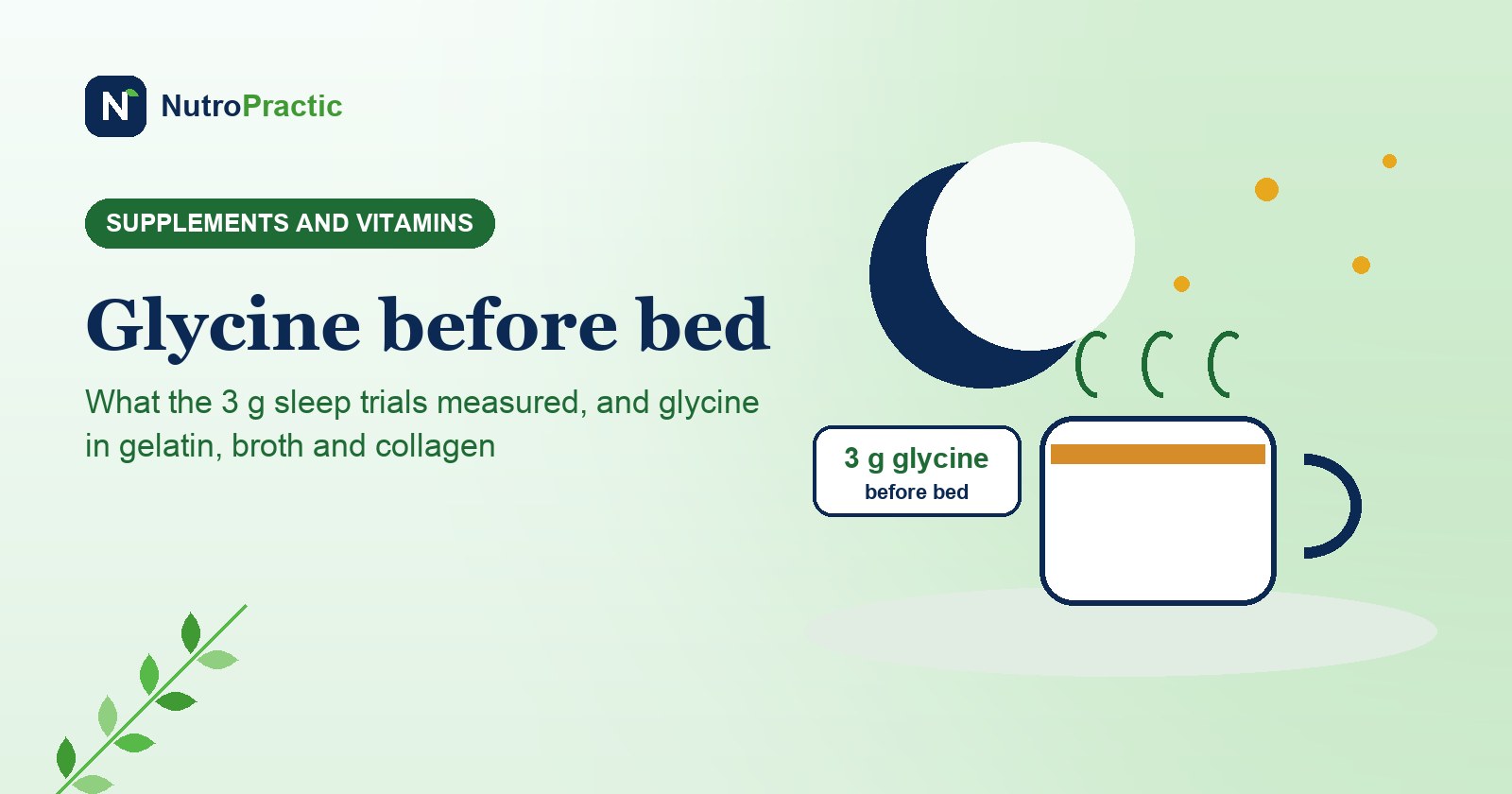
Glycine before bed: the 3 g sleep trials, what they measured, and glycine in gelatin, bone broth and collagen
The 3 g dose comes from small Japanese trials: the sleep-restriction study analysed seven men. Here is what each trial measured, the grams of gelatin, collagen, pork rinds and bone broth that hold 3 g, and the clozapine warning.
17 Nov 2026
Botanicals and sleep
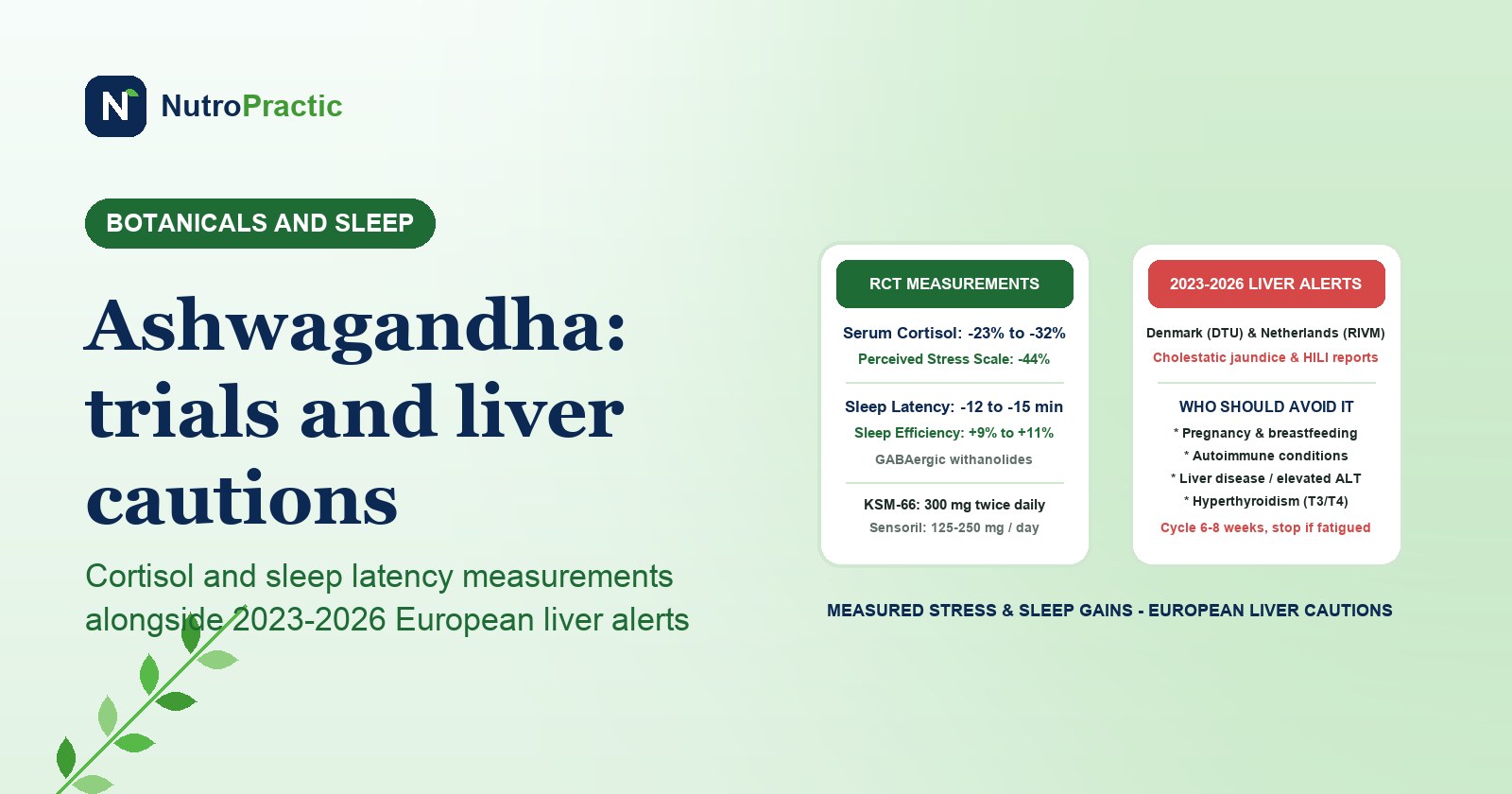
Ashwagandha for stress and sleep: what the randomised trials measured, and liver safety cautions
Standardized Ashwagandha extracts reduce serum cortisol by 23% to 32% and shorten sleep latency by 12 to 15 minutes in double-blind clinical trials. Yet 2023-2026 health alerts from Danish and Dutch authorities highlight serious herb-induced liver injury risks. Discover what the trials measured, extract differences (KSM-66 vs Sensoril), and who should strictly avoid it.
14 Nov 2026
Food and nutrition
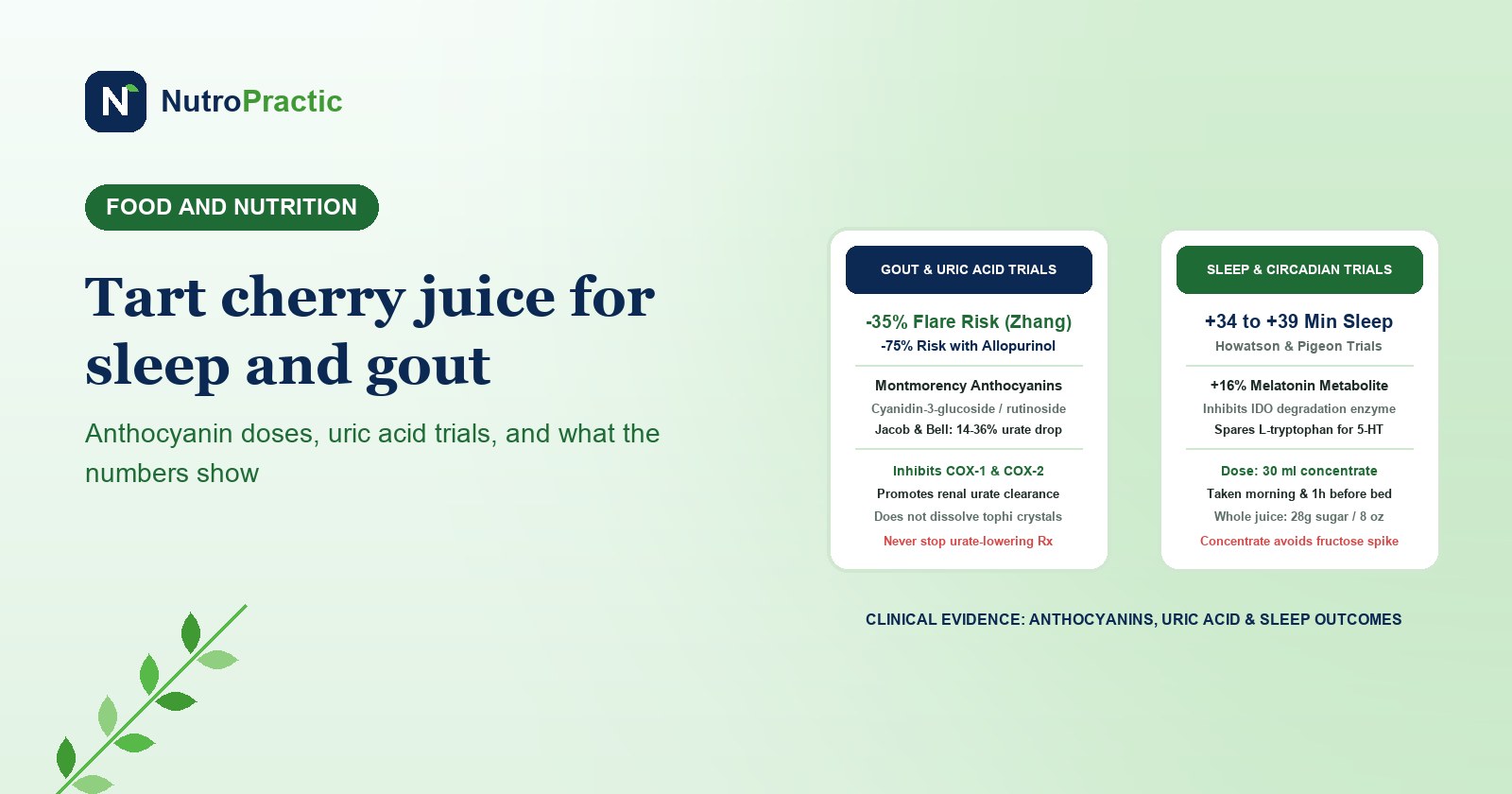
Tart cherry juice for sleep and gout: anthocyanin doses, uric acid trials, and what the numbers show
Tart cherry juice (Prunus cerasus, Montmorency) is frequently promoted as a natural remedy for insomnia and recurrent gout attacks. Clinical trials demonstrate measurable reductions in serum uric acid and acute flare frequency (including a 35% reduction in 2-day gout attack risk and up to 75% when paired with allopurinol), alongside a 34-to-39 minute increase in sleep duration. Discover the biochemical mechanisms of anthocyanins (cyanidin-3-glucoside), the tryptophan-sparing pathway, dosing protocols (30 ml concentrate vs 8 oz juice), sugar trade-offs, and why tart cherry cannot replace prescription urate-lowering therapy.
13 Nov 2026
Newsfeed for your website
Want this feed on your website?
Add it to any site with one copy-and-paste snippet. No sign-up, and it updates itself every hour.
Start with a virtual consultation
Tell Dr. Triveni what you want to change. You will leave with a clear next step, whether you are in Toronto, London, New York or Chennai.