Sports nutrition & athletic performance physiology · November 22, 2026
High-dose vitamin D3 corrects seasonal deficiency in female national handball players but yields no physical performance edge in randomized trial
A double-blind, randomized, placebo-controlled trial evaluating 5,000 IU daily of vitamin D3 over 8 weeks in elite female indoor handball players during their competitive season significantly raised serum 25(OH)D levels from 26.7 to 43.0 ng/mL, but produced no measurable improvement in sprint speed, endurance, or anaerobic peak power.
Vitamin D is a seco-steroid prohormone renowned for regulating calcium-phosphate homeostasis and bone remodeling, but its nuclear receptors (VDR) are also expressed across skeletal muscle tissue, influencing cross-bridge cycling, protein synthesis, and mitochondrial function. Indoor team-sport athletes—such as handball, volleyball, and basketball players—compete predominantly under artificial lighting during autumn and winter months, experiencing virtually zero cutaneous ultraviolet B (UVB) synthesis. Consequently, seasonal vitamin D insufficiency is rampant among elite indoor competitors, fueling widespread speculation that high-dose supplementation unlocks direct performance enhancements.
To establish whether correcting seasonal insufficiency translates into tangible athletic gains, sports medicine researchers conducted an 8-week randomized, double-blind, placebo-controlled trial in female National League handball players actively competing in official season play. Athletes were randomized to receive either 5,000 IU per day of oral cholecalciferol (vitamin D3) or an identical placebo capsule. Circulating serum 25-hydroxyvitamin D [25(OH)D] was measured via chemiluminescent immunoassay, and physical performance batteries were executed before and after the 8-week intervention.
Laboratory biochemical testing confirmed that the 5,000 IU/day regimen was highly effective at optimizing circulating status: serum 25(OH)D in the supplemented group surged from a baseline average of 26.70 ± 11.12 ng/mL to 42.96 ± 16.20 ng/mL, whereas the placebo group remained stagnant (27.05 to 29.65 ng/mL), representing a statistically significant between-group increase of 13.66 ng/mL (95% CI: 7.32–20.00; p = 0.002). However, rigorous performance testing—encompassing 10-meter and 30-meter acceleration sprint times, 20-meter shuttle-run cardiovascular distances, and 30-second Wingate anaerobic peak power and total mechanical work—demonstrated zero statistically significant time-by-group interactions.
The authors concluded that while 5,000 IU/day of vitamin D3 provides a dependable, safe clinical tool for resolving indoor seasonal hypovitaminosis D, elevating circulating levels into the optimal 40–50 ng/mL range does not act as an ergogenic performance booster in well-trained athletes who are not severely deficient at baseline. Sports nutritionists should prescribe vitamin D to protect long-term bone density, immune competence, and musculoskeletal health rather than expecting immediate speed or power improvements.
Randomized double-blind trial of 5,000 IU/day vitamin D3 in elite indoor athletes
5,000 IU/d
Daily oral cholecalciferol (vitamin D3) dosage administered over 8 weeks
+13.7 ng/mL
Statistically significant net elevation in serum 25(OH)D vs placebo (p = 0.002)
42.96 ng/mL
Achieved post-intervention serum 25(OH)D concentration in supplemented athletes
No effect
No significant improvement in 10m/30m sprints, shuttle runs, or Wingate peak power
Randomized, double-blind, placebo-controlled trial published in Nutrients (11 November 2026).
- Ultraviolet B (UVB) wavelengths between 290 and 315 nm are completely absorbed by standard commercial indoor window glass, preventing any cutaneous pre-vitamin D3 synthesis indoors.
- In latitudes above 35° North or South, the solar zenith angle during winter months scatters UVB rays through the atmosphere, creating a multi-month 'vitamin D winter'.
- Vitamin D receptor (VDR) activation in type II (fast-twitch) muscle fibers promotes calcium uptake into the sarcoplasmic reticulum, explaining why severe deficiency (<10 ng/mL) causes muscular weakness.
- The Endocrine Society defines vitamin D sufficiency as serum 25(OH)D above 30 ng/mL, with optimal musculoskeletal thresholds typically recognized between 30 and 50 ng/mL.
- Effects of 8-Week High-Dose Vitamin D Supplementation on Physical Performance in Female National League Handball Players During the Competitive SeasonNutrients / MDPI · Randomized, double-blind, placebo-controlled clinical trial. Published 11 November 2026.
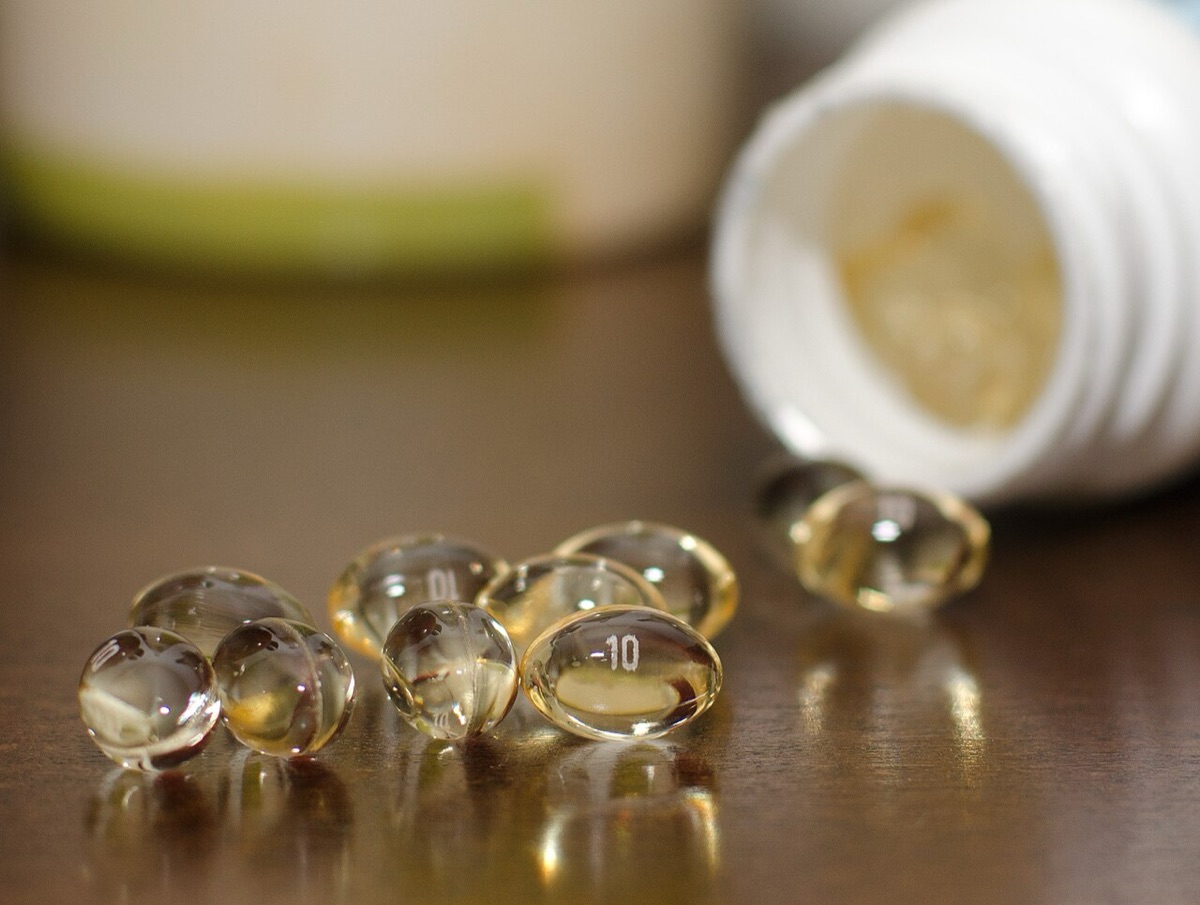
- SoftgelsWikimedia Commons · Photo by Globallystoners, CC0 public domain dedication.
Educational summary of exercise science and vitamin D clinical trial research. Athletes considering high-dose vitamin D supplementation should have their baseline serum 25(OH)D verified by a sports physician or dietitian.
Analysis by NutroPractic from the sources listed. Written for general readers; it does not replace advice from your own doctor.
From our articles
Read, then eat a little better
Plain-language guides on nutrition and wellness, backed by research.

Women's health
Inositol for PCOS: the 40:1 ratio, trial doses, and food milligrams
Why do randomized trials in polycystic ovary syndrome prioritize the 40:1 myo to D-chiro inositol ratio? Here is the science behind the ovarian epimerase paradox, clinical ovulation and insulin metrics, and why cantaloupe cannot replace 4,000 mg trial powder.
21 Nov 2026

Everyday eating
Extra virgin olive oil polyphenols: the EU health claim, smoke point myths, and cooking stability
Does extra virgin olive oil degrade when cooked? What does the EU 5 mg polyphenol health claim require, how does oleocanthal act like ibuprofen, and why does oxidative stability matter more than smoke point in domestic frying? Here is the clinical and culinary data.
21 Nov 2026

Food and nutrition
L-theanine and caffeine: what cognitive trials measured on sustained attention, and milligrams in matcha vs green tea
Combining L-theanine with caffeine produces clean focus without caffeine jitters. Here is what randomized trials measured on attention-switching, EEG alpha brain waves, and the exact milligrams across ceremonial matcha, culinary powder, gyokuro, and sencha.
20 Nov 2026
Newsfeed for your website
Want this feed on your website?
Add it to any site with one copy-and-paste snippet. No sign-up, and it updates itself every hour.
Start with a virtual consultation
Tell Dr. Triveni what you want to change. You will leave with a clear next step, whether you are in Toronto, London, New York or Chennai.