Mental health · November 5, 2026
Low vitamin D turned up far more often in people with OCD. As a treatment, the review could point to one case report
Across six studies, vitamin D deficiency carried about four times the odds in people with OCD. Then come the awkward details: shifting definitions of deficiency, one very influential study, and no way to tell which problem came first.

Blood tests for vitamin D have been compared in people with obsessive-compulsive disorder and people without it for years, and the small studies have not always agreed. A review in Frontiers in Nutrition has now pooled them. The authors searched the literature to March 2026 and kept ten observational studies, seven in adults and three in children and adolescents, all using DSM-IV or DSM-5 criteria to identify OCD.
The comparison of average levels covered eight studies, with 507 people with OCD and 506 controls. Levels were lower in the OCD groups by about two-thirds of a standard deviation (standardised mean difference −0.669, 95% CI −0.943 to −0.394). Six studies also counted people as deficient or not. The pooled odds ratio was 4.06, with a wide confidence interval of 1.98 to 8.31. Adding up the counts in the paper's table gives 233 of 395 people with OCD (59%) and 125 of 417 controls (30%). That sum is ours and is cruder than the review's weighted estimate, but it shows the size of the gap in plain numbers.
Lower vitamin D also went with worse symptoms on the Yale-Brown scale. The pooled correlation with total score was −0.361 across six studies and 511 people. Squared, that comes to roughly 13% of the variation in scores, so most of the differences between people were not accounted for by this blood test. The link looked stronger in adults (−0.598) than in children (−0.336). For compulsions alone it vanished in children (0.031, CI −0.174 to 0.236), though that estimate rests on two studies and the authors warn against reading much into it.
The closer you look at the studies, the less tidy the picture gets. Between 73% and 87% of the variation in each main result came from differences between studies rather than chance. Deficiency meant below 20 ng/mL in two studies, below 15 in one and below 10 in another, and two did not state a cut-off. One comparison group was made up of other psychiatric patients, not healthy people, and 58% of them were deficient, against 68% of the OCD group. One study of 344 people, the only one using LC-MS/MS, reported deficiency in 56% of cases against 11% of controls and a correlation of −0.705. It was flagged as unusually influential in the odds and correlation analyses. Two more cohorts may overlap, which could count some patients twice.
The bigger gap is direction. Low vitamin D could feed into OCD through its effects on the brain, as the authors suggest. OCD could also lower vitamin D, because avoiding outdoor activities and eating a restricted diet are both patterns the authors mention. Sun exposure, season, latitude, diet, gender and other illnesses could not be examined because the original studies did not supply the data. The authors themselves say causality cannot be established and call the evidence for vitamin D as an independent contributor inconclusive.
Their position on treatment is plainer than the headline numbers might suggest. Screening people with OCD for low vitamin D could be worth investigating, they write, but the same cannot be said for routine supplements as part of OCD treatment. Apart from a single case report, clinical evidence is largely missing, and they ask for proper trials. So a person with OCD who has other reasons to suspect low vitamin D, such as little time outdoors or a very narrow diet, has a sensible question for their doctor about a blood test. Nothing here supports swapping therapy or medication for a supplement.
Vitamin D and OCD: what the pooled studies show
10
Observational studies kept in the review, searched to March 2026
−0.669
Standardised mean difference in vitamin D, OCD versus controls; 95% CI −0.943 to −0.394; 507 v 506 people
OR 4.06
Odds of deficiency linked with OCD diagnosis; 95% CI 1.98–8.31; 395 v 417 people
59% v 30%
Deficient, OCD versus controls: simple total of the review's six-study table (our sum, unweighted)
r = −0.361
Vitamin D against total Yale-Brown score; 95% CI −0.566 to −0.157; 511 people
−0.598 v −0.336
The same correlation in adults versus children, three studies each
73–87%
I² for the odds, mean-difference and correlation results: most variation lay between studies
1
Case report: the only clinical evidence for treatment the authors point to
Systematic review and random-effects meta-analysis of observational studies. Deficiency cut-offs and blood assays differed between studies. Age analyses were done at study level, on few studies and without multiplicity correction, so the authors advise caution. The 59% v 30% and the 13% in the text are our own arithmetic from the paper's figures. None of these results shows that low vitamin D causes OCD or that supplements help it.
- In one study of children, 11 of 33 with OCD were deficient and none of the 20 controls were. A zero breaks the odds-ratio calculation, so the reviewers added 0.5 to the empty cell, which is standard practice.
- Healthy controls in one study averaged 13.6 ng/mL. That is lower than the average for the OCD group in all seven other studies, a reminder of how much vitamin D results can vary from one study population to another.
- To turn ng/mL into nmol/L, multiply by 2.5. The review's cut-offs of 10 to 20 ng/mL are the same as 25 to 50 nmol/L, so check the unit on a lab report before comparing it with a figure in a paper.
- The reviewers calculated that 260 null studies would be needed to cancel the difference in average levels. A number like that speaks to unpublished studies. It says nothing about confounding such as time spent outdoors.
- The paper cites a lifetime prevalence for OCD of 1.3%, with women at greater risk than men.
- Vitamin D supplements can do harm as well. The NHS warns that taking too many over a long period can cause calcium to build up in the body, a condition called hypercalcaemia.
- The “sunshine vitamin” in obsessive-compulsive disorder: a systematic review and meta-analytical evaluation of its association with disease etio-pathophysiologyFrontiers in Nutrition, 2 November 2026 · Open-access paper (CC BY 4.0); study counts, tables, pooled estimates, heterogeneity, subgroups, limitations and the authors' treatment position checked against the full text. Supplementary tables not read.
- Vitamin DNHS (UK) · Warning about hypercalcaemia from taking too many supplements over a long period.
- Windows Curtains Tbilisi (Unsplash).jpgWikimedia Commons · Photograph by Orlova Maria, CC0; reused as a general illustration of daylight.
General information, not medical advice. This review of observational studies cannot show that low vitamin D causes OCD or that supplements treat it. Do not stop or change OCD therapy or medication without your clinician, and ask a doctor or dietitian before taking high-dose vitamin D.
Analysis by NutroPractic from the sources listed. Written for general readers; it does not replace advice from your own doctor.
From our articles
Our guides on this subject
Plain-language guides on nutrition and wellness, backed by research.
Micronutrients
Vitamin D and B12: two common gaps, from northern winters to vegetarian kitchens
Vitamin D runs low in Canadian and European winters, and surprisingly often in sunny India too. Vitamin B12 is a risk for vegetarians, people over 50 and people on certain medicines. Who is at risk, what the official advice is in North America, Europe and India, and where to get both.
3 Oct 2026
Diabetes
Pasta and blood sugar: al dente, cooled and reheated, and what the glucose tests measured
Head-to-head tests found little gap between 5 and 15 minutes of boiling. Chilling and reheating ranged from no change to a large drop. Moving from 80 g to 150 g adds 50 g of carbs. The tests, the sums, and legume and whole-wheat pastas per 100 g.
4 Nov 2026
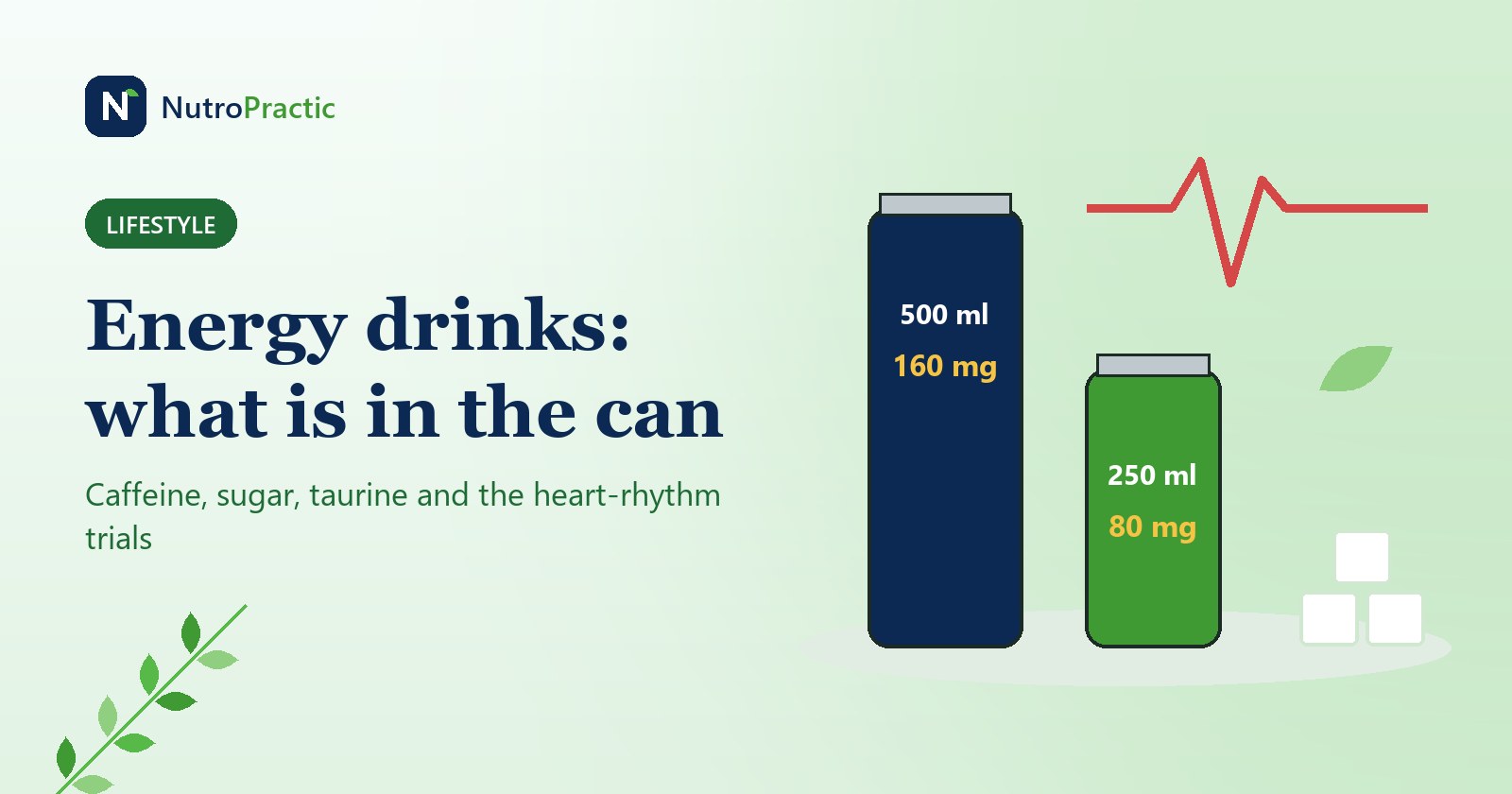
Lifestyle
Energy drinks: caffeine, sugar and taurine per can, and what the emergency-visit and heart-rhythm studies found
From 80 mg to 300 mg of caffeine, and up to 55 g of sugar in one can. The numbers by brand, what they mean for a 50 kg teenager, what the QT and blood pressure trials measured, the old emergency-visit data and England's coming under-16 ban.
4 Nov 2026
Newsfeed for your website
Want this feed on your website?
Add it to any site with one copy-and-paste snippet. No sign-up, and it updates itself every hour.
Start with a virtual consultation
Tell Dr. Triveni what you want to change. You will leave with a clear next step, whether you are in Toronto, London, New York or Chennai.