Liver health · October 22, 2026
Sixty people with chronic liver disease in Sichuan took vitamin D matched to their blood levels, or nothing extra, for a year. Liver stiffness and liver enzymes fell further on vitamin D, but nobody got a placebo
A hospital trial in Shifang, China, topped up low vitamin D with 400 to 800 IU a day alongside usual liver treatment. On a FibroScan and on blood tests the vitamin D group looked better at 3, 6 and 12 months. The authors themselves list why that is a promising signal rather than proof: a small, single-hospital study, no placebo, and markers of scarring rather than biopsies.
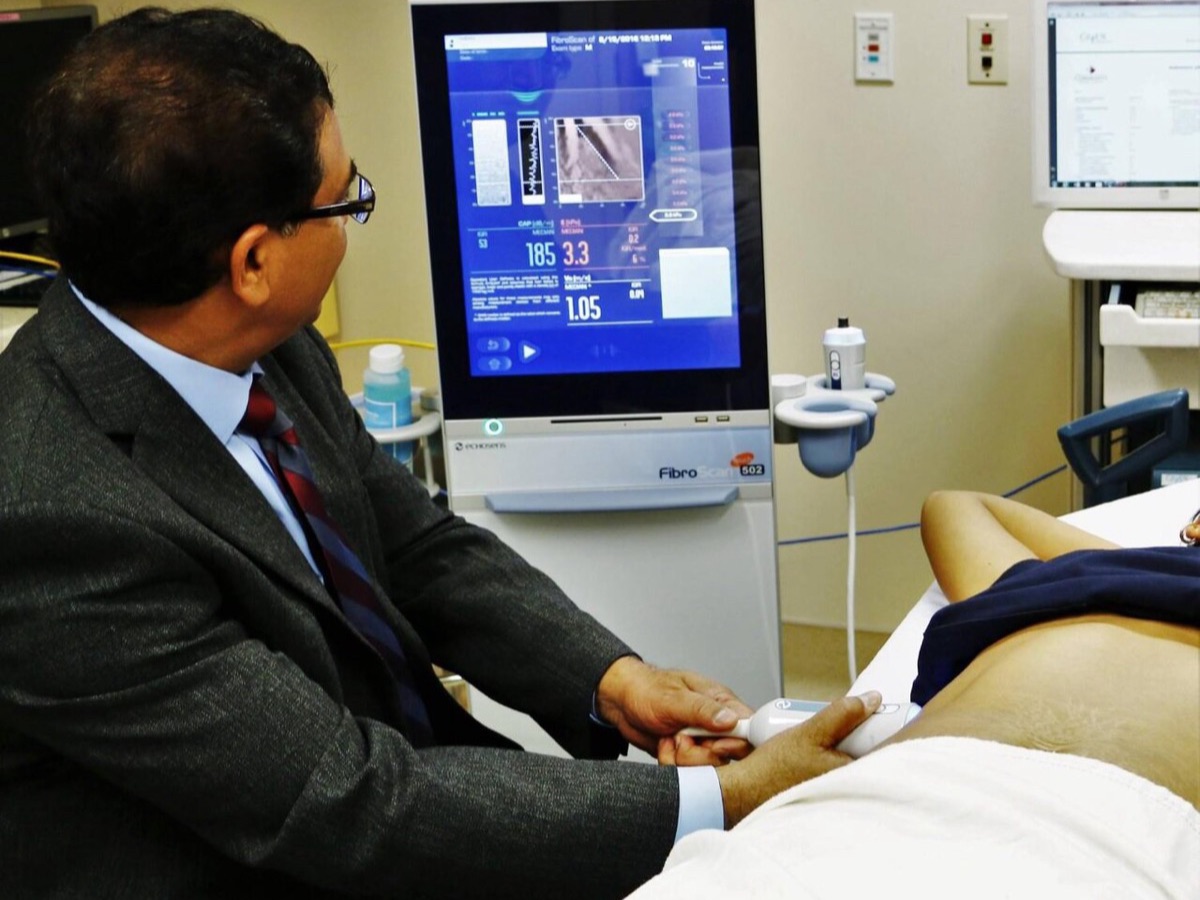
Long-running liver disease, whether from hepatitis B or C, alcohol or other causes, slowly lays down scar tissue (fibrosis) that can end in cirrhosis. Few treatments slow that scarring directly. Vitamin D is often low in people with liver disease, and low levels go with more scarring, so doctors at Shifang People's Hospital in Sichuan, China, tested whether correcting it makes a difference. Their trial came out in Frontiers in Medicine on 14 October.
They enrolled 60 inpatients from their gastroenterology department between April 2024 and April 2025, average age 53: about half with chronic hepatitis B, and the rest with hepatitis C, alcohol-related fatty liver disease or other causes such as autoimmune hepatitis. People with decompensated cirrhosis, liver failure or liver cancer were left out. Everyone got the hospital's usual care for a year: two liver-support medicines (polyene phosphatidylcholine and silybin, from milk thistle), antiviral drugs for hepatitis B or C, no alcohol, a low-fat diet and regular exercise. Half, chosen by sealed envelope, also had their vitamin D checked and topped up with vitamin D3: 800 IU a day if their level was under 20 ng/mL, 400 IU if it was 20 to 29.9, and none if it was 30 or more, with the dose reviewed every three months to keep them at 30 or above.
Both groups started low, at about 14 and 16 ng/mL. Over the year, vitamin D rose in the supplemented group and stayed higher than in the others at 3, 6 and 12 months. Liver enzymes (ALT and AST) fell in both groups, but more with vitamin D. The two measures of scarring, liver stiffness on a FibroScan and the APRI score worked out from a blood test, both fell in the vitamin D group and were lower than in the control group at every check (all p < 0.05). Everyone finished the year. Two people on vitamin D had mild nausea and bloating, which settled when they took it after meals.
The authors are frank about the limits. Sixty people from one hospital is small. There was no placebo, so patients and their doctors knew who was taking vitamin D; only the lab staff and the scan operators were kept unaware. Stiffness and APRI are indirect: both are pushed up by inflammation, so a drop may partly reflect calmer inflammation rather than less scar tissue, and no one had a biopsy. The mix of liver diseases was not analysed separately, and the statistics compared groups one time point at a time rather than with a model of change over time. The results are shown only as graphs, so we cannot give the final numbers. The baseline table also has a figure that does not add up: it lists 17 men and 13 women in the control group against 7 men and 23 women on vitamin D, yet reports no difference (p = 0.302), whereas that split works out to a p-value of about 0.01 to 0.02.
The picture from earlier trials is mixed. A 2021 Cochrane review pooled 27 trials of vitamin D in 1,979 adults with chronic liver disease, judged every one at high risk of bias, and was very uncertain whether vitamin D changes the risk of death or liver complications. This new trial adds a small, encouraging piece, and the authors call for larger, placebo-controlled studies before it becomes routine practice.
One year of usual liver care, with or without vitamin D3 dosed to blood levels, in 60 patients in Sichuan
60
Inpatients with chronic liver disease, 30 per group, randomised by sealed envelope at one hospital in Shifang, Sichuan
12 months
Of follow-up, with checks at 3, 6 and 12 months; all 60 finished
800 / 400 IU
Vitamin D3 a day if blood 25(OH)D was under 20 ng/mL / 20 to 29.9 ng/mL; none if 30 or above
13.6 vs 15.9
Average starting vitamin D level in ng/mL, vitamin D group vs control group: both deficient
10.0 vs 8.9 kPa
Average starting liver stiffness on FibroScan, vitamin D group vs control group
p < 0.05
Liver stiffness, APRI score, ALT and AST lower with vitamin D than without at 3, 6 and 12 months (final values shown only in graphs)
2 of 30
People on vitamin D with mild nausea and bloating; no serious side effects
Study: Zhong C, Yang W, Yin X, 'Vitamin D screening and targeted supplementation delays liver fibrosis in patients with chronic liver disease: a prospective randomized controlled trial', Frontiers in Medicine 2026, 13:1879205, published 14 October 2026, doi 10.3389/fmed.2026.1879205 (open access, CC BY; read in full). Registered as ChiCTR2600124218. Single hospital, simple randomisation 1:1, open label with blinded outcome assessors; no placebo. Diseases: chronic hepatitis B 29, hepatitis C 9, alcohol-related fatty liver disease 13, other 9. Usual care for everyone: polyene phosphatidylcholine 456 mg three times a day and silybin 140 mg twice a day, entecavir for hepatitis B, direct-acting antivirals for hepatitis C, alcohol abstinence, low-fat diet and exercise. Co-primary outcomes: APRI ((AST ÷ upper limit of normal × 100) ÷ platelet count) and liver stiffness by transient elastography. The sample size was worked out for a difference in vitamin D level at 3 months, not for the liver outcomes. Between-group comparisons used separate t-tests at each time point, which the authors list as a limitation. Baseline table: 17/13 men/women in the control group against 7/23 on vitamin D, reported as p = 0.302 (χ² 1.607); our own chi-square on those counts gives about p = 0.008 (0.018 with continuity correction), so either the counts or the test are misprinted. Funding: Deyang Science and Technology Plan Project (2024SZY150); no conflicts of interest declared.
- The liver is where vitamin D from sunlight and food is first converted into 25-hydroxyvitamin D, the form blood tests measure. Damaged livers may do this less well, one reason levels run low in liver disease.
- A FibroScan sends a gentle push through the skin and times how fast the resulting wave crosses the liver. Stiffer, more scarred tissue carries it faster, and the result is given in kilopascals (kPa).
- Vitamin D doses are given in two units: 400 IU is 10 micrograms and 800 IU is 20 micrograms (1 microgram = 40 IU). The doses in this trial were modest everyday amounts, not mega-doses.
- APRI needs only two routine blood results, the liver enzyme AST and the platelet count. Platelets often fall as scarring advances, which pushes the score up.
- A 2021 Cochrane review found 27 earlier trials of vitamin D in chronic liver disease, with 1,979 adults; 12 used a placebo and 15, like this one, gave the control group nothing.
- Vitamin D screening and targeted supplementation delays liver fibrosis in patients with chronic liver disease: a prospective randomized controlled trialFrontiers in Medicine, October 2026 · The paper: full text, open access
- Vitamin D supplementation for chronic liver diseases in adultsCochrane Database of Systematic Reviews, 2021 · Review of 27 earlier trials, all judged at high risk of bias
- Transient elastographyWikipedia · How a FibroScan measures liver stiffness
- Liver Fibroscan Transient ElastographyWikimedia Commons · The photo, CC BY 4.0 (Goleisureintl)
General information, not medical advice. This small, open-label trial tested vitamin D alongside standard liver treatment and measured indirect markers of scarring; it does not show that vitamin D reverses liver fibrosis. If you have liver disease, ask your doctor about testing your vitamin D and the right dose before starting a supplement, and do not change or stop any prescribed treatment.
Analysis by NutroPractic from the sources listed. Written for general readers; it does not replace advice from your own doctor.
From our articles
Our guides on this subject
Plain-language guides on nutrition and wellness, backed by research.
Micronutrients
Vitamin D and B12: two common gaps, from northern winters to vegetarian kitchens
Vitamin D runs low in Canadian and European winters, and surprisingly often in sunny India too. Vitamin B12 is a risk for vegetarians, people over 50 and people on certain medicines. Who is at risk, what the official advice is in North America, Europe and India, and where to get both.
3 Oct 2026

Women's health
Inositol for PCOS: the 40:1 ratio, trial doses, and food milligrams
Why do randomized trials in polycystic ovary syndrome prioritize the 40:1 myo to D-chiro inositol ratio? Here is the science behind the ovarian epimerase paradox, clinical ovulation and insulin metrics, and why cantaloupe cannot replace 4,000 mg trial powder.
21 Nov 2026

Everyday eating
Extra virgin olive oil polyphenols: the EU health claim, smoke point myths, and cooking stability
Does extra virgin olive oil degrade when cooked? What does the EU 5 mg polyphenol health claim require, how does oleocanthal act like ibuprofen, and why does oxidative stability matter more than smoke point in domestic frying? Here is the clinical and culinary data.
21 Nov 2026
Newsfeed for your website
Want this feed on your website?
Add it to any site with one copy-and-paste snippet. No sign-up, and it updates itself every hour.
Start with a virtual consultation
Tell Dr. Triveni what you want to change. You will leave with a clear next step, whether you are in Toronto, London, New York or Chennai.