Joint health · October 21, 2026
Women in Tokyo with knee arthritis did simple leg raises at home twice a day for six months. Their knee pain fell by more than 40%, and adding vitamin D or vitamin E made no measurable difference
Orthopaedic surgeons at Juntendo University split 88 older women with painful knee osteoarthritis into three groups: home exercises alone, or the same exercises plus a prescription active vitamin D or a vitamin E capsule. All three groups ended up with less pain, stronger thighs and a quicker walk. The vitamins added nothing the trial could detect, and the exercise-only group did at least as well on most measures.
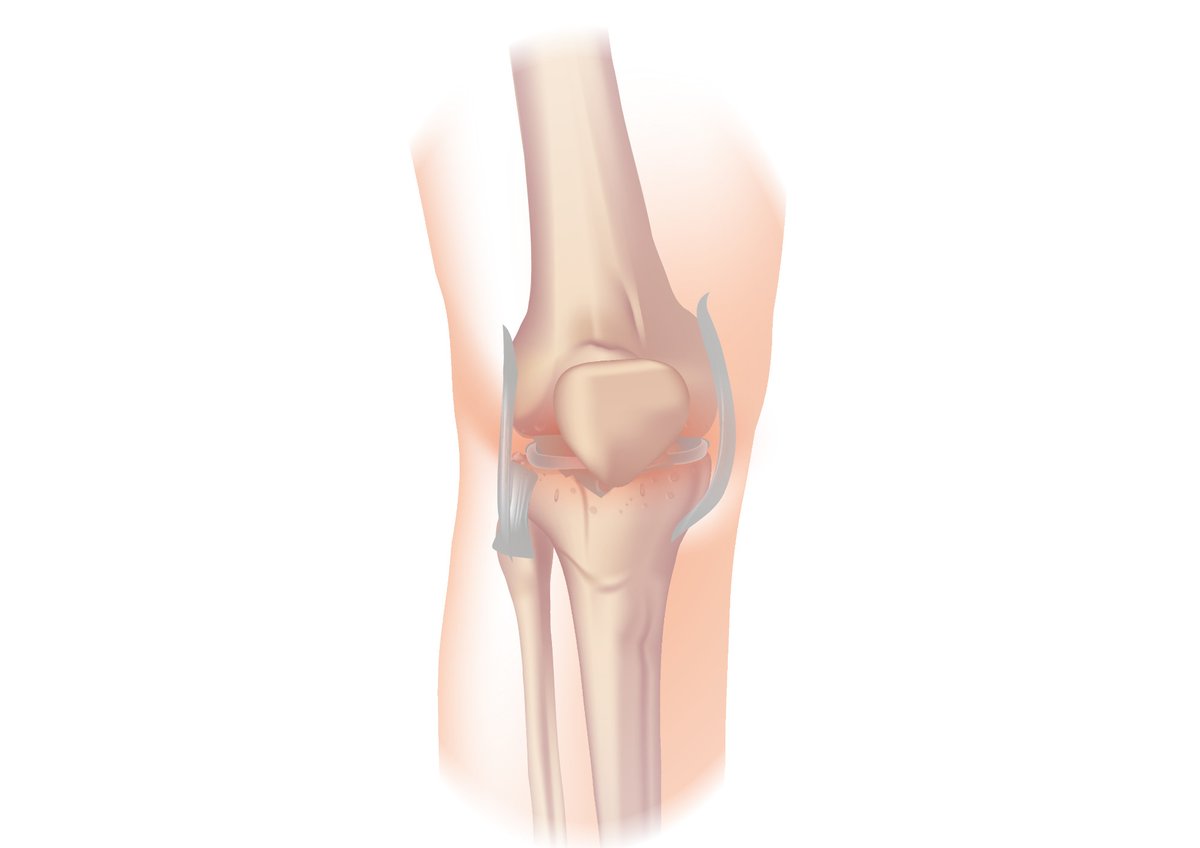
Knee osteoarthritis wears away the cartilage that cushions the joint and changes the bone beneath it. Pain and stiffness follow, and so does weakness in the quadriceps, the big muscle at the front of the thigh that takes load off the knee when you stand, climb stairs or walk. Guidelines rank strengthening exercise as the best-supported treatment that isn't a drug, and no medicine yet slows the disease itself. That has kept interest alive in cheap add-ons, vitamin D for bone and muscle and vitamin E as an antioxidant, though trials of both have given mixed results.
A team from Juntendo University's orthopaedics department in Tokyo tested whether either vitamin adds anything to exercise. Their pilot trial, published in Medicine on 16 October, ran at the university's Koto Geriatric Medical Center from June 2018 to October 2021. It enrolled 88 postmenopausal women aged 55 to 80 (average 72) with symptomatic knee osteoarthritis, from moderate to severe on X-ray. A computer list assigned each to home exercise alone, home exercise plus eldecalcitol (0.75 micrograms a day, an active vitamin D drug prescribed for osteoporosis in Japan), or home exercise plus vitamin E (100 mg of tocopherol acetate a day, as two capsules).
The exercises were deliberately simple and needed no equipment: lying on the back and lifting the straight leg so the heel hovers about 10 cm off the floor, lifting the leg sideways while lying on one side, and squeezing the knees together while seated. Each was held for 5 to 10 seconds and repeated 20 times, morning and evening, for 24 weeks. Physical therapists taught the routine and handed out a brochure.
Eighty women (91%) finished. In every group, knee pain on a 100-point scale fell by more than 40%, from about 54 to 30 with exercise alone and with vitamin D, and from about 60 to 34 with vitamin E. Scores on a Japanese knee osteoarthritis questionnaire improved by about a third or more, quadriceps strength rose and the 10-metre walk got faster. None of these changes differed between the groups. If anything, the exercise-only group came out slightly ahead: its questionnaire score fell from 33.6 to 17.0, against 35.2 to 21.7 with vitamin D and 34.9 to 23.8 with vitamin E, and its thigh strength rose most, from 15.9 to 20.7 kilograms of force. None of those gaps was statistically significant either.
The vitamins did leave some traces. Grip strength rose only in the vitamin D group (17.5 to 19.3 kg), lumbar spine bone density rose a little with vitamin D, and two blood markers of inflammation, hs-CRP and TGF-beta, fell in the vitamin E group. But none of these beat exercise alone in a head-to-head comparison. The one measure that did differ between groups was bone density at the hip, where the vitamin E and exercise-only groups slipped slightly while the vitamin D group held steady. Nobody on the vitamin D drug developed high blood calcium.
This was a small pilot with no sample-size calculation, and the authors say it was too small to settle whether the vitamins work. Women were analysed only if they finished, and the paper does not describe a dummy pill for the exercise-only group, so everyone knew which group they were in. The groups were also uneven: 33, 27 and 20 women finished, and only one woman in the exercise-only group had the most severe grade of arthritis on X-ray, against 10 in each vitamin group (our reading of the paper's Table 1; the main comparison was adjusted for grade). The doses were Japanese prescription doses, far lower than in Western supplement trials, and most women were low in vitamin D at the start (blood 25-hydroxyvitamin D around 16 ng/mL). The trial had no funding and the authors declare no conflicts of interest. Their conclusion: exercise therapy works on its own, and whether particular patients gain from adding vitamins needs larger, longer trials.
88 postmenopausal women with knee osteoarthritis in Tokyo, 2018–2021: 24 weeks of home leg exercises alone, or with active vitamin D (eldecalcitol) or vitamin E
80 of 88
Women who finished the 24 weeks (91%): 33 with vitamin D, 27 with vitamin E, 20 with exercise alone
−44% / −43% / −44%
Fall in knee pain on a 100-point scale: exercise alone (53.5 to 29.8), vitamin D (53.7 to 30.3), vitamin E (59.5 to 34.1)
p = 0.634
Difference between the three groups in the main knee questionnaire score (JKOM): none
33.6 → 17.0
Knee questionnaire total with exercise alone (lower is better), vs 35.2 → 21.7 with vitamin D and 34.9 → 23.8 with vitamin E
15.9 → 20.7 kgf
Quadriceps strength with exercise alone, vs 15.1 → 18.0 with vitamin D and 15.6 → 17.9 with vitamin E (no significant difference)
17.5 → 19.3 kg
Grip strength in the vitamin D group, the only group where it rose; exercise alone stayed at 18.1
20 × 2 a day
Repetitions of each of three leg exercises, held 5 to 10 seconds, morning and evening
1 vs 10 vs 10
Women with the most severe X-ray grade (KL 4): exercise alone vs vitamin D vs vitamin E
Study: Kanazawa H, Kurosawa H, Nagao M, Koike M, Miyagawa K, Ozaki Y, Iwase Y, Ishijima M, 'Additive effects of active vitamin D3 or vitamin E administration on therapeutic lower-limb home exercise for knee osteoarthritis: A pilot prospective randomized controlled trial', Medicine (Baltimore) 2026;105(42):e51197, published 16 October 2026, doi 10.1097/MD.0000000000051197 (open access, CC BY; read in full on PubMed Central, PMC13681127). Registered as jRCTs031180357. Juntendo University, Tokyo Koto Geriatric Medical Center; June 2018 to October 2021. 88 postmenopausal women, mean age 71.9 ± 5.6 (55–80), Kellgren–Lawrence grade 2–4; 8 lost to follow-up (5 vitamin D, 2 vitamin E, 1 exercise), per-protocol analysis of 80. Eldecalcitol (Edirol, Chugai) 0.75 µg once daily after breakfast; vitamin E (Juvela, Eisai) tocopherol acetate 50 mg, two capsules daily. Exercises: straight leg raise, side-lying hip abduction, seated hip adduction. Figures are means from Tables 1–3; percentage falls in pain (VAS) are our arithmetic from those means. Between-group P values (ANOVA on percentage change): VAS .809, JKOM total .634, quadriceps strength .297, grip .617, 10 m walk .423, femoral neck BMD .003; JKOM total also showed no group effect after adjusting for age, BMI and KL grade. Within-group: grip strength P = .002 (vitamin D); hs-CRP P = .027 and TGF-β P = .035 (vitamin E); lumbar spine BMD P = .005 (vitamin D). Baseline 25(OH)D 16.3, 16.2 and 16.9 ng/mL (Table 3; the discussion gives a mean of 17.87); deficiency is below 20 ng/mL by Japan Endocrine Society guidelines. The paper calls the design placebo-controlled but describes no placebo; the comments on blinding and on the uneven KL grade 4 split are ours, not the authors'. No funding; no conflicts declared; editorial support from Editage. Side facts from Wikipedia's Osteoarthritis, Eldecalcitol and Vitamin E articles and from the paper.
- Osteoarthritis is the most common form of arthritis, affecting about 237 million people worldwide in 2015, and it is more common in women: among people over 60, about 18% of women have it, against 10% of men.
- More than 90% of hip and knee replacements are done because of osteoarthritis.
- Eldecalcitol, the vitamin D drug in this trial, is a lab-made relative of calcitriol, the body's active form of vitamin D. It was approved in Japan in January 2011 for osteoporosis and is used mainly there.
- Vitamin E got its chemical name, tocopherol, from Greek words for 'birth' and 'to carry', because it was first found to be needed for rats to carry pregnancies to term. Most supplements use the synthetic, more stable form, tocopheryl acetate, as in this trial.
- Earlier trials cited by the authors gave 800 to 2,000 IU of ordinary vitamin D3 a day for two to three years, or 500 IU of vitamin E a day, and also found no improvement in knee arthritis scores.
- Additive effects of active vitamin D3 or vitamin E administration on therapeutic lower-limb home exercise for knee osteoarthritis: A pilot prospective randomized controlled trialMedicine (Baltimore), October 2026 · The paper: full text, open access
- Full text on PubMed CentralPubMed Central, US National Library of Medicine · Methods, tables and the exercise instructions
- OsteoarthritisWikipedia · Symptoms, treatment and how common it is
- EldecalcitolWikipedia · The active vitamin D drug used in the trial
- Vitamin EWikipedia · Forms of vitamin E and the origin of the name tocopherol
- Osteoarthritis of the kneeWikimedia Commons · The illustration, CC BY 4.0 (Injurymap)
General information, not medical advice. This was a small pilot trial in older Japanese women, and eldecalcitol is a prescription drug, not an over-the-counter supplement. Anyone with knee pain should ask a doctor or physiotherapist which exercises suit their knees, and check with a doctor before starting vitamin D or vitamin E, especially alongside other medicines.
Analysis by NutroPractic from the sources listed. Written for general readers; it does not replace advice from your own doctor.
From our articles
Our guides on this subject
Plain-language guides on nutrition and wellness, backed by research.
Micronutrients
Vitamin D and B12: two common gaps, from northern winters to vegetarian kitchens
Vitamin D runs low in Canadian and European winters, and surprisingly often in sunny India too. Vitamin B12 is a risk for vegetarians, people over 50 and people on certain medicines. Who is at risk, what the official advice is in North America, Europe and India, and where to get both.
3 Oct 2026

Women's health
Inositol for PCOS: the 40:1 ratio, trial doses, and food milligrams
Why do randomized trials in polycystic ovary syndrome prioritize the 40:1 myo to D-chiro inositol ratio? Here is the science behind the ovarian epimerase paradox, clinical ovulation and insulin metrics, and why cantaloupe cannot replace 4,000 mg trial powder.
21 Nov 2026

Everyday eating
Extra virgin olive oil polyphenols: the EU health claim, smoke point myths, and cooking stability
Does extra virgin olive oil degrade when cooked? What does the EU 5 mg polyphenol health claim require, how does oleocanthal act like ibuprofen, and why does oxidative stability matter more than smoke point in domestic frying? Here is the clinical and culinary data.
21 Nov 2026
Newsfeed for your website
Want this feed on your website?
Add it to any site with one copy-and-paste snippet. No sign-up, and it updates itself every hour.
Start with a virtual consultation
Tell Dr. Triveni what you want to change. You will leave with a clear next step, whether you are in Toronto, London, New York or Chennai.