Mental health · October 22, 2026
People with schizophrenia had less vitamin C in their blood in 11 studies across eight countries, and symptom scores fell when 118 patients took it. The catch: the review could only compare them with themselves, not with anyone on a placebo
Researchers at Vellore Institute of Technology and Kerman University of Medical Sciences pooled every study they could find on vitamin C and schizophrenia, back to 1979. The blood-level gap was large and held up under every check. The supplement result looks striking until you see how it was measured: before and after, in people who were also on antipsychotic treatment.
Doctors noticed low vitamin C in psychiatric hospital patients as far back as the 1960s, and the idea that the vitamin might help with schizophrenia has never quite gone away, or been settled. A team from the School of Bio Sciences and Technology at Vellore Institute of Technology in India and the Faculty of Pharmacy at Kerman University of Medical Sciences in Iran tried to settle at least part of it. Their systematic review and meta-analysis came out in Frontiers in Nutrition on 14 October.
They asked two questions. First: do people with schizophrenia have less vitamin C in their blood than people without it? Searching PubMed and Google Scholar for English-language studies published between 1975 and April 2026, they found 13 that measured plasma or serum vitamin C in both groups. Two of them pulled the result so far that the authors set them aside, leaving 11 studies with 731 patients and 439 controls, from India (four studies), Iraq, the USA, Turkey, Croatia, Japan, Bangladesh and the UK, published between 1979 and 2023. The patients' levels were lower by a standardised mean difference of 1.05, roughly one standard deviation, which is a big gap by the standards of nutrition research. It survived the usual checks: adding a study the statistics suggested might be missing barely moved it (to 0.93), and it would take 503 unpublished studies showing no difference to wipe it out.
The second question was whether taking vitamin C eases symptoms. Six studies qualified; one was set aside as an outlier, leaving five with 118 patients on vitamin C, at doses from 500 mg a day to an escalating course that reached 8 grams a day, for eight weeks to four months. Symptom scores on the standard psychiatric rating scales fell in every one. In a Pakistani trial, average scores on the Positive and Negative Syndrome Scale went from about 89 to about 47 in eight weeks; in a 2003 Indian study they went from 80 to 61 over four months. Pooled, the drop was a standardised mean difference of 1.63.
That number compares patients with themselves at the start, not with patients who took a placebo. Four of the trials did have a comparison group, but only three usable data points could be extracted, so the authors dropped the between-group analysis they had planned. Two studies had no comparison group at all. The patients were being treated for schizophrenia at the same time, and symptoms often improve over weeks of treatment anyway, so a before-and-after drop cannot say how much, if any, was the vitamin. The authors are candid about this: they call the supplement result hypothesis-generating rather than confirmatory, and conclude that it does not yet justify recommending vitamin C as a standard add-on.
The blood-level finding has its own limits. The case–control studies were hospital-based, small, used different assays and reported levels that varied widely from lab to lab; heterogeneity stayed high (I² 84%) even after the outliers went, and the authors could not run subgroup analyses because the original papers did not report enough detail. Low vitamin C may follow from the illness rather than feed it: as the authors note, people living with schizophrenia often have poorer diets and metabolic problems that could lower it. The review does not show that a shortage causes schizophrenia, and the authors say so. The work was funded by India's Anusandhan National Research Foundation; the authors declare no commercial conflicts, and the corresponding author was a Frontiers editorial board member at the time of submission.
Vitamin C and schizophrenia: blood levels in 11 studies, symptom change in 5
731 vs 439
Patients with schizophrenia and controls in the 11 blood-level studies (1979 to 2023, eight countries), after two outliers were set aside
−1.05 SD
Vitamin C in patients' blood against controls (standardised mean difference, 95% CI −1.46 to −0.63, I² 84%)
503
Studies showing no difference that would be needed to cancel the blood-level result (Rosenthal's fail-safe N)
118
Patients who took vitamin C in the five symptom studies kept: 500 mg a day up to 8 g a day, for 8 weeks to 4 months
−1.63 SD
Symptom scores after vitamin C against the same patients' scores before (95% CI −2.47 to −0.79, I² 90%)
89 → 47
Average symptom score (PANSS) in the Pakistani trial after 8 weeks on 500 mg a day; the 2003 Indian study went from 80 to 61 in 4 months
0
Pooled comparisons with a placebo group: planned, then dropped because only three usable data points existed
Study: Suresh GS, Chengaiyan JG, Dabaghzadeh F, Ahmad F, 'Examining the links between vitamin C and schizophrenia spectrum disorders: a systematic review and meta-analysis on circulating levels and supplementation outcomes', Frontiers in Nutrition 2026, 13:1965059, published 14 October 2026, doi 10.3389/fnut.2026.1965059 (open access, CC BY 4.0; read in full). PubMed and Google Scholar searched for English-language studies from 1975 to April 2026; 13 case–control and 6 supplementation studies kept. Random-effects (REML) models; standardised mean differences. Blood levels with all 13 studies: −1.63 (95% CI −2.48 to −0.78, I² 97%); after removing two influential studies: −1.05; trim-and-fill adjusted: −0.93 (−1.30 to −0.56). Supplementation with all six studies (seven datasets): −2.09 (−3.24 to −0.95, I² 95%); after removing one outlier: −1.63 across five studies and six datasets (one study reported two rating scales). Of the five, two were single-arm, one randomised placebo-controlled trial did not report its placebo group's before and after scores, and two were randomised double-blind placebo-controlled; the between-group analysis was abandoned. Rating scales were PANSS and BPRS. Quality: case–control studies 10 low and 3 moderate risk of bias (Newcastle–Ottawa); supplementation studies 3 low and 3 moderate (MINORS). Egger's and Begg's tests found no clear publication bias. Funding: Anusandhan National Research Foundation, India (SUR/2022/005429).
- Humans are among the few mammals that cannot make their own vitamin C. The gene for the last enzyme in the pathway, L-gulonolactone oxidase, is broken in us and in other monkeys and apes, which is why scurvy exists.
- The US and Canadian recommended intake is 90 mg a day for men and 75 mg for women. The tolerable upper limit for adults is 2,000 mg a day, set because higher doses caused diarrhoea and stomach upsets in trials; one study in this review went up to 8,000 mg a day.
- Smokers have lower vitamin C levels than non-smokers, and the US Institute of Medicine estimated they need about 35 mg a day more, though it never set a separate allowance for them.
- The World Health Organization estimates that about 27 million people worldwide, roughly 1 in 300, live with schizophrenia, and that more than two out of three people with psychosis get no specialist mental health care.
- Albert Szent-Györgyi shared in the discovery of vitamin C in the late 1920s and early 1930s and won the 1937 Nobel Prize in Physiology or Medicine partly for it.
- Examining the links between vitamin C and schizophrenia spectrum disorders: a systematic review and meta-analysis on circulating levels and supplementation outcomesFrontiers in Nutrition, October 2026 · The paper: full text, open access
- Schizophrenia: fact sheetWorld Health Organization · How many people live with schizophrenia and how many get care
- Vitamin CWikipedia · Recommended intakes, the upper limit, smokers' needs and why humans cannot make the vitamin
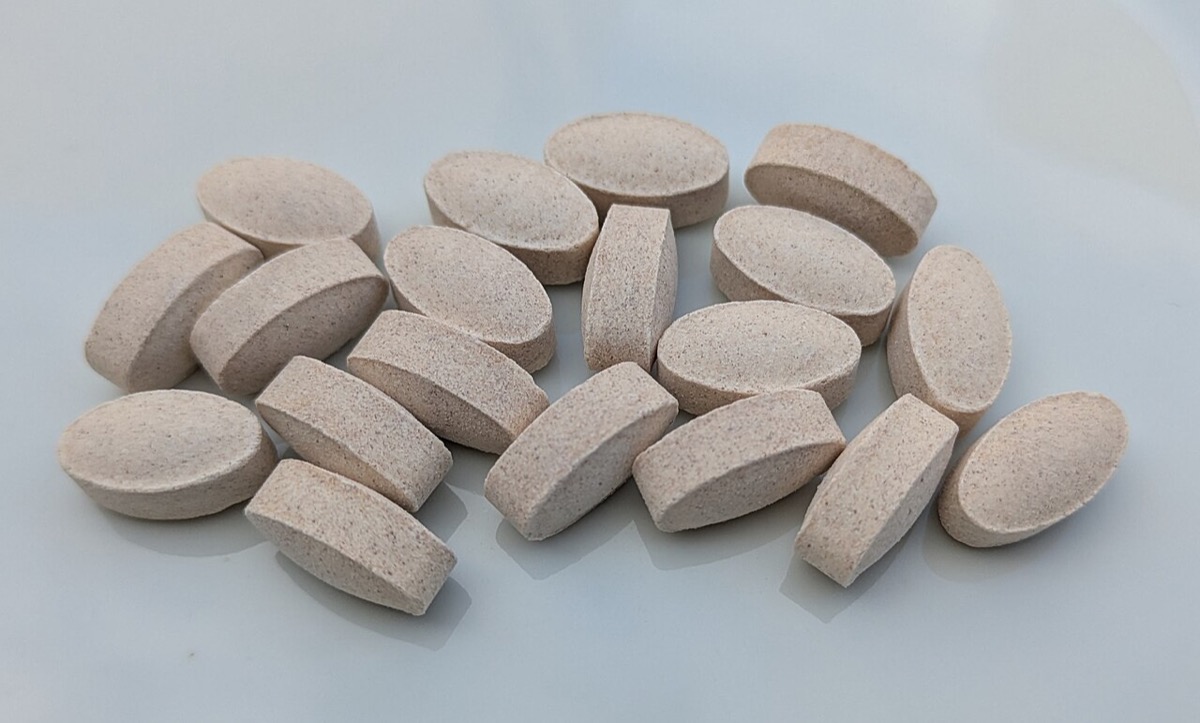
- Vitamin C supplements 2Wikimedia Commons · The photo, CC0
General information, not medical advice. This review cannot show that vitamin C treats schizophrenia: its symptom results compare people with themselves, not with a placebo group, while they were also receiving treatment. Never stop or change antipsychotic medicine because of a supplement. Large doses of vitamin C can cause stomach upsets and are not right for everyone, including people with kidney stones or iron overload; talk to the treating psychiatrist or a doctor before starting one.
Analysis by NutroPractic from the sources listed. Written for general readers; it does not replace advice from your own doctor.
From our articles
Read, then eat a little better
Plain-language guides on nutrition and wellness, backed by research.

Women's health
Inositol for PCOS: the 40:1 ratio, trial doses, and food milligrams
Why do randomized trials in polycystic ovary syndrome prioritize the 40:1 myo to D-chiro inositol ratio? Here is the science behind the ovarian epimerase paradox, clinical ovulation and insulin metrics, and why cantaloupe cannot replace 4,000 mg trial powder.
21 Nov 2026

Everyday eating
Extra virgin olive oil polyphenols: the EU health claim, smoke point myths, and cooking stability
Does extra virgin olive oil degrade when cooked? What does the EU 5 mg polyphenol health claim require, how does oleocanthal act like ibuprofen, and why does oxidative stability matter more than smoke point in domestic frying? Here is the clinical and culinary data.
21 Nov 2026

Food and nutrition
L-theanine and caffeine: what cognitive trials measured on sustained attention, and milligrams in matcha vs green tea
Combining L-theanine with caffeine produces clean focus without caffeine jitters. Here is what randomized trials measured on attention-switching, EEG alpha brain waves, and the exact milligrams across ceremonial matcha, culinary powder, gyokuro, and sencha.
20 Nov 2026
Newsfeed for your website
Want this feed on your website?
Add it to any site with one copy-and-paste snippet. No sign-up, and it updates itself every hour.
Start with a virtual consultation
Tell Dr. Triveni what you want to change. You will leave with a clear next step, whether you are in Toronto, London, New York or Chennai.