Food security · October 30, 2026
Scurvy isn't history: more than half of 48 adults tested for vitamin C at one northern Canadian clinic had levels in the deficiency range
Family doctors in La Ronge, Saskatchewan, started checking vitamin C when they kept seeing bruises, slow-healing wounds and swollen gums. Of the adults whose samples could be read, 27 of 48 were deficient and 10 more were low. Some deficient patients had none of the classic signs at all.
Scurvy sounds like a sailor's disease from the age of sail, but it never fully went away. Vitamin C is needed to make collagen, the protein that holds skin, gums and blood vessel walls together, and the body cannot make it, so it has to come from food, mainly fresh fruit and vegetables. Within weeks of very low intake, people can start to bruise easily, heal slowly and develop swollen gums; earlier on, the signs can be as vague as tiredness, low mood or aching joints. A study published in PLOS Global Public Health on 28 October looks at how common low vitamin C turned out to be among patients tested at a family medicine clinic in northern Saskatchewan, Canada.
The clinic in La Ronge serves the town and a number of remote First Nations communities, a region of about 16,000 people where, by the 2021 census, about three in four identify as First Nations and about a quarter live on low income. Local doctors had been seeing patients they suspected of scurvy, so the team, from the University of Saskatchewan working with Lac La Ronge Indian Band Health Services and the Northern Inter-Tribal Health Authority, went back through the clinic's records for every serum vitamin C test from January 2011 to March 2024. Almost all of them, 50 of 51, were ordered between August 2023 and March 2024, after the doctors' suspicions grew. In that period 7,709 different patients used the clinic, so about 0.65% were tested.
Three samples could not be read, which left 48 results. Twenty-seven (56%) were below 11 micromoles per litre, the laboratory cut-off for deficiency, and another 10 (21%) were in the low range of 11 to 23. Only 11 were normal. Deficiency was more common among patients identified as First Nations than among other patients, 66% against 20%, a gap that held up statistically even in this small group. There was no real difference between women and men (56% and 57%) or across age groups, although most of the people tested, and most of those deficient, were in their 30s and 40s.
Why the doctors tested is telling. The most common reasons in the notes were skin signs such as bruising or poor wound healing (11 patients), mouth problems such as swollen gums or poor teeth (10), muscle and joint pain (6) and tiredness or weakness (5). But the classic picture did not separate people well: 7 of the 11 patients with typical scurvy signs were deficient, and so were 20 of the 37 without them. The authors suggest doctors in places like this keep vitamin C in mind for vague complaints too, when diet, smoking or money troubles point that way.
The authors are careful about what this does and does not show. These were people a doctor already suspected, not a random sample, so 56% is not the share of the region that is deficient. Vitamin C breaks down quickly once blood is drawn, and these samples travelled on dry ice to a laboratory in Regina more than 600 kilometres away, which could make some results read low. Inflammation can also lower blood levels for a while, and markers of it were not routinely measured. Smoking, which raises the body's need for vitamin C, and diet were too patchily recorded to analyse. The team still judges that the pattern is unlikely to be a lab artefact alone.
They also do the arithmetic for remote clinics. A vitamin C blood test costs CAD 15.78 before the special transport, while a month of 500 mg tablets costs under CAD 2.50 and is safe, so for patients with suggestive symptoms and clear risk factors, simply treating may make more sense than testing first. The longer-term answer, they argue, lies in food: high prices and limited fresh food in the north, changes to harvesting, and heavier reliance on cheap packaged food. The two partner health organisations have already folded the findings into their clinical guidance and nutrition programmes.
Vitamin C deficiency in a Northern Saskatchewan Population, Canada (PLOS Global Public Health, 2026)
27 of 48
Adults with readable results who were vitamin C deficient (below 11 µmol/L), 56%
10 of 48
Who had low vitamin C (11 to 23 µmol/L), 21%; only 11 were in the normal range
66% vs 20%
Deficiency among patients identified as First Nations vs other patients tested (p = 0.014)
20 of 37
Deficient patients among those tested without classic scurvy signs, compared with 7 of 11 who had them
0.65%
Share of the clinic's 7,709 patients who were tested, August 2023 to March 2024
CAD 15.78 vs < 2.50
Cost of one blood test (before transport) vs a month of 500 mg vitamin C tablets
Retrospective review of electronic records at the La Ronge Medical Clinic for every serum ascorbic acid test from 1 January 2011 to 31 March 2024: 51 tests, 50 of them August 2023 to March 2024; 3 unreadable (testing error), leaving 48. All tested patients were 20 or older; 60% female; 74% First Nations, inferred from a treaty number in the record. Categories: deficient < 11 µmol/L, hypovitaminosis C 11 to 23 µmol/L, normal ≥ 23 µmol/L. Testing was clinician-initiated on suspicion or perceived risk, so the proportions are not a population prevalence. Non-fasting samples, protected from light, chilled and sent frozen to the provincial laboratory in Regina (more than 600 km). Comparisons by Fisher's exact test: First Nations vs not p = 0.014; female 55.6% vs male 57.1% p = 1.00; age p = 0.86; characteristic scurvy features 63.6% vs none 54.1% p = 0.73. No multivariable analysis; smoking, diet and inflammation markers not analysable. Figures from the open-access article (CC BY): abstract, methods, results, Table 1, discussion and limitations.
- The paper recalls that scurvy was first recorded in what is now Canada in 1535, when Jacques Cartier's crew wintering near present-day Quebec City fell ill and were treated with a remedy shared by the local Haudenosaunee, possibly eastern white cedar or balsam fir.
- Sailors on the Parry Arctic expedition grew mustard and cress in their cabins to ward off scurvy, a trick the authors point out is not far from growing microgreens at home.
- In an earlier national study of First Nations diets cited by the authors, half of the Lac La Ronge Indian Band participants reported eating no vitamin C-containing foods in the 24 hours they recalled.
- Smoking raises the body's need for vitamin C, one reason the authors flag smokers with poor diets as a group to watch.
- Before August 2023 the clinic had a single vitamin C test on record in more than 12 years, and that sample could not be read.
- Vitamin C deficiency in a Northern Saskatchewan Population, CanadaPLOS Global Public Health · The study, published 28 October 2026 (open access, CC BY); figures from the abstract, methods, results, Table 1, discussion and limitations
- Full text on Europe PMCEurope PMC · Open-access copy of the article
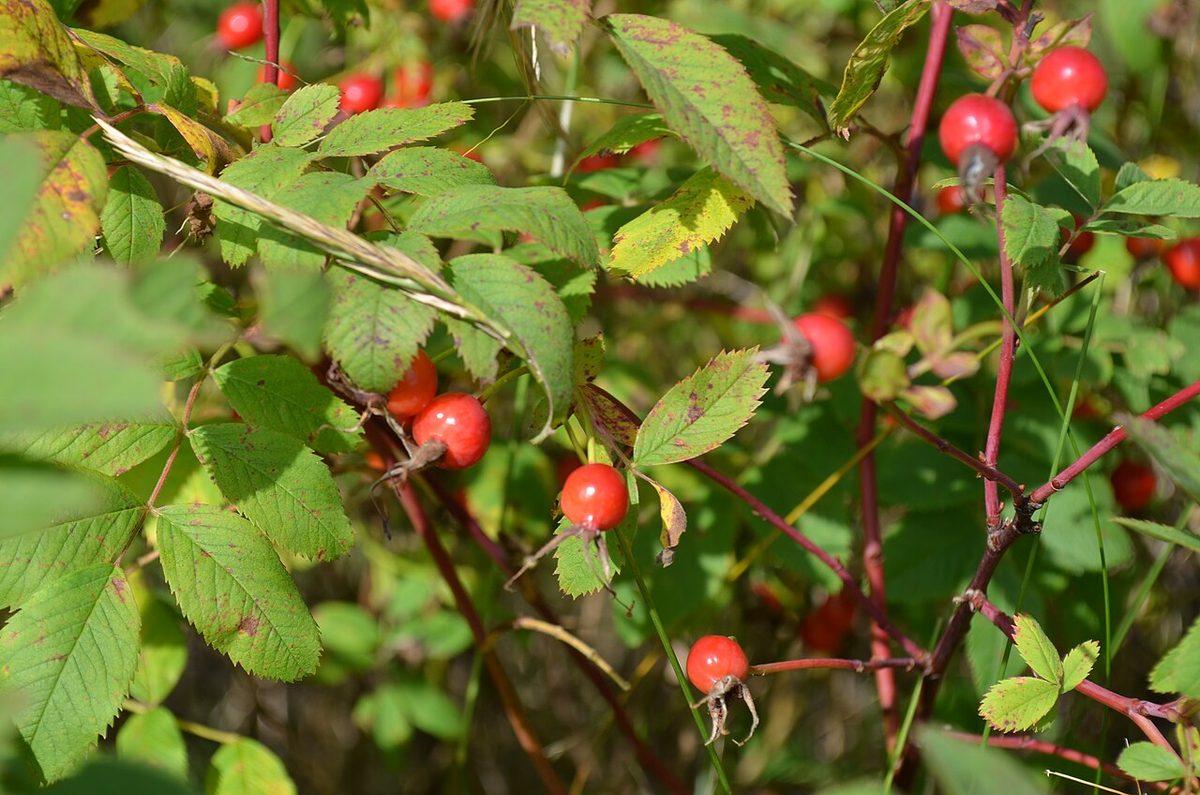
- Wild Rose HipsWikimedia Commons · The image, public domain (U.S. Fish and Wildlife Service); an illustration, not a place or food from the study
General information, not medical advice. This small study looked only at patients a doctor had already chosen to test, so it can't tell you how common low vitamin C is in the wider community. If you have easy bruising, slow-healing wounds or bleeding gums, or worry your diet is short on fresh fruit and vegetables, talk to your doctor or a registered dietitian before starting supplements.
Analysis by NutroPractic from the sources listed. Written for general readers; it does not replace advice from your own doctor.
From our articles
Read, then eat a little better
Plain-language guides on nutrition and wellness, backed by research.

Diabetes
Potatoes and blood sugar: boiled, cooled, mashed or fried, and what the cohorts and trials found
Fries were linked to 20% higher diabetes risk per three servings a week in 205,000 US adults; boiled, baked and mashed potatoes to almost none. GI by cooking method, resistant starch in grams after chilling, the glycaemic load of a potato against a cup of rice, and how to fit aloo into an Indian plate.
30 Oct 2026

Children's nutrition
Picky eaters aged 2 to 8: what feeding studies show works at the table
Fussy eating peaks between two and six and is usually a normal stage, not a parenting failure. Feeding trials show what moves it: small repeated tastes, eating together, no pressure and the right kind of reward. Here is how to use them, and the signs that mean it's more than picky eating.
30 Oct 2026

Women's health
PCOS and food: what the diet trials show for cycles, insulin and weight
PCOS affects about one woman in ten, and most are told to "lose weight" with little else. Here is what drives it, why insulin matters even in slim women, how much weight loss brings cycles back, what the low-GI and Mediterranean trials found, what inositol and metformin do, and which tests to ask for.
30 Oct 2026
Newsfeed for your website
Want this feed on your website?
Add it to any site with one copy-and-paste snippet. No sign-up, and it updates itself every hour.
Start with a virtual consultation
Tell Dr. Triveni what you want to change. You will leave with a clear next step, whether you are in Toronto, London, New York or Chennai.