Liver health · October 21, 2026
55 adults with obesity and fatty liver near Bari ate under 800 calories a day, with almost no carbohydrate, for eight weeks. They lost about 10 kg and the scanner's liver-fat reading fell from 321 to 256. Whether the 'keto' part mattered, the study cannot say
Fatty liver now affects a quarter to a third of the world, and losing weight is still the main treatment. An Italian research hospital put patients on a very-low-calorie ketogenic diet and measured their livers before and after. The results look striking, the liver enzyme most doctors check barely moved, and the authors are blunt that without a comparison group their numbers can't show this diet beats any other way of losing the same weight.
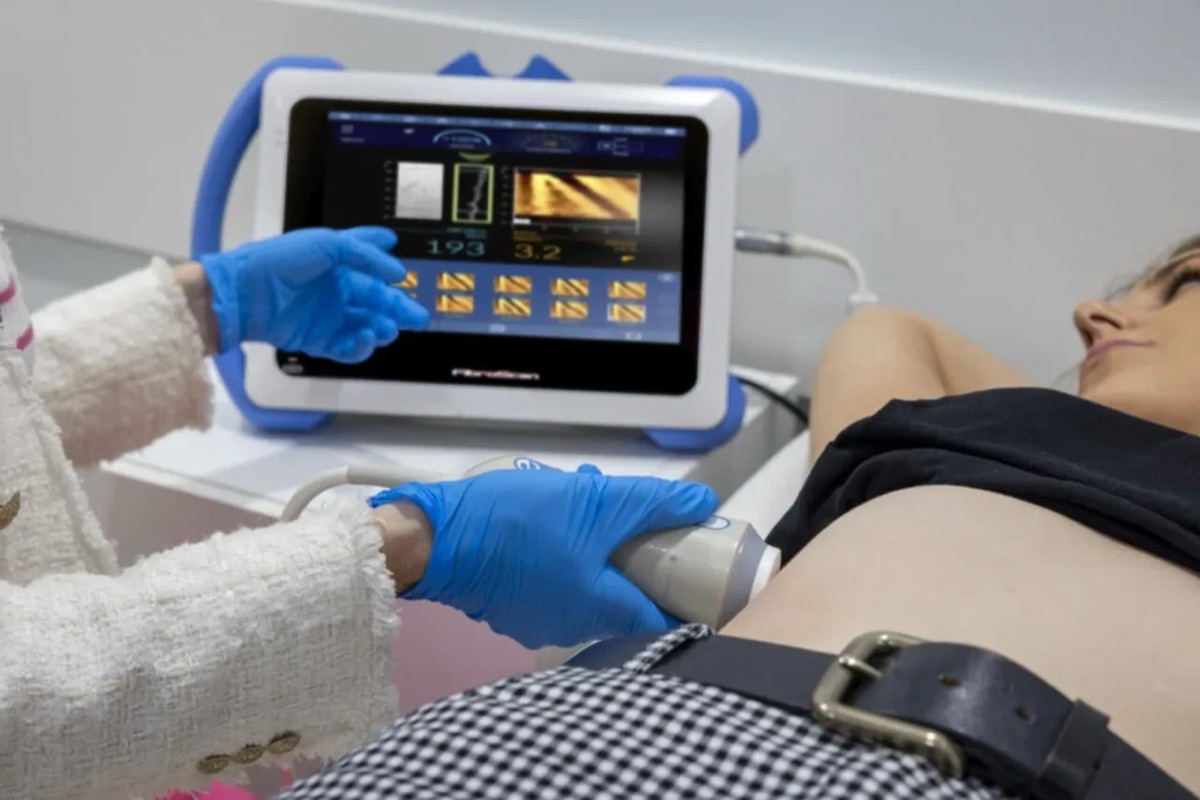
Fatty liver disease got a new name in 2023. What used to be called non-alcoholic fatty liver disease is now MASLD, metabolic dysfunction-associated steatotic liver disease, to make the point that it travels with obesity, high blood sugar, high blood pressure and abnormal blood fats. It affects somewhere between a quarter and a third of adults worldwide, and about four in five people with obesity. There is no diet pill for it. The first treatment is still to lose weight, and the diet most guidelines recommend is a Mediterranean one.
The Mediterranean diet works, but it is slow, and the authors, from the National Institute of Gastroenterology "Saverio de Bellis" research hospital in Castellana Grotte, near Bari, point out that olive oil, fish and fresh produce cost money and that the pattern travels badly outside southern Europe. So they looked at a much more drastic option: a very-low-calorie ketogenic diet, or VLCKD. Their paper appeared in Nutrients on 16 October.
The 55 patients, median age 43 and a little under half of them men, all had obesity (a BMI of 30 or more) and fat in the liver confirmed by a FibroScan, plus at least one other metabolic risk factor. For eight weeks they ate 650 to 800 calories a day, drawn up by the hospital's dietitians: very little carbohydrate (the paper gives both under 30 g and 30 to 50 g a day), 20 to 30 g of fat mostly from extra virgin olive oil and nuts, protein of 1.2 to 1.4 g per kilogram of ideal body weight, vegetables of certain kinds without limit, vitamin and mineral supplements throughout and at least 2 litres of water a day. They kept daily food diaries. The data came from a registered study run between July 2022 and December 2023 and were analysed afterwards.
The changes were large. Median weight went from 102 kg to about 92 kg, roughly a tenth of body weight, and the median waist shrank by 9 cm. The FibroScan's measure of liver fat, the controlled attenuation parameter, dropped from a median 321 to 256 dB/m, and together with leptin it showed the biggest change of anything measured. Fasting insulin almost halved, from 19.6 to 10.5, and the HOMA-IR score of insulin resistance fell from 4.75 to 2.25. LDL cholesterol came down from 132 to 103 mg/dL, triglycerides from 95 to 79, and blood pressure from 130/85 to 125/80. Leptin, the hormone fat tissue makes in proportion to its size, fell from 23.3 to 9.0 ng/mL, and sex hormone-binding globulin, a liver-made protein that earlier studies found tends to rise as liver fat falls, rose by about a third.
Not everything moved the way a fatty-liver patient might hope. ALT and AST, the two liver enzymes on a standard blood test, did not change significantly, although GGT did fall. Median liver stiffness, the FibroScan's proxy for scarring, stayed at 5.6 kPa, with a median individual drop of 0.6 kPa that was statistically significant; the authors warn that a change in stiffness over eight weeks can reflect less fat and swelling rather than less scarring. Some of the weight that came off was not fat: fat-free mass, which includes muscle and water, fell by a median 3.4 kg against 7.7 kg of fat. HDL, the 'good' cholesterol, fell too. Uric acid went up from 5.1 to 6.1 mg/dL, iron went down, and the active thyroid hormone T3 dropped while T4 rose, patterns the authors attribute to ketosis and severe calorie restriction.
The biggest caveat is in the design, and the authors spell it out: there was no control group. Everyone got the same diet and was measured twice, so the study cannot separate the effect of ketosis from the effect of eating 800 calories a day and losing 10 kg, which on its own is known to clear a lot of liver fat. It also did not compare the diet with a Mediterranean one, so it says nothing about which is better. Body composition was measured by bioimpedance rather than a DEXA scan, the group was small, and nobody was followed after the eight weeks to see whether the weight and the liver fat stayed off. The work was funded by the Italian Ministry of Health, and the authors declare no conflicts of interest.
What it does add is a careful before-and-after picture of what a supervised, very low calorie, low carbohydrate diet does to the liver and to the hormones made by fat tissue in two months. The authors call it unbalanced, list constipation, low blood sugar, bad breath and raised uric acid among its possible side effects, and say it should be done only under close medical supervision. Their own conclusion is that whether it is a real alternative to the Mediterranean diet for some patients needs a properly randomised trial against a diet that loses the same weight.
55 adults with obesity and fatty liver (MASLD) before and after eight weeks of a very-low-calorie ketogenic diet, Castellana Grotte (Bari), Italy; medians
321 → 256 dB/m
FibroScan liver-fat reading (controlled attenuation parameter); median individual drop 58
102 → 92 kg
Body weight; median loss 10 kg, of which fat 7.7 kg and fat-free mass 3.4 kg (bioimpedance)
4.75 → 2.25
HOMA-IR insulin resistance score; fasting insulin 19.6 → 10.5 µU/mL
23.3 → 9.0 ng/mL
Leptin, the hormone made by fat tissue; SHBG rose from about 32.5 to 42.0 nmol/L
No significant change
ALT and AST liver enzymes (ALT 25.5 → 21 U/L, AST 18.5 → 18); GGT fell from 22.5 to 15 U/L
5.1 → 6.1 mg/dL
Uric acid went up; iron fell from 79 to 67 µg/dL and HDL cholesterol from 47 to 42 mg/dL
Study: Tatoli R, Donghia R, Pesole PL, Di Chito M, Stabile D, Ferro A, Ancona A, Casimo G, Giannelli G, 'Short-Term Changes in Metabolic Dysfunction-Associated Steatotic Liver Disease (MASLD) and Related Circulating Biomarkers Following a Very-Low Calorie Ketogenic Diet (VLCKD): A Paired Longitudinal Analysis', Nutrients 2026, 18(20):3397, published 16 October 2026, doi 10.3390/nu18203397 (open access, CC BY 4.0). Retrospective secondary analysis of prospectively collected data from the registered study NCT05477212 (enrolment July 2022 to December 2023), National Institute of Gastroenterology "Saverio de Bellis" Research Hospital; 55 adults aged 18 to 64 with BMI ≥ 30 and MASLD (steatosis by FibroScan CAP plus at least one cardiometabolic risk factor), median age 43.2, 43.6% men; no control group. Diet: 650 to 800 kcal/day, carbohydrate < 30 g/day (section 2.1) or 30 to 50 g/day (section 2.4), fat 20 to 30 g/day mainly extra virgin olive oil and nuts, protein 1.2 to 1.4 g/kg ideal body weight, micronutrient supplements, ≥ 2 L water, daily food diaries; 8 weeks. Medians (IQR) before → after, Wilcoxon signed-rank: weight 102.00 → 92.25 kg (Δ −10.00), BMI 37.40 → 33.29, waist 115.0 → 105.5 cm (Δ −9.0), fat mass 40.70 → 34.45 kg (Δ −7.70), fat-free mass 61.60 → 58.30 kg (Δ −3.40), SBP/DBP 130/85 → 125/80 mmHg, CAP 321 → 256 dB/m (Δ −58, p < 0.0001), liver stiffness 5.6 → 5.6 kPa (Δ −0.6, p = 0.0005), insulin 19.60 → 10.50 µUI/L, HOMA-IR 4.75 → 2.25, HbA1c 5.5 → 5.3%, LDL 132.2 → 103.1 mg/dL, HDL 47.25 → 42.35 mg/dL, triglycerides 95.0 → 78.5 mg/dL, ALT 25.5 → 21.0 U/L (p = 0.11), AST 18.5 → 18.0 U/L (p = 0.07), GGT 22.5 → 15.0 U/L (p < 0.0001), uric acid 5.05 → 6.10 mg/dL, iron 79.2 → 66.9 µg/dL, FT3 3.30 → 2.90 pg/mL, FT4 1.19 → 1.32 ng/dL, leptin 23.29 → 8.95 ng/mL, SHBG 32,530 → 41,970 pmol/L (shown here in nmol/L), adiponectin unchanged (p = 0.10). The 'about a tenth of body weight' and 'about a third' SHBG rise are our arithmetic from the medians. Funded by the Italian Ministry of Health (Ricerca Corrente 2025–2026; INNOVA Hub Life Science, National Complementary Plan); no conflicts declared.
- MASLD is the 2023 name for what was called non-alcoholic fatty liver disease (NAFLD). It was agreed by a panel of liver societies so that the name describes what drives the disease, not just what it isn't.
- A FibroScan gives two numbers at once from the same probe: the controlled attenuation parameter (in dB/m), which tracks how much fat is in the liver, and liver stiffness (in kPa), which is used as a stand-in for scarring.
- The European guidelines on MASLD from the liver, diabetes and obesity societies (EASL, EASD and EASO) put lifestyle change and weight loss first; the paper's authors note that losing 10% or more of body weight has been linked with fatty liver clearing completely.
- A ketogenic diet keeps carbohydrate low enough, usually under about 50 g a day, that the liver starts turning fat into ketones, which the body then uses for fuel in place of some of its glucose.
- Short-Term Changes in Metabolic Dysfunction-Associated Steatotic Liver Disease (MASLD) and Related Circulating Biomarkers Following a Very-Low Calorie Ketogenic Diet (VLCKD): A Paired Longitudinal AnalysisNutrients, October 2026 · The study: full text, open access
- Study record NCT05477212ClinicalTrials.gov · The registered study the data come from
- A multisociety Delphi consensus statement on new fatty liver disease nomenclatureHepatology, 2023 · Where the name MASLD comes from
- EASL–EASD–EASO Clinical Practice Guidelines on the management of metabolic dysfunction-associated steatotic liver disease (MASLD)Journal of Hepatology, 2024 · The European treatment guidelines
- Liver Transient Elastography (FibroScan) result showing Liver Stiffness Measurement (LSM) and Controlled Attenuation Parameter (CAP)Wikimedia Commons · The photo, CC BY 4.0 (Goleisureintl)
General information, not medical advice. This was an uncontrolled before-and-after study of 55 adults with obesity, so it cannot show that a ketogenic diet works better than any other way of losing the same weight. Very-low-calorie diets can cause side effects and are unsafe for some people, including those taking insulin or other diabetes medicines, people with kidney disease or gout, and anyone pregnant or with a history of eating disorders; if you have fatty liver, plan any diet like this with your doctor.
Analysis by NutroPractic from the sources listed. Written for general readers; it does not replace advice from your own doctor.
From our articles
Our guides on this subject
Plain-language guides on nutrition and wellness, backed by research.
Liver health
Fatty liver (MASLD): how much weight loss reverses it, and what coffee and alcohol do
About one adult in three has a fatty liver, and most find out by accident on a scan. Biopsy studies show how much weight loss clears the fat, calms the inflammation and even shrinks scarring. Here are the numbers, what diet and drinks do, the new medicines and the one blood test worth asking for.
30 Oct 2026
Liver health
Choline: how much you need, which foods have it, and what the PEMT gene variant and fatty liver research found
Most adults eat less choline than the 425 mg (women) or 550 mg (men) target: the average is 278 mg for women and 402 mg for men. In one feeding trial, 80% of women with two copies of a common PEMT gene variant developed liver or muscle damage on a low-choline diet, against 13% with none. A table of foods in mg, a worked day that reaches 540 mg, and what the fatty-liver studies do and don't show.
16 Nov 2026

Women's health
Inositol for PCOS: the 40:1 ratio, trial doses, and food milligrams
Why do randomized trials in polycystic ovary syndrome prioritize the 40:1 myo to D-chiro inositol ratio? Here is the science behind the ovarian epimerase paradox, clinical ovulation and insulin metrics, and why cantaloupe cannot replace 4,000 mg trial powder.
21 Nov 2026
Newsfeed for your website
Want this feed on your website?
Add it to any site with one copy-and-paste snippet. No sign-up, and it updates itself every hour.
Start with a virtual consultation
Tell Dr. Triveni what you want to change. You will leave with a clear next step, whether you are in Toronto, London, New York or Chennai.