Teen nutrition · November 14, 2026
Where teenagers found a snack mattered more than who they were — vending-machine fruit was especially rare
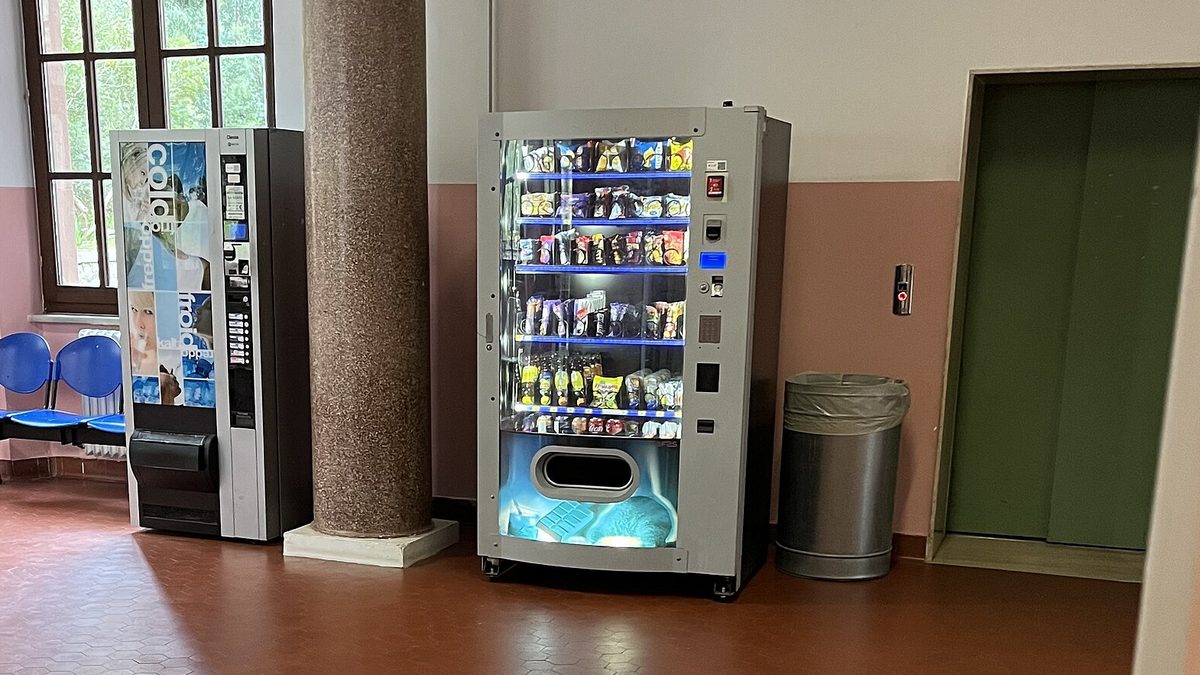
Diet recalls from 3,631 US adolescents linked convenience-store, vending-machine and socially supplied snacks with greater energy density. The source stood out more consistently than the individual and social factors the researchers tested.
Researchers analysed one-day food recalls from 1,835 boys and 1,796 girls aged 12 to 19 in the 2011–2018 US National Health and Nutrition Examination Survey. They asked whether snack energy density and the food groups eaten at snack time varied with personal, social and physical surroundings.
Snack source produced the clearest pattern. Snacks from convenience stores, vending machines or another person were more energy-dense than grocery-store snacks. Compared with grocery-store snacks, the odds of fruit appearing in convenience-store snacks were 80% lower for boys and 69% lower for girls. For girls, fruit odds at vending-machine snacks were 93% lower, although that estimate was imprecise.
This is a cross-sectional analysis of self-reported intake, not a test of changing vending machines or shops. It cannot show that the outlet caused the food choice, and one recall day does not capture every teenager's usual diet. Still, it points to the food available where adolescents snack as a practical target rather than placing the whole burden on willpower.
Snack source carried the strongest signal
3,631
US adolescents analysed
0.20
boys' odds ratio for fruit, convenience store vs grocery
0.31
girls' odds ratio for fruit, convenience store vs grocery
0.07
girls' odds ratio for fruit, vending machine vs grocery
Odds ratios describe associations after modelling; they are not the percentage of snacks containing fruit and do not establish cause and effect.
- Snacks eaten outside home also had lower odds of containing dairy foods for both boys and girls.
- The survey's 24-hour recall captures foods and drinks consumed on one selected day.
- Few consistent associations appeared for the personal and social-environment measures, making snack source the more actionable finding.
- Individual and environmental factors associated with snack characteristics among US adolescents: NHANES 2011-2018Public Health Nutrition / PubMed · Primary study abstract with sample, modelling and sex-stratified estimates; published 6 November 2026.
This newsfeed item is for general education and does not replace individual nutrition or medical advice.
Analysis by NutroPractic from the sources listed. Written for general readers; it does not replace advice from your own doctor.
From our articles
Read, then eat a little better
Plain-language guides on nutrition and wellness, backed by research.

Women's health
Inositol for PCOS: the 40:1 ratio, trial doses, and food milligrams
Why do randomized trials in polycystic ovary syndrome prioritize the 40:1 myo to D-chiro inositol ratio? Here is the science behind the ovarian epimerase paradox, clinical ovulation and insulin metrics, and why cantaloupe cannot replace 4,000 mg trial powder.
21 Nov 2026

Everyday eating
Extra virgin olive oil polyphenols: the EU health claim, smoke point myths, and cooking stability
Does extra virgin olive oil degrade when cooked? What does the EU 5 mg polyphenol health claim require, how does oleocanthal act like ibuprofen, and why does oxidative stability matter more than smoke point in domestic frying? Here is the clinical and culinary data.
21 Nov 2026

Food and nutrition
L-theanine and caffeine: what cognitive trials measured on sustained attention, and milligrams in matcha vs green tea
Combining L-theanine with caffeine produces clean focus without caffeine jitters. Here is what randomized trials measured on attention-switching, EEG alpha brain waves, and the exact milligrams across ceremonial matcha, culinary powder, gyokuro, and sencha.
20 Nov 2026
Newsfeed for your website
Want this feed on your website?
Add it to any site with one copy-and-paste snippet. No sign-up, and it updates itself every hour.
Start with a virtual consultation
Tell Dr. Triveni what you want to change. You will leave with a clear next step, whether you are in Toronto, London, New York or Chennai.