Food processing · November 13, 2026
‘Ultraprocessed’ did not tell the whole story in 6,525 US adults—the food’s nutritional quality changed the pattern
Most ultraprocessed calories came from foods high in nutrients to limit, and those—not the smaller remainder—tracked with several risk markers.
A cross-sectional analysis used two 24-hour diet recalls from 6,525 adults in the 2017–2020 US National Health and Nutrition Examination Survey. Researchers classified foods both by NOVA processing level and by whether they were high in nutrients commonly recommended for moderation.
Ultraprocessed foods in the moderation category supplied an average 48% of energy, while ultraprocessed foods outside that category supplied 6%. The nutritional screen considered added sugar, sodium, refined grains, carbohydrate-to-fibre ratio, saturated and total fat, and alcohol.
For each 1% of energy replacing less-processed foods, moderation-category ultraprocessed intake was associated with 0.03 higher BMI, 0.08 cm greater waist circumference and small increases in body fat, insulin and C-reactive protein. The non-moderation ultraprocessed category showed null associations for those measures.
That does not prove some ultraprocessed foods are harmless: the study measured diet and health markers at the same time, and food recalls are imperfect. It does show why a single processing label can hide meaningful nutritional differences—and why processing and nutrient profile are better examined together.
NHANES processing-and-nutrition analysis (11 November 2026)
6,525
Adults with two diet recalls
48%
Energy from moderation-category ultraprocessed foods
6%
Energy from other ultraprocessed foods
+0.03
BMI per 1% energy replacement
+0.08 cm
Waist per 1% energy replacement
Cross-sectional survey analysis. The coefficients are associations per percentage point of energy and cannot establish that the food category caused the measured differences.
- NOVA classifies food by the nature and purpose of processing rather than by a nutrient threshold.
- Two foods in the same processing group can differ greatly in sodium, fibre, added sugar and saturated fat.
- A 24-hour recall captures a recent day, so researchers often use more than one to better estimate usual intake.
- C-reactive protein is a broad inflammation marker; it does not identify a specific disease or cause.
- Cross-sectional associations of ultra-processed food intake with cardiometabolic risk differ by nutritional qualityAmerican Journal of Clinical Nutrition / PubMed · Primary NHANES analysis abstract with classification method, energy shares and adjusted coefficients. Published 11 November 2026.
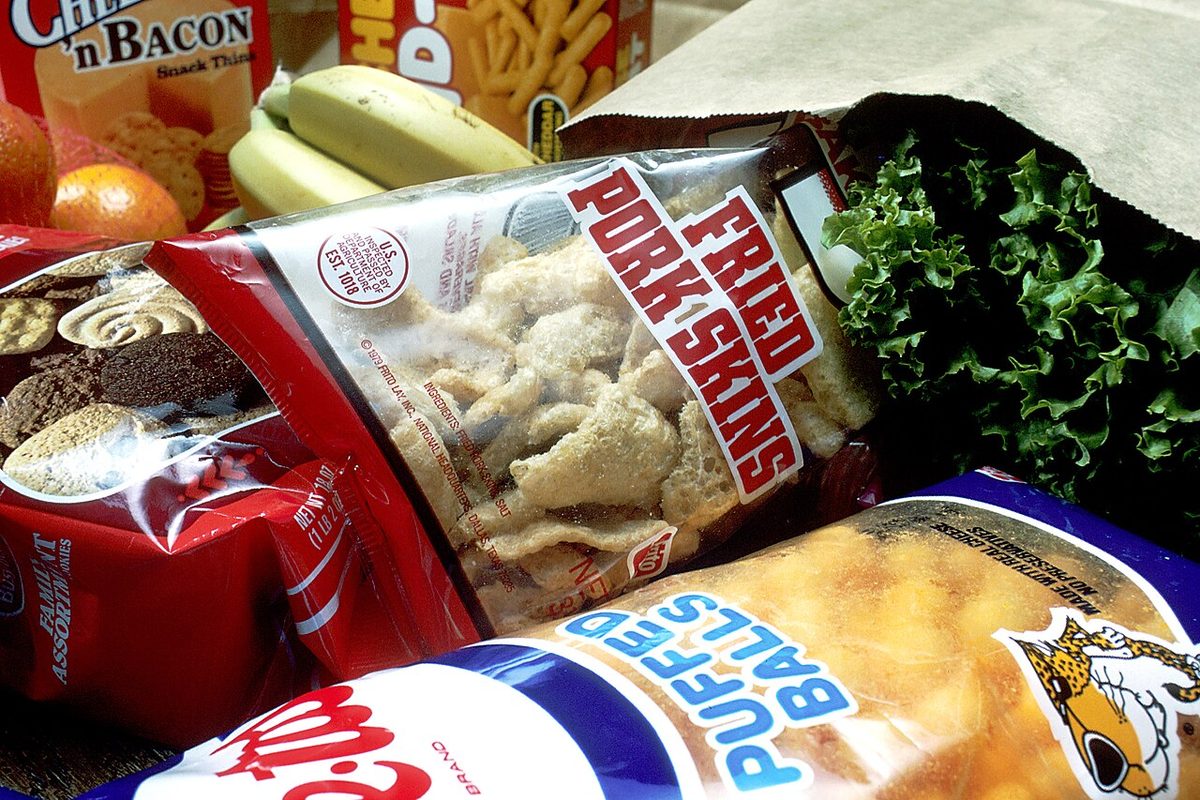
- Grocery bag of junk foodsWikimedia Commons · Bill Branson, US National Cancer Institute, public domain. General packaged-food illustration only.
General information, not a verdict on any single product. Consider ingredients, nutrients, portion, processing and the overall eating pattern together.
Analysis by NutroPractic from the sources listed. Written for general readers; it does not replace advice from your own doctor.
From our articles
Our guides on this subject
Plain-language guides on nutrition and wellness, backed by research.
Nutrition science
Ultra-processed foods: what the evidence says, and a realistic way to eat fewer
Ultra-processed foods now make up more than half of the calories eaten in the US and the UK. What counts as ultra-processed, what a landmark NIH trial and a 2024 BMJ review found, where the science is still uncertain, and simple swaps that don't require cooking everything from scratch.
3 Oct 2026

Women's health
Inositol for PCOS: the 40:1 ratio, trial doses, and food milligrams
Why do randomized trials in polycystic ovary syndrome prioritize the 40:1 myo to D-chiro inositol ratio? Here is the science behind the ovarian epimerase paradox, clinical ovulation and insulin metrics, and why cantaloupe cannot replace 4,000 mg trial powder.
21 Nov 2026

Everyday eating
Extra virgin olive oil polyphenols: the EU health claim, smoke point myths, and cooking stability
Does extra virgin olive oil degrade when cooked? What does the EU 5 mg polyphenol health claim require, how does oleocanthal act like ibuprofen, and why does oxidative stability matter more than smoke point in domestic frying? Here is the clinical and culinary data.
21 Nov 2026
Newsfeed for your website
Want this feed on your website?
Add it to any site with one copy-and-paste snippet. No sign-up, and it updates itself every hour.
Start with a virtual consultation
Tell Dr. Triveni what you want to change. You will leave with a clear next step, whether you are in Toronto, London, New York or Chennai.