Ultra-processed food · October 26, 2026
Shown pictures of cookies and fries in a brain scanner, 8-year-olds who got more of their calories from ultra-processed food lit up more in one reward area, and that area predicted who put on body fat over the next year
46 Los Angeles children, all a healthy weight, recalled everything they ate, then looked at food and non-food photos inside an MRI scanner after a sweet drink. A year later researchers measured them again. The study is small and can't prove cause, but it points at habit circuits in the brain, not just appetite.
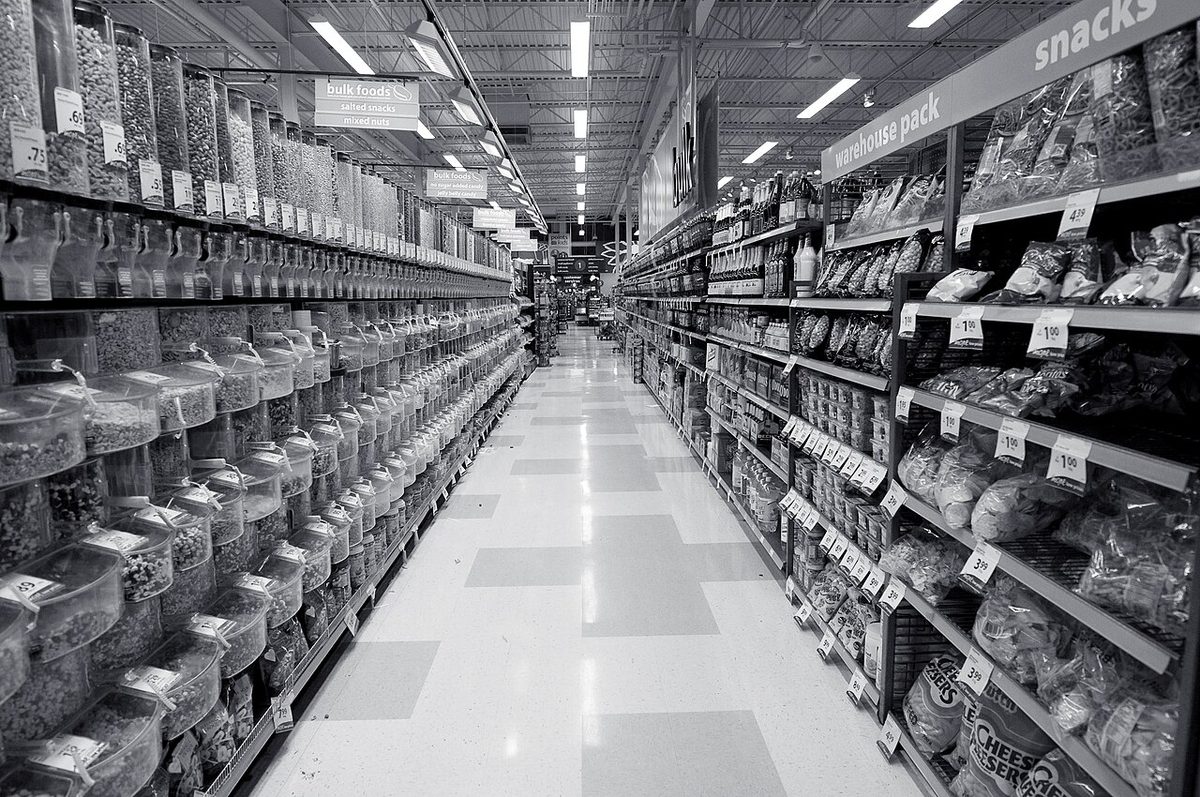
Ultra-processed foods, the packaged snacks, sweetened cereals, soft drinks and ready meals in group 4 of the NOVA system, make up most of what American children eat: 61.9% of the calories of 1 to 18-year-olds in the latest national survey. Many studies link them with weight gain, but why is less clear. One idea is that foods made to be very rewarding train the brain's reward circuits to react more strongly to anything that signals food. A team at the University of Southern California and Kaiser Permanente Southern California tested part of that idea in children. Their study was published in JAMA Network Open on 23 October.
The children came from BrainChild, a Los Angeles cohort set up to study children whose mothers did or did not have diabetes in pregnancy. Of 244 children enrolled at age 7 to 10, 75 had complete diet, body and brain data at the start and a year later, and the 46 who were a healthy weight at the start (below the 85th BMI percentile) were analysed. They were 8.7 years old on average, 26 girls and 20 boys, 61% Hispanic or Latino. Each child and a parent went through two detailed 24-hour food recalls, and every food was sorted into the NOVA groups. On average these children got 67.7% of their calories from ultra-processed foods, out of about 1,730 kcal a day.
About a month after the first measurements, the children came in fasting, drank a glucose drink sized to their weight so nobody was hungry, and lay in an MRI scanner for just over three minutes, looking at blocks of photos: tempting foods such as cookies or French fries, and neutral objects such as a pencil or a bench. The researchers looked at two parts of the striatum, a deep brain region involved in reward and motivation. The ventral part is linked with how rewarding something feels; the dorsal part with learned, habitual responses to cues.
Children with a larger share of ultra-processed food in their diets showed a stronger response to the food pictures in the dorsal striatum (a standardised coefficient of 0.34 after adjusting for age, sex, BMI, total calories and their mother's diabetes status), but not in the ventral striatum. About 15 months later on average, children whose dorsal striatum had reacted more had gained more BMI (0.32) and more body fat (0.44). A higher ultra-processed share at the start went with a bigger rise in waist size (0.38), and the links with BMI and body fat pointed the same way but sat right at the edge of statistical significance. When the brain response was added to the models, the link between ultra-processed food and body fat shrank by 44% and the link with BMI by 31%, which the authors read as the brain response possibly being part of the pathway.
The authors are open about the limits. 46 children is a small sample for a brain imaging study, and such studies often fail to replicate. Diet came from two recall days and is open to reporting error. The design is observational, so it cannot say which way things run: children whose reward circuits are more reactive to start with may simply eat more ultra-processed food. In an extra analysis, adjusting for added sugar weakened the link between ultra-processed food and the dorsal striatum response so that it was no longer statistically significant, so sugar may account for part of it. The results also may not apply to children who already have overweight. The study was funded by the US National Institutes of Health and the American Diabetes Association, and the authors report no conflicts of interest.
Ultra-processed food, brain responses to food pictures and one-year change in body fat in 46 healthy-weight children in Los Angeles (JAMA Network Open, 23 October 2026)
46
Healthy-weight children analysed, mean age 8.7 years, out of 244 enrolled in the BrainChild cohort
67.7%
Average share of the children's daily calories from ultra-processed foods (out of about 1,730 kcal)
0.34
Standardised link between ultra-processed share and dorsal striatum response to food pictures (95% CI 0.07 to 0.61); ventral striatum 0.16, not significant
0.44
Standardised link between dorsal striatum response and one-year gain in body fat percentage (95% CI 0.15 to 0.72)
+3.9 cm
Average rise in waist size over the follow-up; a higher ultra-processed share went with a bigger rise (0.38, 95% CI 0.11 to 0.66)
44% / 31%
How much the ultra-processed food link with body fat / BMI gain shrank once the brain response was taken into account
Source: Alves JM, Morgan E, Angelo B, Le K, Smith J, Chow T, Jann K, Xiang AH, Page KA, 'Ultraprocessed Food Intake, Striatal Response to Food Cues, and Adiposity Gain in Children', JAMA Network Open 2026;9(10):e2640252, published 23 October 2026, doi 10.1001/jamanetworkopen.2026.40252, PMID 42912392, open access (CC BY). Design: prospective cohort (BrainChild, Kaiser Permanente Southern California and USC); baseline visits April 2015 to June 2024, follow-up one year later (mean 448.9 days). Diet from two multipass 24-hour recalls, classified by NOVA. fMRI food-cue task after a weight-based glucose drink (1.75 g/kg, max 75 g). Coefficients are per standard deviation, adjusted for age, sex, baseline BMI, total calories and gestational diabetes exposure. Ultra-processed share and one-year change in BMI 0.29 (0.00 to 0.57), body fat 0.29 (0.00 to 0.57), both P = .05. After adjusting for added sugar, ultra-processed share and dorsal striatum 0.28 (-0.03 to 0.58), P = .07. Funding: NIH NIDDK grants R01DK116858 and R01DK134079, American Diabetes Association award 1-14-ACE-36; no conflicts reported. Survey figure (61.9%) from the US National Center for Health Statistics, NHANES August 2021 to August 2023.
- In the US national survey for August 2021 to August 2023, children aged 6 to 11 got 64.8% of their calories from ultra-processed foods, more than children aged 1 to 5 (56.1%) or adults (53.0%).
- The scan in this study took just 3 minutes and 16 seconds: 12 blocks alternating between food and non-food photos, three photos a block, four seconds each.
- The children drank a glucose drink before the scan because how strongly the striatum responds to food pictures changes a lot with hunger, so the researchers wanted everyone equally fed.
- NOVA, the system used to sort the foods, has four groups: unprocessed or minimally processed foods, processed culinary ingredients such as oils and sugar, processed foods, and ultra-processed foods.
- Ultraprocessed Food Intake, Striatal Response to Food Cues, and Adiposity Gain in ChildrenJAMA Network Open · The study, published 23 October 2026
- Full text (PMC13695063)PubMed Central · Methods, tables, funding and limitations
- Ultra-processed Food Consumption in Youth and Adults: United States, August 2021 to August 2023 (Data Brief 536)US National Center for Health Statistics · Share of calories from ultra-processed foods by age
- Resisting temptationWikimedia Commons · The photo, CC BY 2.0
General information, not medical advice. This was a small observational study and does not show that ultra-processed food changes children's brains. If you are worried about your child's eating or weight, talk to your paediatrician or a registered dietitian.
Analysis by NutroPractic from the sources listed. Written for general readers; it does not replace advice from your own doctor.
From our articles
Our guides on this subject
Plain-language guides on nutrition and wellness, backed by research.

Food and nutrition
L-theanine and caffeine: what cognitive trials measured on sustained attention, and milligrams in matcha vs green tea
Combining L-theanine with caffeine produces clean focus without caffeine jitters. Here is what randomized trials measured on attention-switching, EEG alpha brain waves, and the exact milligrams across ceremonial matcha, culinary powder, gyokuro, and sencha.
20 Nov 2026

Women's wellness and nutrition
Creatine for women: cognitive performance, menstrual cycle phases, and bone density beyond muscle building
Creatine is widely stereotyped as a bodybuilding supplement for men, but female physiology tells a very different story. Women exhibit 70% to 80% lower endogenous creatine stores, reduced dietary intake, and cyclical fluctuations in brain creatine kinase across the follicular and luteal phases. Robust clinical trials demonstrate that 3 to 5 grams of daily creatine monohydrate enhances cognitive performance during sleep deprivation, augments clinical response in unipolar depression, preserves femoral neck bone geometry in postmenopausal women, and causes cellular intracellular hydration rather than subcutaneous bloating.
13 Nov 2026
Nutrition science
Ultra-processed foods: what the evidence says, and a realistic way to eat fewer
Ultra-processed foods now make up more than half of the calories eaten in the US and the UK. What counts as ultra-processed, what a landmark NIH trial and a 2024 BMJ review found, where the science is still uncertain, and simple swaps that don't require cooking everything from scratch.
3 Oct 2026
Newsfeed for your website
Want this feed on your website?
Add it to any site with one copy-and-paste snippet. No sign-up, and it updates itself every hour.
Start with a virtual consultation
Tell Dr. Triveni what you want to change. You will leave with a clear next step, whether you are in Toronto, London, New York or Chennai.