Ultra-processed food · October 19, 2026
Brain scans of 8,783 Canadians: people who ate the most ultra-processed food were 40% more likely to show silent damage to the brain's small blood vessels
Most people with this kind of damage never notice it: a tiny silent stroke here, a patch of worn white matter there. Canadian researchers put thousands of middle-aged adults through an MRI scanner and compared what they saw with what people ate. More packaged snacks, soft drinks and ready meals went with more body fat, more belly fat and more of these hidden marks, but not with worse scores on thinking tests. Here's what that does and doesn't mean.
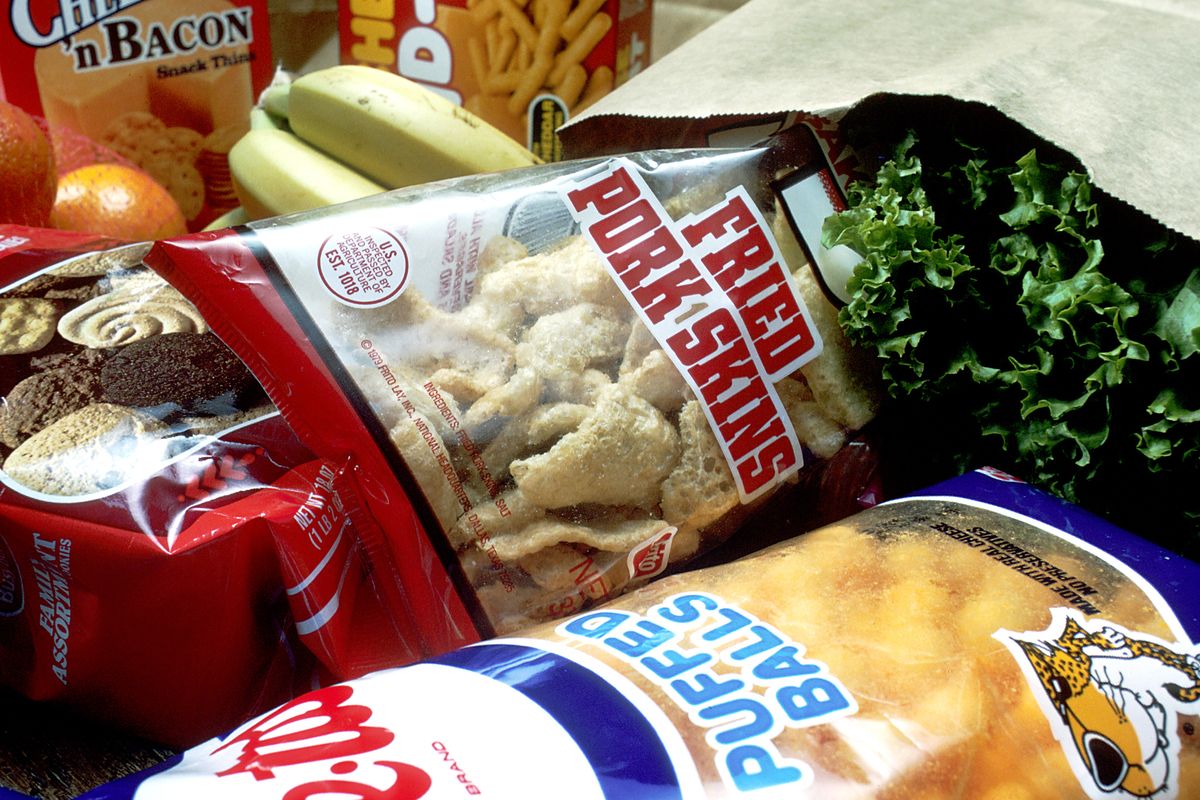
Not every stroke announces itself. Brain scans of healthy-looking middle-aged people often turn up small areas where a tiny blood vessel was blocked (a 'covert' or silent infarct) or bright patches in the white matter that point to wear on the small vessels. Neither causes obvious symptoms, but both are linked to a higher chance of later strokes and memory problems. A study published on 15 October in JAMA Network Open asked whether people who eat more ultra-processed food carry more of this hidden damage.
The team, led from McMaster University in Hamilton, Ontario, used two Canadian studies, the Canadian Alliance for Healthy Hearts and Minds and PURE-MIND, which recruited adults aged 35 to 70 between 2010 and 2018. The 8,783 people analysed had no known heart disease or stroke, were 58 on average, and 57% were women. Each filled in a detailed food questionnaire about the past year, had MRI scans, a body fat measurement and two short thinking tests. The researchers sorted foods with the NOVA system, which labels as ultra-processed the industrial products made mostly from extracted ingredients and additives: packaged snacks, soft drinks, sweetened cereals, processed meats, many ready meals.
To compare people who ate different amounts of food overall, intake was counted as servings per 2,000 calories. The lowest quarter ate a median of about 3 servings of ultra-processed food per 2,000 calories a day; the highest quarter about 13. Compared with the lowest quarter, the highest had 1.7 percentage points more body fat and 5.7 mL more visceral fat (the fat packed around the organs) on the scan, after accounting for age, sex, smoking, exercise, income, education and other factors. Liver fat was not significantly different.
On the brain scans, 8.1% of the lowest quarter and 11.3% of the highest had silent vascular injury. After the adjustments, the highest quarter had 40% higher odds (odds ratio 1.40, 95% CI 1.10 to 1.77). Yet scores on the Montreal Cognitive Assessment and a symbol-matching speed test did not get worse with more ultra-processed food. The authors' reading: the vessel damage may come years before any drop in thinking skills that short tests can pick up.
There are big caveats. This was a snapshot: diet, body fat and brain scans were measured at the same visit, so it can't show which came first, and people who ate the most ultra-processed food also smoked more, exercised less and had lower incomes, which statistics can only partly adjust for. Diet came from one questionnaire that wasn't designed with NOVA in mind, and the authors note that the brain finding was sensitive to how ultra-processed intake was defined. The participants were mostly well educated and of White European background.
So this is a signal, not proof that a bag of crisps damages your brain. It fits with a large body of research tying ultra-processed diets to high blood pressure, diabetes and heart disease, conditions that also wear down the brain's small vessels. The authors call for long-term studies that follow people's diets over time. In the meantime, the practical message is an old one: more meals built from whole foods, fewer from packets.
Highest vs lowest quarter of ultra-processed food intake, 8,783 Canadian adults aged 35 to 70
8,783
Adults with no known heart disease, each given MRI scans, from two Canadian studies
~3 vs ~13
Median servings of ultra-processed food per 2,000 kcal a day, lowest vs highest quarter
+1.7 points
Body fat percentage in the highest quarter vs the lowest
+5.7 mL
Visceral (deep belly) fat volume on MRI, highest vs lowest quarter
8.1% → 11.3%
Share with silent vascular brain injury, lowest vs highest quarter
1.40
Adjusted odds ratio for silent brain injury, highest vs lowest quarter (95% CI 1.10 to 1.77)
Study: de Souza RJ, Schulze KM, Desai D, Després JP, Dummer TJB, Friedrich MG, Hicks J, Ho V, Lear SA, Lee DS, Mente A, Miller V, Poirier P, Smith EE, Tardif JC, Teo KK, Vena JE, Yusuf S, Anand SS, 'Ultraprocessed Food Intake and Adiposity, Vascular Brain Injury, and Cognition in Middle-Aged Adults', JAMA Network Open 2026;9(10):e2639118, published online 15 October 2026, doi 10.1001/jamanetworkopen.2026.39118. Cross-sectional analysis of the Canadian Alliance for Healthy Hearts and Minds (recruited 2014 to 2018) and PURE-MIND (2010 to 2018); 8,783 adults aged 35 to 69 without cardiovascular disease, mean age 57.7 years, 4,917 women (56.6%). Diet by validated semiquantitative food frequency questionnaires, classified with NOVA and expressed as servings per 2,000 kcal a day; quartile medians 3.1 (lowest) and 12.8 (highest). Body fat by bioelectrical impedance; visceral fat and liver fat fraction by MRI; vascular brain injury defined as covert brain infarcts or high white matter hyperintensities on MRI; cognition by the Montreal Cognitive Assessment (MoCA) and Digit Symbol Substitution Test (DSST). Highest vs lowest quartile: body fat +1.7 percentage points (95% CI 1.2 to 2.2), visceral fat +5.7 mL (3.2 to 8.3), liver fat not significant; vascular brain injury 8.1% vs 11.3%, adjusted OR 1.40 (1.10 to 1.77), P for trend 0.009; no significant association with MoCA or DSST. The authors state that the brain injury association was sensitive to the definition of ultra-processed food exposure and that longitudinal studies are needed to establish temporality.
- The NOVA system, which sorts foods into four groups from unprocessed to ultra-processed, was developed by researchers at the University of São Paulo in Brazil and is now used in nutrition studies worldwide.
- Silent brain infarcts often turn up on scans of people who have never had a recognised stroke, which is why researchers treat them as an early warning sign rather than a diagnosis on their own.
- Visceral fat, the kind packed around the organs inside the belly, is more closely tied to diabetes and heart disease than the fat just under the skin, and you can't tell how much someone has just by looking.
- Counting food as 'servings per 2,000 calories' lets researchers compare a big eater with a small one: it measures how much of the diet is ultra-processed, not just how much food someone eats.
- Ultraprocessed Food Intake and Adiposity, Vascular Brain Injury, and Cognition in Middle-Aged AdultsJAMA Network Open, October 2026 · The study, open access
- Full text with tablesJAMA Network · Article page with methods, results by quartile, limitations, funding and conflict-of-interest statements
- Ultra-processed foods: what they are and how to identify themPublic Health Nutrition, 2019 · The NOVA food classification explained by the researchers who created it
General information, not medical advice. This was an observational snapshot that shows a link, not cause and effect. If you are worried about your stroke risk, memory or diet, talk to your doctor or a registered dietitian, especially about blood pressure, blood sugar and cholesterol, the main drivers of small-vessel damage in the brain.
Analysis by NutroPractic from the sources listed. Written for general readers; it does not replace advice from your own doctor.
From our articles
Our guides on this subject
Plain-language guides on nutrition and wellness, backed by research.

Food and nutrition
L-theanine and caffeine: what cognitive trials measured on sustained attention, and milligrams in matcha vs green tea
Combining L-theanine with caffeine produces clean focus without caffeine jitters. Here is what randomized trials measured on attention-switching, EEG alpha brain waves, and the exact milligrams across ceremonial matcha, culinary powder, gyokuro, and sencha.
20 Nov 2026

Women's wellness and nutrition
Creatine for women: cognitive performance, menstrual cycle phases, and bone density beyond muscle building
Creatine is widely stereotyped as a bodybuilding supplement for men, but female physiology tells a very different story. Women exhibit 70% to 80% lower endogenous creatine stores, reduced dietary intake, and cyclical fluctuations in brain creatine kinase across the follicular and luteal phases. Robust clinical trials demonstrate that 3 to 5 grams of daily creatine monohydrate enhances cognitive performance during sleep deprivation, augments clinical response in unipolar depression, preserves femoral neck bone geometry in postmenopausal women, and causes cellular intracellular hydration rather than subcutaneous bloating.
13 Nov 2026
Nutrition science
Ultra-processed foods: what the evidence says, and a realistic way to eat fewer
Ultra-processed foods now make up more than half of the calories eaten in the US and the UK. What counts as ultra-processed, what a landmark NIH trial and a 2024 BMJ review found, where the science is still uncertain, and simple swaps that don't require cooking everything from scratch.
3 Oct 2026
Newsfeed for your website
Want this feed on your website?
Add it to any site with one copy-and-paste snippet. No sign-up, and it updates itself every hour.
Start with a virtual consultation
Tell Dr. Triveni what you want to change. You will leave with a clear next step, whether you are in Toronto, London, New York or Chennai.