Cancer risk · November 1, 2026
Of 204,494 UK adults, 848 later turned up in hospital records with a myeloid blood cancer. Those eating more ultra-processed food were slightly more likely to be among them
A new UK Biobank analysis links ultra-processed food to cancers that start in the bone marrow, and the link held even in people with no detectable early warning mutations in their blood. The rise in risk is modest, the disease is uncommon, and the authors stop short of calling it cause and effect.
Ultra-processed food has already been tied to a list of chronic diseases. Much less is known about myeloid neoplasms, a group of blood cancers and related conditions that begin in the bone marrow. A team led from the Jiangsu Institute of Hematology at Soochow University in Suzhou went looking in the UK Biobank, and published what they found in The American Journal of Clinical Nutrition on 26 October.
They followed 204,494 people who had no hospital record of these diseases when the clock started. Each person's share of energy from ultra-processed food was averaged across the online diet questionnaires they had completed, and follow-up began at their last valid one. Over a median of 10.5 years, 848 people developed a myeloid neoplasm recorded in hospital inpatient data. Allowing for demographic, behavioural, socioeconomic, dietary, physical activity and body size factors, each one standard deviation higher share of ultra-processed energy went with a 12% higher hazard (hazard ratio 1.12, 95% CI 1.05 to 1.21).
The clearest signal among the subtypes was in myeloproliferative neoplasms, in which the marrow makes too many red cells, white cells or platelets (hazard ratio 1.15, 95% CI 1.04 to 1.27, and still significant after correcting for multiple tests). Measuring ultra-processed food by its share of food weight instead of energy also showed the association. The team then looked at clonal haematopoiesis of indeterminate potential, or CHIP, acquired blood-cell mutations that become common with age and raise the odds of a later blood cancer. In people without detectable CHIP at the start the link remained, at 1.10 (95% CI 1.01 to 1.20), and there was no evidence that CHIP status changed it. So the association was not limited to people who already carried those mutations.
Keep the scale in view. A 12% rise is relative, and it applies to something uncommon: across the whole group, about 1 person in 240 developed one of these conditions during follow-up. Cases came from hospital inpatient records, so anyone whose illness never reached those records would be missed. Diet was self-reported, and this is an observational study, where people eating more ultra-processed food may differ in ways that adjustment cannot fully catch. The team found lipid, inflammatory, blood and immune markers that lined up with intake, some of them also seen in outside datasets, but they say plainly that this offers biological context and does not establish a causal pathway. The full paper is behind a paywall, so we checked these figures against its abstract. The abstract does not say how many percentage points one standard deviation represents, which is why we cannot turn the 12% into a practical amount of food.
204,494 UK Biobank participants, ultra-processed share of energy and hospital-recorded myeloid neoplasms, median follow-up 10.5 years (The American Journal of Clinical Nutrition, 26 October 2026)
204,494
Participants without a hospital record of a myeloid neoplasm at the start
848
Developed a hospital-recorded myeloid neoplasm during follow-up
10.5 years
Median follow-up
1.12 (1.05 to 1.21)
Hazard ratio for any myeloid neoplasm, per one standard deviation higher ultra-processed share of energy (p = 0.001)
1.15 (1.04 to 1.27)
Hazard ratio for myeloproliferative neoplasms, the clearest subtype (p = 0.006; corrected p = 0.019)
1.10 (1.01 to 1.20)
Hazard ratio among people with no detectable CHIP at the start (p = 0.032)
p = 0.528
Test of whether CHIP status changed the link: no evidence that it did
Observational study, so it shows association, not cause. Figures come from the abstract on PubMed; the full paper is paywalled and was not read. The models adjusted for demographic, behavioural, socioeconomic, dietary, physical activity and body size factors. The size of one standard deviation is not given in the abstract. Outcomes came from hospital inpatient records. The authors declare no competing interests.
- Across the whole group, 848 cases out of 204,494 people works out to about 0.4%, or roughly 1 in 240, over a median 10.5 years. That sum is ours, not the paper's, and it covers everyone, whatever they ate.
- The 204,494 people here are about two in five of the roughly 500,000 adults UK Biobank recruited. Only those with valid diet questionnaires could be counted.
- The Oxford WebQ, the kind of online questionnaire used here, asks about the previous 24 hours. In its first evaluation, 116 people took a median of 12.5 minutes to fill it in themselves.
- Myeloproliferative neoplasms include chronic myeloid leukaemia, polycythaemia vera, essential thrombocythaemia and primary myelofibrosis. According to the US National Cancer Institute, they usually worsen slowly, and they sometimes become acute leukaemia.
- Most people who pick up clonal haematopoiesis with age will never develop myelodysplastic syndrome, one of the myeloid conditions. The 2015 paper in Blood that set out the CHIP idea compared it with other precursor states that are usually benign and do not progress.
- Association of ultra-processed food consumption with incident myeloid neoplasms: population-based cohort studyThe American Journal of Clinical Nutrition, 26 October 2026 · The paper's DOI. The full text is paywalled; figures were checked against the abstract.
- PubMed record for the paper (PMID 42933535)US National Library of Medicine · Abstract with all study figures, publication dates, author affiliations and the competing interests statement.
- UK BiobankUK Biobank · The cohort the data come from: about 500,000 adults recruited across the UK.
- Myeloproliferative Neoplasms Treatment (PDQ), Patient VersionUS National Cancer Institute · What these neoplasms are, their types and how they can progress.
- Clonal hematopoiesis of indeterminate potential and its distinction from myelodysplastic syndromesBlood, 2015 · Background on CHIP: common with ageing, linked to later blood cancers, usually does not progress.
- Development and evaluation of the Oxford WebQ, a low-cost, web-based method for assessment of previous 24 h dietary intakes in large-scale prospective studiesPublic Health Nutrition, 2011 · How the diet questionnaire works and how long it took to complete.
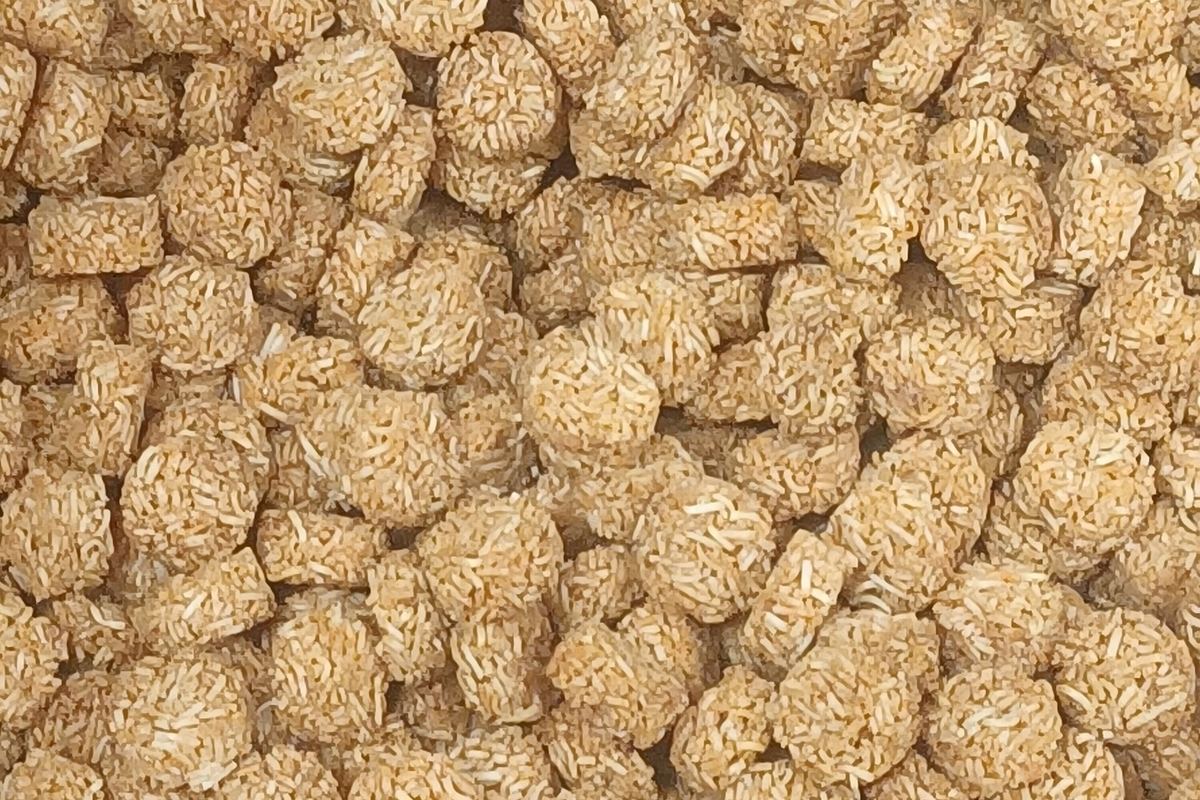
- Instant noodle ballsWikimedia Commons · CC0 photograph, used as a general illustration.
General information, not medical advice. This observational study cannot show that ultra-processed food causes myeloid blood cancers. If you are worried about your diet, your blood test results or your risk of blood cancer, talk to your doctor or a registered dietitian.
Analysis by NutroPractic from the sources listed. Written for general readers; it does not replace advice from your own doctor.
From our articles
Our guides on this subject
Plain-language guides on nutrition and wellness, backed by research.
Nutrition science
Ultra-processed foods: what the evidence says, and a realistic way to eat fewer
Ultra-processed foods now make up more than half of the calories eaten in the US and the UK. What counts as ultra-processed, what a landmark NIH trial and a 2024 BMJ review found, where the science is still uncertain, and simple swaps that don't require cooking everything from scratch.
3 Oct 2026
Diabetes
Potatoes and blood sugar: boiled, cooled, mashed or fried, and what the cohorts and trials found
Fries were linked to 20% higher diabetes risk per three servings a week in 205,000 US adults; boiled, baked and mashed potatoes to almost none. GI by cooking method, resistant starch in grams after chilling, the glycaemic load of a potato against a cup of rice, and how to fit aloo into an Indian plate.
30 Oct 2026

Children's nutrition
Picky eaters aged 2 to 8: what feeding studies show works at the table
Fussy eating peaks between two and six and is usually a normal stage, not a parenting failure. Feeding trials show what moves it: small repeated tastes, eating together, no pressure and the right kind of reward. Here is how to use them, and the signs that mean it's more than picky eating.
30 Oct 2026
Newsfeed for your website
Want this feed on your website?
Add it to any site with one copy-and-paste snippet. No sign-up, and it updates itself every hour.
Start with a virtual consultation
Tell Dr. Triveni what you want to change. You will leave with a clear next step, whether you are in Toronto, London, New York or Chennai.