Cancer prevention · October 28, 2026
Ultra-processed, but not all the same: across 461,682 older Americans followed for nearly 19 years, eating more ultra-processed food did not raise bowel cancer rates overall, because the packaged bread, cereal and dairy pulled one way and the processed meat the other
A US cohort that tracked 10,075 colorectal cancers found no overall link with ultra-processed food. Split by what the food was, the picture changed: ultra-processed breads, breakfast cereals and milk-based desserts went with lower rates, reconstituted meat and fish products with higher ones. Whole grain, fibre, calcium and processed meat mattered wherever they came from.
Ultra-processed foods, the industrial products in group 4 of the Nova classification, now supply more than half the calories American adults eat, and they are often blamed for bowel cancer. The evidence is mixed: some cohorts have found higher colorectal cancer rates among heavy eaters of ultra-processed food, others have not. One reason may be that the group is so broad. It takes in hot dogs and soft drinks, but also packaged wholemeal bread, breakfast cereals and flavoured yoghurt, while the long-standing advice for bowel cancer, from the 2018 World Cancer Research Fund report, is to eat more whole grains, fibre and dairy and less processed meat. A study published on 15 October in PLOS Medicine tried to pull those threads apart.
The researchers used the NIH-AARP Diet and Health Study, which recruited adults aged 50 to 71 in 1995 and 1996 from six US states and two cities. After exclusions, 461,682 people who were free of cancer at the start (274,269 men and 187,413 women) were followed through cancer registries until the end of 2018, a median of 18.8 years. In that time 10,075 were diagnosed with colorectal adenocarcinoma. Each person's answers to a 124-item food questionnaire were broken down into individual food codes and sorted by Nova group. The median intake of ultra-processed food was 293 g per 1,000 kcal a day, about 43% of daily energy.
Overall there was no link. After adjusting for age, sex, smoking, alcohol, education, exercise, family history and self-rated health, the fifth of people who ate the most ultra-processed food had a colorectal cancer rate 3% lower than the fifth who ate the least, a difference well within chance (hazard ratio 0.97, 95% CI 0.91 to 1.03). The result held when diet quality, fibre, calcium or body weight were added to the model, and it was much the same for cancers of the right colon, left colon and rectum.
Breaking ultra-processed food into subgroups told a different story. The highest eaters of ultra-processed breads had 9% lower rates than the lowest, of breakfast cereals 16% lower, and of frozen desserts and milk drinks 18% lower. The highest eaters of reconstituted meat and fish products had 10% higher rates. In this group of older Americans, 82.8% of whole grain intake, about a third of fibre and calcium, and 74.3% of processed meat came from ultra-processed foods.
When the team looked at nutrients by source, the familiar pattern came through either way. Per 300 mg of calcium per 1,000 kcal, colorectal cancer rates were 23% lower when the calcium came from ultra-processed food and 10% lower when it came from other food; per serving of dairy, 25% and 10% lower. Each serving of meat went with 8% higher rates from ultra-processed sources and 4% higher from the rest. Whole grain and fibre from ultra-processed food were linked to lower rates; from other sources the estimates were not significant, likely because so little whole grain came from them. Diet quality still mattered: compared with people eating little ultra-processed food and a good diet overall, those with a poor diet had 22% to 28% higher rates in both the second and the top fifth of ultra-processed intake. And in a model that swapped 10% of food weight from ultra-processed to minimally processed food, rates were 2% lower.
The study has real limits. Diet was asked about once, in the mid-1990s, with a questionnaire designed to measure nutrients, not processing, so a plain and a sweetened yoghurt could not be told apart, and today's food supply looks different. The participants were older and 91% white. The authors had no data on additives such as emulsifiers, and some confounding by things like anti-inflammatory drug use is possible. Their reading is that, for bowel cancer, what a food contains seems to matter more than how processed it is, and that the existing advice stands: whole grains, fibre, dairy and calcium, and as little processed meat as possible.
Ultra-processed food and colorectal cancer, NIH-AARP Diet and Health Study, 461,682 US adults aged 50-71
10,075
Colorectal cancers diagnosed over a median 18.8 years of follow-up
43%
Median share of daily energy from ultra-processed food (293 g per 1,000 kcal)
0.97
Hazard ratio, highest vs lowest fifth of ultra-processed food intake (95% CI 0.91-1.03): no link
0.84 / 0.82
Hazard ratios for the highest vs lowest intake of ultra-processed breakfast cereals and of frozen desserts and milk drinks
1.10
Hazard ratio for the highest vs lowest intake of reconstituted meat and fish products
82.8%
Share of whole grain intake that came from ultra-processed foods; 74.3% of processed meat did too
Prospective cohort, adults recruited in 1995-96 from California, Florida, Louisiana, New Jersey, North Carolina, Pennsylvania, Atlanta and Detroit; cancers from state registries through 2018. Diet from one 124-item food frequency questionnaire at baseline, classified by Nova. Hazard ratios adjusted for age, sex, energy, race and ethnicity, smoking, education, physical activity, alcohol, family history of cancer and self-rated health. Swapping 10% of food weight from ultra-processed to minimally processed food: HR 0.98 (0.96-0.99). People in the top fifth of ultra-processed intake were younger (median 60.7 vs 63.8 years) and more often had obesity (29.6% vs 15.2%). Observational: shows associations, not cause and effect. Published 15 October 2026, open access (CC0).
- Under the Nova system, a packaged wholemeal loaf made with additives such as emulsifiers counts as ultra-processed, in the same group as soft drinks and instant noodles.
- Of the 10,075 cancers in the study, 4,787 were in the right (proximal) colon, 2,633 in the left (distal) colon and 2,389 in the rectum.
- A European cohort, EPIC, ran the same swap of 10% of food weight from ultra-processed to minimally processed food and found 6% lower colorectal cancer rates, against 2% here; people in EPIC ate more ultra-processed meat and less ultra-processed cereal than these Americans.
- The NIH-AARP study drew its volunteers from about 3.5 million AARP members; 566,398 returned the first questionnaire.
- The median overall diet quality score (Healthy Eating Index) was 70.9 out of 100 among the lowest ultra-processed eaters and 65.6 among the highest.
- Associations of food processing and dietary risk factors with colorectal cancer incidence in the NIH-AARP Diet and Health Study: A cohort studyPLOS Medicine · The study, published 15 October 2026; figures from the full text and its tables
- PubMed record (PMID 42879326)PubMed · Abstract and author details
- Full text (PMC13671506)PubMed Central · Open access full text with methods and limitations
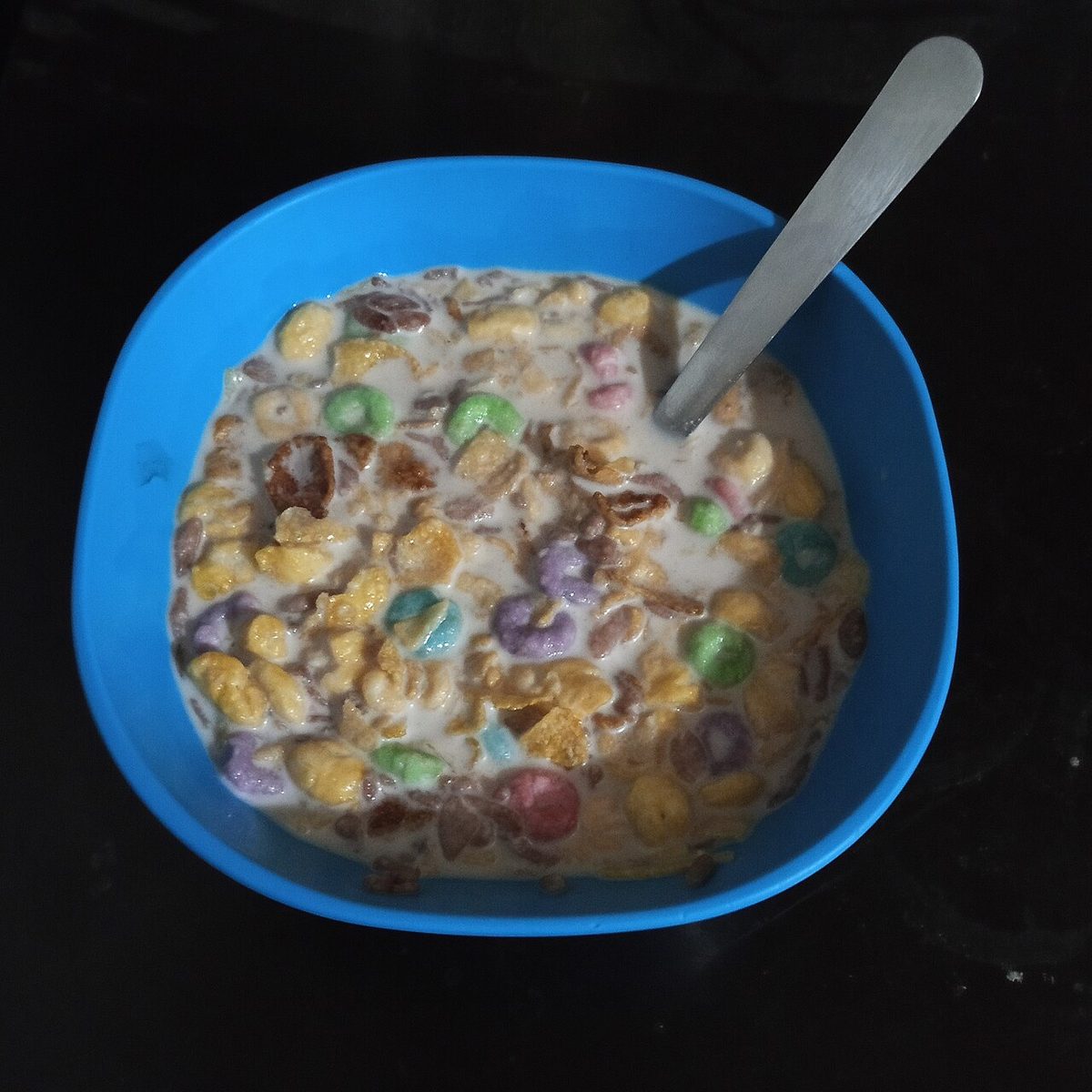
- Bowl of mixed cerealsWikimedia Commons · The image, CC0
General information, not medical advice. This is an observational study and cannot show cause and effect. If you have bowel symptoms, a family history of colorectal cancer or questions about screening, talk to your doctor.
Analysis by NutroPractic from the sources listed. Written for general readers; it does not replace advice from your own doctor.
From our articles
Our guides on this subject
Plain-language guides on nutrition and wellness, backed by research.

Everyday eating
The fibre gap: why most adults fall short, and an easy 30-gram day
Most adults in the US, Canada and Europe eat far less fibre than recommended, even though higher intakes are linked to lower rates of heart disease, type 2 diabetes and bowel cancer. How much you need, where it hides, and a sample day that gets you to 30 grams.
3 Oct 2026
Gut health
Lactose intolerance: how much milk most people can actually tolerate, and which dairy is easiest
Most adults who don't digest lactose well still handle about 12 g at once, roughly a 250 ml glass of milk, in blinded trials. What the 12 g studies found, a lactose table for milk, yoghurt, cheese, chai and dahi, how lactase tablets and A2 milk compare, why the famous 68% figure was retracted, and how to keep calcium up if you cut back.
25 Oct 2026

Gut health
Constipation and food: kiwis, prunes, psyllium and what the head-to-head trials found
Two green kiwis a day added about 1.5 complete bowel movements a week in a 2023 trial across New Zealand, Italy and Japan, and beat psyllium overall; prunes beat psyllium in an earlier one. The doses the trials and the 2025 British dietitians' guideline used, what water, magnesium, coffee and rye bread add, IBS-C, isabgol, a four-week plan and the warning signs.
25 Oct 2026
Newsfeed for your website
Want this feed on your website?
Add it to any site with one copy-and-paste snippet. No sign-up, and it updates itself every hour.
Start with a virtual consultation
Tell Dr. Triveni what you want to change. You will leave with a clear next step, whether you are in Toronto, London, New York or Chennai.