Family food · November 13, 2026
For 1,045 UK parents, the workable route to less meat looked more like a familiar stir-fry than a complete diet overhaul
Cost, convenience and concern about processing were barriers; substitutions and meals mixing animal and non-animal proteins felt more practical.
Researchers combined focus groups with 32 parents and an online questionnaire completed by 1,013 UK parents of children aged six months to 16 years. They asked what made it easier or harder for families to eat more non-animal protein.
Cost and lack of convenience repeatedly appeared as barriers, along with a perception that some meat alternatives were highly processed. Parents were more receptive when non-animal proteins fitted familiar family meals, added variety or made a meal more affordable.
The researchers therefore point to incremental substitutions and hybrid meals—combining animal and non-animal ingredients—rather than treating dietary change as an all-or-nothing identity. That could mean beans added to a meat sauce or lentils sharing the plate with a smaller meat portion.
This study mapped attitudes and reported preferences; it did not give families a diet and measure what children ate or how their health changed. Administrative support came from a food company, although the authors state that data collection, analysis and writing were independent.
UK mixed-methods family study (5 November 2026)
32
Parents in focus groups
1,013
Parents in online questionnaire
6 months–16 years
Children's age range
3
Prominent barriers: cost, convenience, processing
Observational
Preferences, not a feeding intervention
Mixed-methods study of UK parents. It identifies plausible ways to make change acceptable but cannot show that a strategy changes household purchases, nutrient intake or health.
- A flexitarian pattern reduces rather than necessarily eliminates meat.
- Hybrid meals can change the proportion of protein sources without requiring a completely unfamiliar recipe.
- Convenience includes preparation time, ingredient availability and whether everyone in the household will eat the meal.
- Children's protein needs vary by age, body size and health, so family changes still need balanced meals.
- Transitioning to a flexitarian diet: barriers, enablers and strategies among UK parentsFood Chemistry / PubMed · Primary mixed-methods study abstract with sample sizes, barriers, enablers and funding disclosure. Published 5 November 2026.
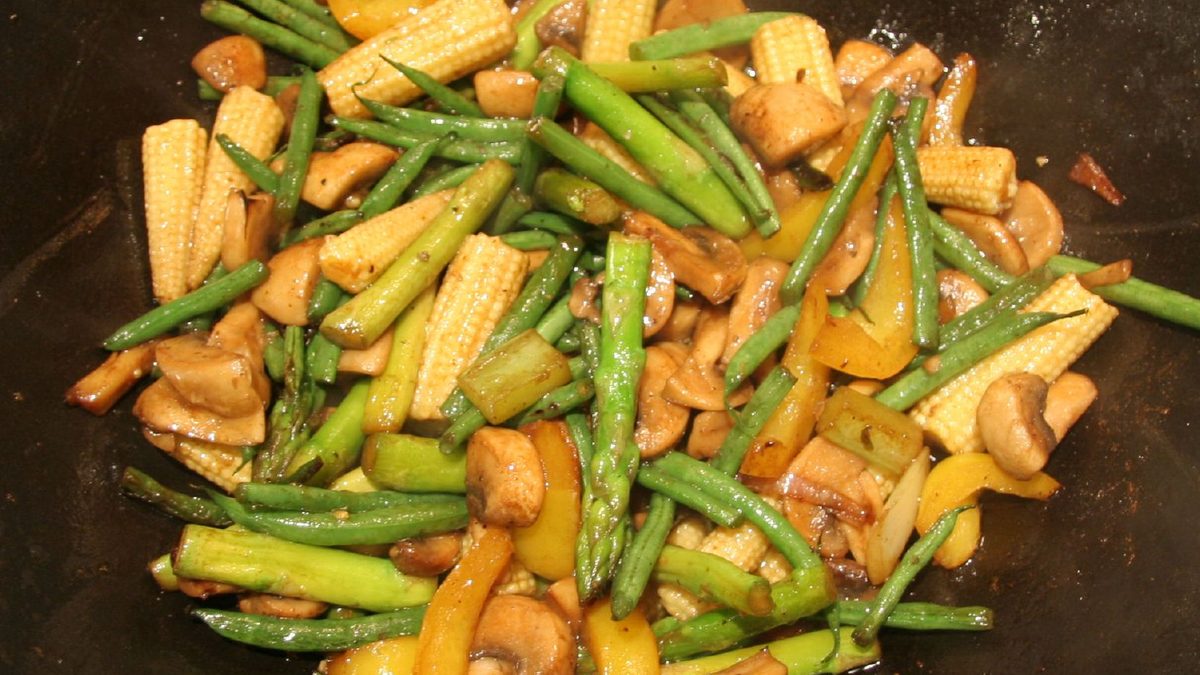
- Stir fry à la Gabi—showcasing baby cornWikimedia Commons · Brian Snelson, CC BY 2.0. General meal illustration only.
General information, not an individualized diet for a child. Families with allergies, feeding difficulties or growth concerns should seek advice from a qualified paediatric clinician or dietitian.
Analysis by NutroPractic from the sources listed. Written for general readers; it does not replace advice from your own doctor.
From our articles
Read, then eat a little better
Plain-language guides on nutrition and wellness, backed by research.

Women's health
Inositol for PCOS: the 40:1 ratio, trial doses, and food milligrams
Why do randomized trials in polycystic ovary syndrome prioritize the 40:1 myo to D-chiro inositol ratio? Here is the science behind the ovarian epimerase paradox, clinical ovulation and insulin metrics, and why cantaloupe cannot replace 4,000 mg trial powder.
21 Nov 2026

Everyday eating
Extra virgin olive oil polyphenols: the EU health claim, smoke point myths, and cooking stability
Does extra virgin olive oil degrade when cooked? What does the EU 5 mg polyphenol health claim require, how does oleocanthal act like ibuprofen, and why does oxidative stability matter more than smoke point in domestic frying? Here is the clinical and culinary data.
21 Nov 2026

Food and nutrition
L-theanine and caffeine: what cognitive trials measured on sustained attention, and milligrams in matcha vs green tea
Combining L-theanine with caffeine produces clean focus without caffeine jitters. Here is what randomized trials measured on attention-switching, EEG alpha brain waves, and the exact milligrams across ceremonial matcha, culinary powder, gyokuro, and sencha.
20 Nov 2026
Newsfeed for your website
Want this feed on your website?
Add it to any site with one copy-and-paste snippet. No sign-up, and it updates itself every hour.
Start with a virtual consultation
Tell Dr. Triveni what you want to change. You will leave with a clear next step, whether you are in Toronto, London, New York or Chennai.