Fasting and exercise · October 28, 2026
Same workouts, shorter eating window: about 1.85 kg more fat lost. Which workout won is still anyone's guess
Researchers in China and Korea pooled the randomised trials that paired time-restricted eating with an exercise programme. Adding an eating window of 12 hours or less to the same training took off about 1.85 kg more body fat, and the result barely varied between trials. Ranking spin, HIIT, weights or mixed training against each other was another matter.
Time-restricted eating means fitting the day's food into a fixed window, often eight hours, and eating nothing with calories outside it. Exercise and an eating window are each sold as ways to lose fat, so people naturally ask whether doing both helps more, and whether it matters which kind of exercise goes with it. A systematic review and network meta-analysis from Dalian Polytechnic University, Liaoning Normal University and Hanyang University in Seoul, published on 27 October in Frontiers in Nutrition, tried to answer both questions.
The team searched five databases plus Google Scholar for trials since 2016 and ended up with 15 randomised trials, reported in 17 papers. All gave adults an eating window of 12 hours or less for at least two weeks alongside a set exercise programme. Ramadan fasting, alternate-day fasting and 5:2 diets were left out. The trials were small and short, 4 to 12 weeks, and the people in them fell into two rough groups: young, already-trained men and women doing weights, cycling or running, and women with overweight or obesity doing aerobic exercise, interval training or mixed workouts.
Eight trials had the numbers needed for the main analysis. In them, people who did the same exercise with an eating window lost 1.85 kg more fat mass than those who exercised and ate as usual (95% CI −2.34 to −1.35 kg). The trials agreed with each other unusually well: heterogeneity was zero, and even the range expected for a future trial stayed between about 1.2 and 2.5 kg. In the network, every eating-window-plus-exercise combination beat usual habits by roughly 2.8 to 3.3 kg of fat, compared with about 1.5 kg for the eating window alone and 1.2 kg for exercise alone.
Which exercise worked best is where the evidence runs thin. Mixed or concurrent training came top of the ranking, followed by interval training, aerobic exercise and then resistance training, but the gaps between them were a fraction of a kilogram, every confidence interval crossed zero, and no trial ever compared two of these combinations head to head. The authors rate their confidence in that ranking as very low. The groups also differed: the weights trials mostly enrolled lean, trained young adults with little fat to lose, while the aerobic and HIIT trials enrolled women with obesity.
Beyond fat, the picture is a patchwork. Resistance training was the combination with the most repeated evidence for keeping muscle and strength, while in one trial the eating window on its own cost some fat-free mass. Blood sugar and insulin improved in a couple of trials, but too few measured them the same way to pool. Certainty for the main fat result is rated low, and 11 of the 15 trials raised some concerns about bias. The authors' advice: an eating window adds a modest fat loss on top of training, and the type of exercise should follow what a person wants (muscle, fitness or weight) and what they will keep doing.
Time-restricted eating combined with exercise in adults: systematic review and network meta-analysis (Dalian Polytechnic University and others, 2026)
15 trials
Randomised trials (17 papers) from 5,749 records; 8 had data for the fat-mass analysis
−1.85 kg
Extra fat mass lost with an eating window on top of the same exercise (95% CI −2.34 to −1.35)
0%
Heterogeneity (I²) across the 8 trials in that comparison
−3.32 kg
Fat mass vs usual habits for the top-ranked mix: eating window plus concurrent training (95% CI −4.72 to −1.93)
−1.51 / −1.17 kg
Fat mass vs usual habits for the eating window alone and for exercise alone
4 to 12 weeks
Length of the trials; eating windows of about 4 to 12 hours a day
Systematic review and frequentist network meta-analysis registered in PROSPERO (CRD420261440609), following PRISMA 2020 and its network extension. Searches of PubMed/MEDLINE, Web of Science, Scopus, Embase, the Cochrane Library and Google Scholar from 2016 to 20 July 2026. Network nodes: usual habits, eating window alone, exercise alone, and the eating window combined with resistance, aerobic, HIIT or mixed training. Rankings use P-scores (0.838 for the eating window plus mixed training, 0.650 plus resistance training); no two combinations differed with confidence. GRADE/CINeMA certainty: low for the added fat loss, very low for the ranking of exercise types and for blood sugar and performance outcomes. Some variances were reconstructed assuming a within-person correlation of 0.5; results held at 0.3 and 0.7. No funding; no conflicts declared. Published 27 October 2026, open access (CC BY).
- The largest trial in the review, TREHIIT in Norway, enrolled 131 women with overweight or obesity who combined an eating window with high-intensity interval training for seven weeks.
- In one crossover trial, male recreational runners trained four weeks with an eating window and four weeks without; the eating window added nothing to their aerobic fitness.
- Google Scholar returned 3,596 of the 5,749 records the team screened, more than the five medical databases combined.
- Elite cyclists were among the volunteers: one four-week trial had 16 of them train on a time-restricted eating schedule.
- Comparative efficacy of time-restricted eating combined with different exercise modalities for improving body composition, metabolic health, and physical performance in adults: a systematic review and fat-mass network meta-analysisFrontiers in Nutrition · The study, published 27 October 2026; figures from the full text, Methods, Results and Tables 4 and 7
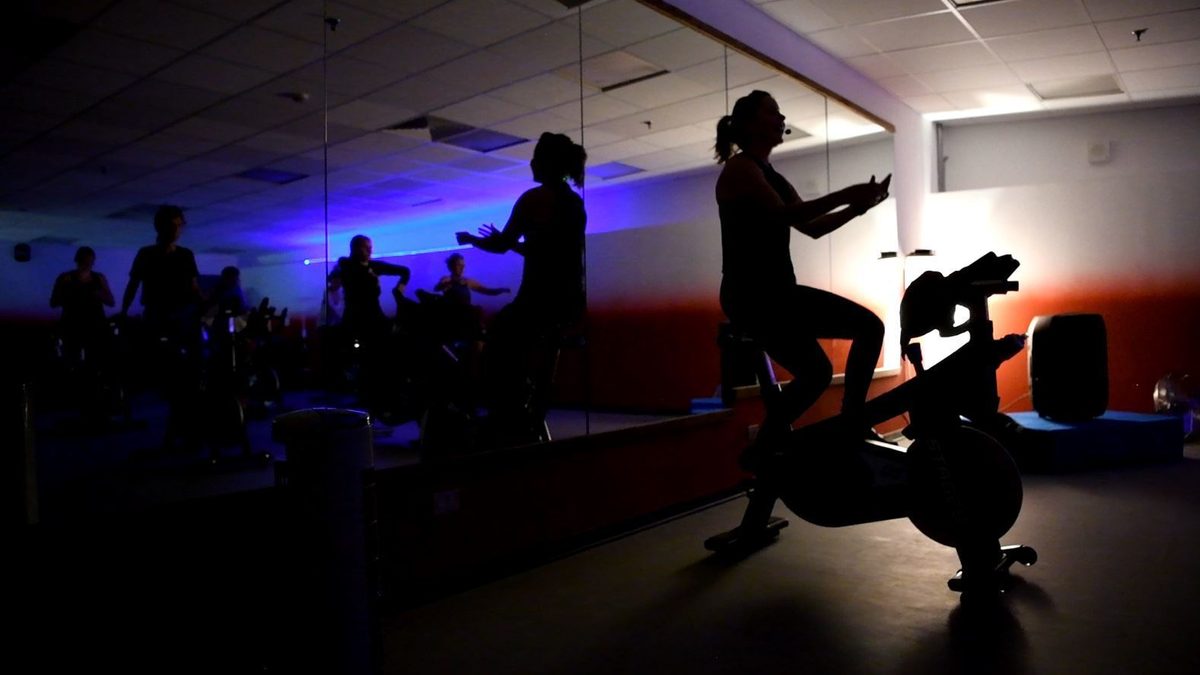
- Ederle Gym spin cycle class, Caserma Ederle, Vicenza, 2020Wikimedia Commons · The image, public domain (US Army)
General information, not medical advice. Time-restricted eating is not suitable for everyone: people with diabetes on insulin or other glucose-lowering medicines, anyone who is pregnant or breastfeeding, and anyone with a history of eating disorders should talk to their doctor first. Most trials here were short and small, in otherwise healthy adults.
Analysis by NutroPractic from the sources listed. Written for general readers; it does not replace advice from your own doctor.
From our articles
Our guides on this subject
Plain-language guides on nutrition and wellness, backed by research.
Nutrition science
Intermittent fasting and time-restricted eating: what the head-to-head trials found
When trials give an eating window and plain calorie cutting the same calories, weight, blood sugar and cholesterol end up in much the same place. The window works by helping some people eat less. What the trials found, early versus late windows, the muscle catch, who shouldn't fast, and a 12-hour default.
30 Oct 2026

Women's health
Inositol for PCOS: the 40:1 ratio, trial doses, and food milligrams
Why do randomized trials in polycystic ovary syndrome prioritize the 40:1 myo to D-chiro inositol ratio? Here is the science behind the ovarian epimerase paradox, clinical ovulation and insulin metrics, and why cantaloupe cannot replace 4,000 mg trial powder.
21 Nov 2026

Everyday eating
Extra virgin olive oil polyphenols: the EU health claim, smoke point myths, and cooking stability
Does extra virgin olive oil degrade when cooked? What does the EU 5 mg polyphenol health claim require, how does oleocanthal act like ibuprofen, and why does oxidative stability matter more than smoke point in domestic frying? Here is the clinical and culinary data.
21 Nov 2026
Newsfeed for your website
Want this feed on your website?
Add it to any site with one copy-and-paste snippet. No sign-up, and it updates itself every hour.
Start with a virtual consultation
Tell Dr. Triveni what you want to change. You will leave with a clear next step, whether you are in Toronto, London, New York or Chennai.