Cancer recovery · November 5, 2026
90 surgery patients got tailored nutrition plans. 66.7% hit their energy target — but the trial cannot say AI caused the difference
A clinician-reviewed system produced more detailed, individual discharge advice after gastric or colorectal cancer surgery. Intake and symptoms improved at 30 days; weight, blood markers and complications did not.
Going home after stomach or bowel cancer surgery can turn eating into a calculation: the body needs enough energy and protein, while appetite, nausea and a changed digestive tract may make ordinary meals difficult. A single-centre trial published on 29 October 2026 tested whether a highly tailored discharge plan could make those targets easier to reach.
Researchers in China randomly assigned 90 adults after laparoscopic gastric or colorectal cancer surgery to two groups. Standard care received the hospital's usual general dietary advice. The other group received an individual plan generated with a structured Analysis–Blueprint–Concrete Plan prompt and then reviewed by a clinician. It used the person's operation, laboratory results and food preferences, set quantified targets and laid out a phased plan for eating at home.
At 30 days, 30 of 45 people in the tailored-plan group — 66.7% — reached at least 90% of their energy target, compared with 18 of 45, or 40.0%, after standard advice. The odds ratio was 3.0, with a 95% confidence interval from 1.3 to 7.1. Protein adequacy, defined as at least 1.2 grams per kilogram per day, was also more common: 62.2% versus 35.6%.
Those are useful behavioural outcomes, not proof of better recovery. Average weight loss was similar in the two groups, as were changes in albumin and haemoglobin. Complications also did not clearly differ: the paper's results text reports 20.0% versus 22.2%, with a wide confidence interval. Thirty days is too short, and 90 people too few, to establish effects on longer-term nutrition, readmission or survival.
Participants given tailored plans reported less fatigue, nausea or vomiting, appetite loss and overall gastrointestinal symptoms. The plans were rated more complete, individual and actionable, and provider time averaged 8.2 minutes rather than 12.5 minutes. But the comparison bundled several changes together: longer written advice, quantified goals, individualisation, a structured prompt and clinician review. Standard care did not receive an equally detailed human-written plan.
That design is the most important caveat. The trial tested a package supported by one language model; it did not isolate the model's contribution and cannot show that automated advice is better than a dietitian delivering the same detail. The plans were also reviewed by a clinician, and the study excluded people with severe malnutrition or major organ dysfunction. After gastrointestinal cancer surgery, nutrition advice should stay tied to the operation, symptoms, laboratory results and clinical team — not to an unsupervised chatbot.
What happened by day 30
90
Adults randomized after laparoscopic gastric or colorectal cancer surgery
66.7% vs 40.0%
Reached at least 90% of their energy target, tailored plan versus standard advice
OR 3.0
Odds of energy adequacy; 95% CI 1.3–7.1
62.2% vs 35.6%
Reached at least 1.2 g/kg/day of protein
−2.1% vs −2.5%
Average weight change from discharge; no clear between-group difference
20.0% vs 22.2%
Postoperative complications in the paper's results text; no clear difference
8.2 vs 12.5 min
Average provider time per patient
30 days
Follow-up period — too short for long-term clinical conclusions
The intervention was a multicomponent package: model-generated advice from a structured prompt, individual clinical and cultural details, quantified targets, a written plan and clinician review. The control received generic standard advice, so the study cannot attribute the result to AI itself. Energy and protein adequacy were intermediate outcomes based on reaching pre-set intake targets.
- The energy target was 25–30 kilocalories per kilogram of discharge weight per day; adequacy meant reaching at least 90% of it.
- Protein adequacy was set at 1.2 grams per kilogram per day, not simply at eating more protein than before surgery.
- The tailored documents averaged 845 words, compared with 310 words for standard discharge handouts — a substantial difference in the amount of information delivered.
- Clinicians reviewed the generated advice before it reached patients; the trial did not test unsupervised automated nutrition advice.
- Accuracy and safety ratings did not clearly differ between groups even though completeness, individualisation and actionability ratings favoured the tailored plans.
- People with severe preoperative malnutrition, emergency surgery, major organ failure or cognitive impairment were excluded, limiting how widely the result can be applied.
- AI-facilitated individualized nutritional guidance with ABC-structured prompts improves short-term dietary intake adequacy and patient-reported symptoms after gastrointestinal cancer surgery: a randomized controlled trialSupportive Care in Cancer, 29 October 2026 · Primary randomized trial; design, eligibility, intake thresholds, 30-day results, process measures and limitations checked against the full open-access paper.
- Chinese Clinical Trial Registry record ChiCTR2500111035Chinese Clinical Trial Registry · Prospective registration identifier and study record cited by the paper.
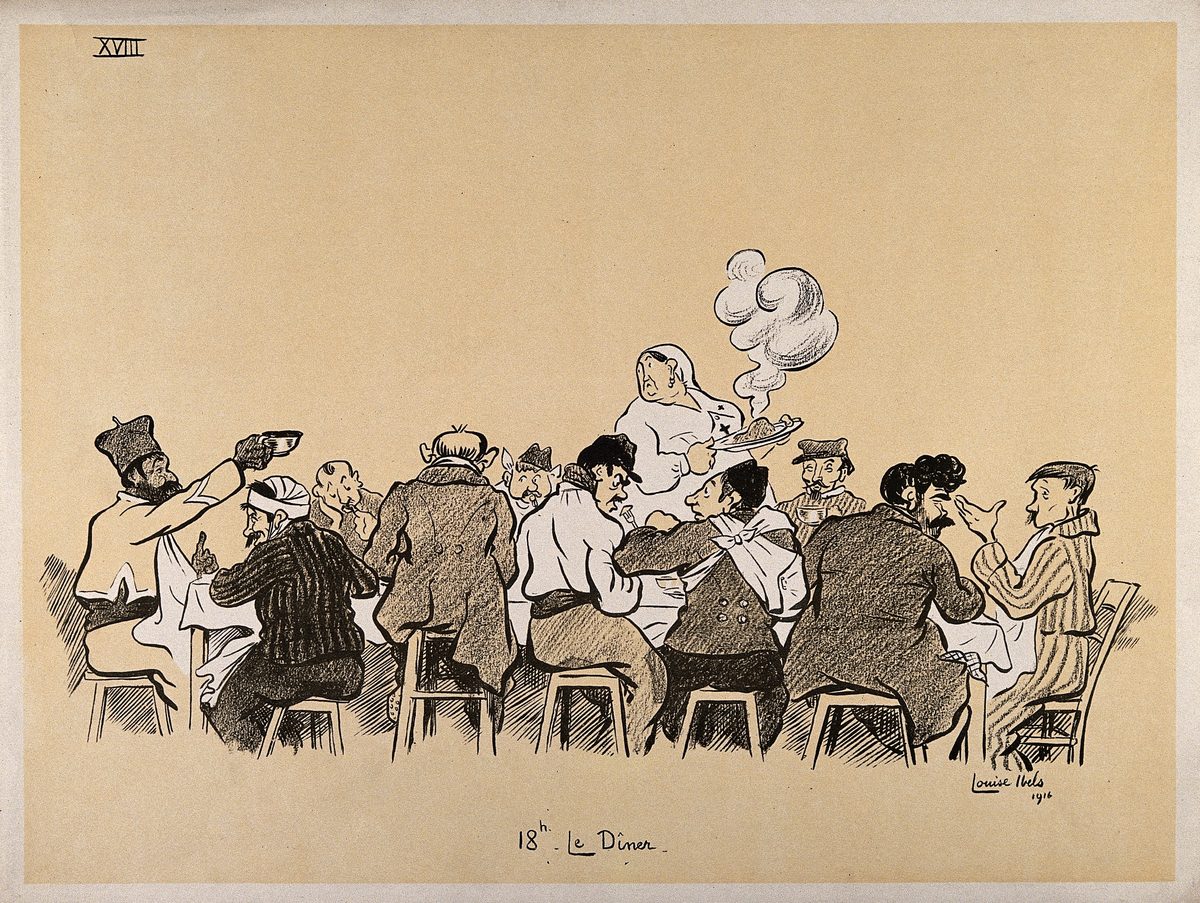
- Hospital patients seated at the dinner table as a nurse brings foodWellcome Collection / Wikimedia Commons · 1916 colour lithograph after Louise Catherine Ibels, licensed CC BY 4.0; used as a general historical illustration and cropped and resized.
General information, not medical advice. This small, short trial tested a clinician-reviewed package after specific cancer operations; it does not validate unsupervised automated diet advice or prove better long-term recovery. Nutrition after gastrointestinal surgery must be individualized by the surgical and dietetic team, especially when there is weight loss, vomiting, dehydration, trouble swallowing or signs of malnutrition.
Analysis by NutroPractic from the sources listed. Written for general readers; it does not replace advice from your own doctor.
From our articles
Read, then eat a little better
Plain-language guides on nutrition and wellness, backed by research.

Diabetes
Pasta and blood sugar: al dente, cooled and reheated, and what the glucose tests measured
Head-to-head tests found little gap between 5 and 15 minutes of boiling. Chilling and reheating ranged from no change to a large drop. Moving from 80 g to 150 g adds 50 g of carbs. The tests, the sums, and legume and whole-wheat pastas per 100 g.
4 Nov 2026

Lifestyle
Energy drinks: caffeine, sugar and taurine per can, and what the emergency-visit and heart-rhythm studies found
From 80 mg to 300 mg of caffeine, and up to 55 g of sugar in one can. The numbers by brand, what they mean for a 50 kg teenager, what the QT and blood pressure trials measured, the old emergency-visit data and England's coming under-16 ban.
4 Nov 2026
Everyday eating
Fruit juice and smoothies for children and adults: how much counts, and what the AAP and NHS limits are based on
None under 1, 120 ml at 1 to 3, 150 ml for British adults, 250 ml for older Indian children. The limits side by side, sugar per glass against whole fruit, what the cohort studies on weight and diabetes found, and why smoothies are a closer call.
3 Nov 2026
Newsfeed for your website
Want this feed on your website?
Add it to any site with one copy-and-paste snippet. No sign-up, and it updates itself every hour.
Start with a virtual consultation
Tell Dr. Triveni what you want to change. You will leave with a clear next step, whether you are in Toronto, London, New York or Chennai.