Teen health · October 27, 2026
In 52,735 rural Chinese teenagers, those who had sugary drinks more than five times a week were about a fifth more likely to report lasting emotional or behaviour problems. Short sleep showed a bigger gap
A survey across 60 village secondary schools in five Chinese provinces, published on 26 October, set frequent sugary drinks and a waist-heavy body shape against a 15-question mental health screen. Both lined up with more symptoms, and together the odds more than doubled in one group. But the combined numbers don't climb in a straight line, and teenagers sleeping under six hours stood out more than any drink.
Most research on teenagers, sugary drinks and mental health comes from cities. A team led from the Physical Education College of Shanghai University went to the countryside instead. In the 2024–2025 school year they surveyed 52,735 students aged 12 to 18, all from rural families, at 60 secondary schools in Guangdong, Heilongjiang, Xinjiang, Anhui and Henan. The paper was published on 26 October in Frontiers in Nutrition.
Each student filled in a food frequency questionnaire and a 15-item screen for psychological symptoms covering emotional problems, behaviour problems and difficulty fitting in socially. An item counted if it had lasted at least a month in the past six months, and seven or more such items was taken as having psychological symptoms. Staff also measured height, weight and waist, and worked out each student's A Body Shape Index (ABSI), a figure that weighs waist size against overall build to pick out fat carried around the middle, even in children whose BMI looks normal.
Overall, 21.8% of the students screened positive, slightly more boys (22.5%) than girls (21.2%), the reverse of what most earlier studies have found. One in seven (14.5%) had sugary drinks more than five times a week, and 25.6% of them screened positive, against 20.5% of those who had them less than twice a week. After allowing for age, parents' schooling, how students got to school, a standing long jump test of fitness, snacking and sleep, the odds were 21% higher in the most frequent drinkers. Drinking three to five times a week showed no difference. Students in the top quarter of ABSI for their age and sex had 23% higher odds than the bottom quarter.
The headline figure comes from putting the two together. Frequent drinkers in the second-highest quarter of ABSI had 2.4 times the odds of symptoms of infrequent drinkers with the slimmest waists. The grid doesn't rise evenly, though: frequent drinkers in the very top ABSI quarter came out at 1.8, lower than infrequent drinkers in that same quarter (1.9). The authors say themselves that this combined table describes the groups and is not a test of whether the two factors work together.
Several things limit what this can show. It is a single snapshot, so it cannot tell whether drinks affect mood or whether teenagers who are struggling reach for sweet drinks. Everything except body measurements was self-reported. The study had no data on physical activity, screen time, family income, caffeine, smoking or alcohol, all of which travel with both soft drinks and mental health, and the models didn't account for students in the same school being alike, which makes the results look more precise than they are. Note also how short sleep stood out in the raw figures: 33.6% of students sleeping under six hours a night screened positive, against 17.7% of those sleeping eight hours or more. The study is a reason to keep sugary drinks occasional for many reasons, not evidence that cutting them will lift a teenager's mood.
Sugary drinks, waist-weighted body shape (ABSI) and psychological symptoms in rural Chinese adolescents aged 12–18 (Frontiers in Nutrition, 26 October 2026)
52,735
Students from rural families at 60 secondary schools in five provinces, surveyed in the 2024–2025 school year (26,043 boys)
21.8%
Screened positive for psychological symptoms (boys 22.5%, girls 21.2%)
25.6% vs 20.5%
Screened positive among students having sugary drinks more than 5 times a week vs fewer than 2 times
+21%
Adjusted odds of symptoms, more than 5 times a week vs fewer than 2 (OR 1.21, 95% CI 1.13 to 1.30); 3 to 5 times a week showed no difference (OR 1.02)
+23%
Adjusted odds, top vs bottom quarter of ABSI for age and sex (OR 1.23, 95% CI 1.16 to 1.31)
2.40×
Highest combined odds: more than 5 drinks a week and the second-highest ABSI quarter, vs fewer than 2 and the lowest quarter (95% CI 2.10 to 2.73)
33.6% vs 17.7%
Screened positive with under 6 hours of sleep vs 8 hours or more (unadjusted)
Cross-sectional survey analysed with logistic regression, adjusted for age, father's and mother's education, mode of travel to school, standing long jump, snack frequency and sleep duration. Drinks and symptoms were self-reported; height, weight and waist were measured. Symptoms were taken as 7 or more of 15 items lasting at least a month in the past six months. No adjustment for physical activity, screen time, income, caffeine, smoking or alcohol, and no allowance for clustering within schools. Figures from the open-access full text (CC BY).
- A Body Shape Index was proposed in 2012 by the US researchers Nir and Jesse Krakauer, who found it predicted risk of death in US adults independently of BMI.
- The study's questionnaire asked about both sugar-sweetened drinks and sugar-free soft drinks; the paper doesn't spell out whether diet drinks were counted in the totals.
- Students who snacked least (under twice a week) had the highest raw rate of symptoms, 26.2%, against about 20% in those who snacked more often.
- The paper cites a global estimate that people drank an average of 2.6 eight-ounce cups of sugary drinks a week in 2020, ranging from 7.3 in Latin America and the Caribbean to 0.7 in South Asia.
- Students absent on the survey day weren't counted, so the 99.4% 'valid' figure describes completed questionnaires, not how many pupils took part.
- A cross-sectional study on the associations between sugar-sweetened beverage consumption, a body shape index, and psychological symptoms among rural Chinese youthFrontiers in Nutrition · The study, open access (CC BY), published 26 October 2026; Tables 2, 4 and 5 give the raw rates, the separate odds ratios and the combined grid
- A New Body Shape Index Predicts Mortality Hazard Independently of Body Mass IndexPLOS ONE · The 2012 paper that introduced ABSI
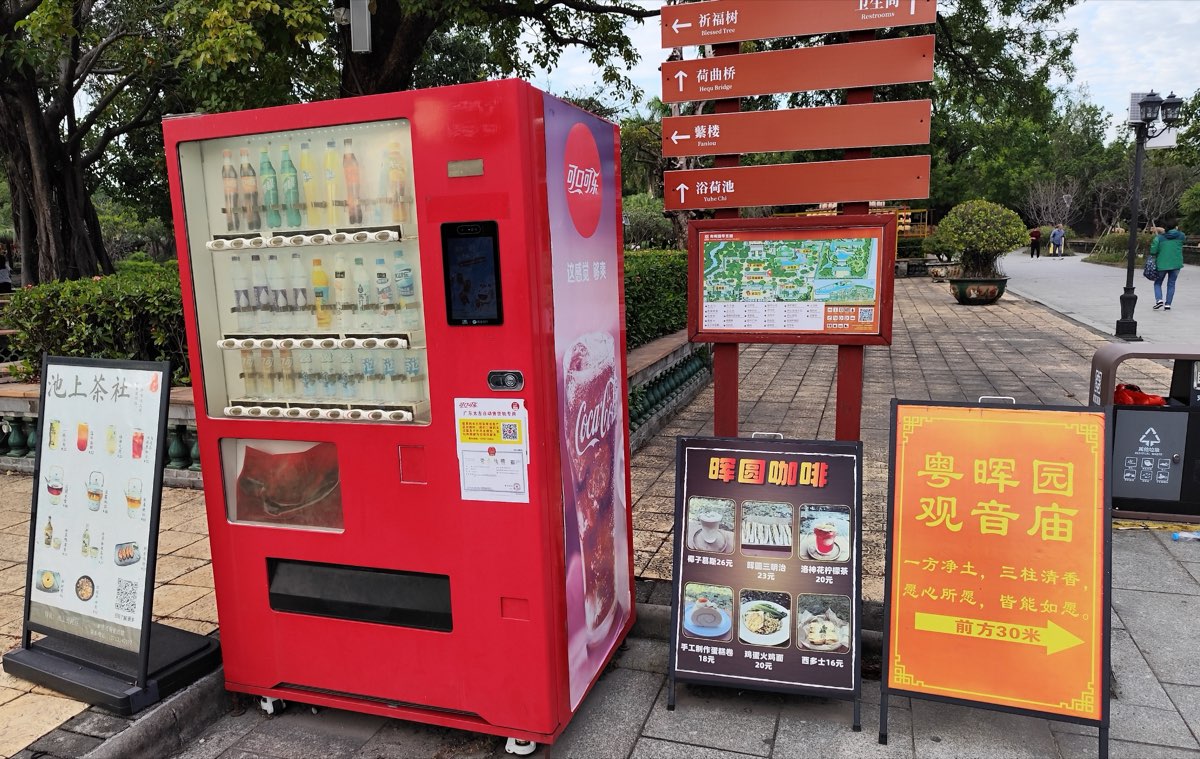
- Yuehui Garden sign and beverage vending machine, Daojiao, DongguanWikimedia Commons · The image, CC0 (ONWPY WHHCALIO 50028)
General information, not medical advice. This survey shows an association, not cause and effect, and it says nothing about any one teenager. If a young person's low mood, worry, behaviour or sleep has been a problem for weeks, talk to a doctor or school counsellor. For changes to a child's diet, talk to your doctor, paediatrician or a registered dietitian.
Analysis by NutroPractic from the sources listed. Written for general readers; it does not replace advice from your own doctor.
From our articles
Our guides on this subject
Plain-language guides on nutrition and wellness, backed by research.
Supplements and vitamins
Glycine before bed: the 3 g sleep trials, what they measured, and glycine in gelatin, bone broth and collagen
The 3 g dose comes from small Japanese trials: the sleep-restriction study analysed seven men. Here is what each trial measured, the grams of gelatin, collagen, pork rinds and bone broth that hold 3 g, and the clozapine warning.
17 Nov 2026
Botanicals and sleep
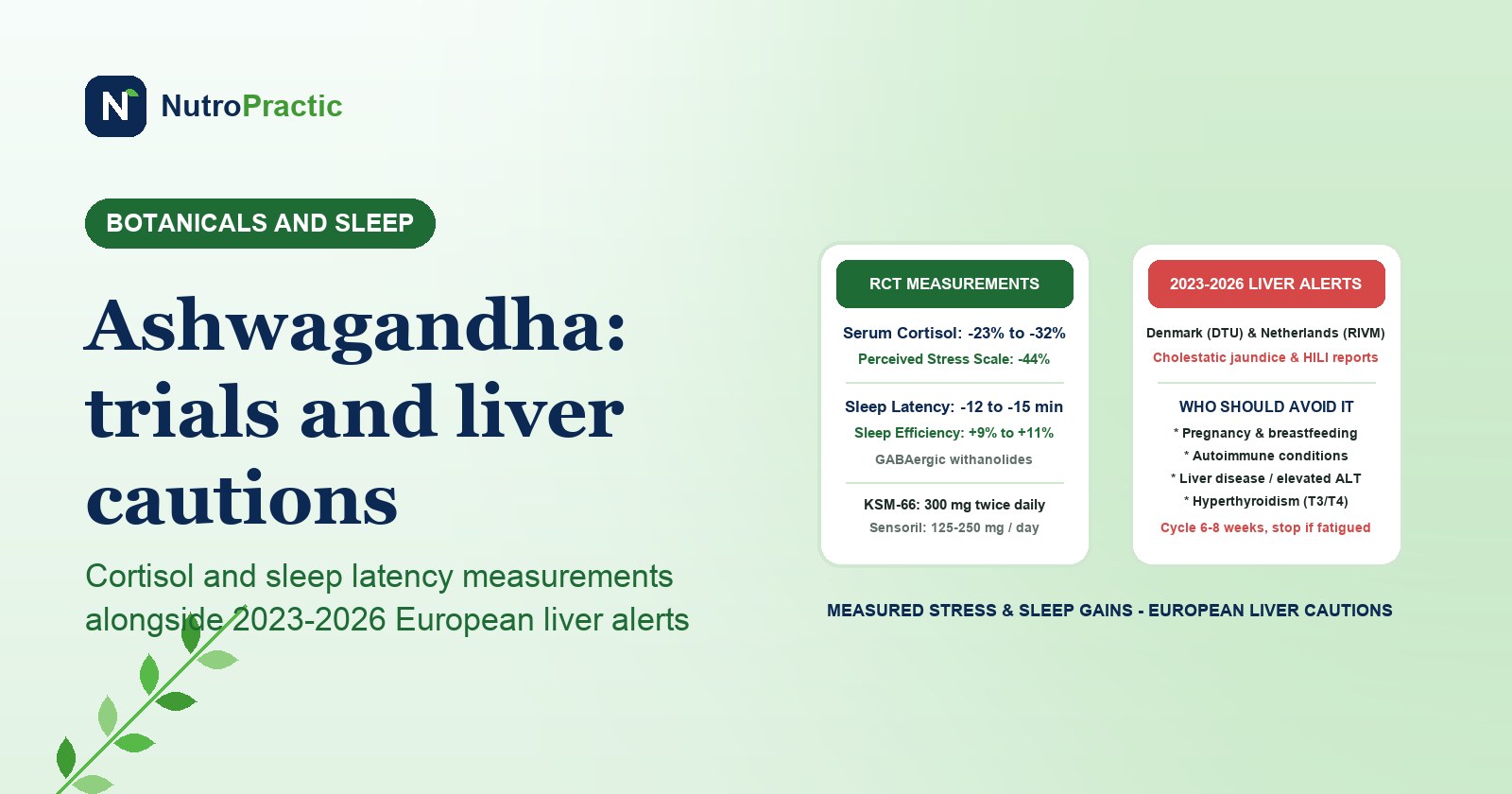
Ashwagandha for stress and sleep: what the randomised trials measured, and liver safety cautions
Standardized Ashwagandha extracts reduce serum cortisol by 23% to 32% and shorten sleep latency by 12 to 15 minutes in double-blind clinical trials. Yet 2023-2026 health alerts from Danish and Dutch authorities highlight serious herb-induced liver injury risks. Discover what the trials measured, extract differences (KSM-66 vs Sensoril), and who should strictly avoid it.
14 Nov 2026
Food and nutrition
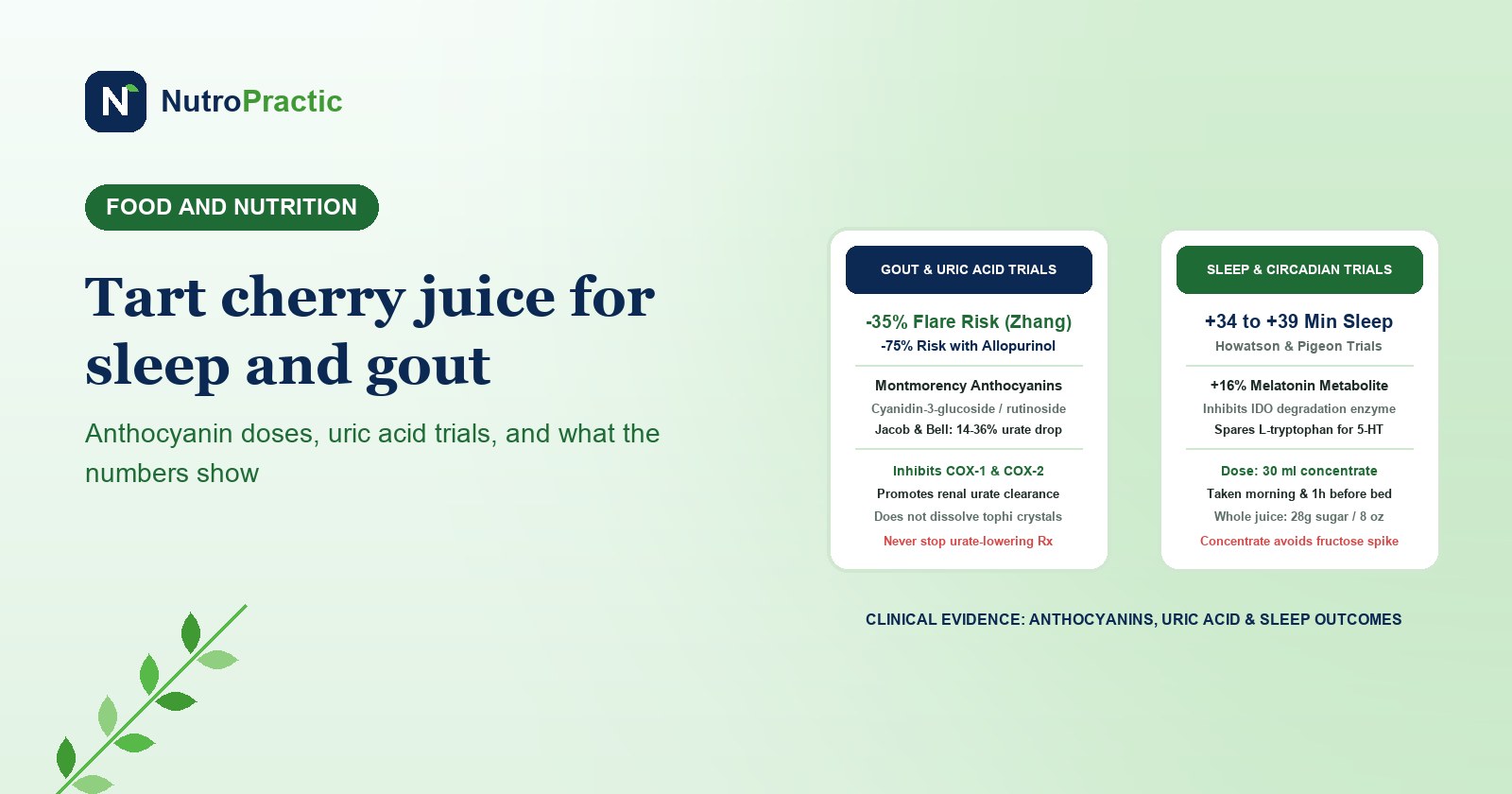
Tart cherry juice for sleep and gout: anthocyanin doses, uric acid trials, and what the numbers show
Tart cherry juice (Prunus cerasus, Montmorency) is frequently promoted as a natural remedy for insomnia and recurrent gout attacks. Clinical trials demonstrate measurable reductions in serum uric acid and acute flare frequency (including a 35% reduction in 2-day gout attack risk and up to 75% when paired with allopurinol), alongside a 34-to-39 minute increase in sleep duration. Discover the biochemical mechanisms of anthocyanins (cyanidin-3-glucoside), the tryptophan-sparing pathway, dosing protocols (30 ml concentrate vs 8 oz juice), sugar trade-offs, and why tart cherry cannot replace prescription urate-lowering therapy.
13 Nov 2026
Newsfeed for your website
Want this feed on your website?
Add it to any site with one copy-and-paste snippet. No sign-up, and it updates itself every hour.
Start with a virtual consultation
Tell Dr. Triveni what you want to change. You will leave with a clear next step, whether you are in Toronto, London, New York or Chennai.