Hydration · November 1, 2026
After a sweaty workout, salty drinks held on to water better than plain water. Sugar-free or sugary? A trial in 20 adults could not settle it, and the drinks' maker paid for it
Twenty people sweated off almost 2% of their body weight, then drank as much as they liked for four hours. Plain water was the drink their bodies kept least of. Whether the sugar mattered is the part the study could not settle, and the authors say so themselves.
Drinking after exercise is not the same as rehydrating. Much of a large drink of plain water can come straight back out as urine within a few hours, which is why oral rehydration solutions carry more salt than most sports drinks. Newer powders promise the same effect without the sugar. A crossover trial at Arizona State University's Hydration Science Lab, published in Nutrients on 30 October, put one of them up against a sugar-sweetened version and plain water.
Twenty recreationally active adults, 11 men and 9 women with an average age of 26, came in on three separate mornings. Each time they walked and cycled in a 31 °C room for up to two hours, until they had lost about 1.8% of their body weight in sweat. Then they had four hours to recover: 500 mL of the drink of the day in the first five minutes, and after that as much as they wanted. One drink had 26 g of glucose and sucrose per litre. The sugar-free one was sweetened with allulose, a rare sugar with almost no calories, and had the amino acids glutamine and alanine added. Both carried similar sodium, around 46 to 49 mmol per litre. The third was plain bottled water.
Four hours later, people had kept 24.8% of the water they drank, against 46.6% of the sugar-free drink and 39.7% of the sugary one; both salty drinks beat water. On the scale, the sugar-free drink had won back 0.83% of body weight against 0.16% for water, a gap the authors put at roughly 470 g for a 70 kg adult. The sugary drink's 0.49% was not clearly better than water. People drank a little more of both salty drinks than of water (1.8 to 1.9 litres against 1.6), but that difference could have been chance. Nobody was fully rehydrated by the end, whatever they drank.
The comparison many readers will care about, sugar against no sugar, is where the study goes quiet. Apart from less urine at the three-hour mark with the sugar-free drink, the two came out statistically level. The trial was sized to compare a salty drink with water, and the authors warn that 'no difference' between the two powders should not be read as proof they are equal. The drinks were also commercial products, Liquid I.V. Hydration Multiplier and its sugar-free version, and the company funded the study. The researchers could not tell whether allulose, the amino acids or the mix made the difference, and they did not measure either in the blood. They also point out that most people eat after exercise, and food changes how a drink is handled; the results matter most when eating is impractical, such as between back-to-back sessions.
Four hours of drink-as-you-like rehydration after losing about 1.8% of body weight in the heat: sugar-free electrolyte drink, sugar-sweetened electrolyte drink and plain water, 20 adults (Nutrients, 30 October 2026)
20 adults
11 men and 9 women, average age 26, who trained at least twice a week; each tried all three drinks, 1 to 4 weeks apart
24.8% / 46.6% / 39.7%
Share of the fluid drunk still in the body after 4 hours: water, sugar-free drink, sugary drink. Both salty drinks beat water (p < 0.05)
+0.16% vs +0.83%
Body weight regained after 4 hours, water against the sugar-free drink (p = 0.011); the sugary drink reached +0.49%, not clearly different from water
1.60 / 1.83 / 1.92 L
Total drunk over 4 hours, including the first 500 mL: water, sugar-free, sugary. Differences not significant (p = 0.087)
753 vs 976 mL
Urine passed by the 3-hour mark, sugar-free against sugary drink (p = 0.035); by 4 hours the gap was no longer significant
About 49 g
Sugar people took in from the sugary drink during recovery; the sugar-free drink gave about 73 kcal and no sugar
Randomised crossover trial, registered before recruitment (NCT06414291); participants did not know which electrolyte drink they had. Sugary drink: 26 g/L glucose and sucrose, 49 mmol/L sodium. Sugar-free drink: about 8 g/L allulose, about 8 g/L L-glutamine plus L-alanine, 46 mmol/L sodium. Funding and interests from the paper: the study was funded by a grant from Liquid I.V., maker of both electrolyte drinks; one author was the company's contact for the study (no longer with it); the senior author lists research grants and consulting for several beverage and food companies, including Liquid I.V., and owns a hydration business. The paper says the sponsor had no role in the design, analysis or writing.
- Plain water was rated less pleasant to drink than the sugar-free electrolyte drink. Earlier studies have found that people drink more after exercise when a drink is flavoured and sweetened.
- Allulose is about 70% as sweet as table sugar but provides almost no energy. Much of what the gut absorbs leaves the body in urine, which the authors suggest may help explain the result, though they did not test it.
- Most sports drinks carry 20 to 30 mmol of sodium per litre. Studies cited in the paper suggest more than 40 mmol is needed to make a clear difference to how much fluid the body keeps compared with water.
- Every drink was spiked with a tiny dose of heavy water (deuterium oxide) so the researchers could trace it into the blood. Because people sipped at their own pace, the authors say this part of the results should be read with caution.
- The 49 g of sugar from the sugary drink is more than the American Heart Association's daily limit on added sugar, the authors note.
- Novel Allulose- and Amino Acid-Containing Sugar-Free Electrolyte Beverage Improves Body Water Restoration in Ad Libitum Rehydration Following Exercise-Induced DehydrationNutrients, 30 October 2026 · Open-access trial (CC BY): methods, results, limitations, funding and conflicts of interest.
- Trial registration NCT06414291ClinicalTrials.gov · Registered before recruitment, as the paper reports.
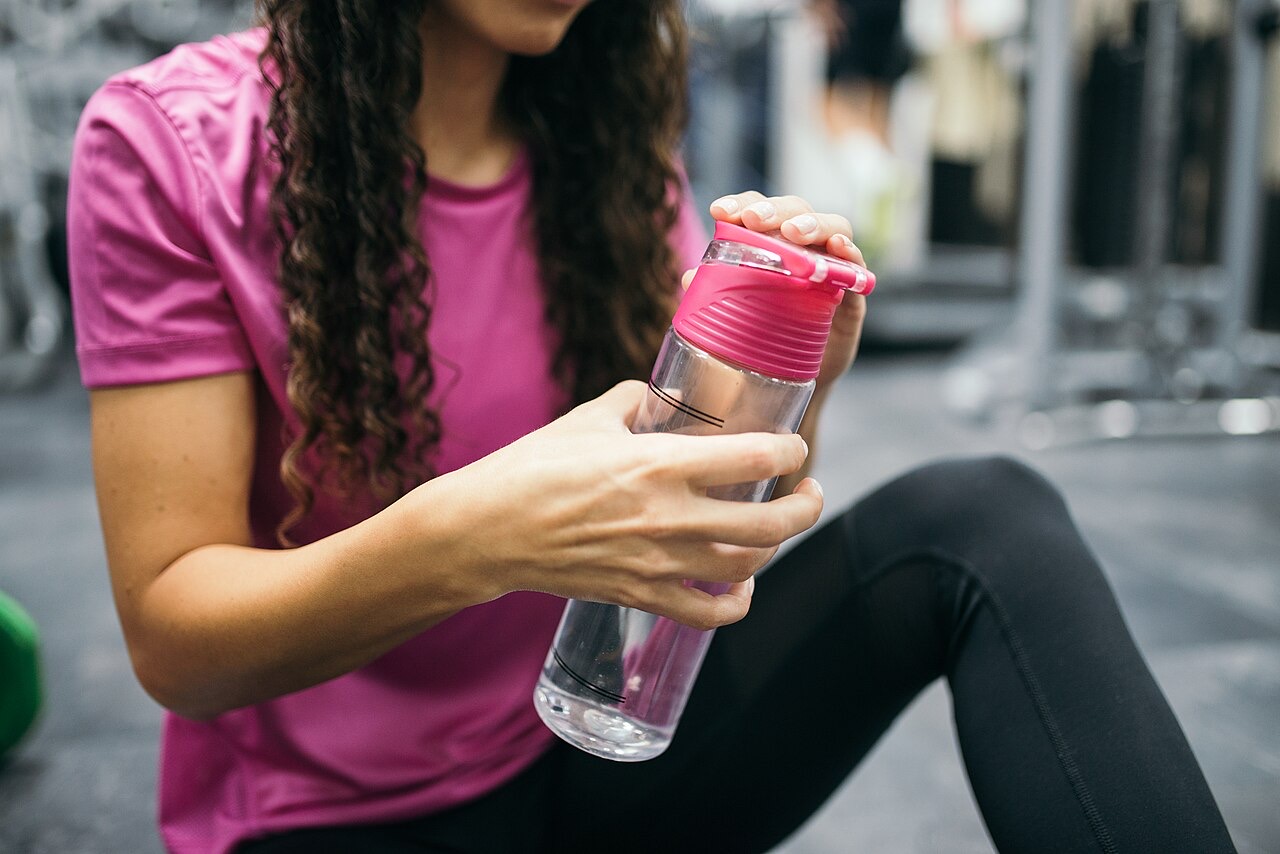
- Woman with curly hair sits on a gym floor, preparing to take a sip from her water bottleWikimedia Commons · Photograph by Shixart1985, CC BY 2.0, used as a general illustration.
General information, not medical advice. This was a small, industry-funded study in healthy young adults after mild dehydration, and it does not show which drink is right for you. If you have heart, kidney or blood pressure problems, are on a low-salt diet, or take medicines that affect fluid or salt balance, ask your doctor before using electrolyte drinks regularly. For dehydration from illness such as diarrhoea, follow medical advice.
Analysis by NutroPractic from the sources listed. Written for general readers; it does not replace advice from your own doctor.
From our articles
Our guides on this subject
Plain-language guides on nutrition and wellness, backed by research.
Nutrition science
Sweeteners after the WHO advice: aspartame, stevia, erythritol and what the 2023 decisions meant
In 2023 the WHO advised against using sweeteners to control weight, and its cancer agency called aspartame 'possibly carcinogenic' a few weeks later. Neither means your diet drink is dangerous, and neither means it helps. What the reviews found, how much is allowed, why erythritol is the one to watch, and what to do if you have diabetes or simply want less sugar.
18 Oct 2026
Diabetes
Potatoes and blood sugar: boiled, cooled, mashed or fried, and what the cohorts and trials found
Fries were linked to 20% higher diabetes risk per three servings a week in 205,000 US adults; boiled, baked and mashed potatoes to almost none. GI by cooking method, resistant starch in grams after chilling, the glycaemic load of a potato against a cup of rice, and how to fit aloo into an Indian plate.
30 Oct 2026
Children's nutrition
Picky eaters aged 2 to 8: what feeding studies show works at the table
Fussy eating peaks between two and six and is usually a normal stage, not a parenting failure. Feeding trials show what moves it: small repeated tastes, eating together, no pressure and the right kind of reward. Here is how to use them, and the signs that mean it's more than picky eating.
30 Oct 2026
Newsfeed for your website
Want this feed on your website?
Add it to any site with one copy-and-paste snippet. No sign-up, and it updates itself every hour.
Start with a virtual consultation
Tell Dr. Triveni what you want to change. You will leave with a clear next step, whether you are in Toronto, London, New York or Chennai.