Social eating · October 31, 2026
Canadians over 45 who stayed socially isolated were more likely to stop eating fruit every day, and income changed who was hit hardest
Researchers followed 11,900 Canadian adults aged 45 and over who all ate fruit or vegetables daily at the start. About six years later, those whose social lives had stayed narrow or isolated were more likely to have dropped daily fruit. The links were uneven: they showed up most strongly in women with higher incomes, not only in people with less money.
Eating fruit and vegetables every day is one of the simplest markers of a good diet in later life, yet more than half of older Canadians do not reach the recommended five or more times a day. Earlier studies have linked social isolation with poorer diets, but they mostly gave an average answer for everyone. A team at the University of British Columbia, with colleagues at the University of Waterloo and BC Cancer, asked a sharper question: when people's social lives change in mid and later life, whose diet suffers, and does that depend on income, education and gender?
Their study, published on 18 October in the journal Nutrients, used three rounds of the Canadian Longitudinal Study on Aging: 2011 to 2015, 2015 to 2018 and 2018 to 2021. It included 11,900 adults aged 45 and over (average age 62, about 61% women) who all reported eating fruit or vegetables at least once a day at the start. Social life was measured by how many of eight types of social activity each person took part in at least once a month. One activity or none counted as socially isolated; five or more counted as diverse social participation. The researchers tracked how these changed between the first and second rounds, then checked who had lost daily fruit or daily vegetable intake by the third round, on average about 70 months after the start.
Staying socially isolated was linked with losing daily fruit intake in several groups. The odds were about 1.9 times higher in women with lower incomes and 1.8 times higher in men with lower incomes, compared with people of the same gender and income group who stayed socially connected. Among women with higher incomes the odds were 7.6 times higher, but that figure rests on just 21 women, 10 of whom stopped eating fruit daily, so it is very uncertain. Keeping a narrow social life (fewer than five regular activities) was linked with losing daily fruit in women and men in both income groups, with odds 1.4 to 1.7 times higher. For vegetables, the clearest link was in higher-income women who kept a narrow social life, with 43% higher odds of losing daily vegetable intake.
The authors had expected people with less money to be the most vulnerable, and that was only partly true. Income changed the picture mainly for women's fruit intake, and several links were stronger among better-off women. Some results ran the other way: women with higher incomes who became more socially active, or stopped being isolated, were also more likely to drop daily fruit. Diet was recorded with a short questionnaire about how often people ate foods, not how much, and social activities were self-reported. Events such as bereavement, a house move or failing health were not measured and may lie behind both changes. The participants were 96% white, and those analysed were better educated and better off than those left out for missing data. An observational study like this shows links, not cause and effect, but the authors suggest that efforts to keep older adults eating well may need to look at social life alongside money.
Changes in social engagement and loss of daily fruit or vegetable intake, Canadian Longitudinal Study on Aging (Nutrients, 2026)
11,900
Adults aged 45 and over, all eating fruit or vegetables daily at the start
70 months
Average follow-up, from 2011-2015 to 2018-2021
8
Types of social activity counted; 0 or 1 a month = isolated, 5 or more = diverse
OR 1.91
Odds of losing daily fruit, lower-income women who stayed isolated (95% CI 1.06 to 3.45)
OR 1.76
Odds of losing daily fruit, lower-income men who stayed isolated (95% CI 1.01 to 3.09)
OR 1.43
Odds of losing daily vegetables, higher-income women who kept a narrow social life (95% CI 1.15 to 1.77)
Odds ratios compare each group with people of the same gender and income group who stayed socially connected or socially diverse. Higher income meant a household income of at least C$100,000 for ages 45 to 64 and at least C$50,000 for ages 65 and over. The study was observational and diet was self-reported as how often foods were eaten.
- The researchers set a different income cut-off for people aged 65 and over, because household income usually drops after retirement.
- In 2024, about one in four older Canadians said they felt isolated at least some of the time, according to figures the authors cite.
- The diet questionnaire used in the study asks one question about fruit and four about vegetables: green vegetables, potatoes, carrots and other vegetables.
- The full Canadian Longitudinal Study on Aging group the researchers drew on, its Comprehensive Cohort, includes 30,097 community-dwelling adults aged 45 and over.
- Social isolation, having few regular contacts, is not the same as loneliness, the feeling of being alone: a person can have many contacts and still feel lonely, or few and feel content.
- Whose Diet Suffers When Social Ties Change? Inter-Related Socioeconomic and Gender Inequalities in the Canadian Longitudinal Study on Aging CohortNutrients (MDPI) · Original study, published 18 October 2026, open access under CC BY 4.0
- Full text, PMC13708564PubMed Central, US National Library of Medicine · Methods, sample, follow-up, income cut-offs, odds ratios and limitations
- PubMed record PMID 42942987US National Library of Medicine · Structured abstract
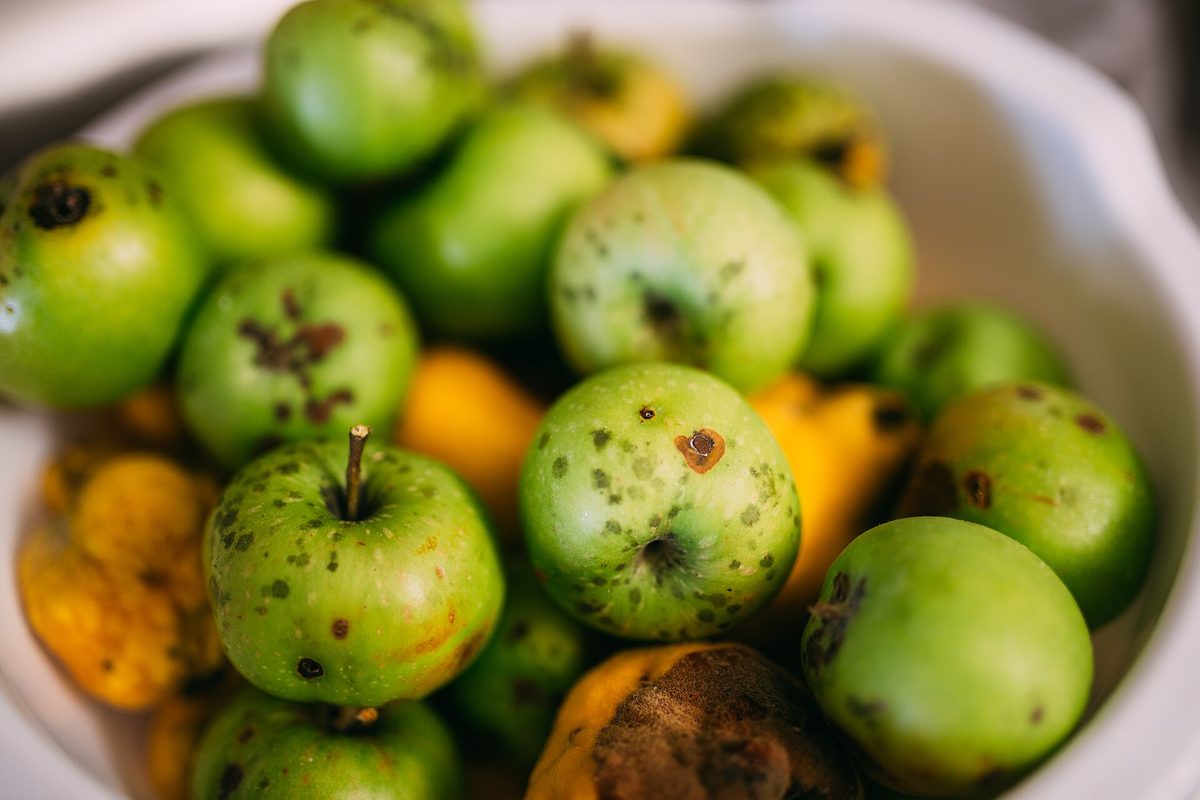
- Fresh green apples and yellow fruit in a bowl on a kitchen tableWikimedia Commons · CC BY 2.0 photograph by Shixart1985 used as a general illustration
General information, not medical advice. This observational study shows links between social life and fruit and vegetable intake, not that one causes the other. If you are worried about your own or a family member's eating, appetite or isolation, talk with your doctor or a registered dietitian.
Analysis by NutroPractic from the sources listed. Written for general readers; it does not replace advice from your own doctor.
From our articles
Read, then eat a little better
Plain-language guides on nutrition and wellness, backed by research.
Diabetes
Potatoes and blood sugar: boiled, cooled, mashed or fried, and what the cohorts and trials found
Fries were linked to 20% higher diabetes risk per three servings a week in 205,000 US adults; boiled, baked and mashed potatoes to almost none. GI by cooking method, resistant starch in grams after chilling, the glycaemic load of a potato against a cup of rice, and how to fit aloo into an Indian plate.
30 Oct 2026
Children's nutrition
Picky eaters aged 2 to 8: what feeding studies show works at the table
Fussy eating peaks between two and six and is usually a normal stage, not a parenting failure. Feeding trials show what moves it: small repeated tastes, eating together, no pressure and the right kind of reward. Here is how to use them, and the signs that mean it's more than picky eating.
30 Oct 2026
Women's health
PCOS and food: what the diet trials show for cycles, insulin and weight
PCOS affects about one woman in ten, and most are told to "lose weight" with little else. Here is what drives it, why insulin matters even in slim women, how much weight loss brings cycles back, what the low-GI and Mediterranean trials found, what inositol and metformin do, and which tests to ask for.
30 Oct 2026
Newsfeed for your website
Want this feed on your website?
Add it to any site with one copy-and-paste snippet. No sign-up, and it updates itself every hour.
Start with a virtual consultation
Tell Dr. Triveni what you want to change. You will leave with a clear next step, whether you are in Toronto, London, New York or Chennai.