Eating disorders · October 25, 2026
309 Istanbul teenagers filled in three questionnaires: the ones who check their phone last thing at night and first thing in the morning worried more about how they look, and that worry, not the scrolling itself, went with signs of disordered eating
Seven in ten girls said their friends' opinion of their photos mattered, against under four in ten boys. A small school survey from Türkiye traces a chain from always-on social media to appearance anxiety to eating-disorder warning signs. It also shows where the chain is weakest, which matters more than the headline its authors gave it.
Between February and April 2024, dietitians from İstanbul Medeniyet University went into two randomly chosen high schools in Istanbul and asked for volunteers. Of 1,457 students, 309 took part: 146 girls and 163 boys, average age 16. Each was weighed and measured, and filled in three questionnaires face to face: one on social media habits, one on social appearance anxiety (the fear of having your looks judged by others) and a 13-question screening form for eating disorders. The results were published in Frontiers in Nutrition on 15 October.
The phones were busy. Three in four spent between one and five hours a day on social media, and about one in six spent five hours or more. WhatsApp (83%) and Instagram (81%) led, followed by TikTok (36%). The split by sex was sharpest around photos: 73% of girls said their friends' opinion of the photos they share was important to them, against 38% of boys; 18% of girls and 8% of boys used filters or effects. Snapchat, a camera-first app, was used by 37% of girls and 13% of boys. On the appearance anxiety scale, which runs from 16 to 80, girls averaged 38 and boys 31.
The social media measure that mattered was not hours. It was what the scale calls continuity: agreeing with statements such as 'I always check my social media accounts immediately before sleeping and right after waking up' and 'I remain continuously online'. Teenagers who scored higher on continuity had more appearance anxiety (a modest correlation of about 0.25), and after allowing for sex, age and mother's education, each point on that four-item scale went with about one more point of appearance anxiety. Girls scored about 6 points higher than boys, and older students slightly lower. Being good with apps, the scale's other half, had no link at all.
Appearance anxiety, in turn, tracked the eating questionnaire closely (correlation 0.46): worry about shape and weight, body dissatisfaction, restricting food, and less often bingeing or purging. Here is the detail the abstract skips. When the authors put social media continuity, appearance anxiety and body size into one model of eating-disorder risk, continuity no longer predicted anything on its own; appearance anxiety and a higher BMI-for-age did. That fits the idea that always-on use matters through how it makes teenagers feel about their looks, but the authors say plainly that they did not test that pathway.
The limits are large. It is a single snapshot, so nothing here shows which came first: anxious teenagers may simply reach for the phone more. Only one in five students in the two schools volunteered, all in one city. Depression, anxiety disorders and self-esteem, which drive both phone use and eating problems, were not measured. The eating questionnaire is a screening tool, not a diagnosis, and average scores were low; most of these teenagers rarely binged and almost never purged. The paper also gives two different sets of figures for how much its models explain (26% and 30% in the results, 14% and 26% in the limitations). The study had no outside funding and the authors declare no conflicts.
Social media use, appearance anxiety and eating-disorder screening in Istanbul high school students (Frontiers in Nutrition, 15 October 2026)
309 of 1,457
Students in two randomly chosen Istanbul high schools who volunteered (146 girls, 163 boys, average age 16), surveyed February to April 2024
73% vs 38%
Girls vs boys who said friends' opinions of their shared photos were important to them
16%
Students on social media five hours a day or more (most, 74%, spent one to five hours)
38 vs 31
Average appearance anxiety score, girls vs boys, on a scale of 16 to 80
0.46
Correlation between appearance anxiety and the eating-disorder screening score, the strongest link in the study
Not significant
Always-on social media use as a predictor of eating-disorder risk once appearance anxiety and body size were in the model
Source: Öztürk Özkan G, Yüce MN, Karagöl B, 'Association between social media use, social appearance anxiety, and eating disorder risk in adolescents', Frontiers in Nutrition, 15 October 2026 (Tables 1 to 5). Cross-sectional survey of volunteers: it shows associations at one point in time, not cause and effect. Percentages are rounded from the paper's tables; the five-hours-or-more figure adds its 5 to 7 and 7 to 9 hour groups.
- The scale behind 'continuity' has just four statements, including checking your accounts right before sleep and right after waking. Daily hours online were asked separately and were similar for girls and boys.
- Average scores on the eating questionnaire's bingeing and purging items were close to zero (0.6 and 0.2 on a 0 to 6 scale), while body dissatisfaction averaged 2.1: worry about shape was far more common than disordered behaviour.
- Boys in the study had a higher average BMI-for-age than girls (63rd against 48th percentile), and 10% of boys were in the obesity range against 2% of girls.
- The NHS lists being criticised for your eating habits, body shape or weight, worrying a lot about being slim, anxiety and low self-esteem among the things that make an eating disorder more likely.
- Association between social media use, social appearance anxiety, and eating disorder risk in adolescentsFrontiers in Nutrition · The study, open access, with the questionnaires, tables and regression models
- Eating disorders: overviewNHS · Signs, causes and where to get help, with advice for parents
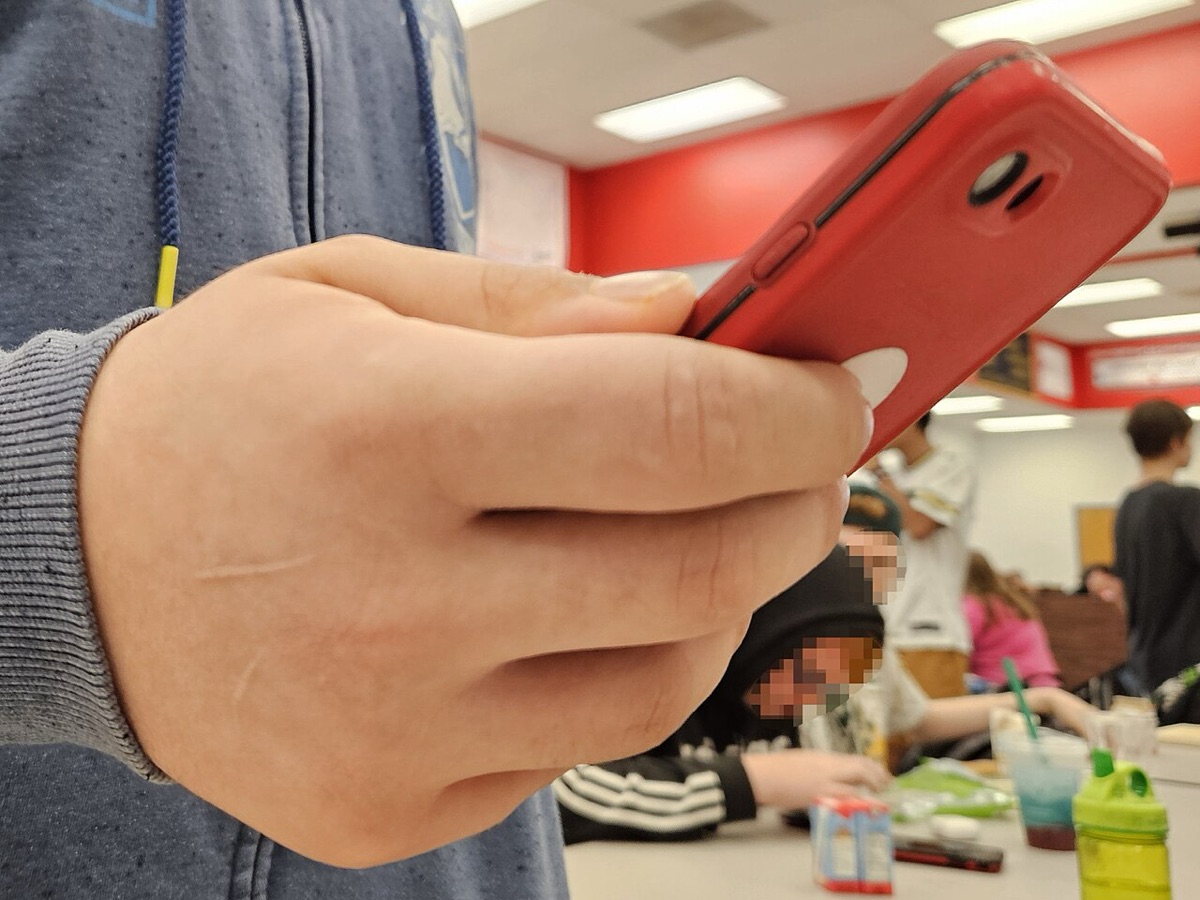
- Male Teenager Holding Red iPhoneWikimedia Commons · The photo, CC0
General information, not medical advice. This survey found associations in one group of volunteers and cannot show that social media causes eating disorders. A screening questionnaire is not a diagnosis. If you are worried about your own eating or a teenager's, talk to a doctor or an eating disorder service.
Analysis by NutroPractic from the sources listed. Written for general readers; it does not replace advice from your own doctor.
From our articles
Read, then eat a little better
Plain-language guides on nutrition and wellness, backed by research.

Women's health
Inositol for PCOS: the 40:1 ratio, trial doses, and food milligrams
Why do randomized trials in polycystic ovary syndrome prioritize the 40:1 myo to D-chiro inositol ratio? Here is the science behind the ovarian epimerase paradox, clinical ovulation and insulin metrics, and why cantaloupe cannot replace 4,000 mg trial powder.
21 Nov 2026

Everyday eating
Extra virgin olive oil polyphenols: the EU health claim, smoke point myths, and cooking stability
Does extra virgin olive oil degrade when cooked? What does the EU 5 mg polyphenol health claim require, how does oleocanthal act like ibuprofen, and why does oxidative stability matter more than smoke point in domestic frying? Here is the clinical and culinary data.
21 Nov 2026

Food and nutrition
L-theanine and caffeine: what cognitive trials measured on sustained attention, and milligrams in matcha vs green tea
Combining L-theanine with caffeine produces clean focus without caffeine jitters. Here is what randomized trials measured on attention-switching, EEG alpha brain waves, and the exact milligrams across ceremonial matcha, culinary powder, gyokuro, and sencha.
20 Nov 2026
Newsfeed for your website
Want this feed on your website?
Add it to any site with one copy-and-paste snippet. No sign-up, and it updates itself every hour.
Start with a virtual consultation
Tell Dr. Triveni what you want to change. You will leave with a clear next step, whether you are in Toronto, London, New York or Chennai.