Pregnancy nutrition · October 31, 2026
In a 351-person pregnancy trial, food tips plus a few practical kitchen tools held energy intake steady while usual care climbed by 263 calories a day
A Louisiana WIC programme sent 24 weeks of remote nutrition support, recipes and basic cooking equipment to pregnant participants. By late pregnancy, the intervention group was eating about 306 fewer calories a day than usual care, with less fat and carbohydrate and a slightly bigger share of protein. The study's own twist: those diet changes did not explain who gained less pregnancy weight.
Pregnancy nutrition advice often arrives as a long list of things to eat less of and more of, with little help making that fit a busy household. A trial in Louisiana asked whether a more practical kind of support could change what people ate. The SmartMoms in WIC programme added remote health education, recipes and cooking equipment to the regular services of the United States Special Supplemental Nutrition Program for Women, Infants, and Children. A new analysis, published on 5 October in the Journal of the Academy of Nutrition and Dietetics, looks at the food records behind the programme.
The study enrolled 351 pregnant people with low incomes through Louisiana WIC clinics, at an average of 15 weeks of pregnancy. Researchers randomly assigned 179 to the 24-week SmartMoms programme and 172 to usual WIC care. Both groups completed repeated 24-hour food recalls early in pregnancy and again at 35 to 37 weeks. The intervention was not a single app or a prescribed diet: it combined remote tips with food-focused resources intended to make everyday changes more doable.
The biggest contrast was total energy. From early to late pregnancy, estimated intake in the SmartMoms group changed by 44 calories a day downward, a result compatible with no real change. In usual care it rose by 263 calories a day. The adjusted difference between groups was 306 calories a day. The intervention group also ended with 12 grams less total fat and 48 grams less carbohydrate a day than usual care, while protein made up two percentage points more of its calories.
That does not mean the trial has found a calorie target for pregnancy. The researchers had previously found lower gestational weight gain with the programme, but in this analysis the changes in reported food intake did not predict gestational weight gain. That gap matters: food recalls are snapshots, people can under- or over-report, and activity, nausea, access to food, metabolism and many other factors can change weight during pregnancy. The programme was a package, so this study cannot separate the effect of a recipe, a kitchen tool or an individual message.
Still, the result is useful because it is about a real service rather than an idealised meal plan. The study suggests that adding sustained, practical support to an existing nutrition programme can shift the pattern of intake late in pregnancy. It does not show that pregnant people should restrict food on their own. Energy needs vary with the stage of pregnancy, starting weight, health, activity and whether someone is carrying more than one baby. Personal advice belongs with an obstetric or midwifery team and, when available, a registered dietitian.
SmartMoms in WIC dietary-intake analysis (Journal of the Academy of Nutrition and Dietetics, 2026)
351
Pregnant Louisiana WIC participants randomly assigned at an average of 15.2 weeks of pregnancy
179 vs 172
Participants assigned to the 24-week intervention versus usual WIC care
−306 kcal/day
Adjusted difference in change in total energy intake, intervention versus usual care (95% CI −500 to −112)
−12 g/day
Difference in change in total fat intake versus usual care (95% CI −22 to −3)
−48 g/day
Difference in change in carbohydrate intake versus usual care (95% CI −75 to −21)
+2%
Difference in change in the share of calories from protein (95% CI 0.4 to 3.5)
Investigator- and assessor-blinded parallel-arm randomized clinical trial conducted July 2019 to May 2024. Dietary intake came from 24-hour recalls and was measured early (10.0 to 16.6 weeks) and late (35.0 to 37.6 weeks) in pregnancy; Healthy Eating Index-2020 was also assessed. The intervention added remote health education, cooking equipment and recipes to regular WIC services. Linear mixed models found energy intake changed by −44 kcal/day in the intervention group (95% CI −179 to 92; adjusted p = 0.79) and +263 kcal/day in usual care (95% CI 123 to 402; adjusted p = 0.001). Changes in dietary intake did not predict gestational weight gain. Figures from the study abstract and full text.
- WIC is a US public nutrition programme for pregnant and postpartum people, infants and children up to age five who meet income and nutritional-risk criteria. Participants receive food benefits and nutrition services; the trial added support rather than replacing usual WIC care.
- A 24-hour dietary recall asks a person to report everything eaten and drunk the previous day. It is useful in a trial, but one day cannot perfectly represent usual eating and recalls can miss or misestimate portions.
- The intervention ran for about 24 weeks, but the dietary analysis compared two windows in pregnancy rather than asking participants to keep a food diary every day.
- The study's food-intake changes did not statistically explain its weight-gain result. That is a reminder that a link between two changes in one programme is not automatically a cause-and-effect chain.
- Protein proportion means the share of total energy that came from protein, not necessarily that every participant ate more grams of protein than before.
- The effects of a community-based multicomponent behavioral eHealth intervention for low-income pregnant individuals on dietary intake: The SmartMoms in WIC randomized clinical trialJournal of the Academy of Nutrition and Dietetics · Original randomized trial analysis, published online 5 October 2026; design, participant totals, intervention, dietary changes and conclusion
- PubMed record PMID 42833302US National Library of Medicine · Abstract and publication record used to cross-check study dates, methods and reported estimates
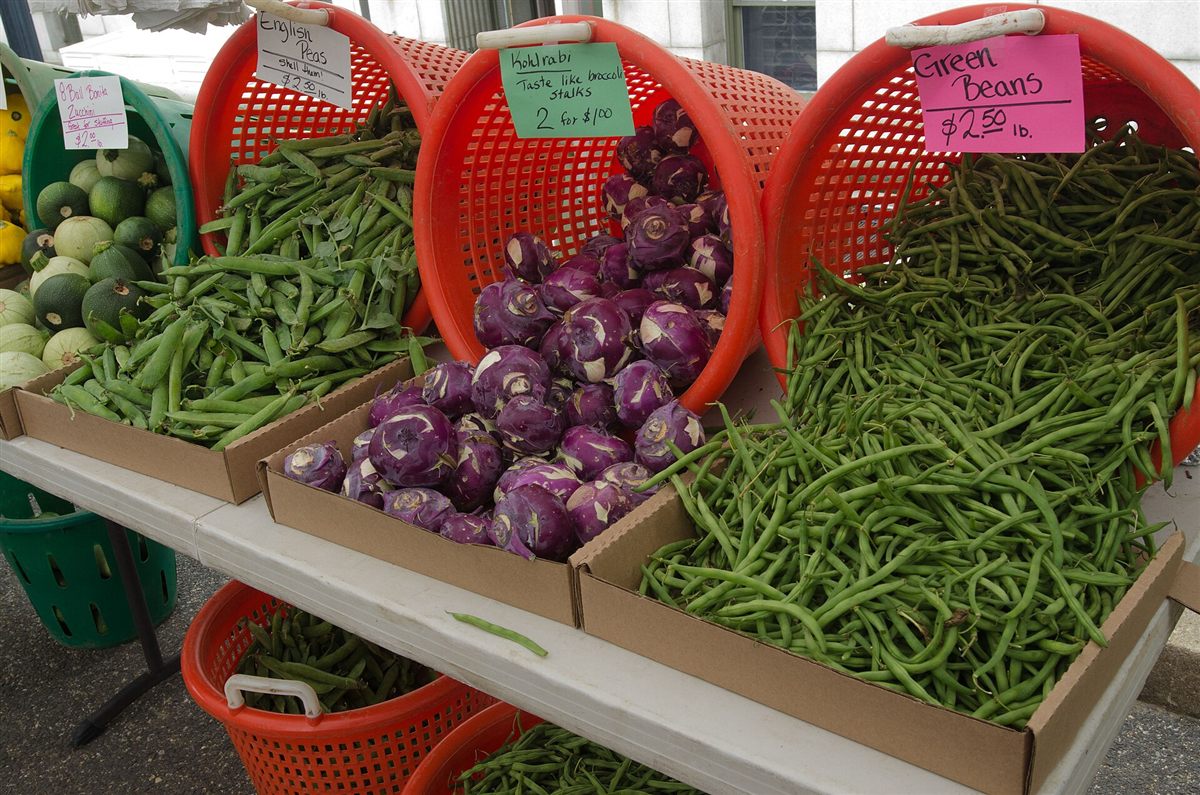
- 2012 USDA Farmers Market Opening (20120601-DM-LSC-0291)Wikimedia Commons · Cover image by Lance Cheung / USDA, public domain; a general illustration, not a trial participant or setting
General information, not medical advice. This study tested a support programme in one US WIC setting; it does not set a calorie target or meal plan for an individual pregnancy. Pregnancy nutrition and weight-gain advice depends on your health, stage of pregnancy and medical history. Speak with your obstetric, midwifery or dietitian team before making significant changes to what you eat.
Analysis by NutroPractic from the sources listed. Written for general readers; it does not replace advice from your own doctor.
From our articles
Our guides on this subject
Plain-language guides on nutrition and wellness, backed by research.
Women's health
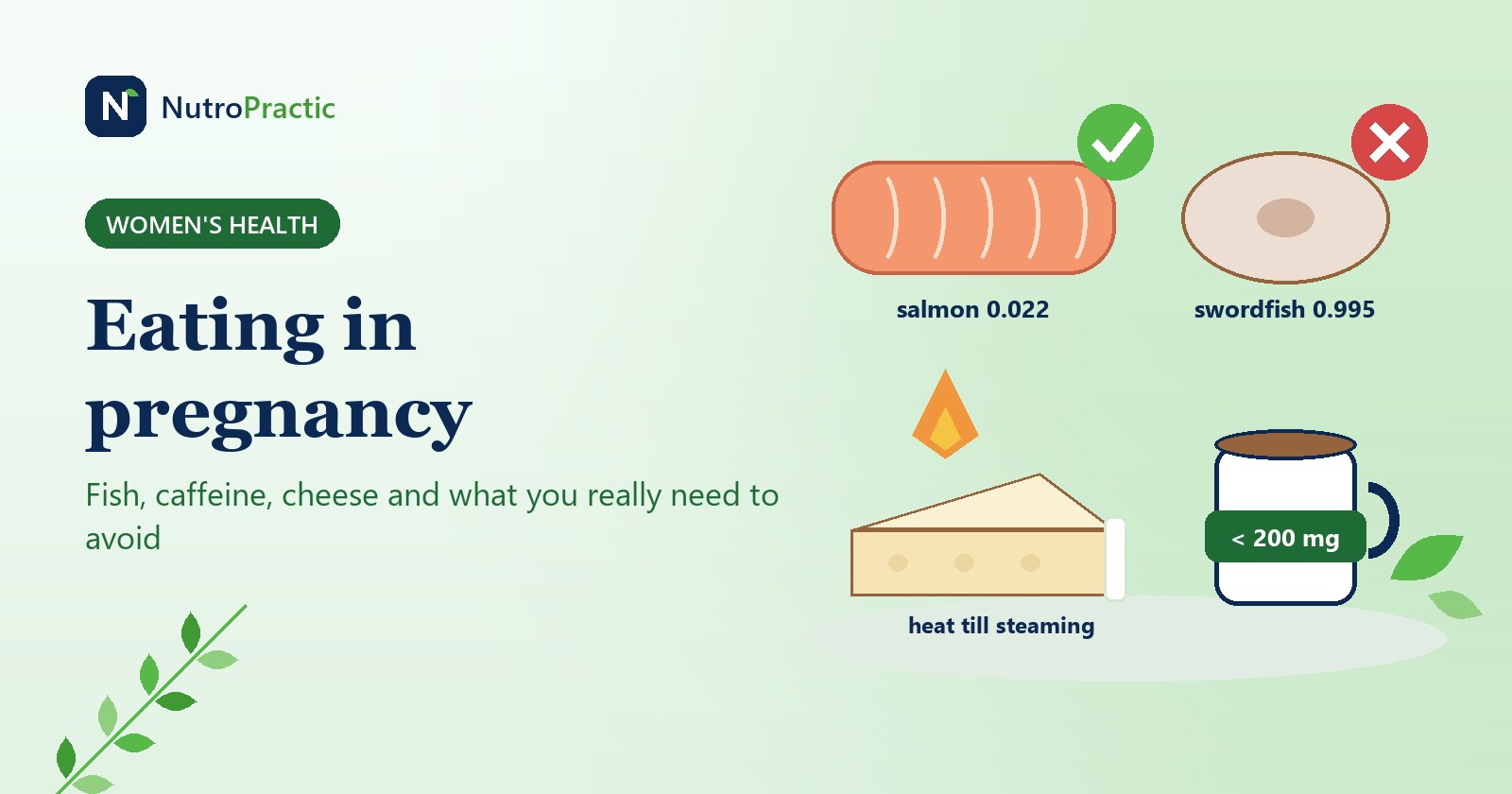
Eating in pregnancy: fish, caffeine, cheese and what you really need to avoid
Most fish is encouraged in pregnancy, not banned: 8-12 oz a week from the low-mercury list. The mercury numbers per fish, what 200 mg of caffeine looks like in real cups, which cheeses carry the listeria risk and how many cases there actually are, why liver is on the list, and how much weight to gain for your BMI.
29 Oct 2026
Women's health
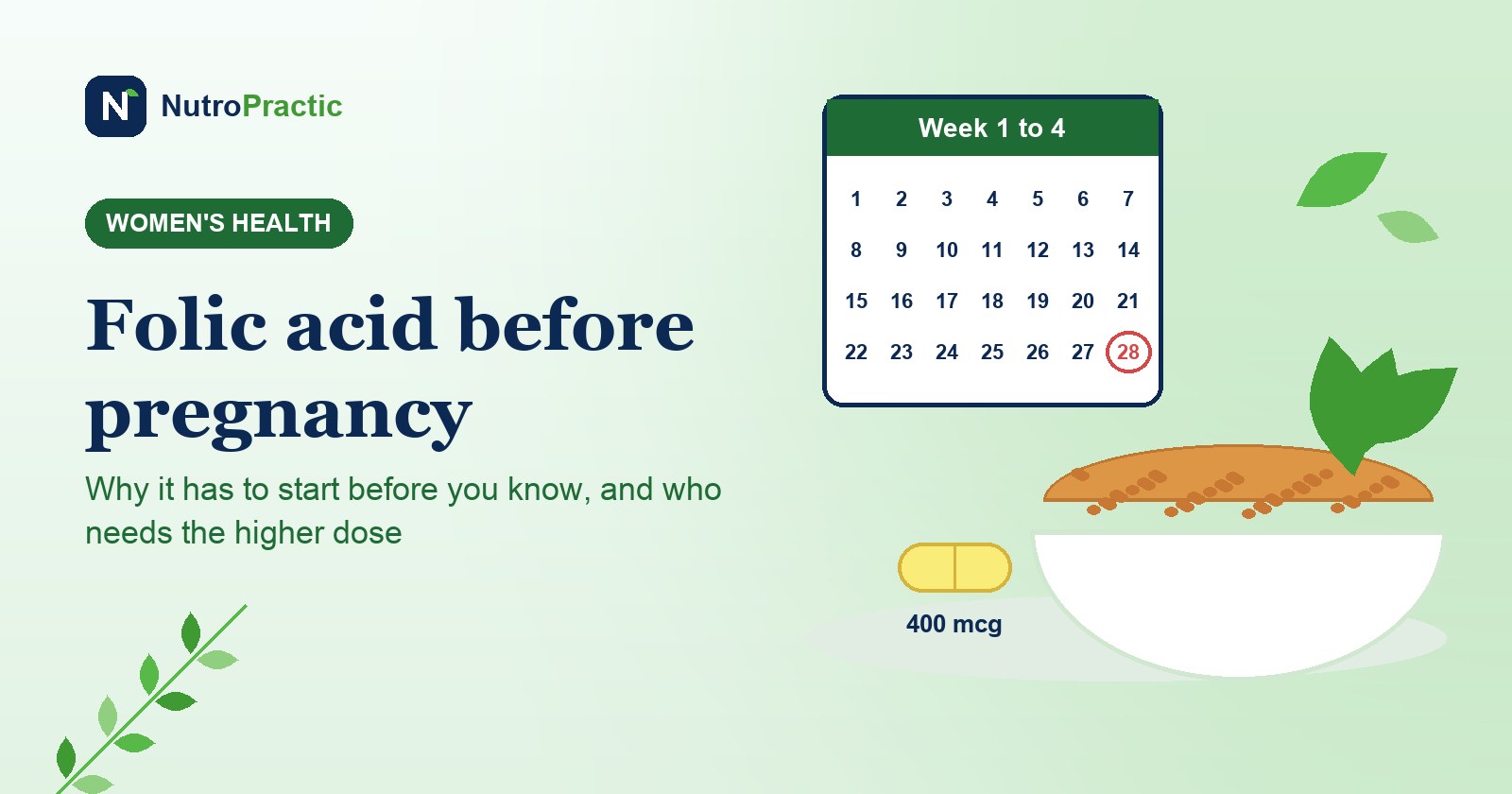
Folic acid before pregnancy: why it has to start before you know, and who needs the higher dose
The neural tube closes 26 to 28 days after conception, about six weeks after the last period and before many people know they are pregnant. Folic acid cut neural tube defects by about 72% in the 1991 MRC trial, yet only about a third of women take it beforehand. The dose, who needs 4 or 5 mg, what changed for higher BMI, fortified flour from the US to the UK's 2026 law, folate foods and the B12 link.
25 Oct 2026

Diabetes
Potatoes and blood sugar: boiled, cooled, mashed or fried, and what the cohorts and trials found
Fries were linked to 20% higher diabetes risk per three servings a week in 205,000 US adults; boiled, baked and mashed potatoes to almost none. GI by cooking method, resistant starch in grams after chilling, the glycaemic load of a potato against a cup of rice, and how to fit aloo into an Indian plate.
30 Oct 2026
Newsfeed for your website
Want this feed on your website?
Add it to any site with one copy-and-paste snippet. No sign-up, and it updates itself every hour.
Start with a virtual consultation
Tell Dr. Triveni what you want to change. You will leave with a clear next step, whether you are in Toronto, London, New York or Chennai.