Pregnancy nutrition · October 31, 2026
A pregnancy programme gave 351 WIC participants recipes, equipment and remote support. The food diaries changed; weight gain did not follow the script
Pregnancy nutrition advice can be hard to use when time, money and kitchen equipment are short. In Louisiana, a trial added practical support to regular WIC services and tracked food recalls from early to late pregnancy. The intervention group held steady on energy while usual care rose. But those dietary shifts did not predict who gained more weight.

Pregnancy nutrition is often presented as a matter of knowing what to choose. For people on a tight budget, the missing pieces can be practical: a pan that works, an easy recipe, a little time to make it, or support that fits around appointments and work. Researchers in Louisiana tested whether adding those pieces to the US Women, Infants, and Children programme, better known as WIC, changed what people ate during pregnancy.
The SmartMoms in WIC trial randomly assigned 351 pregnant participants to usual WIC services or an intervention that added health education, cooking equipment and recipes, delivered with remote support. The study was investigator- and assessor-blinded and followed participants for roughly 24 weeks. Diet was measured with 24-hour food recalls in early pregnancy and again late in pregnancy, rather than by asking participants to estimate how well they had followed a plan.
From early to late pregnancy, reported energy intake in the intervention group changed by -44 kcal a day, a result compatible with no meaningful change. In usual care it rose by 263 kcal a day. The adjusted difference between the groups was -306 kcal a day. The intervention group also increased protein's share of energy by 2 percentage points and, compared with usual care, reported 12 g less total fat and 48 g less carbohydrate per day by late pregnancy.
Those numbers are not a prescription to eat less in pregnancy. The trial did not ask people to restrict calories, and individual needs vary with health, pregnancy stage and medical advice. Crucially, the dietary changes did not predict gestational weight gain in this analysis. The useful lesson is narrower: making nutrition support practical and accessible can shift reported food intake, but pregnancy weight is influenced by more than a food diary. Anyone worried about eating or weight gain in pregnancy should discuss it with their maternity-care team or a registered dietitian.
SmartMoms in WIC: a roughly 24-week randomised trial in Louisiana (Journal of the Academy of Nutrition and Dietetics, 5 October 2026)
351
Pregnant WIC participants randomised
179 / 172
Intervention / usual-care participants
-306 kcal/day
Adjusted difference in energy-intake change, intervention versus usual care
+2 points
Greater change in protein share of energy with the intervention
-12 g/day
Greater reduction in total fat versus usual care
-48 g/day
Greater reduction in carbohydrate versus usual care
Diet was assessed with 24-hour recalls and the Healthy Eating Index-2020 in early (10.0 to 16.6 weeks) and late (35.0 to 37.6 weeks) pregnancy. The reported dietary changes did not predict gestational weight gain; this analysis therefore cannot show that any one food change controls pregnancy weight.
- WIC is a US public-health programme that provides nutrition support for people who are pregnant or postpartum, infants and young children with low incomes.
- A 24-hour recall asks someone to reconstruct everything eaten and drunk during the previous day. It is more specific than a broad diet questionnaire, but still depends on memory and reporting.
- The Healthy Eating Index measures how closely a pattern of eating aligns with US dietary guidance; it is a score for the overall pattern, not a diagnosis or a diet plan.
- Gestational weight gain is calculated across pregnancy, but weight change alone cannot show whether a particular food, programme or advice caused it.
- The effects of a community-based multicomponent behavioral eHealth intervention for low-income pregnant individuals on dietary intake: The SmartMoms in WIC randomized clinical trialJournal of the Academy of Nutrition and Dietetics, 5 October 2026 · Original randomised trial; design, participant numbers, dietary outcomes and the gestational-weight-gain analysis.
- PubMed record PMID 42833302US National Library of Medicine · Structured abstract with the trial methods, effect estimates and publication details.
- Pregnant Woman Sitting Barefoot on Porch StepsWikimedia Commons · CC BY 4.0 photograph by Oceanic7777 used as a general illustration.
General information, not medical advice. This study tested a specific support programme in participants using Louisiana WIC services; it does not set calorie or weight-gain targets for an individual pregnancy. Do not try to restrict food intake in pregnancy without personalised advice from your maternity-care team or a registered dietitian.
Analysis by NutroPractic from the sources listed. Written for general readers; it does not replace advice from your own doctor.
From our articles
Our guides on this subject
Plain-language guides on nutrition and wellness, backed by research.
Women's health
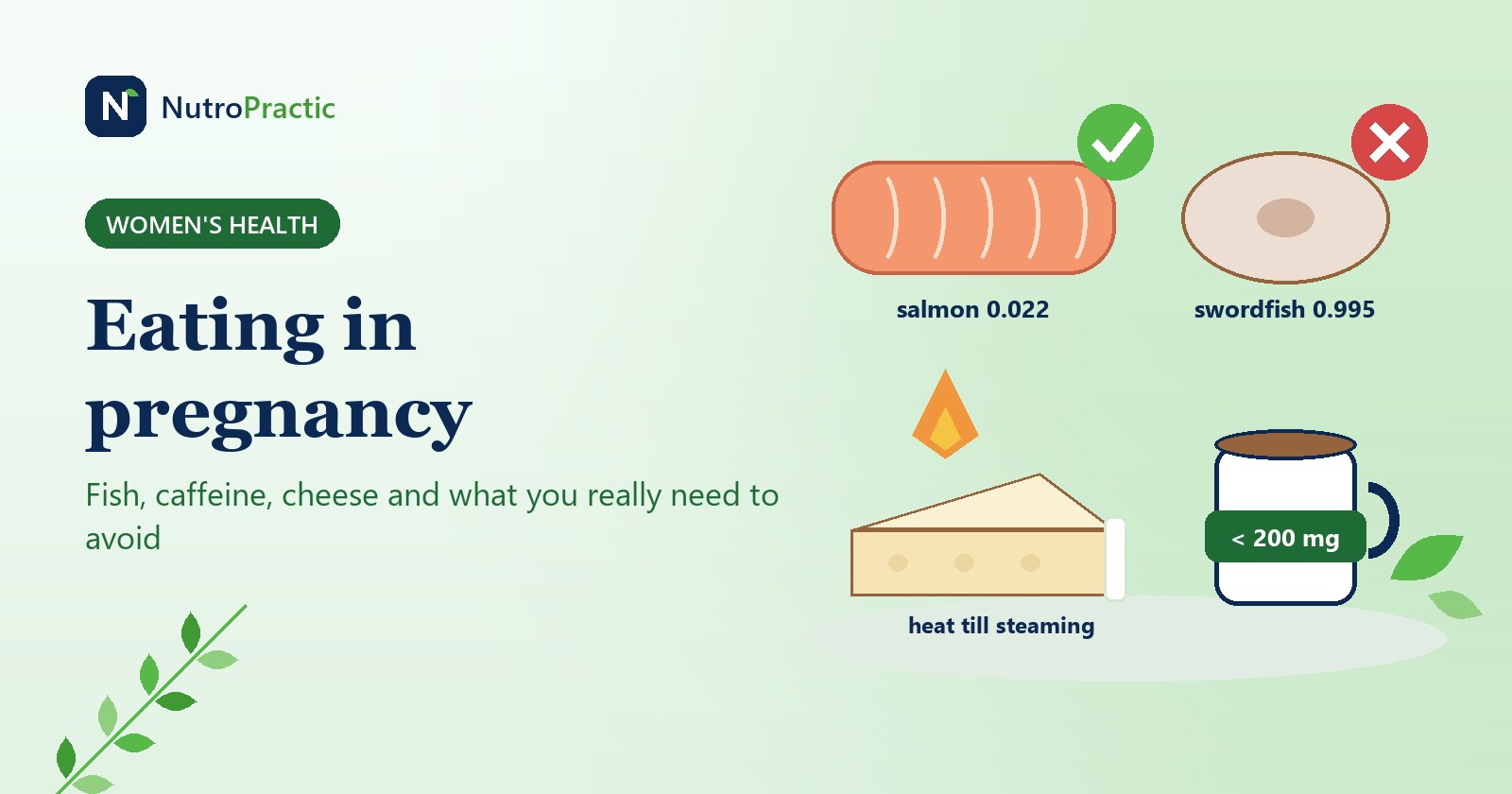
Eating in pregnancy: fish, caffeine, cheese and what you really need to avoid
Most fish is encouraged in pregnancy, not banned: 8-12 oz a week from the low-mercury list. The mercury numbers per fish, what 200 mg of caffeine looks like in real cups, which cheeses carry the listeria risk and how many cases there actually are, why liver is on the list, and how much weight to gain for your BMI.
29 Oct 2026
Women's health
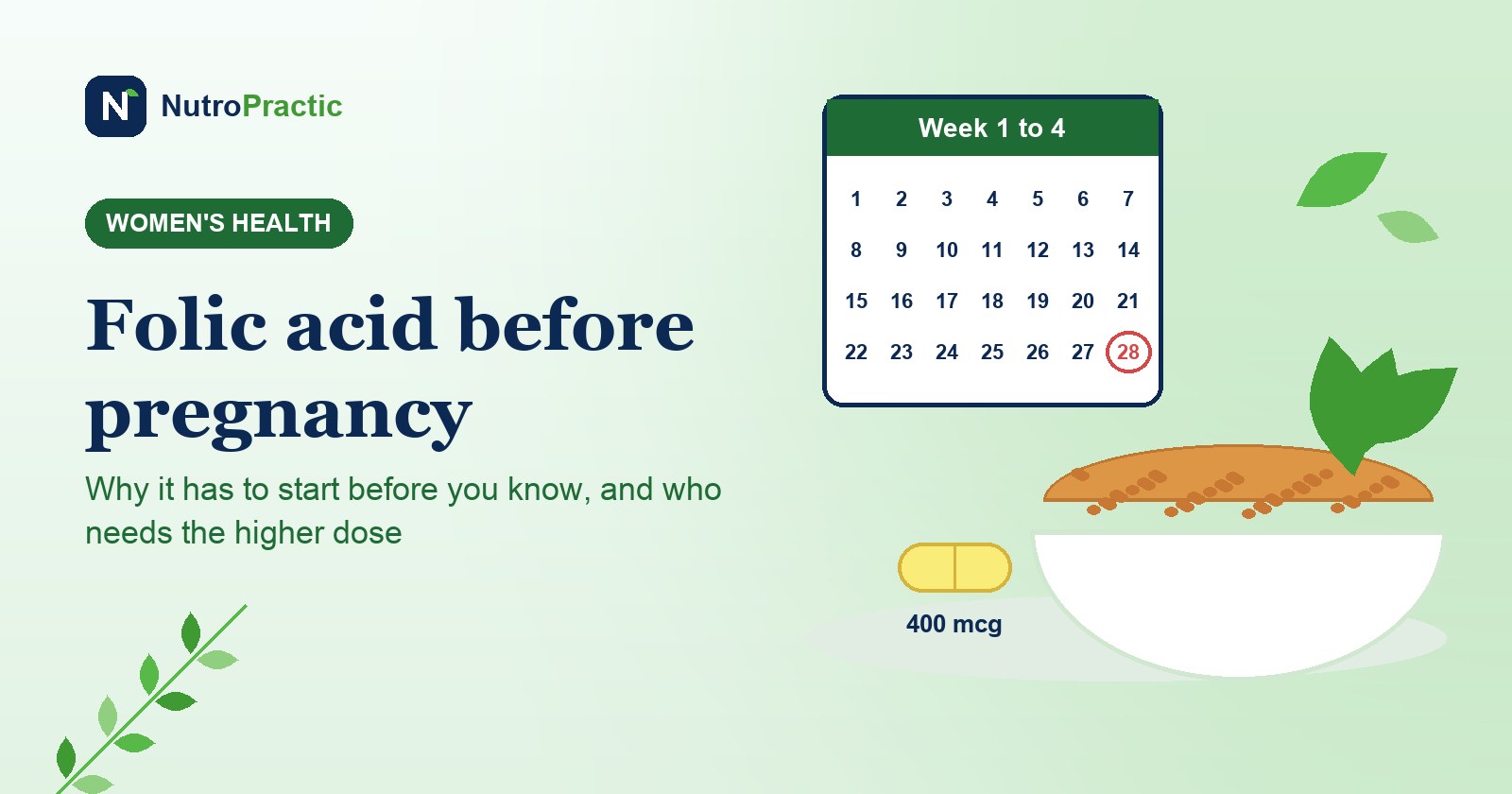
Folic acid before pregnancy: why it has to start before you know, and who needs the higher dose
The neural tube closes 26 to 28 days after conception, about six weeks after the last period and before many people know they are pregnant. Folic acid cut neural tube defects by about 72% in the 1991 MRC trial, yet only about a third of women take it beforehand. The dose, who needs 4 or 5 mg, what changed for higher BMI, fortified flour from the US to the UK's 2026 law, folate foods and the B12 link.
25 Oct 2026
Diabetes
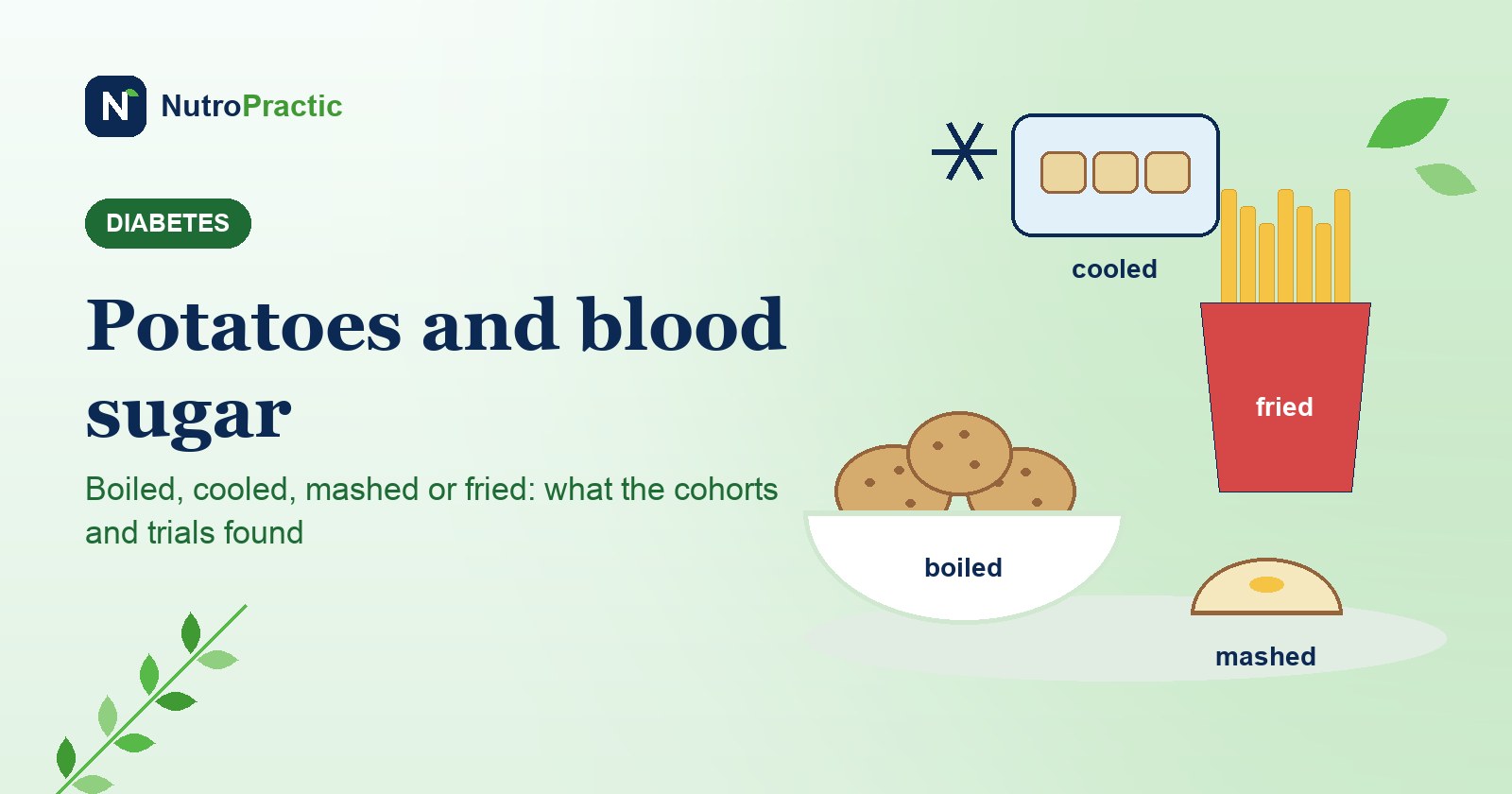
Potatoes and blood sugar: boiled, cooled, mashed or fried, and what the cohorts and trials found
Fries were linked to 20% higher diabetes risk per three servings a week in 205,000 US adults; boiled, baked and mashed potatoes to almost none. GI by cooking method, resistant starch in grams after chilling, the glycaemic load of a potato against a cup of rice, and how to fit aloo into an Indian plate.
30 Oct 2026
Newsfeed for your website
Want this feed on your website?
Add it to any site with one copy-and-paste snippet. No sign-up, and it updates itself every hour.
Start with a virtual consultation
Tell Dr. Triveni what you want to change. You will leave with a clear next step, whether you are in Toronto, London, New York or Chennai.