Digestive health · October 17, 2026
306,543 UK adults, seven healthy habits, nearly 13 years of records: those with five or more were 37% less likely to be diagnosed with acid reflux. Weight and sleep mattered most, diet only a little
A UK Biobank study tallied never smoking, a healthy weight, good sleep, regular exercise, a healthy diet, moderate drinking and no more than two cups of tea or coffee a day, then counted who went on to be diagnosed with reflux disease. More habits went with steadily lower risk. One of the seven made no difference at all.
Heartburn after a big dinner is common enough to be a joke. When stomach acid keeps coming back up into the gullet often enough to be diagnosed, it is called gastroesophageal reflux disease, or GERD, and it affects roughly one adult in eight worldwide. Acid-suppressing tablets are the usual treatment, but many people don't get full relief from them, and doctors also tell patients to change how they live. A study published on 15 October 2026 in PLOS One, by researchers at Shandong University, Zhejiang University and partner institutions, asked a slightly different question: do everyday healthy habits go with a lower chance of developing reflux disease in the first place?
The team used the UK Biobank, which recruited about half a million adults across England, Scotland and Wales in 2006 to 2010. After leaving out the 36,705 people who already had reflux disease and everyone with missing answers on the habits, 306,543 people remained, with an average age of 56.9. Each was given one point for each of seven habits measured when they joined: never smoking, a BMI of 18.5 to 24.9, healthy sleep (at least four of five signs, such as 7 to 8 hours a night, rarely having insomnia and not snoring), regular exercise, moderate alcohol (up to one drink a day for women and two for men), a healthy diet, and no more than two cups of tea or coffee a day. The diet point went to people who met more than half of nine targets, among them three servings each of fruit, vegetables and whole grains a day, fish at least twice a week, processed meat no more than once a week and no sugary drinks.
Over an average of 12.7 years, 27,943 people (9.1%) were diagnosed with reflux disease, picked up from GP records, hospital records, self-reports and death records. The more habits people had, the lower their risk, step by step. Compared with people who had none or one, those with five to seven had a 37% lower risk (hazard ratio 0.63), after allowing for age, sex, ethnicity, deprivation, job, education and conditions such as diabetes, high blood pressure, depression and anxiety. Those with four habits had a 26% lower risk and those with three a 17% lower risk.
Taken one at a time, the habits were far from equal. A healthy weight and healthy sleep went with the biggest drops, about 25% each. Never smoking and regular exercise came next, at about 14% each. A healthy diet and keeping tea and coffee to two cups a day were each linked with only a 7% lower risk. Moderate drinking made no difference at all: 10.02% of moderate drinkers developed reflux disease against 10.03% of everyone else.
The links were somewhat stronger in people under 60 and in women. The results held when the researchers left out people already taking acid-reducing medicines, people with other stomach or gullet conditions, and cases diagnosed in the first two years, which helps rule out the idea that early, undiagnosed reflux was what changed people's habits.
There are real limits. Habits were recorded once, at the start, and could have changed over the next 13 years. Reflux disease was counted only when it reached a medical record, so milder cases that people managed themselves with shop-bought antacids were missed. This is an observational study, so it shows links, not cause and effect, and the authors say so. UK Biobank volunteers are mostly white (96.7% here), better off and healthier than the UK as a whole. The diet score is a broad measure of overall eating, not a test of the foods people with reflux are usually told to avoid, or of late-night eating. And the paper has a couple of slips: the text once describes the comparison group as 'no more than 2' habits when the tables use none or one, and one subgroup table appears to have its 'employed' and 'unemployed' rows swapped.
What the study adds is scale and time. It fits what is already advised for people with reflux: keep to a healthy weight, don't smoke, sleep well and stay active. On its numbers, a healthy diet in the general sense counts for less than any of those, and moderate drinking for nothing.
UK Biobank (England, Scotland and Wales): 306,543 adults without reflux disease at the start (2006 to 2010), seven healthy habits scored once, followed for an average of 12.7 years
306,543
Adults followed, average age 56.9; 50.5% women
27,943 (9.1%)
Diagnosed with reflux disease over an average of 12.7 years
0.63
Hazard ratio with five to seven healthy habits, against none or one (37% lower risk)
0.75 and 0.74
Hazard ratios for a healthy weight and for healthy sleep, the two strongest single habits
0.93
Hazard ratio for a healthy diet, and the same for two cups of tea or coffee a day or fewer
10.02% vs 10.03%
Share diagnosed with reflux disease among moderate drinkers vs everyone else: no difference
Figures are from Peng and colleagues, 'Healthy lifestyle as a protective factor against the risk of gastroesophageal reflux disease: Prospective population cohort analysis', PLOS One 21(10), e0360299 (2026), doi 10.1371/journal.pone.0360299, published 15 October 2026 (open access, CC BY). Hazard ratios are from the fully adjusted model (age, sex, Townsend deprivation index, ethnicity, occupation, education, and history of cancer, diabetes, high blood pressure, depression, anxiety and other upper gut disease). Group hazard ratios: 0.94 (two habits), 0.83 (three), 0.74 (four) and 0.63 (five to seven), against none or one; P for trend below 0.001. Never smoking and regular exercise were 0.86 each. Percentage reductions are 1 minus the hazard ratio and are relative risks. Observational study: associations only.
- Only one participant in five (20.1%) kept to two cups of tea or coffee a day or fewer, the rarest of the seven habits in this group. The commonest was regular exercise, at 75.6%.
- Just 1,972 of the 306,543 people, under 1%, had all seven healthy habits.
- The NHS suggests raising the head of the bed by about 10 to 20 cm with wood, bricks or books for reflux, and warns against using extra pillows instead, because they can push on the belly and make symptoms worse.
- The NHS also advises not eating within 3 or 4 hours before bed, eating smaller, more frequent meals, and avoiding clothes that are tight around the waist.
- Antacids and alginates from a pharmacy work best taken with food or soon after eating, but they ease symptoms rather than cure the problem and are not meant for regular long-term use, according to the NHS.
- Healthy lifestyle as a protective factor against the risk of gastroesophageal reflux disease: Prospective population cohort analysisPLOS One, published 15 October 2026 (open access, CC BY) · The study: participants, the seven habits, results and limitations
- PubMed record 42879421PubMed · Abstract and indexing
- Full text on PubMed CentralPMC (PMC13671543) · Open-access full text with tables and figures
- Heartburn and acid refluxNHS · Self-help advice, raising the bed head and pharmacy medicines
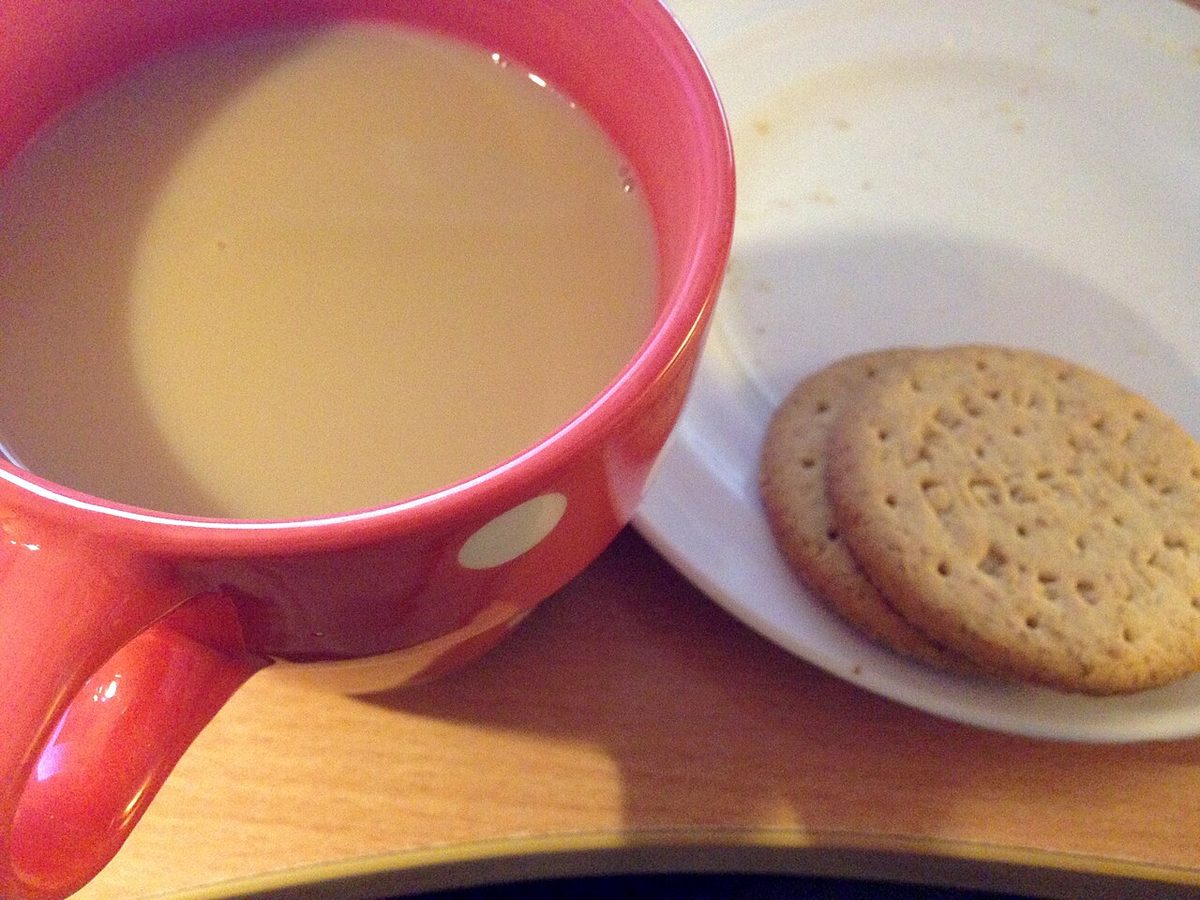
- Tea and digestive biscuitsWikimedia Commons · Image, CC BY 2.0, by Sean MacEntee
General information, not medical advice. Frequent heartburn, trouble swallowing, unexplained weight loss or vomiting need a doctor's assessment. Talk to your doctor before stopping or changing any reflux medicine.
Analysis by NutroPractic from the sources listed. Written for general readers; it does not replace advice from your own doctor.
From our articles
Our guides on this subject
Plain-language guides on nutrition and wellness, backed by research.
Heart health
Coffee and your heart: what the trials found on rhythm, blood pressure and sleep
For years people with palpitations or atrial fibrillation were told to give up coffee. Two randomised trials and cohorts of half a million people now point the other way, with three real exceptions: sleep, very high blood pressure and how the coffee is brewed.
30 Oct 2026
Lifestyle
Food and sleep: what the trials found on late meals, kiwis, milk and caffeine
The foods with the biggest effect on sleep are the ones that take it away: coffee too late, a nightcap and a heavy dinner just before bed. The famous sleepy foods (kiwis, tart cherries, warm milk) rest on small studies. Here is what each one found, and an evening routine built on the parts that hold up.
15 Oct 2026
Gut health
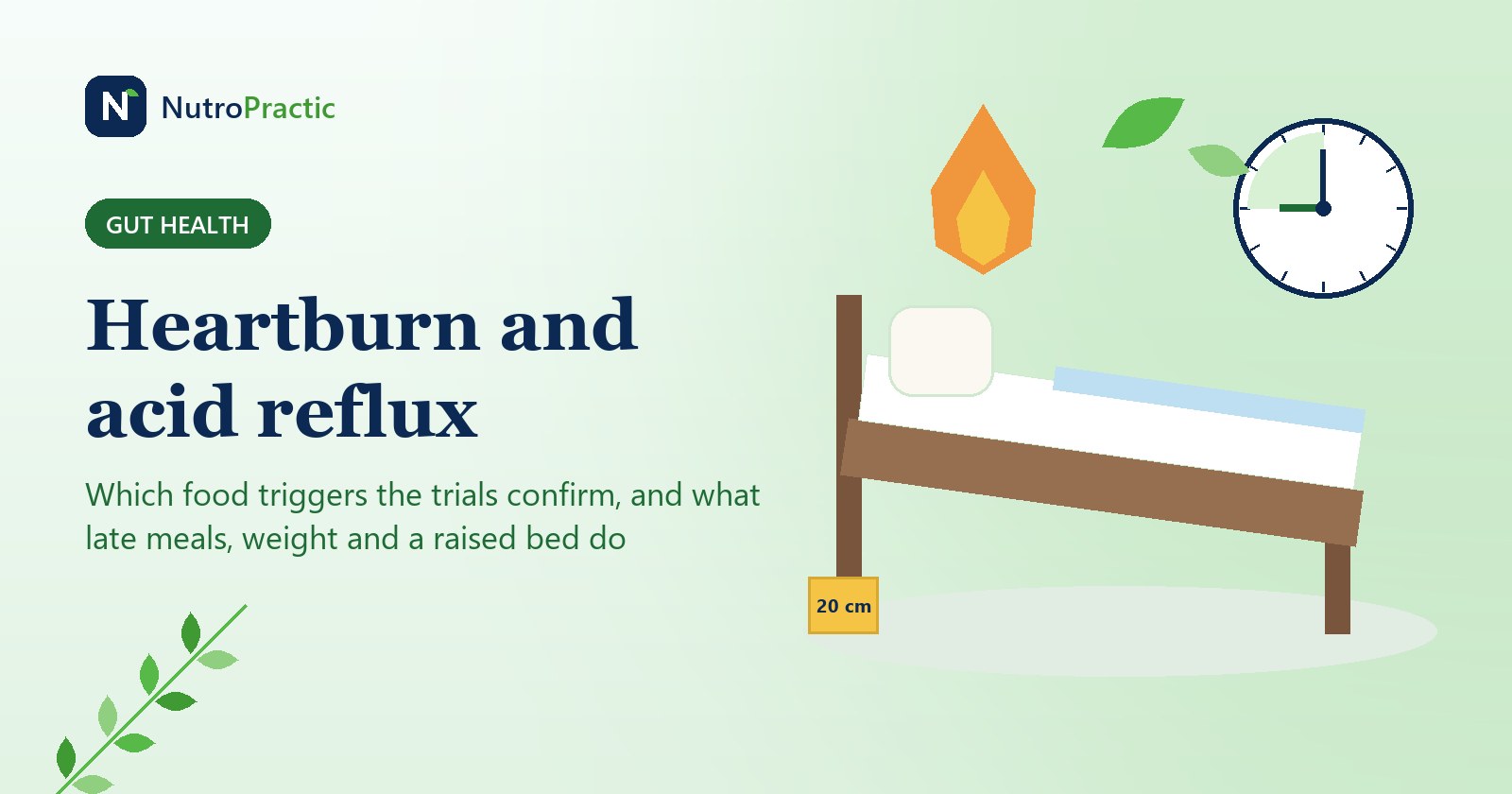
Heartburn and acid reflux: which food triggers the trials confirm, and what late meals, weight and a raised bed do
Up to 28% of North American adults get heartburn every week. Coffee showed no link across 15 studies, but going to bed within three hours of dinner came with 7.5 times the odds, a 1,000 kcal meal brought 65% more acid time than a 500 kcal one, and losing 3.5 BMI units cut the odds by about a third. What the trials say about food, weight, late meals and raising the bed, with a four-week plan.
22 Oct 2026
Newsfeed for your website
Want this feed on your website?
Add it to any site with one copy-and-paste snippet. No sign-up, and it updates itself every hour.
Start with a virtual consultation
Tell Dr. Triveni what you want to change. You will leave with a clear next step, whether you are in Toronto, London, New York or Chennai.