Plant-based eating · October 31, 2026
Ask Americans if they are vegetarian and about 2 in 100 say yes. Check what they ate on two days, and only half of them skipped meat both times
How many vegetarians are there? It depends on how you ask. Researchers went back to a US national survey that asked people directly and also recorded two days of eating. Counting anyone who skipped meat on one day made vegetarians look ten times more common than the strictest count, and many who called themselves vegetarian had meat or fish on their plate.
Headlines about vegetarians living longer, weighing less or having healthier hearts often come from big population surveys. Many of those surveys never asked anyone whether they were vegetarian. Instead, researchers looked at a day or two of food records and labelled anyone who reported no meat or fish as vegetarian. A new analysis, published on 27 October in the journal Scientifica, asks how much that shortcut changes the answer.
The team used the US National Health and Nutrition Examination Survey (NHANES) for 2007 to 2010, the only cycles that asked people directly: "Do you consider yourself to be a vegetarian?" The same people also completed two 24-hour dietary recalls, in which a trained interviewer walks through everything eaten the previous day. In total 15,489 participants had both recalls and a yes-or-no answer, and the figures were weighted to represent the US population.
The count swung widely. Going by the first food recall alone, 14.3% of people looked vegetarian, because they happened to report no meat, poultry or fish that day. Using both recall days brought it down to 4.0%. Asking people directly gave 2.2%. And requiring both, a yes answer plus no meat or fish on either day, left just 1.1%, about one in ninety. Put another way, half of the people who called themselves vegetarian reported some meat, poultry or fish across the two days: 212 of the 327 self-identified vegetarians in the raw sample.
That is not a finding that vegetarians are fibbing. NHANES never defined the word, so some people may use it loosely for mostly plant-based eating, and dietary recalls carry their own memory and reporting errors. Only two days were recorded, and the authors did not adjust for age, income or other factors. The practical point is for anyone reading diet research: before trusting a claim about vegetarians, check how the study decided who was one. A label built on a single day of eating can sweep in many occasional meat-eaters, which may blur or distort any link with health.
Vegetarian prevalence in NHANES 2007 to 2010 by method of counting (Scientifica, 27 October 2026)
15,489
US survey participants with two food recalls and a yes/no answer
14.3%
Looked vegetarian on the first recall day alone
4.0%
Reported no meat, poultry or fish on both recall days
2.2%
Said yes when asked if they consider themselves vegetarian
1.1%
Said yes and reported no meat or fish on both days
212 of 327
Self-identified vegetarians who reported meat, poultry or fish on at least one day (unweighted)
Percentages are survey-weighted estimates for the US population; the 95% confidence interval for the strictest count was 0.77% to 1.58%. Almost 3% of the sample reported no meat or fish on both days but did not call themselves vegetarian. The survey did not define 'vegetarian', recorded only two days of eating, and the analysis did not adjust for demographic factors.
- NHANES only asked "Do you consider yourself to be a vegetarian?" in its 2007 to 2010 cycles, which is why this analysis uses data that are more than 15 years old.
- Two in three of the people in this survey who called themselves vegetarian were women (about 67%).
- Researchers sometimes call people who identify as vegetarian but still eat some meat or fish 'semi-vegetarians'; the study's flow chart uses exactly that label.
- Food frequency questionnaires, which ask how often you ate each food over the past months, are another way to classify diets, and versions designed specifically for vegetarians and vegans exist.
- A US-Based Epidemiological Analysis Reveals Large Discordance Between Exclusive Dietary Recall-Based Vegetarian Status Assessment and Self-Identification in a Nationally Representative Population-Based SurveyScientifica (Wiley), 27 October 2026 · Original analysis by Storz, Huber and Koeder; methods, sample size, prevalence estimates, Table 2 and limitations.
- Full text, PMC13711259Europe PMC · Open-access full text (CC BY) used to check every figure in this item.
- PubMed record PMID 42948134US National Library of Medicine · Structured abstract and publication details.
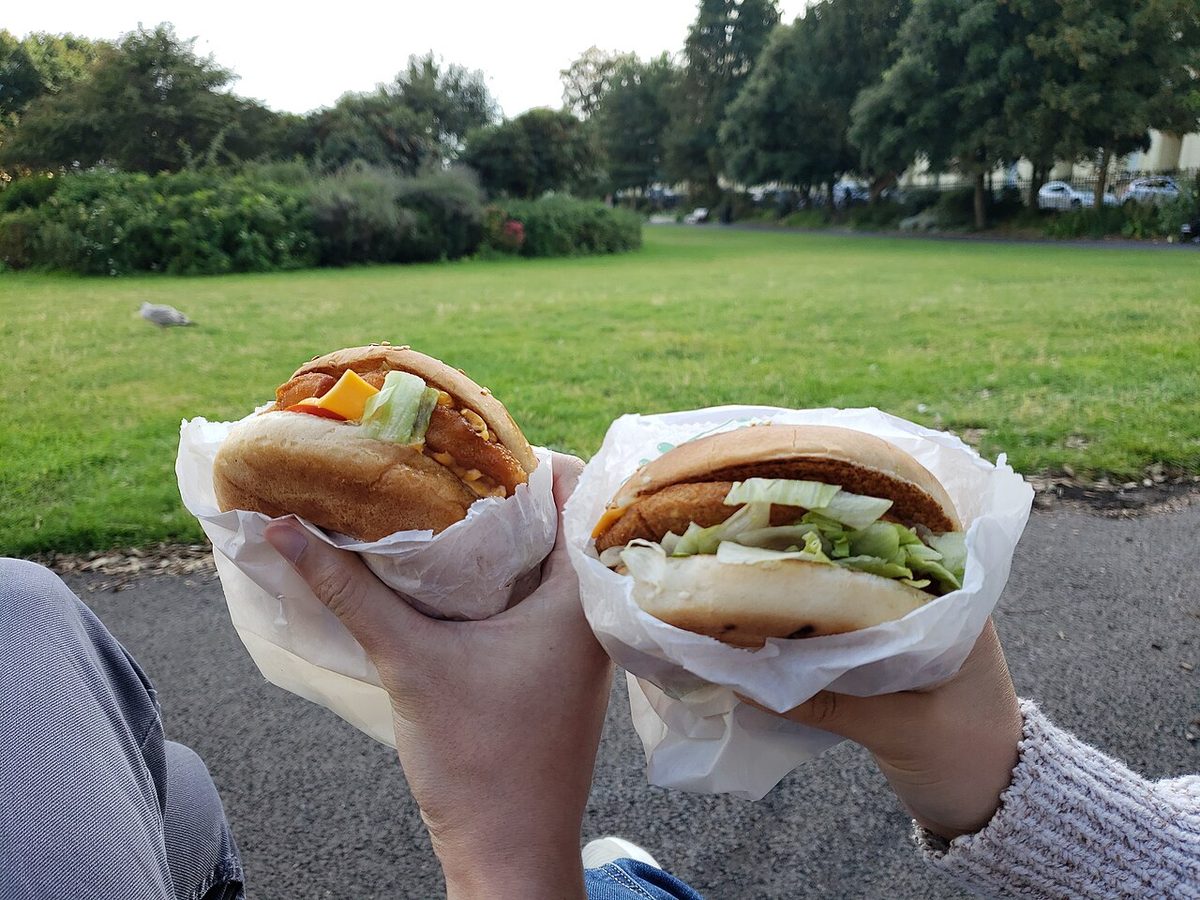
- Chicken cheese burger and Mexican vegetarian burger - GrubbsWikimedia Commons · CC0 photograph by Andy Li used as a general illustration.
General information, not medical advice. This survey analysis looks at how vegetarian diets are counted in research; it does not test whether any diet is healthier. If you are planning a vegetarian or vegan diet, especially in pregnancy, childhood or with a health condition, talk to your doctor or a registered dietitian.
Analysis by NutroPractic from the sources listed. Written for general readers; it does not replace advice from your own doctor.
From our articles
Read, then eat a little better
Plain-language guides on nutrition and wellness, backed by research.

Diabetes
Potatoes and blood sugar: boiled, cooled, mashed or fried, and what the cohorts and trials found
Fries were linked to 20% higher diabetes risk per three servings a week in 205,000 US adults; boiled, baked and mashed potatoes to almost none. GI by cooking method, resistant starch in grams after chilling, the glycaemic load of a potato against a cup of rice, and how to fit aloo into an Indian plate.
30 Oct 2026
Children's nutrition
Picky eaters aged 2 to 8: what feeding studies show works at the table
Fussy eating peaks between two and six and is usually a normal stage, not a parenting failure. Feeding trials show what moves it: small repeated tastes, eating together, no pressure and the right kind of reward. Here is how to use them, and the signs that mean it's more than picky eating.
30 Oct 2026
Women's health
PCOS and food: what the diet trials show for cycles, insulin and weight
PCOS affects about one woman in ten, and most are told to "lose weight" with little else. Here is what drives it, why insulin matters even in slim women, how much weight loss brings cycles back, what the low-GI and Mediterranean trials found, what inositol and metformin do, and which tests to ask for.
30 Oct 2026
Newsfeed for your website
Want this feed on your website?
Add it to any site with one copy-and-paste snippet. No sign-up, and it updates itself every hour.
Start with a virtual consultation
Tell Dr. Triveni what you want to change. You will leave with a clear next step, whether you are in Toronto, London, New York or Chennai.