Food perceptions · November 2, 2026
Seaweed's problem may not be the flavour. Among 3,486 Europeans willing to try it, more people marked down the look and the chew, and 57% of Irish people who had never eaten it already held the texture against it
A survey in Ireland, Norway, Spain and Turkey asked people what they remember or imagine about seaweed. Nobody tasted anything. Those who had eaten it were kinder on every count, but that alone doesn't prove one bite changes minds.
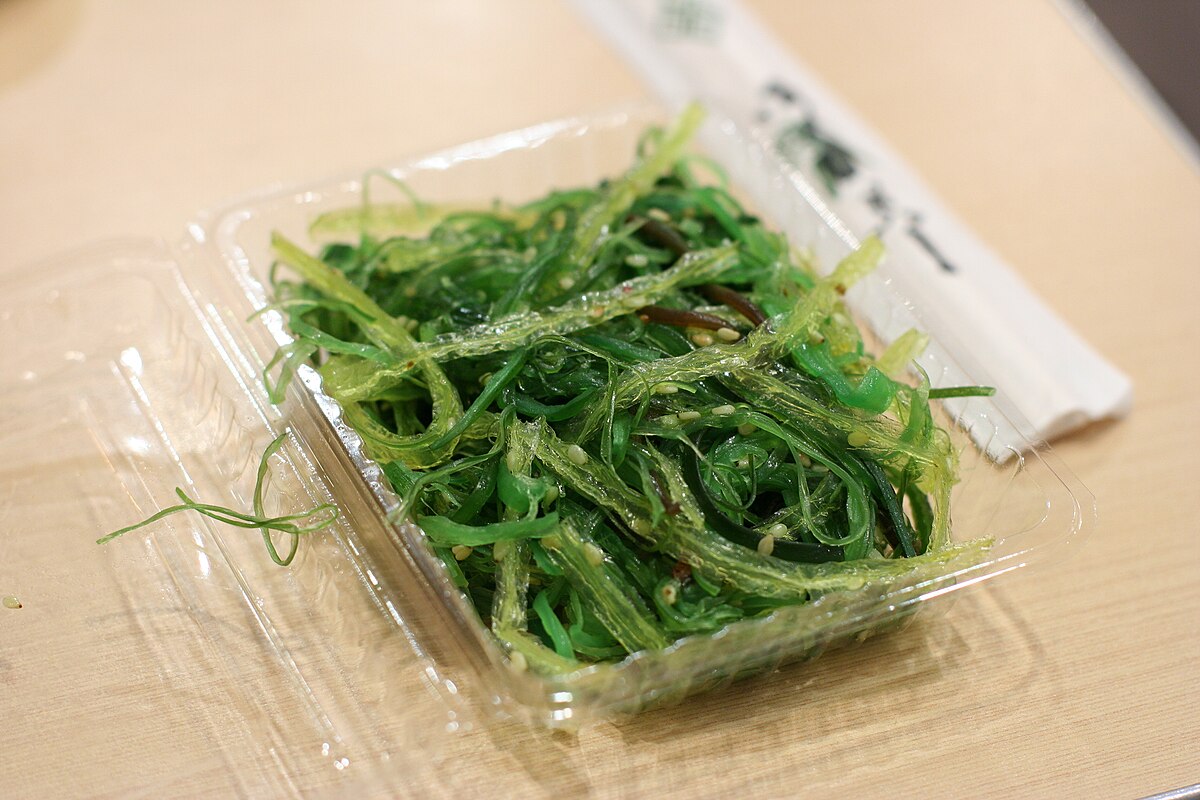
Seaweed keeps getting pitched to European shoppers as a greener food and a possible way to cut salt, yet interest seems to run ahead of appetite. In one Swedish study quoted in this new paper, over 95% of people said they were interested and 41.2% ate it monthly or more often. A team working in Ireland, Norway, Spain and South Africa wanted to know what people have in mind when they think of it. Their results appeared in Food Science & Nutrition on 26 October.
They ran an anonymous online survey through consumer panels and kept only those who answered yes to "Are you willing to try seaweed products?" That left 711 people in Ireland, 763 in Norway, 1,075 in Spain and 937 in Turkey. Each person said whether they had ever eaten seaweed or a seaweed-based food, rated colour, appearance, flavour, taste and mouthfeel as a positive or a negative, and then picked words they connect with seaweed. No seaweed was served at any point.
The sharpest numbers came from Ireland. Among Irish people who had never eaten seaweed, 56.8% counted its mouthfeel as a negative and 54.3% its appearance. Among Irish people who had eaten it, those figures were 35.1% and 28.1%. Reading across the paper's table, we noticed a pattern the authors didn't test directly: in all four countries, in both groups, appearance and mouthfeel each drew more negative votes than flavour. Among those who had never eaten it, 14.9% to 29.7% marked down the flavour, against 27.2% to 54.3% for the look. In every country and on all five counts, people who had eaten seaweed were more positive than those who hadn't.
The words people chose differed by country. Salty led everywhere, at 85.8% to 91.4% in Ireland and roughly 60% to 70% elsewhere. Over half of Turkish respondents called seaweed herbal, and 58.6% of those who had never eaten it called it sour, though the authors warn that taste words may not travel cleanly between languages. Among people who had eaten seaweed, 79.5% in Spain picked marine as a flavour, against 37.4% in Norway. Metallic, chewy and sticky tended to go with a poor opinion, and creamy with a good one in all four countries. Seafood-like split opinion: it counted in seaweed's favour in Ireland and Spain, but it was divisive in Norway and Turkey.
The limits matter here. Anyone unwilling to try seaweed was removed, so these figures flatter it, and this paper says nothing about how reluctant the wider public is. The survey also takes a single snapshot, so people who had eaten seaweed may simply be those who were well disposed to begin with. Some who said they had never eaten it may have had seaweed-derived thickeners without knowing, and the survey didn't ask which species people had in mind. Nothing here concerns health. The authors' own suggestions are aimed at food makers, such as finer particles, flavour masking or changing the texture, and they say those ideas still need testing with real prototypes. For now this is a map of expectations, not a verdict on any food.
What people willing to try seaweed associate with it, online survey in four countries (Food Science & Nutrition, 26 October 2026)
3,486
Respondents willing to try seaweed: Spain 1,075, Turkey 937, Norway 763, Ireland 711
56.8% vs 35.1%
Irish respondents rating mouthfeel as a negative: never eaten seaweed vs have eaten it
54.3% vs 28.1%
Irish respondents rating appearance as a negative: never eaten vs have eaten
14.9% to 29.7%
Rating flavour as a negative among those who had never eaten it, across the four countries (8.2% to 15.3% among those who had)
85.8% to 91.4%
Irish respondents calling seaweed salty; roughly 60% to 70% in the other three countries
58.6% vs 44.6%
Turkish respondents calling seaweed sour: never eaten vs have eaten
79.5% vs 37.4%
Choosing marine as a flavour among people who had eaten seaweed: Spain vs Norway
35% vs 20%
Norwegian respondents naming brown as the first colour they think of: never eaten vs have eaten
Figures come from the open-access paper's text and Table 2. The 3,486 total and the comparison of appearance and mouthfeel against flavour are our own arithmetic and reading, not a test in the paper. All of this is self-reported association, not tasting. Two points where the paper's summary and its results don't quite match: the abstract lists soft and seafood-like as positive across countries, but the results describe seafood-like as polarising in Norway and Turkey and soft as less likely to be positive in Norway; and the conclusion says people who had eaten seaweed cited seafood-like more often, but in Norway it was the other way round (66.0% of those who hadn't, 55.8% of those who had). We follow the results section. The main text doesn't give how many respondents fell into each group. Ethical suitability was handled through a self-assessment in the project proposal, with completion of the survey taken as consent. Irish respondents came from the private consumer database of Innovate Solutions, the lead author's affiliation; the others came through a third-party panel company. The authors declare no conflicts of interest. The work is part of SEAFOODTURE, a project developing seaweed-based foods, funded through the Sustainable Blue Economy Partnership with Irish, Norwegian and Spanish public agencies.
- The paper counts only 91 peer-reviewed sensory studies on seaweed so far: 17 analytical and 74 based on liking or a mix, with a third published since 2021.
- It cites evidence that over 100 edible seaweed species have been eaten in Europe, and closer to 650 worldwide, mainly in Asian countries.
- Caramel is one of the smell and flavour notes reported for some seaweeds, including the red seaweeds Pyropia and Porphyra.
- One study quoted in the paper found that seaweed in powder form was perceived as saltier than whole seaweed.
- A 2007 Irish report, cited here, described egg wrack as unpleasant with a strong marine flavour, and processing didn't rescue it in either dry or wet form.
- Toward a Deeper Understanding of the Seaweed Sensory Space Through Consumer-Evoked Associations Across Ireland, Norway, Spain, and TurkeyFood Science & Nutrition, 26 October 2026 · The paper's DOI. Open access under CC BY.
- Full text of the paperPubMed Central · Methods, Table 2, results by word and country, limitations, funding.
- Seaweed saladWikimedia Commons · CC BY 2.0 photograph by Geoff Peters, used as an illustration.
General information, not medical advice. This survey recorded what people associate with seaweed; it didn't test any seaweed food or any health effect. Seaweed products can contain iodine and salt, so if you have a thyroid condition, are pregnant or are watching your sodium, check with your doctor or dietitian.
Analysis by NutroPractic from the sources listed. Written for general readers; it does not replace advice from your own doctor.
From our articles
Read, then eat a little better
Plain-language guides on nutrition and wellness, backed by research.
Gut health
Gluten-free without coeliac disease: who actually benefits, and what the blinded gluten challenges found
In blinded trials only 16% of people who said gluten made them ill reacted to gluten rather than placebo, and in Oslo fructans caused more bloating than gluten. Who really needs to avoid it, how to get tested before you stop, how much gluten is in a slice of bread or a roti, and what gluten-free food costs (159% more in the UK) and lacks.
1 Nov 2026
Diabetes
Fenugreek, cinnamon and turmeric for blood sugar: what the trials in an Indian kitchen measured
Fenugreek seed at 5-10 g a day lowered HbA1c by about 0.85 points in pooled trials, and in a 3-year Hyderabad study 23% went on to diabetes against 55%. Cinnamon trims fasting glucose by 15-25 mg/dL, but a teaspoon of cassia tops the coumarin limit. Curcumin: about 0.3-0.4 points, and rare liver injury from capsules. Doses in teaspoons, and a fair way to test it at home.
1 Nov 2026

Diabetes
Potatoes and blood sugar: boiled, cooled, mashed or fried, and what the cohorts and trials found
Fries were linked to 20% higher diabetes risk per three servings a week in 205,000 US adults; boiled, baked and mashed potatoes to almost none. GI by cooking method, resistant starch in grams after chilling, the glycaemic load of a potato against a cup of rice, and how to fit aloo into an Indian plate.
30 Oct 2026
Newsfeed for your website
Want this feed on your website?
Add it to any site with one copy-and-paste snippet. No sign-up, and it updates itself every hour.
Start with a virtual consultation
Tell Dr. Triveni what you want to change. You will leave with a clear next step, whether you are in Toronto, London, New York or Chennai.