Muscle and ageing · October 21, 2026
20 trials, 2,160 people over 60 and 16 different supplement recipes for ageing muscle. Whey with vitamin D and leucine came out ahead most often, but take away one Italian trial and much of its grip-strength advantage disappears
Shelves are full of protein shakes promising to keep older muscles strong, each with its own mix of whey, leucine, vitamin D, fish oil or probiotics. A new network analysis tried to rank the mixes against each other. It found that supplements as a group helped a little, that one combination looked best across several tests, and that the evidence behind almost every ranking is rated low or very low.
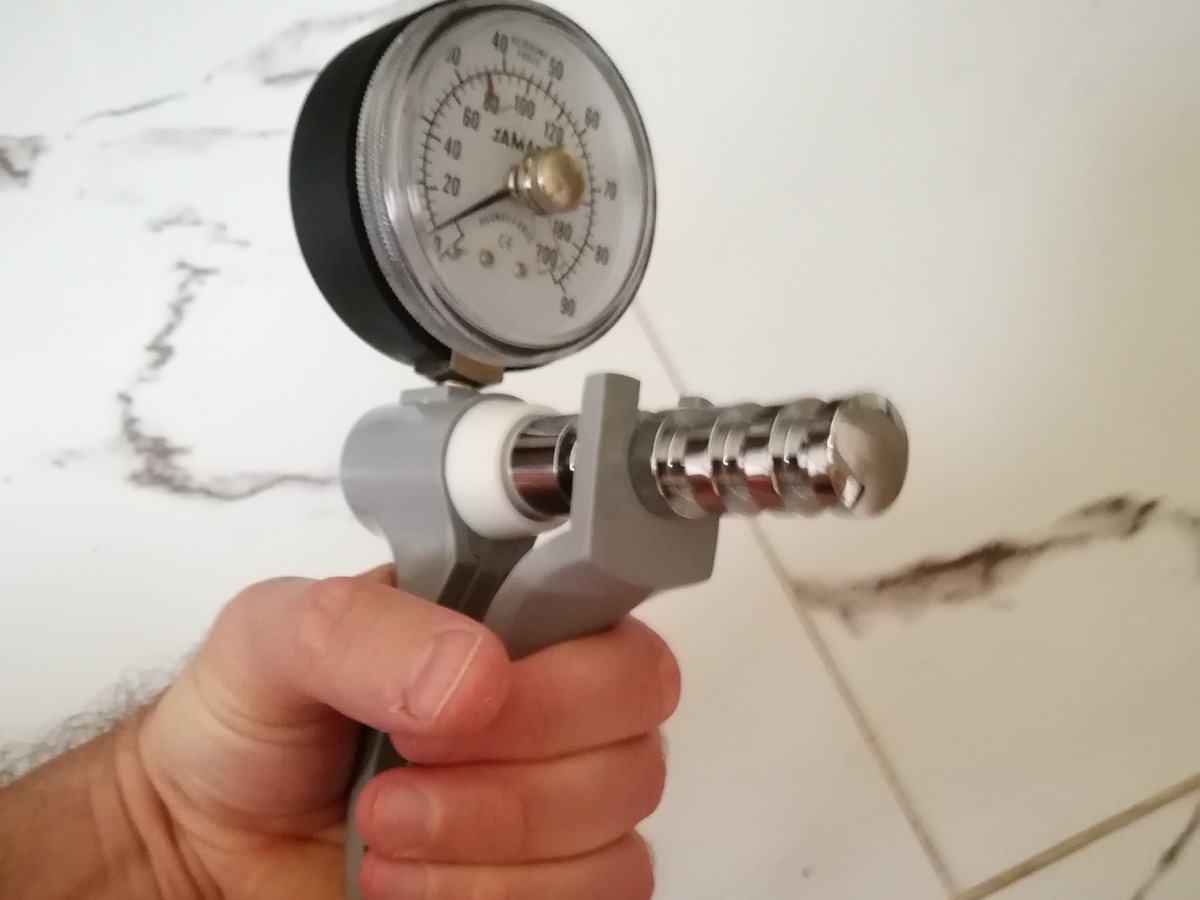
From the age of about 50, most people lose a little muscle every year, and with it some strength. When the loss goes far enough to affect how someone walks, climbs stairs or gets out of a chair, it has a name: sarcopenia. It is linked with falls, hospital stays and losing independence, and there is no drug approved to treat it. What there is, in abundance, is supplements: whey shakes, leucine powders, vitamin D, fish oil, HMB, probiotics, and blends of several at once.
Most earlier reviews asked whether one ingredient works, protein or vitamin D or leucine. A team from Shaanxi Normal University and East China University of Technology asked a different question in Nutrients on 14 October: if you treat each recipe as its own treatment, which ones do better than others? They searched five databases up to 15 June 2026 for randomised trials in adults aged 60 or over who had sarcopenia or were at high risk of it, where the only difference between groups was the supplement. Any exercise programme had to be the same for everyone.
They found 20 trials with 2,160 people, published between 2004 and 2026 in the United States, Europe, Latin America, the Middle East and East and South-East Asia. The supplements were given for between 6 and 48 weeks, and the trials tested 16 distinct recipes. Because few recipes had been compared head to head, the authors used a network meta-analysis, which combines direct comparisons with indirect ones that pass through a shared comparison group, here placebo, usual diet or no supplement.
Taken together, supplements helped a little. Against no supplement they raised the muscle mass of the arms and legs adjusted for height (a measure called ASMI) and grip strength, and made walking slightly faster. They did not make a clear difference to the time taken to stand up from a chair five times. The results are given as standardised effect sizes, which let different measuring devices be pooled but cannot be turned back into kilograms or seconds; by the usual rule of thumb the gains in muscle mass and walking speed were small and the gain in grip strength was small to moderate.
When the recipes were ranked, one stood out for consistency: whey protein with vitamin D and leucine, tested in at least three trials. It was the only recipe that beat no supplement on three of the four measures: muscle mass, grip strength and the chair-stand test. Two others posted bigger numbers on some measures. A blend of omega-3 fats, leucine and the probiotic strain Lactobacillus paracasei PS23 came top for muscle mass and grip strength, and leucine with vitamin D and medium-chain triglycerides (a type of fat found in coconut oil) came top for walking speed. But each of those rested on a single small trial, of 50 and 36 people respectively.
The authors went looking for weak spots and found several. When they removed one 2020 Italian trial, the whey, vitamin D and leucine recipe no longer made a statistically clear difference to muscle mass or grip strength, and its grip-strength effect roughly halved. When they kept only people with confirmed sarcopenia, its grip and chair-stand effects were no longer clear either, and the walking-speed recipe dropped out of the analysis altogether. Funnel plots hinted that small trials with good results may be over-represented. Of the 20 trials, six were judged at low risk of bias and four at high risk. Using a standard rating system, the authors rated the certainty of the evidence as low for two of their main findings and very low for the other five.
The authors' own conclusion is careful: these are 'candidate signals' for future trials, not a ranking to shop by. The analysis cannot say whether a supplement adds anything for someone who already eats enough protein and has normal vitamin D, and none of the trials was long enough to show fewer falls or hospital stays. Resistance exercise, which strengthens muscle on its own, was kept equal across groups within each trial, so it isn't part of the comparison. The review was registered in advance with PROSPERO, funded by the China Postdoctoral Science Foundation, and the authors declare no conflicts of interest.
Nutritional supplements for older adults with or at risk of sarcopenia: 20 randomised trials, 2,160 people aged 60+, 16 recipes, network meta-analysis
20 trials · 2,160 people
Randomised trials published 2004 to 2026 in 14 countries and regions; supplements given for 6 to 48 weeks
SMD 0.25
All supplements vs none, arm and leg muscle mass (ASMI), 9 trials (95% CI 0.10 to 0.40)
SMD 0.42
All supplements vs none, grip strength, 17 trials (95% CI 0.15 to 0.68); walking speed 0.27, 11 trials
No clear effect
Five-times chair-stand test, 8 trials (SMD −0.31, 95% CI −0.81 to 0.20)
3 of 4 measures
Whey protein + vitamin D + leucine beat no supplement on muscle mass, grip strength and chair-stand time
0.82 → 0.40
Its grip-strength effect after removing a single 2020 trial, no longer statistically clear
Low to very low
Certainty of the evidence for the seven main comparisons (CINeMA)
Study: Zhang X, Fan S, Zan J, Chen M, Chen X, 'Comparative Effectiveness of Nutritional Strategies for Sarcopenia-Related Outcomes in Older Adults: A Systematic Review and Network Meta-Analysis', Nutrients 2026, 18(20):3368, published 14 October 2026, doi 10.3390/nu18203368 (open access, CC BY 4.0). Shaanxi Normal University (Xi'an) and East China University of Technology (Nanchang), China. PROSPERO CRD420261498361. PubMed, Embase, Cochrane Library, Web of Science and CNKI searched from inception to 15 June 2026; RCTs in adults ≥ 60 with sarcopenia (AWGS, EWGSOP or the trial's own definition) or at high risk; any co-intervention such as exercise had to be identical across arms; control = placebo, usual diet or no extra supplement. 20 RCTs, 2,160 participants, 17 network nodes (16 formulations + control), 6 to 48 weeks. Pairwise random-effects meta-analysis, supplements vs control: ASMI SMD 0.25 (0.10 to 0.40), 9 studies, I² 0%; grip strength 0.42 (0.15 to 0.68), 17 studies, I² 85%; gait speed 0.27 (0.08 to 0.46), 11 studies, I² 65%; five-times sit-to-stand −0.31 (−0.81 to 0.20), 8 studies, I² 91%. Network estimates vs control: whey protein + vitamin D + leucine ASMI 0.29 (0.06 to 0.52), grip 0.82 (0.13 to 1.50), 5STS −1.41 (−2.63 to −0.18), gait 0.17 (−0.25 to 0.60); omega-3 + leucine + L. paracasei PS23 (one trial, n = 50) ASMI 0.67 (0.10 to 1.25), grip 1.84 (0.39 to 3.28); leucine + vitamin D + MCT (one trial, n = 36 across three arms) gait 1.28 (0.13 to 2.43). Leaving out Rondanelli 2020: whey + vitamin D + leucine ASMI 0.20 (−0.11 to 0.51), grip 0.40 (−0.08 to 0.88). Confirmed sarcopenia only: grip 0.91 (−0.01 to 1.84), 5STS −1.42 (−3.42 to 0.58). Risk of bias (RoB 2): 6 low, 10 some concerns, 4 high. Funnel plots for grip and gait somewhat asymmetric. 'Small' and 'small to moderate' use the common rule of thumb for SMDs (about 0.2 small, 0.5 moderate, 0.8 large); that wording is ours. The trial count per recipe and the 50 and 36 participants are from the paper's Table 1. Funded by the China Postdoctoral Science Foundation (2025M783217); no conflicts declared.
- Grip strength is a core measure in both the European (EWGSOP2) and Asian (AWGS 2019) definitions of sarcopenia. The European cut-offs for low grip are under 27 kg for men and under 16 kg for women; the Asian ones are under 28 kg and under 18 kg.
- The five-times chair-stand test is exactly what it sounds like: stand up from a chair and sit down five times, arms folded, as fast as you can. In the European definition, taking longer than 15 seconds counts as low.
- Sarcopenia was given its own diagnosis code, M62.84, in the US version of the international disease classification in October 2016, which made it easier to record and study as a condition in its own right.
- Leucine is one of the nine essential amino acids, the ones the body can't make, and it acts as a signal that switches on muscle protein building. Whey, the watery part of milk left over from cheese-making, is one of the richest food sources of it.
- Comparative Effectiveness of Nutritional Strategies for Sarcopenia-Related Outcomes in Older Adults: A Systematic Review and Network Meta-AnalysisNutrients, October 2026 · The study: full text, open access
- Sarcopenia: revised European consensus on definition and diagnosis (EWGSOP2)Age and Ageing, 2019 · The European definition and its grip-strength and chair-stand cut-offs
- Asian Working Group for Sarcopenia: 2019 Consensus Update on Sarcopenia Diagnosis and TreatmentJournal of the American Medical Directors Association, 2020 · The Asian definition and its grip-strength cut-offs
- Hand dynamometerWikimedia Commons · The photo, CC0 (Ashashyou)
General information, not medical advice. This review pooled small trials of mixed quality, and its rankings of supplement recipes are rated low or very low certainty. Protein and amino-acid supplements may not suit people with kidney disease, and vitamin D can build up to harmful levels if taken in large doses on top of other sources; if you are losing strength or weight as you get older, talk to your doctor before starting a supplement.
Analysis by NutroPractic from the sources listed. Written for general readers; it does not replace advice from your own doctor.
From our articles
Our guides on this subject
Plain-language guides on nutrition and wellness, backed by research.
Women's health
Eating through menopause: what changes for your bones, muscle and heart, and what to put on the plate
Around the final period, bone density at the spine drops by about 2% a year and LDL cholesterol jumps within a year or two. Hot flushes get the attention, but these quieter changes are where food and strength training do the most. Targets for protein, calcium and vitamin D, an honest look at soy, and a week you can start on Monday.
8 Oct 2026
Weight-loss medicines
Eating on Ozempic, Wegovy or Mounjaro: protein first, so the weight you lose isn't your muscle
GLP-1 medicines shrink your appetite, and with it often your protein. In the big trials a quarter to more than a third of the weight lost was lean mass. What the 2025 joint nutrition advisory recommends, the arithmetic for your own target, and four small plates that get there.
8 Oct 2026
Micronutrients
Vitamin D and B12: two common gaps, from northern winters to vegetarian kitchens
Vitamin D runs low in Canadian and European winters, and surprisingly often in sunny India too. Vitamin B12 is a risk for vegetarians, people over 50 and people on certain medicines. Who is at risk, what the official advice is in North America, Europe and India, and where to get both.
3 Oct 2026
Newsfeed for your website
Want this feed on your website?
Add it to any site with one copy-and-paste snippet. No sign-up, and it updates itself every hour.
Start with a virtual consultation
Tell Dr. Triveni what you want to change. You will leave with a clear next step, whether you are in Toronto, London, New York or Chennai.