Plant-based eating · October 23, 2026
'Where's the meat?': 2,210 rural Americans and the people at their table. Of those who said the people who matter to them wanted them to eat plant-based, 73% did; of those who strongly disagreed, 9%
A University of Vermont team surveyed rural adults across the US and interviewed 55 people in Vermont and Texas about eating mostly plants in places built on hunting, dairy and ranching. What family and friends expect lined up closely with what people ate. A partner who wants meat at every meal was a bigger hurdle for women than for men, and friends were more often an ally than a brake.
Most advice about eating more plants is aimed at the person holding the fork: try a bean chilli, swap one meat meal a week. A study published in Nutrients on 13 October looks at everyone else around the table. Researchers at the University of Vermont and Texas A&M asked rural Americans whether they ate a plant-based diet, and how the people in their lives felt about it.
The survey ran online in 2023 and 2024 and reached 2,210 adults who had lived in the US for at least five years and called where they lived rural. They were first given a definition: a healthy plant-based pattern puts plant foods first but can still include some meat, eggs or dairy. Then came a simple yes or no. Just over a third (35.4%, or 782 people) said yes. Women said yes more often than men (39% against 28%), and so did people aged 18 to 42 (42%) compared with those 59 and over (26%).
The clearest pattern was about expectations. People rated the statement 'Most people who are important to me think I should follow a plant-based diet.' Among the 750 who strongly disagreed, only 70 followed one, about 9%. Among the 238 who agreed or strongly agreed, 173 did, about 73%. After allowing for age, gender, education and income, the odds of eating plant-based rose with each step of agreement up to 'agree', and the pattern held for women and men alike.
A second question, about feeling 'social pressure' to eat plant-based, gave a muddier answer. Three in four respondents agreed or strongly agreed that they felt such pressure, whatever they ate, and the link with diet did not climb step by step. Men who strongly agreed were less likely to eat plant-based than men who were neutral (odds ratio 0.39). Among those who strongly agreed, women were more likely to eat plant-based than men (odds ratio 1.87). The authors say two single questions cannot capture social norms fully.
The interviews explain what the numbers can't. Of the 55 people interviewed (48 in Vermont, 7 in Texas), 34 ate mostly plants. Almost half of them (16) lived in households that ate the same way, which made meal planning easy. But nearly a third (10) did not have that support at home. One woman cooked pasta and kept the meat 'on the side' for her boyfriend; another still bought meat for her husband though she no longer ate it herself. Lack of support at home came up for 33% of the plant-based women and 20% of the men. Among people who didn't eat plant-based, a third said their families would not take to it: 'If there's no meat, the kids ask, "Where's the meat?"'
Friends were the friendlier influence. Half of the plant-based eaters called friends a key source of support, often 'like-minded' or 'chosen' friends, and only 3 described unsupportive ones. Extended family was split: 9 described relatives who resisted, especially around strong food traditions ('What are you going to eat?' from one woman's large Italian family), and 9 described relatives who were supportive or came round. Community was split too. In Vermont, 11 plant-based eaters named hunting and dairy culture as a hurdle and 11 named co-ops, farmers' markets and home gardens as a help ('Everyone's got a garden'). Every Texas interviewee described a meat-centred community.
The limits are real. The survey was a convenience sample recruited through Facebook ads and a purchased email list, two thirds women and better educated than rural America as a whole. 'Plant-based' was self-reported, with no check of what people actually ate or how healthy it was, and the data come from one point in time, so they cannot show that expectations change diets rather than the other way round. Still, the practical point travels: if you want to eat more plants, who cooks, who shops and who sits at your table may matter as much as willpower.
Social expectations and plant-based eating among rural US adults: survey of 2,210 plus 55 interviews
35.4%
Share of 2,210 rural adults who said they follow a plant-based diet (782 people)
9% → 73%
Followed one, among those who strongly disagreed vs agreed or strongly agreed that the people important to them think they should
39% vs 28%
Women vs men who said they follow a plant-based diet
0.39
Odds ratio for men who felt strong social pressure vs neutral men (95% CI 0.18 to 0.84)
16 of 34
Plant-based interviewees whose whole household ate the same way; 10 had no support at home
17 of 34
Plant-based interviewees who called friends a key source of support; 3 described unsupportive friends
Source: Alvirdizadeh S, Abdul-Rahaman S, Seguin-Fowler RA, Belarmino EH, 'Social Dynamics Are Associated with Plant-Based Dietary Consumption Patterns Among Rural Adults in the U.S.', Nutrients 18(20):3346, published 13 October 2026, doi 10.3390/nu18203346, open access (CC BY). Survey: national online survey of rural US adults (Qualtrics, 2023 to 2024), recruited via Facebook ads plus a purchased email list to reach Asian and Black rural adults; 2,786 responses, 2,210 analysed; 1,457 women, 753 men. Plant-based diet: self-identified yes/no after a definition (plants first, animal foods allowed in varying amounts). Followed one: 782 (35.4%); women 574 of 1,457 (39.4%), men 208 of 753 (27.6%); aged 18 to 42, 378 of 895 (42.2%); 59 and over, 153 of 592 (25.8%); group percentages are our calculation from the paper's Table 2. 'Most people who are important to me think I should follow a PBD': strongly disagree 70 of 750 (9.3%) followed one; agree or strongly agree 173 of 238 (72.7%), our calculation. Adjusted logistic regression (age, gender, education, income): expectations Wald χ² (4) = 387.5, p < 0.001, every step different except agree vs strongly agree, no significant gender interaction (p = 0.163); social pressure Wald χ² (4) = 13.5, p = 0.009, gender interaction p = 0.001; men strongly agreeing vs neutral OR 0.39 (95% CI 0.18 to 0.84); women vs men among those strongly agreeing OR 1.87 (1.14 to 3.05). 1,639 of 2,186 (75%) agreed or strongly agreed they felt social pressure to follow a plant-based diet. Interviews: 55 adults (39 women, 16 men; 48 Vermont, 7 Texas; 34 plant-based), 2023 to 2024, thematic analysis. Limitations given by the authors: cross-sectional, self-reported diet with no intake assessment, two single-item norm measures, sample skewed to women and degree holders. Funding: USDA NIFA Hatch project VT-H02705 and the Texas A&M AgriLife Institute for Advancing Health Through Agriculture. One author directs a community health programme (declared). OR = odds ratio; CI = confidence interval.
- A 'plant-based' diet in this study didn't mean vegan. Respondents were told it puts plant foods first while allowing varying amounts of animal products, and the first round of interviews only took people who ate at least one serving of meat a week.
- The 'expectations' question is what psychologists call an injunctive norm: what you think others want you to do. The 'social pressure' question was meant to capture a descriptive norm. The two told quite different stories in this survey.
- Plant-based diets differ a lot in quality. Research links patterns rich in vegetables, fruit, whole grains and legumes with better health, and plant-based diets heavy in refined grains and added sugar with worse, which is why the authors want future work to measure what people actually eat.
- In the interviews, the person who did the cooking often pulled the household along: one woman said her partner ate mostly plant-based 'because I cook for him'.
- Two thirds of the survey's respondents were women, so the authors caution that the results don't represent rural US adults as a whole.
- Social Dynamics Are Associated with Plant-Based Dietary Consumption Patterns Among Rural Adults in the U.S.Nutrients (MDPI) · The study, open access, with the survey tables and interview themes
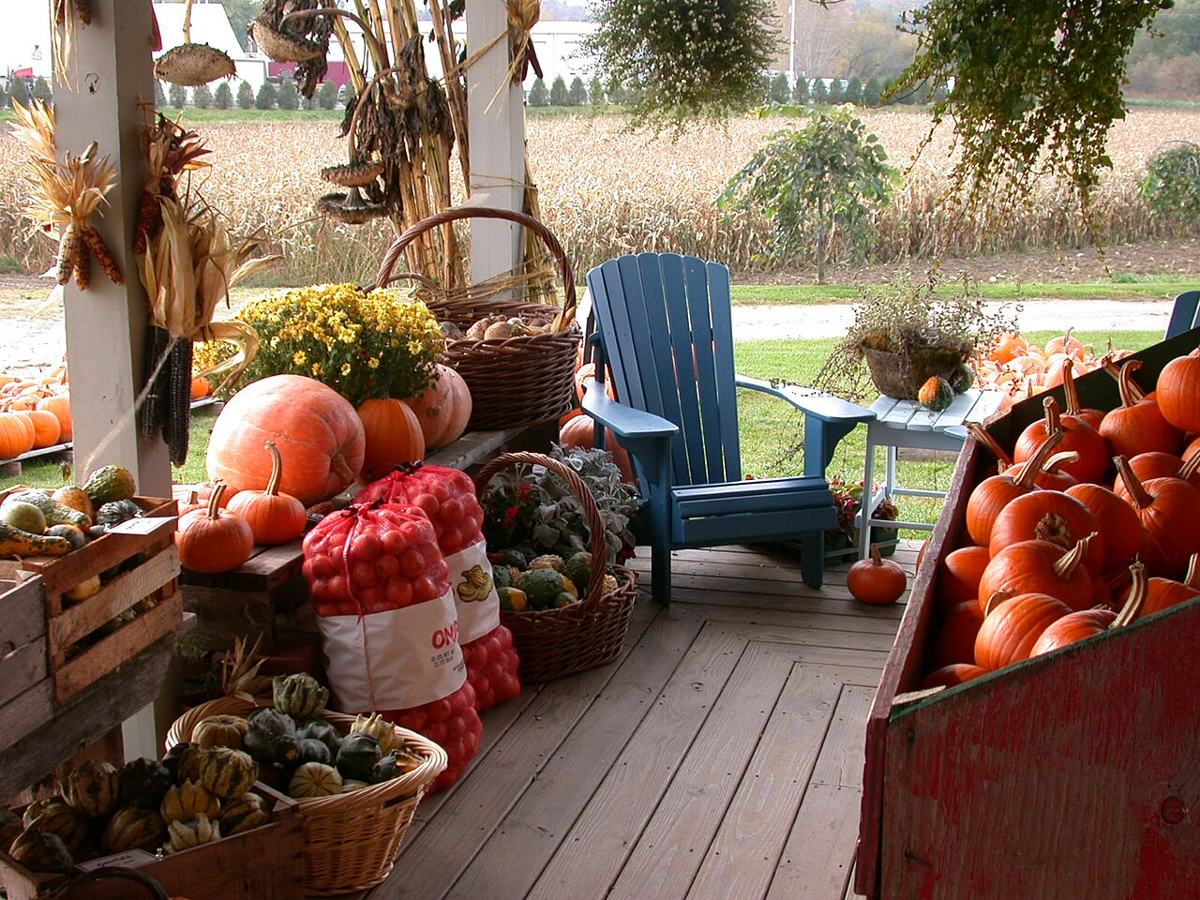
- Connecticut River Byway - Harlow's Farm Stand in Westminster, VermontWikimedia Commons / U.S. National Archives · The photo, public domain
General information, not medical advice. This was a survey and interview study that shows links, not cause and effect. If you have a health condition, are pregnant, or are planning a big change to what you eat, talk to your doctor or a registered dietitian first.
Analysis by NutroPractic from the sources listed. Written for general readers; it does not replace advice from your own doctor.
From our articles
Read, then eat a little better
Plain-language guides on nutrition and wellness, backed by research.

Women's health
Inositol for PCOS: the 40:1 ratio, trial doses, and food milligrams
Why do randomized trials in polycystic ovary syndrome prioritize the 40:1 myo to D-chiro inositol ratio? Here is the science behind the ovarian epimerase paradox, clinical ovulation and insulin metrics, and why cantaloupe cannot replace 4,000 mg trial powder.
21 Nov 2026

Everyday eating
Extra virgin olive oil polyphenols: the EU health claim, smoke point myths, and cooking stability
Does extra virgin olive oil degrade when cooked? What does the EU 5 mg polyphenol health claim require, how does oleocanthal act like ibuprofen, and why does oxidative stability matter more than smoke point in domestic frying? Here is the clinical and culinary data.
21 Nov 2026

Food and nutrition
L-theanine and caffeine: what cognitive trials measured on sustained attention, and milligrams in matcha vs green tea
Combining L-theanine with caffeine produces clean focus without caffeine jitters. Here is what randomized trials measured on attention-switching, EEG alpha brain waves, and the exact milligrams across ceremonial matcha, culinary powder, gyokuro, and sencha.
20 Nov 2026
Newsfeed for your website
Want this feed on your website?
Add it to any site with one copy-and-paste snippet. No sign-up, and it updates itself every hour.
Start with a virtual consultation
Tell Dr. Triveni what you want to change. You will leave with a clear next step, whether you are in Toronto, London, New York or Chennai.